
15 Best Indoor Plants for Winter (Low-Maintenance Picks)

.jpg)
You can keep houseplants stable through winter if you match species to indoor light, heat loss near windows, and low humidity from HVAC. You’ll get the best results with taxa that tolerate reduced photosynthetic photon flux, slow transpiration, and wider watering intervals. Snake plant, ZZ plant, pothos, and heartleaf philodendron handle shade and neglect, while aloe, jade, parlor palm, and Christmas cactus each require specific thresholds. The key differences aren’t obvious until you compare them…
- Choose winter-hardy indoor plants like snake plant, ZZ plant, cast iron plant, and Chinese evergreen for low light and missed waterings.
- Place plants at the brightest window matching their needs; use a grow light if rooms are dim.
- Water only after the top soil dries; succulents need full dry-down, while peace lily prefers lightly moist soil.
- Keep temperatures 18–27°C, away from drafts and heaters, and aim for 40–60% humidity for tropical plants.
- Use well-draining potting mix, wipe dusty leaves, rotate pots monthly, and fertilize lightly since winter growth slows.
How to Choose Winter-Proof Houseplants (Light, Heat, Humidity)
Three variables largely determine whether a houseplant stays stable through winter: light intensity, ambient temperature, and indoor relative humidity. Match species’ light requirements to your brightest window and shorten the photoperiod with grow lights if daily PAR drops. You’ll see winter-proof candidates tolerate lower irradiance without etiolation or leaf abscission.
Keep temperatures in the plant’s functional range; avoid cold-window drafts and heat vents that spike transpiration and desiccate margins. Aim for steady root-zone warmth so water uptake matches reduced photosynthesis. Track humidity levels with a hygrometer; many tropical foliage plants perform best around 40–60% RH, while succulents prefer drier air. Choose plants with thicker cuticles, slower growth rates, and flexible stomatal control for winter stability.
Snake Plant: Easiest Low-Light Winter Houseplant
Although winter light levels crash and windows turn drafty, snake plant (Dracaena trifasciata, syn. Sansevieria trifasciata) keeps photosynthesizing under low photon flux and tolerates cool, dry indoor air. You’ll get reliable snake plant benefits: strong drought tolerance via CAM metabolism, upright architectural leaves, and steady growth with minimal inputs.
For snake plant care, place it in bright shade to low light, rotate monthly for even morphology, and keep leaves off cold glass. Water only when the mix dries fully; winter overwatering is the main failure mode because roots suffocate in anoxic media. Use a gritty, fast-draining substrate and a pot with drainage. Skip fertilizer until spring; low temperatures suppress uptake and increase salt risk.
ZZ Plant: Survives Low Light and Missed Waterings
If you want another winter-proof houseplant with the same “set it and forget it” tolerance as snake plant, reach for ZZ plant (Zamioculcas zamiifolia), a shade-adapted aroid that keeps its structure in low indoor irradiance and shrugs off irregular watering. You’ll see thick, pinnate leaves supported by rhizomes that store water and carbohydrates, buffering drought and short photoperiods.
For plant care, place it in low light to bright indirect light; growth slows in winter, so don’t chase new shoots. Water only when the potting mix dries nearly through, then drain fully to prevent hypoxic roots and rhizome rot. Use a coarse, well-aerated mix and keep temperatures above 60°F. Wipe leaves to maintain stomatal function.
Pothos: Fast Vine for Winter-Ready Greenery
A trailing vine on a bookshelf can stay lush through winter with pothos (Epipremnum aureum), a shade-tolerant aroid that maintains photosynthetic function under low indoor irradiance and short photoperiods. You’ll get fastest growth in bright, indirect light, but it still holds chlorophyll and keeps internodes elongating under typical room lux. For pothos care, water only when the upper 2–3 cm of substrate dries, then fully rewet to avoid hypoxic roots and Pythium risk.
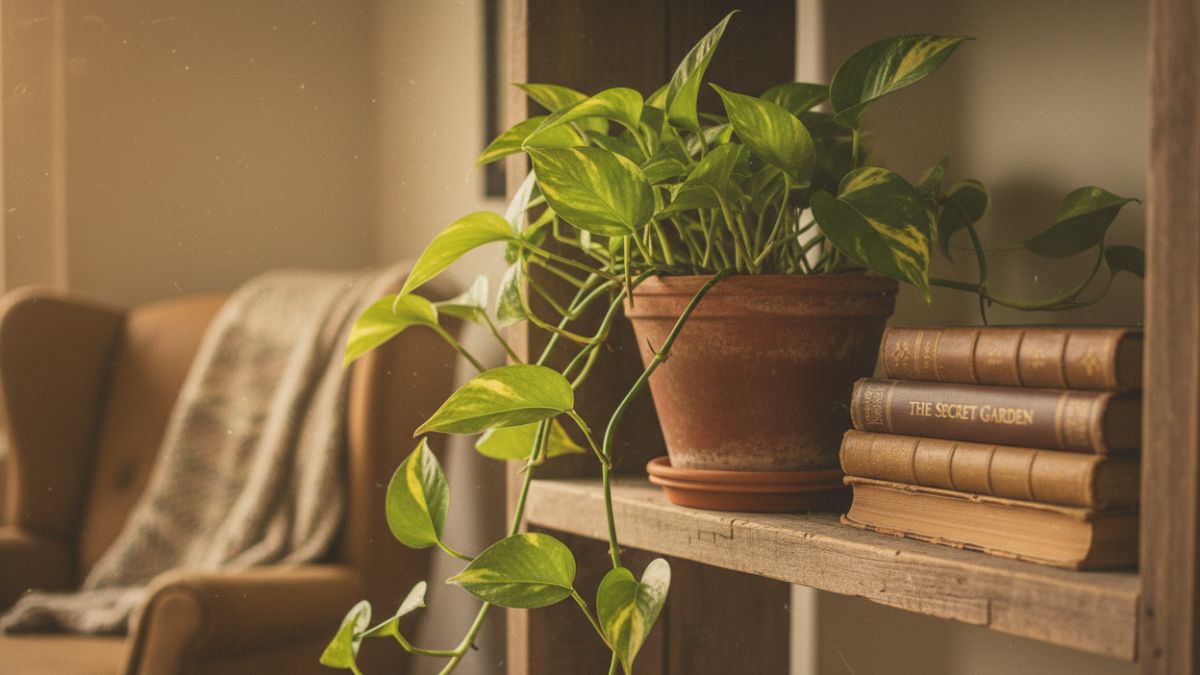
Keep 18–27°C and moderate humidity; cold drafts slow stomatal conductance and leaf expansion. Feed lightly monthly, or pause if growth stalls. Wipe leaves to reduce boundary-layer dust and support indoor airquality by maintaining active gas exchange and transpiration.
Heartleaf Philodendron: Tough Trailing Winter Plant
Heartleaf philodendron (Philodendron hederaceum) earns its winter-hardy reputation indoors by maintaining stable leaf turgor and acceptable carbon gain under low light and shorter days. You’ll see slower internode extension, yet chlorophyll-rich leaves persist when you keep it near an east or north window or under LEDs. For heartleaf care, let the top 2–3 cm of substrate dry, then water to slight drainage; chronic saturation reduces root aeration and promotes opportunistic rot.
Maintain 40–60% RH if possible, but this species tolerates drier heated air with minimal marginal necrosis. Feed lightly (¼ strength) monthly only if new growth continues. Use trailing benefits: train stems on a shelf edge or pin nodes into soil to enhance rooting and fullness.
Peace Lily: Winter Houseplant That Flowers Indoors
Although winter light drops and indoor air dries out, peace lily (Spathiphyllum spp.) can still initiate and hold spathes indoors because it maintains functional photosynthesis at low irradiance and uses its thick, aerenchymatous roots to buffer short-term moisture variation. For reliable winter flowering, place it in bright, indirect light near an east or shaded south window, and rotate weekly for uniform leaf irradiance.
In peace lily care, keep the substrate evenly moist but aerated; water when the top 2–3 cm dries, then drain fully to prevent hypoxic root stress. Maintain 40–60% RH to limit stomatal closure and leaf-tip necrosis. Feed lightly (¼ strength) monthly, since low temperature and light reduce nutrient demand. Remove senescent spathes to redirect carbohydrates.
Chinese Evergreen: Winter Color for Dim Rooms
Winter’s low-light corner gets a reliable pigment boost from Chinese evergreen (Aglaonema spp.), a shade-adapted aroid that sustains carbon gain under low photon flux and holds chlorophyll- and anthocyanin-based variegation when other foliage plants etiolate. You’ll see stable green, silver, or red patterning because leaf tissues maintain higher chlorophyll density and photoprotective pigments in shade.
For plant care, keep it at 18–27°C, avoid cold drafts, and water only when the top 2–3 cm of substrate dries; chronic saturation promotes root hypoxia. Use a porous mix and moderate humidity to reduce marginal necrosis. Feed lightly in winter to match slowed growth. Provide bright indirect light to intensify color benefits without photobleaching or leaf scorch.
Cast Iron Plant: The Toughest Winter Houseplant
When daylight drops and indoor humidity swings, cast iron plant (Aspidistra elatior) keeps producing functional leaves because its thick, leathery lamina and slow metabolism limit transpirational loss and buffer carbon balance under low irradiance. Place it in low to medium indirect light; you’ll still get resilient foliage with minimal etiolation.
For cast iron care, water only when the top 5–7 cm of substrate dries, since rhizomes store reserves and excess moisture promotes root hypoxia and fungal rot. Keep temperatures 10–24°C; avoid cold drafts that disrupt membrane stability. Feed lightly in late winter with a balanced, dilute fertilizer to prevent salt stress. Dust leaves to maximize photon capture, and rotate the pot monthly to maintain even canopy architecture.
Spider Plant: Forgiving Winter Plant for Beginners
Cast iron plant handles winter by throttling water loss, but spider plant ( Chlorophytum comosum ) wins beginners over by rapidly rebuilding leaf area after stress and tolerating typical indoor missteps. You’ll get reliable growth because its arching leaves keep photosynthesizing under moderate light, while its fleshy roots buffer short droughts and minor watering errors. For spider plant care, let the top 2–3 cm of mix dry, then water thoroughly; cold, saturated media is the main winter risk.
Keep it 15–24°C and away from drafts to limit tip necrosis, and flush salts monthly if you use hard water. Winter plant benefits include fast offset production for easy propagation and measurable indoor air particulate capture in ventilated rooms.
Rubber Plant: Glossy Leaves for Bright Winter Windows
Although low light slows most tropical houseplants, the rubber plant (*Ficus elastica*) maintains winter performance near bright windows because its thick, waxy leaves reduce transpiration while still supporting steady photosynthesis at moderate indoor light levels. Place it 1–3 feet from an east or south window, then rotate weekly to prevent asymmetric canopy growth.
.jpg)
For plant care, let the top 2–3 inches of mix dry before watering; cool soils slow root uptake and increase hypoxia risk. Keep temperatures 65–80°F and avoid cold drafts that trigger leaf abscission. Maintain 40–60% relative humidity to limit marginal browning, and wipe leaves to remove dust that lowers photon capture. For winter aesthetics, the glossy lamina reflects indoor light, adding depth and contrast.
Dracaena: Low-Effort Winter Plant for Corners
Bright-window plants like rubber plant earn their keep in winter, but corners and interior zones need a species that tolerates lower photon flux without declining fast—dracaena (*Dracaena* spp.) fits that role. You’ll get best performance at moderate indirect light, yet many dracaena varieties maintain chlorophyll and turgor under lower PPFD than most broadleaf houseplants.
For dracaena care, let the substrate dry partially between waterings; cool, low-light conditions slow transpiration, so overwatering drives root hypoxia and leaf tip necrosis. Use a fast-draining mix and keep 18–24°C to stabilize growth. Rotate monthly for symmetric phototropism. Prefer filtered or dechlorinated water; fluoride and salts can accumulate and scorch margins. Prune canes to stimulate axillary shoots.
Aloe Vera: Best Winter Plant for Sunny Sills
When winter sun angles low and indoor humidity drops, aloe vera (*Aloe barbadensis* Miller) still performs on a bright sill because its CAM photosynthesis lets it fix CO₂ at night and conserve water during the day. Place it within 30 cm of a south- or west-facing window, and rotate weekly to keep rosettes symmetrical.
For winter care, use a fast-draining cactus mix and a pot with drainage; let the substrate dry fully before watering, since cool roots plus excess moisture increases rot risk. Keep nights above 10°C and avoid cold glass contact. Aloe benefits include mucilaginous leaf gel used topically, while the plant also buffers indoor dryness with minimal transpiration. Fertilize lightly or not at all until spring.
Jade Plant: Drought-Tolerant Winter Succulent
Because Crassula ovata stores water in its thick, CAM-adapted leaves and stems, you can overwinter a jade plant with minimal irrigation as long as it receives high light on a south- or west-facing sill. For jade plant care, let the potting mix dry fully, then water deeply and drain; persistent moisture predisposes roots to rot.
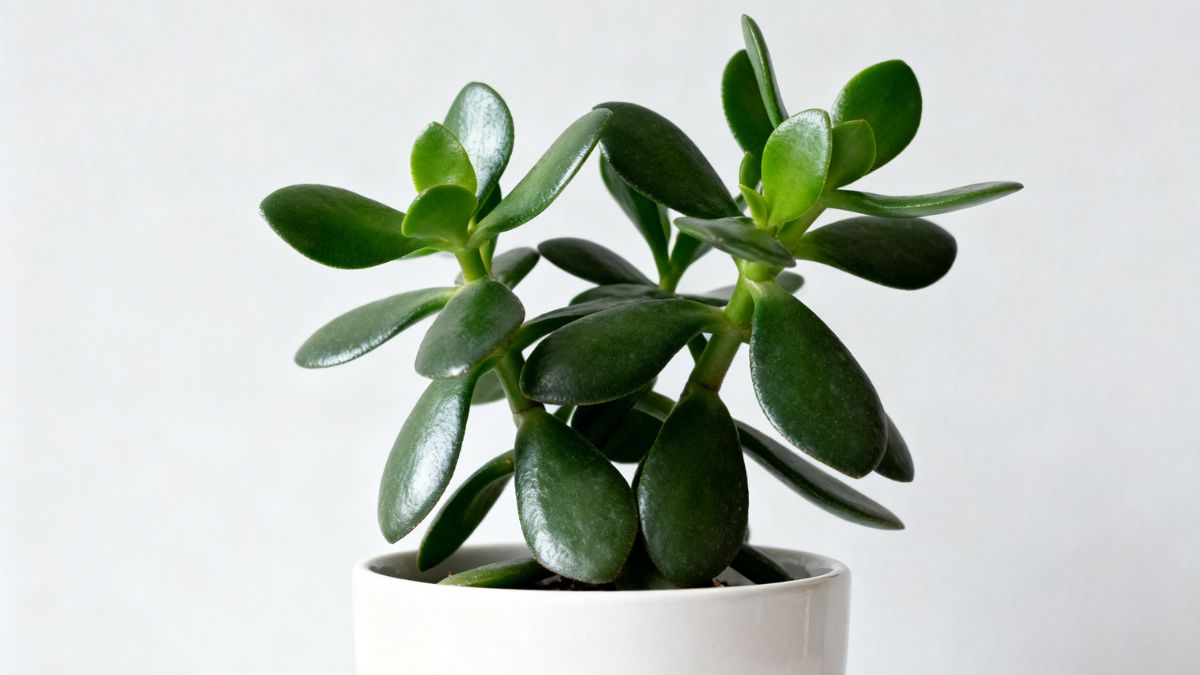
Keep temperatures around 15–24°C and avoid cold drafts below 10°C, which can trigger leaf drop. Use a gritty, fast-draining cactus substrate and a pot with drainage to maintain aeration. Don’t fertilize in winter; low light slows growth and increases salt sensitivity. Prune leggy stems to promote branching. Jade plant benefits include strong drought tolerance, long lifespan, and easy propagation from stem cuttings.
Parlor Palm: Winter-Friendly Palm for Low Light
Although winter light levels drop sharply indoors, parlor palm (*Chamaedorea elegans*) maintains acceptable photosynthetic performance at low irradiance, making it a reliable choice for north- or east-facing windows and interior placements with steady ambient light. For parlor palm care, you’ll keep it in bright shade, rotate weekly for symmetric frond expansion, and water only after the upper 2–3 cm of substrate dries; chronically saturated media reduces root aeration and promotes decay.
Maintain 40–60% relative humidity to limit leaflet tip necrosis, and avoid hot, desiccating vents. Feed sparingly in winter—quarter-strength balanced fertilizer every 6–8 weeks—because growth slows under reduced photon flux. Key parlor palm benefits include improved perceived indoor air quality and durable, low-transpiration foliage.
Christmas Cactus: Winter Blooms With Minimal Fuss
If your winter windowsill runs cool and bright, Christmas cactus (*Schlumbergera* spp.) rewards you with reliable blooms while demanding less light and water than many flowering houseplants. You’ll get best seasonal blooms by keeping nights 55–65°F and giving 12–14 hours of darkness for 3–6 weeks; this photoperiod promotes bud initiation.
Water when the top 1–2 cm dries, then drain fully; segmented stems store moisture, so chronic saturation drives root rot. Use a fast, airy mix (bark, perlite, peat/coco) and a pot with drainage to maintain oxygen. For holiday care, stop fertilizing in late fall, avoid moving the plant during bud set, and raise humidity slightly to reduce bud drop.
Conclusion
You can keep houseplants physiologically stable in winter by matching species to light intensity, ambient temperature, and relative humidity. You’ll reduce abiotic stress by watering only after substrate dries, limiting fertiliser, and avoiding cold drafts and radiator heat.
Choose CAM succulents like aloe and jade for bright, dry sills, and shade-tolerant aroids like snake plant, ZZ, pothos, and philodendron for low light. You’ll even get reliable blooms from Christmas cactus.


.svg)

.jpg)
.jpg)
.jpg)