Contractor General Liability - What Every Contractor Needs to Know


Trades contractors experience multiple risks every day during their projects that vary from large commercial construction sites to small residential renovation work. Business survival could be threatened when one mistake occurs along with accidents or dissatisfied clients who initiate lawsuits or property damage claims or financial losses. Many businesses need contractor general liability insurance as their primary insurance coverage.
Any contractor seeking protection for their business along with their assets and their professional reputation must fully grasp the working principles of general liability insurance together with its coverage scope and its separate nature from other insurance types.
The following article explains contractor general liability through its coverage scope as well as its importance alongside its comparisons to professional liability insurance. Additionally, we will separate fact from fiction regarding this coverage while providing you with practical guidelines to select the right policy.
What Is Contractor General Liability Insurance?
A policy under contractor general liability protects professionals against third-party compensation claims that involve physical harm to people and damage to property objects together with specified legal fees.
Clients in addition to subcontractors, vendors, and members of the public may claim against a contractor's policy. General liability insurance requires coverage for workplace fall injuries together with client property damage resulting from accidental construction work so contractors avoid personal financial liability.
The insurance serves as an industry requirement before people can obtain licenses or win contracts and access business locations primarily within government and commercial sectors. A contractor's financial stability depends on carrying this insur
ance because one claim can potentially cause serious monetary hardships.
Basic Liability Insurance: What Does It Cover?
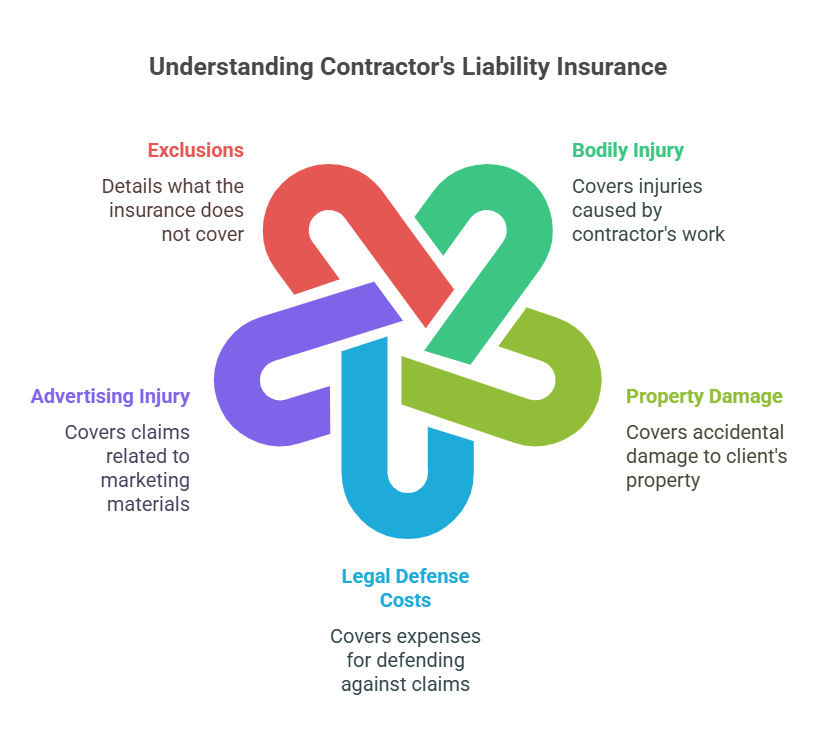
General liability insurance for contractors usually covers a lot of different scenarios, such as:
- Bodily Injury: You could be held responsible if someone gets hurt because of your work, like a homeowner tripping over your tools. General liability helps pay for things like medical bills and lawyer fees.
- Damage to Property: If your crew breaks a neighbor's window or tears up a client's furniture by accident, your insurance can help pay for the repairs or replacement.
- Legal Defense Costs: It can be pricey to defend yourself in court, even if the claim is not valid or you are not found guilty. This insurance helps pay for court costs, lawyer fees, settlements, and verdicts.
- Advertising Injury: This coverage can be applicable if your marketing materials are accused of slander, copyright infringement, or defamation.
But you should know what general responsibility does not cover. It won't cover damage to your own property, hurt employees (that's workers' compensation), or mistakes in your work (that could be professional responsibility).
Where Does the Difference Lie Between General Liability and Professional Liability?
Despite the fact that many contractors believe that general liability insurance covers everything, this is not the case. This is especially true for design-build organizations, engineering firms, architectural firms, and contractors who provide consulting services. It is at this point that the contrast between general liability and professional liability becomes significant.
General liability insurance protects against physical hazards, such as accidents that result in injuries or damage to property. Take, for example, mishaps involving scaffolding, damaged glass, or injuries caused by tools.
On the other hand, professional liability insurance protects you against claims that are brought about by negligence, errors, or omissions in the professional services that you provide. It is possible that general responsibility will not cover the situation in which you design a defective roof and it falls later owing to an error in computation; nevertheless, professional liability may cover the situation.
Having a thorough understanding of the professional versus general liability means that you will not be left vulnerable in areas that are not covered by your primary business insurance policy. Depending on the kind of work you do, you might require both of them in order to be completely protected.
.jpg)
Why All Contractors Need GLI
Unanticipated issues can arise without warning, even for the most diligent of contractors. Accidents can occur in a single second on construction sites because of the unpredictability of it all. Damages or legal claims that can amount to thousands, or even hundreds of thousands, of dollars could be the consequence of anything as simple as a fallen ladder, paint that gets spilled, or a botched installation.
If the contractor did not have general liability insurance, the contractor would be responsible for paying these costs. Your personal assets could be put at risk, your business funds could be depleted, and your reputation could be harmed as a result of this.
The term "general liability insurance" refers to a form of protection. Because of this, you will have the self-assurance to take on projects, submit bids for contracts, and expand your firm without the concern that a single occurrence may bring you to your knees.
It is also legally compulsory to have this kind of insurance in some jurisdictions and industries and in certain industries. Moreover, even when it is not, many customers would not use uninsured contractors due to the liability concerns that they provide.
Identifying Your Company's Needs in Terms of Liability Insurance
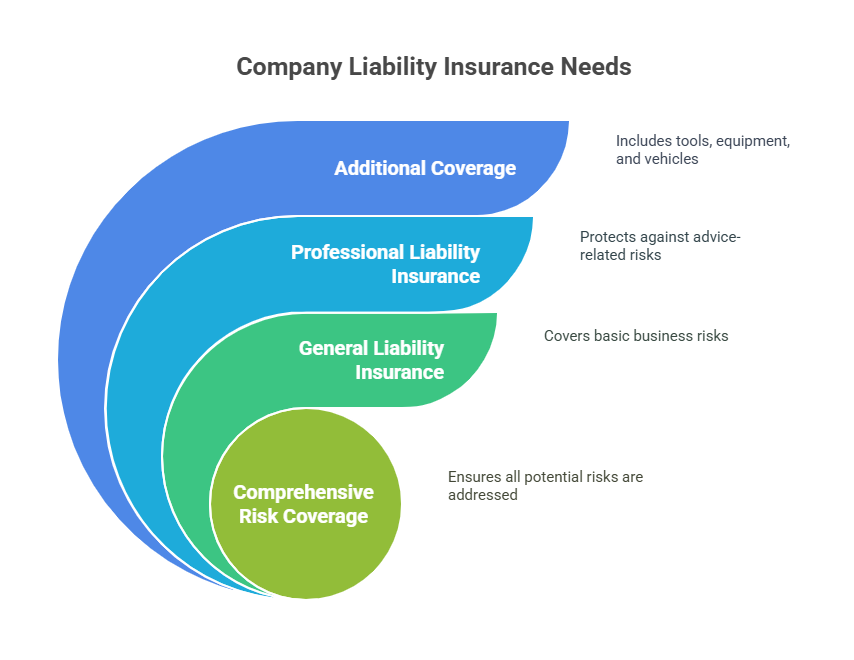
These are not all the same types of worker liability insurance. It's important to work with an insurance agent or broker who knows your business, the types of projects you usually work on, and the risks that come with them.
Make sure that the insurance limits are high enough to cover any claims that might come up. You can also ask about add-ons or endorsements that cover things like tools and equipment, completed operations, or commercial vehicles.
You should also think about whether you need both general liability and expert liability. As we already said, a general liability coverage might not be enough if you offer services like advice, plans, or design work. You'll need a combined plan that covers all possible risk areas.
Conclusion
Finally, getting contractor general liability insurance isn't just something you do; it's an important part of running a responsible, long-lasting business in a dangerous field. It keeps you from going bankrupt, helps you keep your clients' trust, and gives you the confidence to work on every job site.
You won't be surprised when something goes wrong if you know the details of your policy, especially the difference between professional liability and general liability. Because one mistake can cause a lawsuit or a financial problem, having liability insurance is not only a good idea, it's a must.
Getting the right liability insurance is one of the most important things you can do as a contractor, whether you work alone or with a growing building company. Don't wait until you need to file a claim to find out you're not covered. Protect the business you've worked so hard to build by learning about it and getting insurance.


.svg)
.jpg)