Fall Closet Decluttering Tips: How to Transition Your Wardrobe for Cooler Weather

.jpg)
Audit your wardrobe by lifestyle and weather, then sort into Keep, Tailor, Donate, and Store. Identify gaps (waterproof jacket, neutral knits, warm trousers, weatherproof boots) and set a capsule goal with a tight palette and item count. Prioritize layers: two to three base tees, two mid-layers, one versatile coat. Favor slim silhouettes, thinner-to-thicker stacking, and short-to-long lengths. Organize zones, match hangers, label bins. Track wears, remove duplicates, and plan sustainable, targeted buys—next, you’ll get exact formulas and care tips.
- Define your fall lifestyle, color palette, and temperature range; set a capsule goal with silhouette formula, item count, budget, and deadlines.
- Sort into Keep, Tailor, Donate, and Store piles using strict fit, condition, and versatility criteria; schedule tailoring and donations.
- Build smart layers: two to three base tees, two mid-layers, one versatile outer layer; favor slim silhouettes for easy layering.
- Zone your closet for visibility with consistent hangers, labeled accessory bins, and pre-staged outfits by temperature range.
- Run a weekly review to rehang, repair, donate, and rotate pieces; track wear to spot duplicates and guide sustainable shopping.
Evaluate Your Current Wardrobe With a Seasonal Mindset
Before you pull everything out, define what fall means for your lifestyle—temperature range, dress code, activities, and color palette. Lock that seasonal mindset, then perform a quick wardrobe evaluation. Scan categories: outerwear, knitwear, base layers, pants, shoes, and accessories. For each, ask: Does it fit now? Is it comfortable with fall layers? Does it align with your current schedule and palette? Note gaps: reliable waterproof jacket, neutral sweater, warm trousers, weatherproof boots, moisture-wicking tees, smart-casual pieces.
Assess fabric weights and textures: wool, cashmere, flannel, denim, leather, and water-resistant shells. Prioritize versatile colors that mix easily. Check condition fast: pilling, stretched cuffs, faded blacks, damaged soles, broken zippers. Track findings on a simple list. Make immediate repairs list and identify priority upgrades.
Sort Items Into Keep, Tailor, Donate, and Store Piles
Start with four clear piles—Keep, Tailor, Donate, Store—and move fast category by category. Use strict keep criteria: fit now, comfort, condition, and versatility with fall layers. If an item needs minor tweaks, choose tailor options like hemming, waist nips, sleeve shortening, or replacing buttons. Anything stained, pilled, or warped goes out.
For Donate, apply quick donation tips: only clean, gently worn pieces; bundle by type; note specialty charities for coats and workwear. Recycle unwearables.
For Store, pick breathable storage solutions: washed, fully dry items in labeled bins or cotton bags; add cedar to deter pests. Fold knits, protect leather, and store delicates away from light. Return Keep items to prime space. Schedule tailoring and drop donations promptly.
Identify Gaps and Set a Fall Capsule Goal
Now that you’ve edited ruthlessly, scan what’s left and pinpoint what’s missing. Pull pieces by category—tops, bottoms, shoes, accessories—and note duplicates and holes. Identify wardrobe essentials you rely on weekly: dark denim, neutral trousers, versatile knits, a go-to dress, everyday shoes, practical outerwear. Compare your list to your calendar: work, weekend, events, travel. Assess personal style with three words (e.g., minimal, classic, relaxed) and let those guide colors, fits, and finishes.
Set a clear fall capsule goal: choose a palette (base, accent, metallic), a silhouette formula (top, bottom, shoe), and a target item count. Prioritize replacements for worn basics before adding statement pieces. Write a short shopping list with exact specs, budgets, and deadlines. Commit and track progress.
Prioritize Layering Pieces for Variable Temperatures
Although fall days swing from crisp mornings to warm afternoons, you can stay comfortable by building smart layers. Start with breathable base tees or long-sleeves that wick moisture. Add mid-layers like lightweight sweaters, shirt-jackets, or vests for quick warmth. Top with a packable jacket or trench that blocks wind and light rain. Prioritize pieces that zip, snap, or unbutton so you can vent heat fast.
Audit your closet: keep two to three bases, two mid-layers, and one versatile outer layer per weekly rotation. Favor slim silhouettes that stack cleanly and don’t bulk under coats. Use layering techniques such as thinner-to-thicker and short-to-long lengths to maintain mobility and weather adaptability. Pre-stage outfits by temperature range and set grab-and-go combos near the door.
Choose a Cohesive Color Palette and Textures
Your layered lineup works even harder when the colors and textures coordinate. Start with a three-color base you love—think camel, charcoal, and cream or navy, olive, and tan. Pull every fall piece and sort by this palette; set aside outliers you rarely wear. Use color coordination to simplify outfits: neutrals as anchors, one accent for interest.
Audit textures next. Keep a balanced mix: smooth (cotton tees, poplin shirts), fuzzy (cashmere, mohair), chunky (fisherman knits), and rugged (tweed, corduroy). Practice texture mixing by pairing opposites—silk under wool, denim with soft knits, leather over ribbed layers. Eliminate duplicates that don’t add contrast.
Create micro-capsules: two tops, two layers, two bottoms that interchange. Snap outfit references. When shopping, match your palette and add only missing textures.
Store Off-Season Clothing the Right Way
Three smart moves keep off-season pieces pristine: clean, contain, and control climate. Wash or dry-clean everything before packing to prevent stains from setting and to deter pests. Repair loose buttons and minor snags now. Choose breathable containers: cotton garment bags for delicate dresses, acid-free boxes for knits, and clear bins with gasket lids for basements or attics. Add cedar blocks or lavender sachets; skip mothballs. Fold heavy sweaters; stuff boots with inserts; roll scarves.
Label each bin by category and season to streamline seasonal rotation. Store in a cool, dry, dark space away from vents and sunlight. For small homes, use under-bed bins or top-shelf vacation storage. Keep a quick-access capsule for surprise weather swings. Set calendar reminders to inspect quarterly.
Optimize Closet Layout for Easy Access
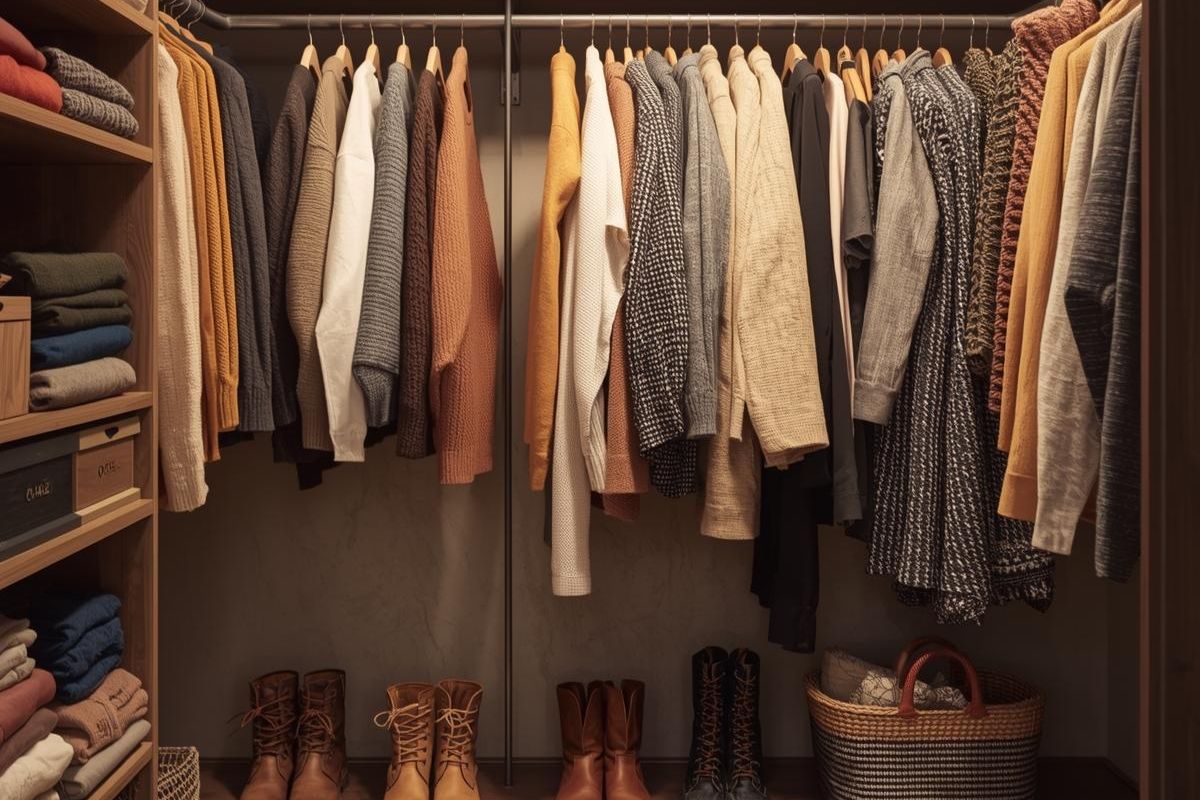
With off-season pieces stored smartly, set up the closet you use daily for speed and visibility. Start by zoning: eye-level for everyday layers, lower rods for pants, upper shelves for backup basics. Group by category, then by color, so you scan left to right quickly.
Use consistent hanger types to save inches and keep garments aligned—slim velvet for blouses, wood for coats, clip hangers for skirts. Face everything forward; hang most-worn pieces at the dominant-hand side. For shelf organization, add labeled bins for hats, scarves, and belts; use shelf dividers to keep stacks from toppling. Install hooks for bags and a valet rod for next-day outfits. Place a small basket for repairs and returns. Finish with good lighting and a step stool for safe access.
.jpg)
Care for Knitwear, Denim, and Boots Properly
Before cool-weather staples carry you through the season, set a maintenance routine that preserves shape, color, and structure. Start with knitwear care: de-pill with a fabric comb, hand-wash in cool water, roll in a towel to remove moisture, then dry flat on mesh racks. Fold sweaters; never hang.
For denim maintenance, wash inside out, cold, with mild detergent; skip fabric softener. Air-dry to preserve dye and shape. Spot-clean between washes to extend wear and reduce fading.
Prioritize boot preservation: wipe salt and dirt after each outing, condition leather monthly, waterproof suede with a spray, and use cedar boot trees to retain form. Rotate pairs to prevent creasing.
Plan seasonal storage: seal clean knits in breathable bins, stack folded denim, and store boots upright with shapers.
Create Outfit Formulas for Everyday Dressing
Start by building 3–5 reliable outfit formulas that mix your fall staples without overthinking. Identify daily essentials first: jeans or tailored trousers, a knit, a layer (blazer, trench, utility jacket), and grounded shoes (loafers, ankle boots, sneakers). Then map outfit combinations you can repeat.
Example formulas:
- Straight jeans + ribbed turtleneck + blazer + loafers.
- Wide-leg trousers + crewneck sweater + trench + sneakers.
- Midi skirt + fitted knit + leather jacket + ankle boots.
- Dark denim + chambray shirt + cardigan coat + Chelsea boots.
- Leggings + oversized sweater + quilted vest + sporty sneakers.
Set a color palette so pieces interchange easily. Add one accessory rule per look: belt or scarf, not both. Snap photos, name each formula, and keep them visible near your closet for quick mornings.
Maintain Your Closet With Weekly Mini-Edits
Even after a big purge, you keep clutter at bay by running quick weekly mini-edits. Set a 15-minute timer every Sunday for weekly wardrobe maintenance. Scan hangers left to right: return strays, rehang wrinkled pieces, and pull anything unworn, damaged, or ill-fitting. Create three bags: repair, donate, and resell. If an item needs mending, schedule it; if it doesn’t earn a slot in two weeks, release it.
Rotate seasonals: move heavy knits forward, lighter layers back. Check duplicates—keep the best, let the rest go. Track wears with a simple tally in your notes; anything under three wears this month gets reconsidered. Make a micro-list of gaps before shopping to support sustainable fashion choices. Finish by wiping shelves and renewing cedar blocks.
Conclusion
You’ve cleared the clutter, filled the gaps, and built a focused fall capsule. Keep momentum: review your closet weekly, rotate in layers as temps shift, and retire what you’re not wearing. Stick to your color palette, maintain knitwear and boots, and store off-season pieces clean and labeled. Lean on simple outfit formulas to get dressed fast. Track what works, tailor what doesn’t, and donate duplicates. Stay decisive—you’ll enjoy a streamlined wardrobe and stress-free mornings all season.


.svg)
.png)
.jpg)