How Tiny Homes Are a Great Option for First-Time Buyers


The appeal of tiny homes continues to grow with new homeowners in every generation. The growing urbanization and escalating housing prices drive first-time buyers toward using tiny homes as their real estate solution. The compact size of these homes under 400 square feet provides three essential qualities that appeal to modern, practical homebuyers, including affordability, sustainability, and simplicity.
This guide provides detailed information about how tiny homes create perfect entry points for first-time homebuyers. The article presents a thorough examination of tiny house living as it assists first-time buyers to become homeowners through its financial benefits, alongside lifestyle advantages and explanations about zoning regulations and purchasing strategies.
Why Tiny Homes Make Financial Sense?
Lower Purchase Price
The price of tiny homes constitutes a significant advantage that makes them stand out as an attractive option. The price range of tiny homes in Canada starts at $40,000 and reaches up to $150,000 based on construction elements and site location, as well as customization preferences. First-time buyers with restricted savings or minimal down payment capacity will find that lower entry points make home ownership seem achievable.
The Canadian Real Estate Association (CREA) reports that Toronto home prices exceeded $1 million in 2024. A tiny home in the same province would typically cost between $75,000 and $120,000, allowing homeowners to own their property without a mortgage through appropriate saving strategies.
Reduced Utility and Maintenance Costs
The limited space of tiny homes results in lower utility consumption, which produces significant monthly cost savings. The reduced surface area of your home requires less energy for heating, cooling, and power usage. Tiny home owners typically select energy-efficient components such as solar panels with composting toilets, and tankless water heaters, which reduce their expenses.
Simpler Financing Options
The availability of traditional mortgages for tiny homes remains uncertain, especially when these homes are mobile, because alternative financing solutions exist. The market has started to see an increase in personal loans, together with RV loans and builder financing. An expert real estate agent assists clients in understanding local regulations while connecting them to specific financing solutions that match their tiny home objectives.
The Lifestyle Benefits of Tiny Home Living
Intentional, Minimalist Living
The design of tiny homes automatically leads residents toward minimalistic living. The restricted space of tiny homes forces buyers to choose only their essential and meaningful items. Through this experience, first-time buyers can create a purposeful life that escapes the typical consumerist patterns of regular-sized residences.
The new perspective that first-time buyers experience brings numerous advantages to their home ownership journey. Homeowners who do not have to manage large unused spaces tend to live mindfully while saving money and working toward long-term objectives.
Greater Mobility and Flexibility
Some tiny mobile homes offer the benefit of wheel-based construction, which enables homeowners to move freely between places without needing to sell their conventional property. Young buyers find this mobility attractive because it allows them to pursue travel activities and work remotely. Through this option, homeowners gain the ability to evaluate different locations across Canada or provinces without making long-term commitments to a specific place.
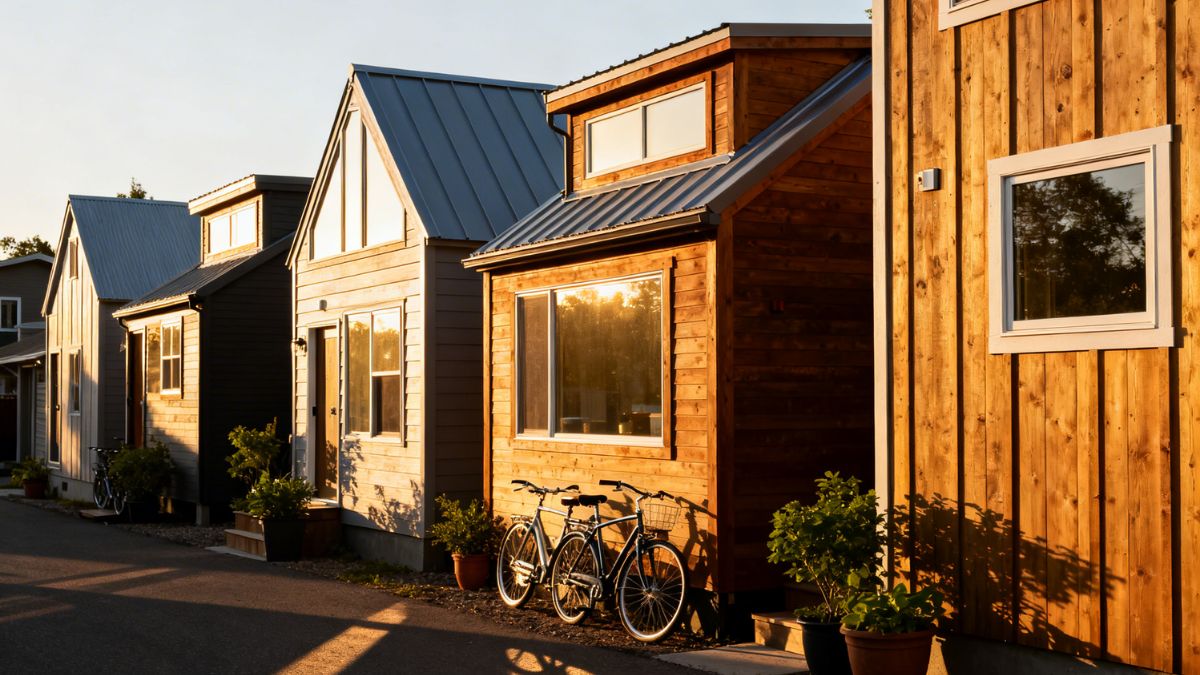
Stationary tiny homes also present flexibility as an option. The tiny home can serve as a secondary dwelling unit (SDU) in a backyard or private property or become part of a tiny home community. The various placement choices enable homebuyers to maintain control of their environment and their future direction.
Lower Environmental Impact
Sustainability is another core advantage. The construction of tiny homes requires reduced materials, and they need less power consumption and generate less environmental impact. The design of eco-friendly features such as reclaimed wood, solar panels, water catchment systems, and composting toilets exists in many modern tiny homes.
First-time buyers who care about sustainability find appeal in this option since it allows them to decrease their ecological footprint from the very start.
.jpg)
Practical Considerations Before Buying a Tiny Home
Zoning and Bylaws
Tiny home buyers need to understand all local zoning regulations as a fundamental step. Full-time residence in tiny homes remains prohibited by local authorities because they have restrictions against wheel-based tiny homes. Cities typically define tiny homes as recreational vehicles, which restricts their use as permanent residential spaces.
The Planning Act of Ontario received an amendment in 2019, which added additional residential units (ARUs) to single-family zoning areas for tiny homes. Each municipality maintains its own set of bylaws, which function independently. Potential buyers must contact their local planning department for compliance or work with a real estate agent who can verify the compliance.
Land Considerations
The ownership of land for your tiny home will be necessary, except when you place it on family property or join a community. When shopping for land, consider:
- Utilities: Does the land have access to electricity, water, and sewage?
- Accessibility: Is the property accessible year-round?
- Zoning: Is residential use permitted?
The price of land differs substantially, yet rural property owners can obtain lower prices together with adaptable zoning regulations.
Financing and Insurance
The process of securing a mortgage for a tiny home demands innovative approaches. Traditional mortgage lenders will not provide financing when the structure does not meet the requirements for a permanent dwelling. The available financial options for buyers include:
- Personal loans: Best for homes under $100,000.
- Builder financing: Some tiny home manufacturers offer payment plans.
- RV loans: For mobile tiny homes with CSA certification.
Specialized insurers pose the main difficulty in obtaining insurance coverage. The fact that tiny homes do not meet permanent structure standards requires buyers to locate specialized insurance providers. The Canadian insurance providers Aviva and Square One specialize in tiny home coverage, but homebuyers should obtain multiple insurance quotes.
Step-by-Step Guide for First-Time Buyers Entering the Tiny Home Market
1. Determine Your Budget
The initial step should be determining your budget, which includes home price and land costs as well as delivery fees and permits, and setup expenses. Your financial planning should include your desired monthly payments, together with financing details.
Use a budgeting application or create a spreadsheet to evaluate these expenses:
- Tiny home cost
- Land or lot lease
- Delivery/setup
- Utility connections
- Furnishings
- Permits and inspections
2. Research Builders and Floor Plans
Most builders who produce tiny homes enable their customers to choose from various floor plans. Potential homebuyers should research companies that demonstrate transparency in pricing and have CSA or RVIA certification for mobile homes. View model homes in person when possible or visit tiny home expos to gather ideas.
Canadian customers have identified these as their top choices in tiny home construction:
- Minimaliste (Quebec)
- TruForm Tiny (serves Canada)
- Teacup Tiny Homes (Alberta)
- VIVA Collectiv (design-focused)
3. Secure Land or a Parking Spot
Homeowners who want mobile tiny houses should consider leasing private land or using RV parks together with tiny home communities. Homeowners who want to install a stationary tiny home should purchase land or use a relative's backyard for the setup. Before making any decisions, verify that the property area complies with zoning rules and provides access to necessary utilities.
The growing acceptance of backyard suites and laneway homes in certain Ontario and British Columbia municipalities makes urban tiny home living more achievable.
4. Apply for Financing and Insurance
Non-traditional housing requires homebuyers to find lenders who understand these unique property types. Credit unions, together with alternative finance companies, demonstrate more flexibility in lending compared to major banking institutions. The application process requires you to present:
- Income verification
- Home specifications
- Land or lot documentation
- Builder invoices
After obtaining a new insurance policy, find an insurer who specializes in covering tiny homes. The insurance policy should protect your property from theft as well as fire damage and liability claims, and transit-related risks when applicable.
5. Customize and Prepare for Delivery
Your builder should assist you in completing the design choices and the establishment timeline. The transportation of tiny homes happens through flatbed trucks or by towing vehicles. The site needs preparation with a gravel pad or foundation and utility hookups, and a proper driveway access.
Following delivery you should schedule the setup work as well as inspections before moving in.
.jpg)
Challenges to Anticipate (and How to Overcome Them)
Limited Space
The confined living space of under 400 square feet requires people to learn how to adapt. The storage needs to be designed for maximum efficiency, and every item must serve multiple functions. Every square inch in your space can be optimized by installing shelving units and using bed space for storage, and implementing sleeping lofts along with foldable furniture pieces.
First, organize your space by clearing out all unwanted items before the relocation. Select only items that you regularly use. Cloud storage tools serve as a means to cut down the requirement for physical objects, including books and files.
Social Stigma and Misconceptions
People frequently see tiny houses as inferior to standard residential homes. The perception about tiny homes is quickly changing as increasing numbers of people choose sustainable intentional living.
People can develop pride and fight misconceptions by visiting model homes and joining both online and local tiny home communities, and educating their friends and family members.
Resale and Appreciation
Tiny homes do not experience the same appreciation levels as regular houses, mainly because they are mobile. The initial cost savings, combined with decreased monthly costs, make the financial investment less dangerous. The market demand for minimalist homes leads to quicker home resale than typical expectations.
To increase the resale value of your home, maintain it with perfect care while documenting all enhancements and make sure the house remains mobile or follows local construction requirements.
Conclusion
First-time homebuyers who want to own a house at affordable prices with flexibility and eco-friendly living can use tiny homes as their entry into homeownership. Tiny homes give homebuyers the ability to achieve homeownership now, since conventional down payments no longer require years of saving in an environment where housing costs rise and people choose simpler lifestyles.
Tiny homes present both financial advantages and design possibilities, and community backing, which proves they serve as actual housing alternatives. The compact size of tiny homes provides numerous advantages to first-time homebuyers as well as apartment dwellers who want to transition to independent living.


.svg)
.jpg)