
How to Choose the Right Flooring for Your Space


Flooring decisions affect how you live in your home every single day. The right floor makes your space more comfortable and easier to maintain. Bad flooring choices create headaches that cost you money and time to fix later.
Your floor needs to handle your daily routine and fit your space requirements. Tiny homes and compact spaces need extra thought about weight and durability. Material choice impacts everything from how easy installation will be to maintenance costs down the road. Engineered hardwood flooring gives you real wood beauty with better stability than solid planks.
Material Options That Work in Small Spaces
Different flooring materials offer specific benefits for compact living areas. Some handle moisture better while others cost less or install more easily. You need to match the material to what matters most in your space.
Vinyl plank flooring works great in tight spots because it's lightweight and waterproof. You can put it over most existing floors without tearing everything out first. The material bends slightly, which helps when your space shifts or settles over time.
Laminate gives you a cheaper option that looks okay and goes down fast. It can't handle water as well as other choices. You have to watch out around sinks and anywhere humidity stays high.
Engineered hardwood flooring combines real wood looks with way better stability than solid boards. The layered build fights off moisture and temperature swings more effectively. This matters a lot in small spaces where keeping temperatures steady gets tricky. You get that authentic wood appearance without dealing with warping problems.
Cork provides natural padding and stays comfortable under your feet in tight quarters. The material bounces back when you walk on it repeatedly. Some folks love how it feels, while others want more traditional wood appearance.
.jpg)
Understanding Load Capacity in Compact Builds
Weight really matters when you're dealing with limited structural support. Every material you bring in affects how much load your frame carries.
Weight Differences Between Flooring Types
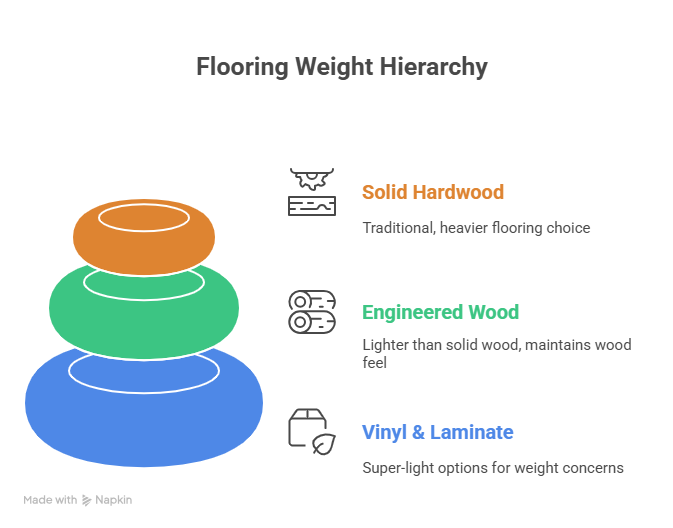
Traditional solid hardwood weighs between 2.5 to 4 pounds per square foot. That piles up quickly when you cover your whole floor area. Your beams and foundation have to support this extra weight safely.
Engineered options typically weigh 20 to 30 percent less than solid wood. Losing that weight helps you stay inside safe building limits. You still get wood floors without putting too much stress on your structure.
Vinyl and laminate products weigh even less, at around 1 to 2 pounds per square foot. These super-light options work when weight is your biggest worry. You give up some durability and future resale value compared to real wood.
Calculating Your Total Floor Load
Figure out your complete floor weight before you pick your final materials. Add in the underlayment and any leveling compound you'll need. Building codes set maximum load limits that you must follow for safety reasons. Going over these limits puts your whole structure at risk of damage or failure.
Moisture Resistance and Climate Control
Small spaces deal with tricky humidity issues that hurt certain flooring types. Air doesn't move around as much, so moisture gets trapped in problem spots.
Bathrooms and kitchens create concentrated wetness in compact floor plans. Steam and water spills have less room to dry out in tight spaces. Your flooring has to handle direct water without puffing up or bending out of shape.
Solid wood floors grow and shrink when humidity levels change through the seasons. This shifting creates gaps during dry winter months and buckling in summer dampness. The problem gets worse in small spaces where temperatures change quickly throughout the day.
Engineered products handle moisture changes better because of how they're built in layers. The inside materials resist swelling, while the top gives you real wood beauty. You skip the seasonal shifting that causes problems with traditional hardwood installations.
Vinyl holds up against direct water better than any wood product you can buy. It works perfectly in wet spots where spills happen all the time. The fake material doesn't soak up water or let mold grow underneath.
Good air flow helps any flooring material last longer in your home. Put in exhaust fans for bathrooms and run dehumidifiers when you need them. Moving air stops moisture from sitting in your floors and rotting them out.
Budget-Friendly Flooring Grades
Flooring comes in different quality levels that change both price and how it looks. Knowing these grades helps you match what you can spend to what you need.
Here's what you should know about the main flooring grades available:
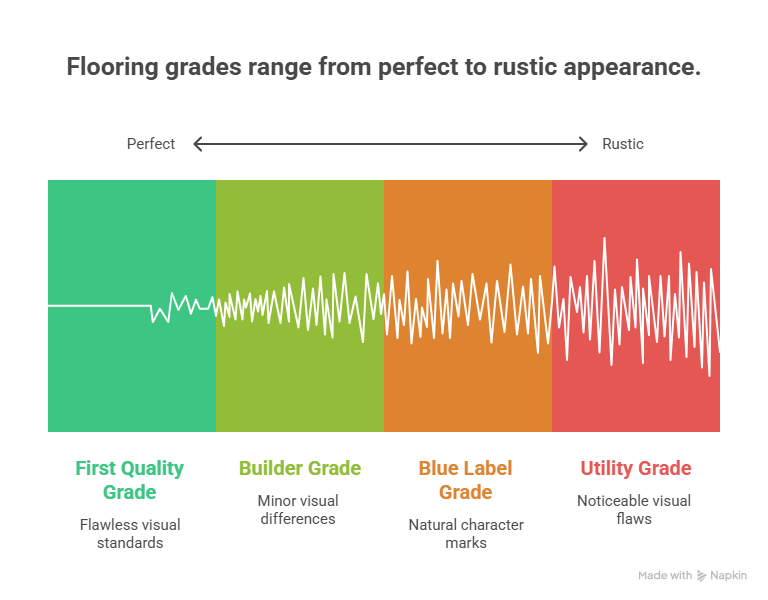
- First Quality Grade offers the best visual standards with almost no defects visible. You pay top dollar for floors that look perfect straight from the package. This grade works if appearance matters most and money isn't tight.
- Builder Grade gives you solid performance at middle prices with some small visual differences. You'll see minor knots and color changes more often than top-grade stuff. The floors still hold up great, even though they look slightly less perfect.
- Blue Label or Cabin Grade shows more natural character marks and color variation throughout. These floors cost way less while staying just as strong and durable. The rustic look actually attracts people who want authentic wood character in their home.
- Utility Grade offers the lowest prices with noticeable visual flaws all over the place. You get bigger knots, mineral streaks, and color shifts across different planks. The material still works fine structurally if you can live with the varied appearance.
Mix different grades smartly to save money without losing quality where it counts. Use better grades in your main rooms where people see your floors. Put cheaper grades in closets or back areas where looks matter less to visitors.
Making Your Final Selection
Measure your total square footage carefully to figure out how much material you need. Add 10 percent extra to cover cuts and mistakes while you're installing. Order everything from the same production batch so colors match across your whole floor.
Test sample pieces in your actual space before you buy the full amount. Flooring looks totally different under your specific lights and next to your walls. Live with samples for a few days to see how they feel and fit your style.
Think about installation based on what skills you have and what tools you own. Some products snap together super easily, while others need a professional installer. Factor installation costs into your complete budget right from the start planning stage.
Consider long-term upkeep when you're comparing different flooring options available. Some materials need refinishing every few years, while others just need regular sweeping. Pick floors that match how much time and effort you want to spend maintaining them.
Your flooring investment changes how comfortable you feel and what your space is worth. Take enough time to research different options and compare products side by side. The right choice gives you a solid foundation you'll be happy with for years.


.svg)
.jpg)
.jpg)
.jpg)