
How to Get Rid of Ticks in Your Yard


To get rid of ticks in your yard, start by trimming your grass and clearing away leaf litter, which offers perfect hiding spots. Keep bushes and shrubs well-maintained to eliminate shelter for ticks. Consider using natural repellents like essential oils or planting herbs that deter ticks. If the problem persists, look into chemical treatments designed for tick control, ensuring they're safe for pets and kids. Regularly inspect your yard and set up tick traps to monitor populations. Stay vigilant after outdoor activities to check for ticks on yourself and pets—there's much more to explore about effective strategies!
- Regularly mow your lawn and trim bushes to reduce tick habitats and prevent overgrowth.
- Create dry zones with wood chips or gravel to discourage tick migration from wooded areas.
- Use natural repellents like essential oils or plant rosemary and marigolds to deter ticks.
- Apply chemical treatments designed for tick control during dry weather, focusing on areas where ticks hide.
- Monitor your yard regularly and check pets and family for ticks after outdoor activities.
Understand Tick Habitats
To effectively tackle ticks in your yard, it's crucial to understand their habitats. Ticks thrive in moist, shaded areas, often found in tall grass, dense shrubs, and leaf litter. By knowing where they prefer to live, you can take targeted actions to reduce their presence. They're also attracted to animals, so if you have pets or wildlife frequenting your yard, consider creating barriers.
Keep the grass trimmed and remove any debris or clutter where ticks can hide. Additionally, consider using wood chips or gravel to create a dry zone around play areas. By recognizing these habitats and making strategic changes, you can greatly decrease the tick population and create a safer outdoor environment for your family.
Maintain Your Landscaping
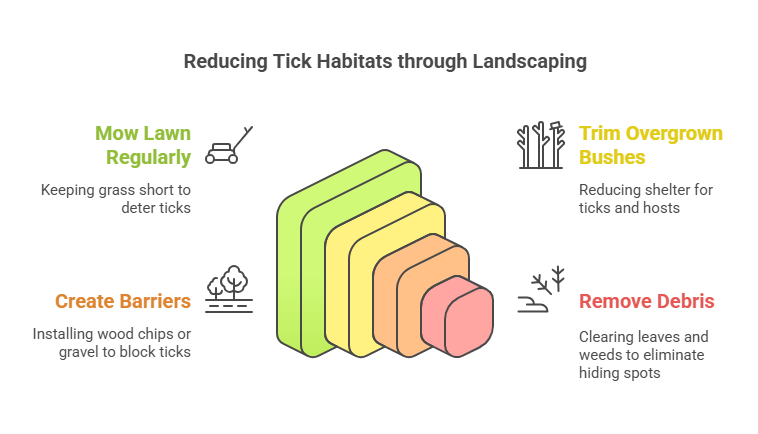
Maintaining your landscaping plays a significant role in minimizing tick habitats. Start by regularly mowing your lawn to keep grass short; ticks thrive in tall grass and dense vegetation. Trim back any overgrown bushes and shrubs, as they can provide shelter for ticks and their hosts. Create a barrier of wood chips or gravel between your yard and wooded areas to discourage tick migration. Additionally, remove any debris like leaves, brush, or tall weeds where ticks may hide.
If you have pets, keep their resting areas clean and well-maintained. By implementing these landscaping practices, you'll not only enhance your yard's appearance but also create a less inviting environment for ticks, helping to protect your family and pets from potential tick-borne diseases.
Use Natural Repellents
While chemical repellents can be effective, many people prefer using natural alternatives to keep ticks at bay. Essential oils like peppermint, eucalyptus, and lavender are great options. Mix a few drops with water in a spray bottle and apply it around your yard, particularly in areas where ticks are likely to hide. You can also plant natural repellents, such as rosemary and marigolds, to deter these pests.
Another effective method is using diatomaceous earth; sprinkle it around your yard to create a barrier that ticks can't cross. Don't forget to regularly check your pets and family for ticks after outdoor activities. By incorporating these natural repellents, you can enjoy your yard while minimizing tick risks.
.jpeg)
Employ Chemical Treatments
If you're facing a serious tick problem in your yard, employing chemical treatments can be a highly effective solution. Start by selecting a pesticide specifically designed to target ticks. Look for products containing permethrin or bifenthrin, as they're proven to be effective. Before application, read the label carefully to guarantee safe use around pets and children.
Apply the treatment during dry weather for best results, focusing on areas where ticks are likely to hide, such as tall grass, shrubs, and wooded perimeters. You might consider hiring a professional pest control service if the infestation is severe. Regularly reapply the treatment as recommended, especially after heavy rain, to maintain a tick-free environment. Your yard will thank you!
Monitor and Maintain Regularly
After addressing your tick problem with chemical treatments, keeping an eye on your yard is vital for long-term success. Regularly inspect your outdoor space for signs of ticks, especially in areas like tall grass and dense foliage. Consider setting up tick traps to monitor populations effectively. It's also essential to maintain your yard by mowing the grass regularly and clearing away leaf litter or debris where ticks can thrive.
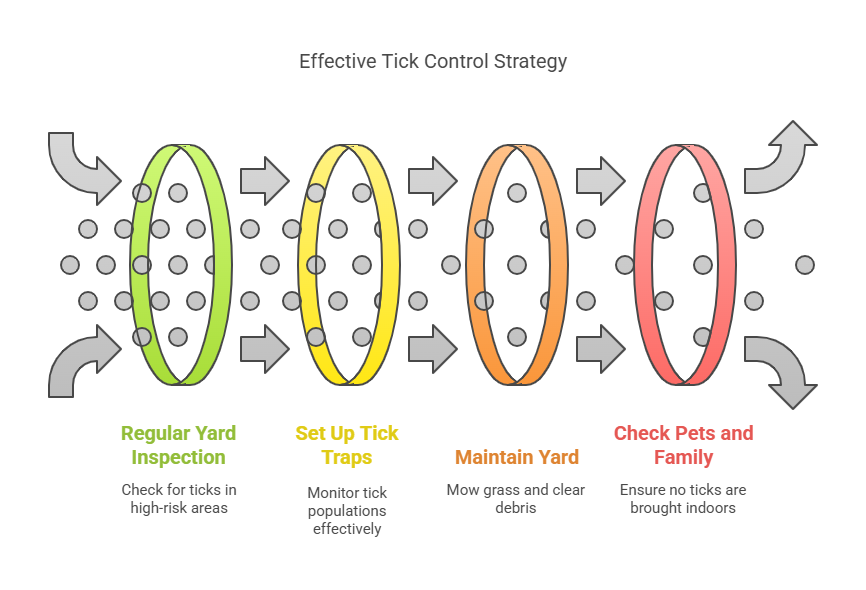
Don't forget to check your pets and family members after spending time outside. By combining vigilant monitoring with consistent yard maintenance, you'll greatly reduce the risk of a tick resurgence, making your outdoor space safer and more enjoyable for everyone. Stay proactive, and you'll keep ticks at bay!
Conclusion
By understanding tick habitats and maintaining your landscaping, you can greatly reduce the risk of ticks in your yard. Incorporating natural repellents and, if necessary, chemical treatments can provide added protection. Remember, it's essential to monitor and maintain your outdoor space regularly to stay ahead of these pests. With a little effort and consistent care, you can enjoy your yard while keeping ticks at bay. Don't let ticks ruin your outdoor fun—take action today!


.svg)

.jpg)
.jpg)
.jpg)