How to Organize Your Closet for Spring and Maximize Space

.jpg)
Are you struggling with a cluttered closet? Spring is the perfect time to regain control and maximize your space. Start by evaluating what you really wear and what can go. Organizing isn’t just about tidiness; it’s about creating a functional system that works for you. By categorizing and utilizing smart storage solutions, you can transform your closet. Let’s explore how to streamline your wardrobe efficiently and make the most of your space.
- Set aside time for a thorough decluttering session, focusing on items you haven’t worn in the past year.
- Categorize clothes into sections like tops, bottoms, and outerwear, using color coding for easy access.
- Utilize vertical space with hooks and hanging organizers to maximize storage for accessories and seasonal items.
- Regularly reassess your closet, donating items that no longer fit your style or needs to maintain organization.
- Implement a seasonal swap strategy to refresh your wardrobe and keep only the essentials visible for easy selection.
Are You Struggling With a Cluttered Closet?
Are you overwhelmed by the chaos in your closet? A cluttered closet can make it tough to find what you need, leading to frustration and wasted time.
Start by evaluating your space; identify items you use regularly versus those you rarely touch. Implementing effective organizing strategies can transform your closet into a functional area.
Use bins or baskets to categorize items, and consider vertical space for additional storage. Hang frequently worn clothes at eye level for easy access.
Don’t forget to donate or discard items that no longer serve you. By tackling your cluttered closet with these practical tips, you’ll create a more organized environment that works for you, making daily routines smoother.
How to Start Your Closet Declutter Process
Kickstart your closet declutter process by setting aside dedicated time and space.
Create a declutter checklist to streamline your efforts. Start with one section of your closet, like hanging clothes or shoes.
As you sift through items, be mindful of any emotional attachment you have; it’s easy to hold onto things for nostalgia. Ask yourself if you’ve worn it in the past year or if it truly sparks joy.
Keep your focus on functionality and space. Use boxes or bags for items you plan to donate or toss, keeping the process organized.
.jpg)
How to Decide What to Keep, Donate, or Toss?
Once you’ve sorted through your closet, it’s time to make decisions about what to keep, donate, or toss. Start by identifying your wardrobe essentials—pieces you wear frequently and that fit well.
If an item hasn’t been worn in the past year, consider donating it. Next, evaluate any sentimental items. While they hold memories, ask yourself if they still serve a purpose in your life. If they do, keep them; if not, let them go.
Be honest about items that no longer fit your style or needs. Finally, remember that a clutter-free closet enhances your daily routine, so focus on keeping only what you truly love and use. This will maximize your space and simplify your wardrobe.
How to Categorize Your Clothes for Easy Access
To easily access your clothes, start by categorizing them into clear sections. Divide your wardrobe into categories like tops, bottoms, dresses, and outerwear.
Within each category, implement color coding to streamline your choices. For example, arrange shirts from light to dark shades, making it easier to spot what you need.
Don't forget about seasonal rotation. Keep current season items front and center, while storing off-season clothes in the back or in bins. This approach not only declutters but also helps you quickly find what you're looking for.
Regularly reassess and adjust your categories as needed. With a little organization, you'll enjoy a more efficient and accessible closet all spring long.
Space-Saving Tips for Small Closets
While small closets can feel limiting, there are plenty of strategies to maximize your space effectively.
Start by using shelf dividers to keep stacks of clothes neat and prevent them from toppling over. This helps you see everything at a glance and makes it easier to grab what you need.
Next, consider installing hanging organizers on the back of your closet door. These are perfect for shoes, accessories, or even small bags, keeping them off the floor and within easy reach.
Utilize vertical space by adding hooks for belts or scarves.
Finally, regularly declutter and donate items you no longer wear, ensuring your closet remains functional and organized.
With these tips, you’ll turn your small closet into a more efficient storage space.
Maximize Your Walk-In Closet Storage
If you've successfully maximized your small closet space, it’s time to elevate your organization game in a walk-in closet. Start by implementing effective shelf organization. Use adjustable shelves to customize heights for different items, ensuring everything’s easily accessible.
Invest in stackable bins for shoes and accessories; this keeps things tidy and visible.
Next, focus on vertical storage. Install hooks or racks on the back of the door for bags and hats, utilizing every inch.
Consider tall dressers or shelving units to draw the eye upward, creating an illusion of more space.
Finally, label bins and shelves to maintain order. By strategically organizing, you’ll transform your walk-in closet into a functional and stylish storage haven.
Storing Off-Season Clothes: A Simple Guide
Storing off-season clothes can free up valuable space in your closet and keep your wardrobe organized. Start by sorting your clothes into seasonal categories.
Choose sturdy, breathable bins for seasonal storage, labeling each one clearly. Fold items neatly to maximize space and prevent wrinkles. Before you pack, make sure everything is clean and dry; this helps avoid musty smells and damage.
Next, implement a clothing rotation system. As you shift between seasons, swap your current wardrobe with off-season items. This not only keeps your closet tidy but also makes it easier to find what you need.
Regularly reassess your stored clothes to make certain you’re only keeping what you love and wear. With these steps, you’ll maintain an efficient and organized closet year-round.
Best Organizational Tools for Your Closet
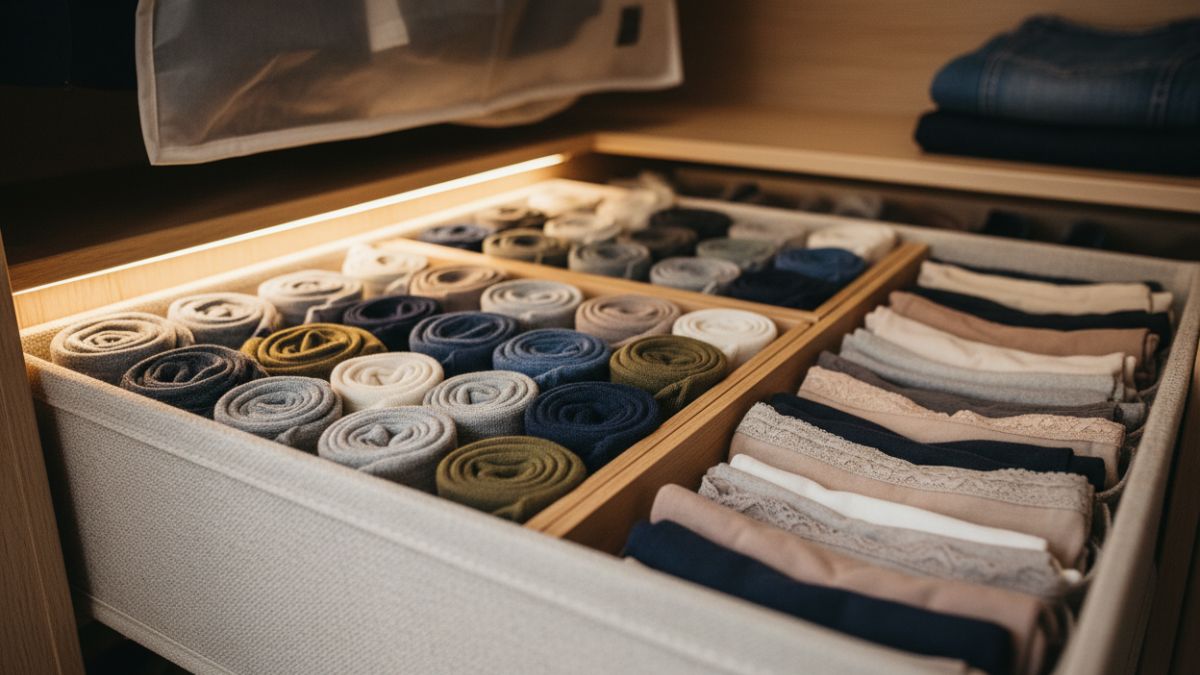
Transforming your closet starts with the right organizational tools. Use shelf dividers to create neat sections for folded clothes.
Hanging organizers can maximize vertical space, holding shoes or accessories within reach. Drawer inserts keep small items in order, preventing clutter. Storage bins are perfect for seasonal items, while closet rods can be adjusted for ideal hanging space.
Shoe racks help display your footwear collection, making selection easier. Garment bags protect delicate clothing, ensuring they stay in pristine condition.
Accessory trays keep jewelry and small items organized, while space cubes can store bulkier items neatly. Finally, closet baskets offer a stylish way to hold miscellaneous items, providing easy access and maintaining a tidy look.
Maintaining Your Organized Closet: Best Practices
Once you've set up your closet with the right organizational tools, maintaining that order is key to long-term success.
Start by implementing a regular wardrobe rotation; every season, swap out clothes that no longer fit or that you haven’t worn recently. This keeps your closet fresh and functional.
Schedule seasonal swaps to shift your wardrobe effectively—store winter items in bins and bring out spring favorites.
As you add new items, consider removing an equal number to prevent clutter.
Take a few minutes each week to tidy up, ensuring everything goes back in its designated spot.
Finally, make it a habit to evaluate your closet periodically, adjusting your organization methods as your style and needs evolve.
Personalize Your Closet for Style and Function
To make your closet both stylish and functional, start by evaluating your personal style and daily needs. Think about the clothes you wear most often and organize them for easy access.
Use custom storage solutions like shelves, bins, or hanging organizers to maximize space. Labeling these containers helps maintain order.
Incorporate decorative accents, such as stylish hangers or a chic shoe rack, to add personality. Choose colors and designs that reflect your taste, making your closet a space you enjoy opening.
Consider using a full-length mirror or artwork to enhance the ambiance.
Finally, regularly reassess your closet to verify it continues to meet your style and storage needs, keeping it both practical and visually appealing.
Conclusion
By following these steps, you can transform your cluttered closet into a well-organized space that maximizes functionality. Regularly declutter, categorize, and utilize space-saving tools to keep everything in order. Remember to maintain your closet with seasonal swaps and routine tidying. Personalizing your space not only enhances its style but also makes it more enjoyable to use. Start today, and enjoy the rejuvenating feeling of a tidy, organized closet all spring long!


.svg)
.jpg)