Legal Tips To Buy A Tiny House In North America

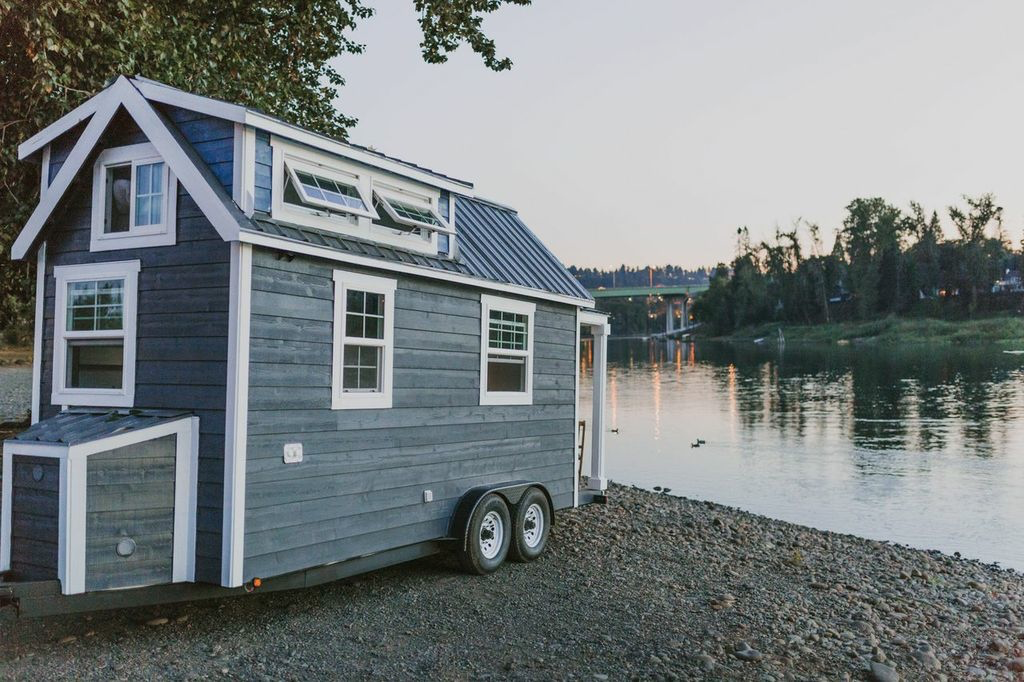
The modern real estate market allows individuals to buy affordable tiny homes, which offer liberation to their owners. People interested in smaller living arrangements or traveling while pursuing sustainable choices find many advantages in tiny homes. The affordable price tag does not simplify the legal complexities associated with tiny homes. This guide presents vital legal information about buying tiny houses in North America while providing clear and confident steps for your purchase.
1. Legal Recognition of Tiny Houses Depends on How You Define Them
The classification of a tiny home needs to be understood by buyers before making their purchase. Tiny houses in North America belong to various legal categories because of their construction methods and placement locations:
- Tiny House on Wheels (THOW) exists under recreational vehicle (RV) or mobile home definitions. These units follow RVIA building standards, but some jurisdictions do not allow them to serve as permanent homes.
- Tiny House on Foundation exists as either an accessory dwelling unit or a guesthouse or a complete residential structure when it follows building codes.
The various legal consequences differ between these classifications. The legal use of THOWs extends to temporary stays or designated campsites, but tiny houses built on foundations can qualify as permanent residences if local authorities permit them. Your legal status to occupy the property depends on classification because it determines your placement choices and taxation requirements, and year-round living permissions.
Getting professional legal advice from a real estate lawyer during the initial stages will help you determine your tiny house classification. Your jurisdiction's position on tiny homes will become clear with their assistance while they validate your purchasing decision for compliance.
2. Understand Zoning and Building Codes
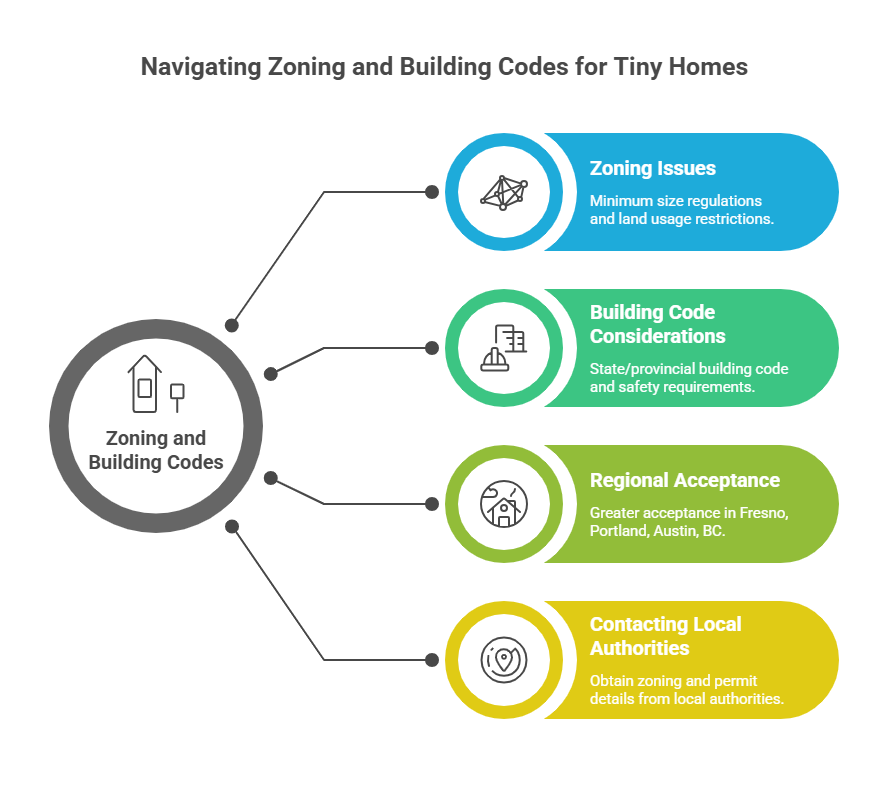
Zoning regulations serve as major legal challenges for anyone who wants to acquire a tiny home. The laws determine which types of buildings can exist in particular areas, together with their authorized uses.
Zoning Issues to Consider:
- Many municipalities have minimum dwelling size regulations that could prevent numerous tiny homes from being constructed.
- Your property exists under zoning laws that designate it for single-family residences or agricultural usage, or commercial development. Each comes with its own set of rules.
- When you place a tiny home adjacent to an existing house, you must fulfill all requirements of accessory dwelling unit (ADU) regulations.
Building Code Considerations:
- The tiny house needs to fulfill state/provincial building code requirements.
- The plumbing, together with electrical and insulation systems, must fulfill all code requirements.
- Will it pass health and safety inspections?
Certain locations throughout the country show greater acceptance of tiny homes compared to others. The U.S. cities Fresno (California), Portland (Oregon) , and Austin (Texas) have established legal frameworks for tiny home living. The Canadian provinces of British Columbia and other areas, including Nelson and Vancouver, are now adapting to this trend.
Contact your local planning or building department to obtain specific zoning and permit details before proceeding. The precise requirements for building codes can be found through a visit to city hall or by accessing information on your municipality's website.
3. Verify Land Ownership and Placement Options
After buying a tiny home, you must secure a legitimate site for its placement. Your land ownership options include purchasing real estate or obtaining lease rights or joining a tiny house community. Different legal problems exist when choosing between land purchase or lease agreements, or community placement.
Buying Land:
- The land must have a residential or mixed-use zoning designation.
- Check if the land has accessible or installable utilities, including water supply, sewage system, electricity, and internet access.
- Verify that the property is subject to any Homeowners’ Association rules and regulations.
- The title and deed review should show that ownership is clear, along with no active restrictions on the property.
Leasing Land or Backyard Placement:
- You must establish a written agreement that specifies your legal rights, together with lease duration and rent payment terms, and removal conditions.
- Verify the lease agreement meets provincial/state tenancy laws and has proper legal standing.
- Several cities enable backyard tiny homes under ADU regulations through the use of approved permits.
Tiny Home Communities:
The number of these establishments is increasing as they offer plug-and-play solutions for THOWs. Review the community rules as well as fees and determine your responsibilities for shared utilities. The process of finding an appropriate location stands as the biggest challenge for tiny home ownership and generates most legal disputes. A properly built tiny home will remain illegal for habitation when it is incorrectly situated in any location.
4. The correct approach to handle financing and insurance procedures.
The emerging nature of tiny homes as a housing category has created restrictive financing choices that follow different regulations than the traditional real estate market.
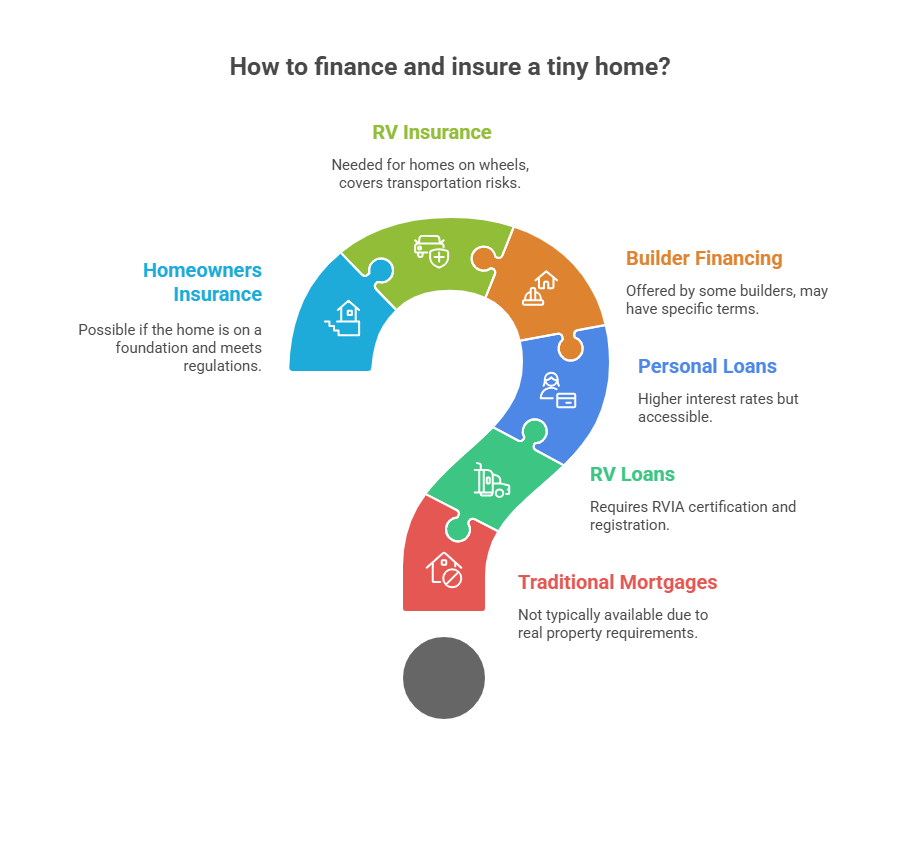
Traditional Mortgages: Most lenders will not provide mortgages for tiny homes or THOWs because these units do not meet real property requirements.
- RV Loans: The RVIA certification, along with recreational vehicle registration, will help you obtain an RV loan for your tiny home.
- Personal Loans or Lines of Credit: The purchase of tiny homes usually requires these financial instruments, although they come with elevated interest rates.
- Builder Financing: Some tiny home builders offer in-house financing.
Insurance Concerns:
The insurance requirements for homes on wheels usually demand RV or mobile home insurance coverage. Homeowners’ insurance coverage becomes possible for your home when it sits on a foundation, but only when it meets all local building regulations. The insurance policy must protect against liability claims as well as theft losses and weather damage, and mobile transportation risks.
You should evaluate multiple insurance policies after verifying that your insurer understands your home's specific classification. A suitable policy must safeguard your investment while fulfilling all legal requirements that apply to your location.
5. Legal Checklist Before Purchase
A practical legal checklist exists to help tiny home buyers navigate their purchase process:
- Consult a professional: Early discussion with certified builders, along with architects and legal experts, is essential.
- Choose the right classification: Decide whether your home will be stationary or mobile.
- Verify zoning laws: Check local regulations before acquiring land or siting your home.
- Inspect the land: Conduct a title search and environmental assessment.
- Secure permits: This includes building permits, occupancy certificates, and RV registration (if needed).
Check the builder's qualifications before purchasing a pre-built home to ensure they meet safety standards while providing warranty coverage.
- Get everything in writing: From purchase agreements to land leases, documentation is your best protection.
- Plan utilities and access: Don't forget water, power, waste management, and road access.
Determine your tax responsibilities because property taxes depend on how your home is classified.
- Have legal support available: Keep a legal advisor or planning consultant on call in case issues arise.


.svg)
.png)
.jpg)