Off Grid Plumbing 101: How to Set Up Water Systems Without Utilities


To set up an off-grid water system, start by scouting your land for natural sources like streams, ponds, or rain, or consider drilling a well. Install gutters to collect rainwater and channel it into food-grade storage tanks, making sure everything’s filtered and covered. Use sturdy pipes, insulate exposed runs, and check for leaks, especially before winter. Purify your water with filters or UV if needed. If you want to make your setup even more robust, there’s plenty more you can do.
- Identify reliable water sources such as wells, rainwater collection, or nearby streams, and ensure legal compliance and water safety.
- Install a gravity-fed or solar-powered water delivery system with food-grade piping to supply water throughout your off-grid property.
- Use multi-stage filtration and purification methods, including debris filters, ceramic/carbon filters, and UV or chemical treatments, for safe drinking water.
- Insulate and protect all pipes, especially exposed or unheated sections, to prevent freezing and maintain year-round water flow.
- Establish routine maintenance for plumbing, including leak checks, filter replacements, and winterizing procedures, to ensure long-term system reliability.
Understanding Off Grid Water Sources
Before you can set up any off grid plumbing, you’ll need a reliable water source. Start by surveying your land for nearby streams, rivers, lakes, or springs. If you find a year-round waterway, check local regulations and test the quality for contaminants.
For groundwater, consider drilling a well. Contact a professional to determine the depth, estimate drilling costs, and check for permits. Don’t overlook hauling water as a temporary solution; you can transport water from municipal sources and store it in large tanks. Always plan for backup sources, especially during droughts or seasonal changes.
The suppliers from https://www.polymaster.com.au/ suggest factoring in appropriate water storage capacity early in the planning stage, as durable tanks sized to match seasonal availability can help stabilize supply when natural sources fluctuate.
Evaluate each option’s reliability, water quality, and maintenance requirements. Once you’ve chosen your primary source, you’re ready to design your off grid plumbing system around it.
Collecting and Storing Rainwater
Although setting up a rainwater collection system might seem complex, you can break it down into manageable steps. First, position gutters along your roof to channel rainwater efficiently. Install downspouts that lead to a debris filter or first-flush diverter, keeping leaves and contaminants out. Next, route the clean water into a food-grade storage tank or barrel, placed on a stable, elevated surface for easy gravity-fed use. Secure a fine mesh screen over the tank’s opening to block insects and debris.
Regularly inspect and clean your gutters and filters to maintain water quality. Make sure the tank is shaded to reduce algae growth. Add an overflow outlet to direct excess water safely away from your foundation. With these steps, you’ll reliably collect and store rainwater for off-grid needs.
Drilling and Maintaining a Well
One reliable way to secure a steady water supply off-grid is by drilling a well on your property. First, research your local geology to determine the best drilling location—consult maps or hire a professional for an assessment. Next, obtain any required permits before hiring a well-drilling contractor, as specialized equipment is needed for most sites. Once drilled, install a well casing and cap to prevent contamination. Fit the well with a sanitary seal and submersible pump to deliver water to your storage tanks.
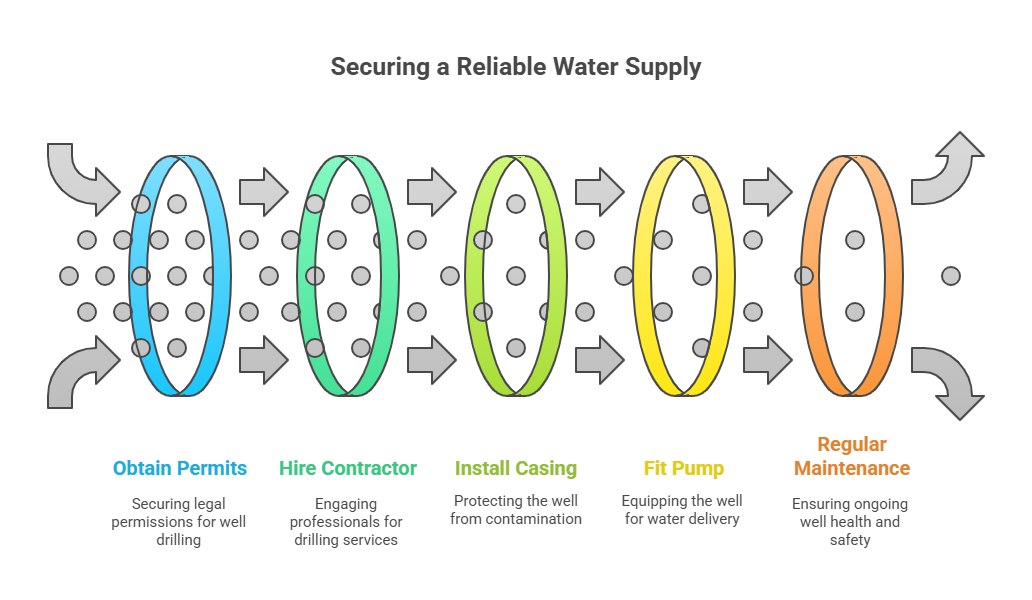
Regularly maintain your well by inspecting the cap, checking for leaks, and testing water quality annually for bacteria and chemicals. If you notice reduced flow or odd tastes, service the pump or consult a well specialist to keep your system safe and reliable.
Harnessing Surface Water: Streams and Ponds
When you’re living off-grid, tapping into a nearby stream or pond can supplement your water needs if you follow a careful process. First, locate a consistent, accessible water source on your land. Choose a spot upstream from livestock, septic, or agricultural runoff to minimize contamination risk. Next, install an intake system—use a sturdy intake screen or mesh to keep out debris and aquatic life. Secure the intake below the water’s surface but above the bottom to avoid sediment. Run food-grade piping from the intake to your storage tank, using gravity feed if elevation allows, or a solar-powered pump if needed. Regularly inspect and maintain your intake and piping for blockages, leaks, or algae buildup to guarantee a steady, reliable supply.
Water Filtration and Purification Methods
Once you’ve set up your water intake from a stream or pond, your next step is making sure the water’s safe to drink. First, filter out debris and sediment. Use a pre-filter like a fine mesh screen or clean cloth at your intake. Next, run the water through a proper filter—ceramic or carbon filters remove most bacteria and protozoa. For viruses, follow up with purification. Boil the water for at least one minute, or use chemical treatments like chlorine dioxide tablets, following package instructions. UV purifiers work well if you have solar or battery power. Always maintain your filters by cleaning or replacing as recommended. Never skip filtration and purification—natural water often contains invisible contaminants that can cause illness, even if it looks clean.
Gravity-Fed Water Systems Explained
If you want a simple, reliable way to move water without pumps or electricity, set up a gravity-fed water system. Start by placing your water source—like a storage tank or cistern—at a higher elevation than where you need the water. The greater the height difference, the more pressure you’ll get. Use sturdy piping (like PVC or PEX) to connect the tank to your taps or fixtures. Install shutoff valves for easy maintenance. Include a sediment filter at the tank’s outlet to keep debris from clogging pipes. Plan your pipe runs as straight and downhill as possible to maintain steady flow. Regularly inspect for leaks or blockages. With proper setup, gravity will deliver water efficiently to your off-grid home or garden.
Off Grid Water Pump Options
Gravity-fed systems work well with enough elevation, but many off-grid properties don't always offer ideal terrain or constant water pressure. That’s where water pumps come in. Start by deciding how you’ll power your pump—solar, wind, manual, or fuel-powered options exist. Solar pumps are efficient and reliable if you get enough sunlight; just size the panels and batteries to match your needs. Manual hand pumps require effort but work anywhere, while wind or fuel-driven pumps suit larger water demands or less sunny locations.
Next, select the type: submersible pumps sit inside your well or cistern, pushing water up, while surface pumps pull water from shallow sources. Match pump flow rate and lift capacity to your daily use and source depth. Always install filtration before the pump to protect it.
Plumbing Materials and Pipe Selection
Although it might seem straightforward, choosing the right plumbing materials is crucial for a reliable off-grid water system. Start by evaluating your water source—well, rainwater, or stream—since water quality affects pipe selection. For most off-grid setups, use PEX or HDPE piping; both resist freezing, are flexible, and easy to install with minimal tools. Avoid PVC for drinking water, as it can leach chemicals over time. For fittings, opt for brass or polypropylene, which handle pressure and temperature changes well.
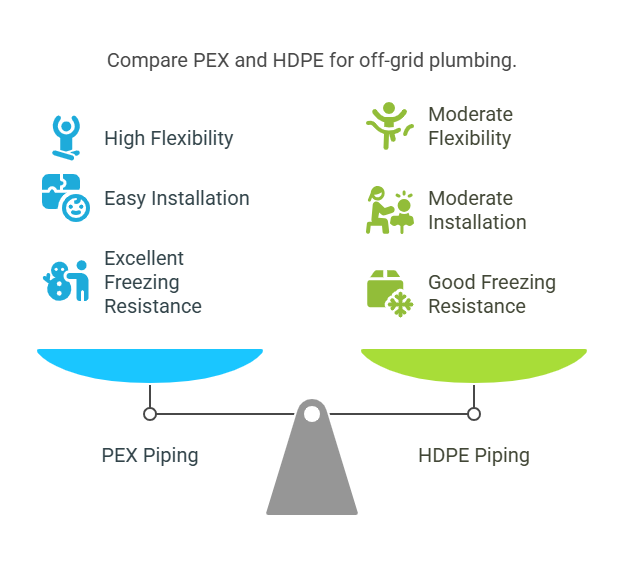
Measure runs carefully and plan for slight expansion due to temperature swings. Buy extra connectors and elbows to navigate corners or obstacles. Use pipe insulation if your system’s exposed to cold. Always double-check for compatibility between pipes and fittings to prevent leaks and guarantee long-lasting performance.
Managing Greywater and Blackwater Safely
Because handling wastewater is just as important as supplying fresh water, you’ll need to separate greywater (from sinks, showers, and laundry) from blackwater (from toilets). Start by running dedicated drain lines: one system for greywater, another for blackwater. For greywater, install filters to catch debris, then direct it to a mulch basin or subsurface irrigation system—never let it pool on the ground. Always avoid using harsh chemicals so your greywater stays safe for reuse. For blackwater, use a sealed composting or septic system. Make sure your system’s vented and watertight, with regular maintenance checks. Keep all pipes sloped to prevent backups. Don’t cross-connect the two systems. By planning carefully and following these steps, you’ll protect your health and the environment.
Winterizing Your Off Grid Plumbing System
When temperatures drop below freezing, you'll need to protect your off grid plumbing from damage by winterizing it properly. Start by shutting off your water supply and draining all pipes, faucets, and holding tanks. Open every valve and tap to let trapped water escape. Use an air compressor, if available, to blow out lingering water in the lines. Next, pour non-toxic RV antifreeze into all drain traps, toilets, and tanks to prevent ice blockages. Insulate exposed pipes with foam sleeves or heat tape—pay special attention to areas above ground or in unheated spaces. Check all seals and joints for leaks, repairing as needed. Finally, monitor weather forecasts and repeat steps if a thaw is followed by another freeze. This routine prevents costly freeze damage.
Conclusion
Now that you know the basics, setting up your off grid plumbing system is completely doable. Start by choosing your water source, then move step-by-step: collect, filter, pump, and store your water safely. Use the right pipes and manage waste responsibly. Don’t forget to winterize everything to prevent damage. With careful planning and regular maintenance, you’ll guarantee reliable water year-round without relying on public utilities. Take it one step at a time, and you’ll succeed.


.svg)
.png)
.jpg)