
The Space You Didn’t Know You Needed: Rethinking Storage in a Tiny Home

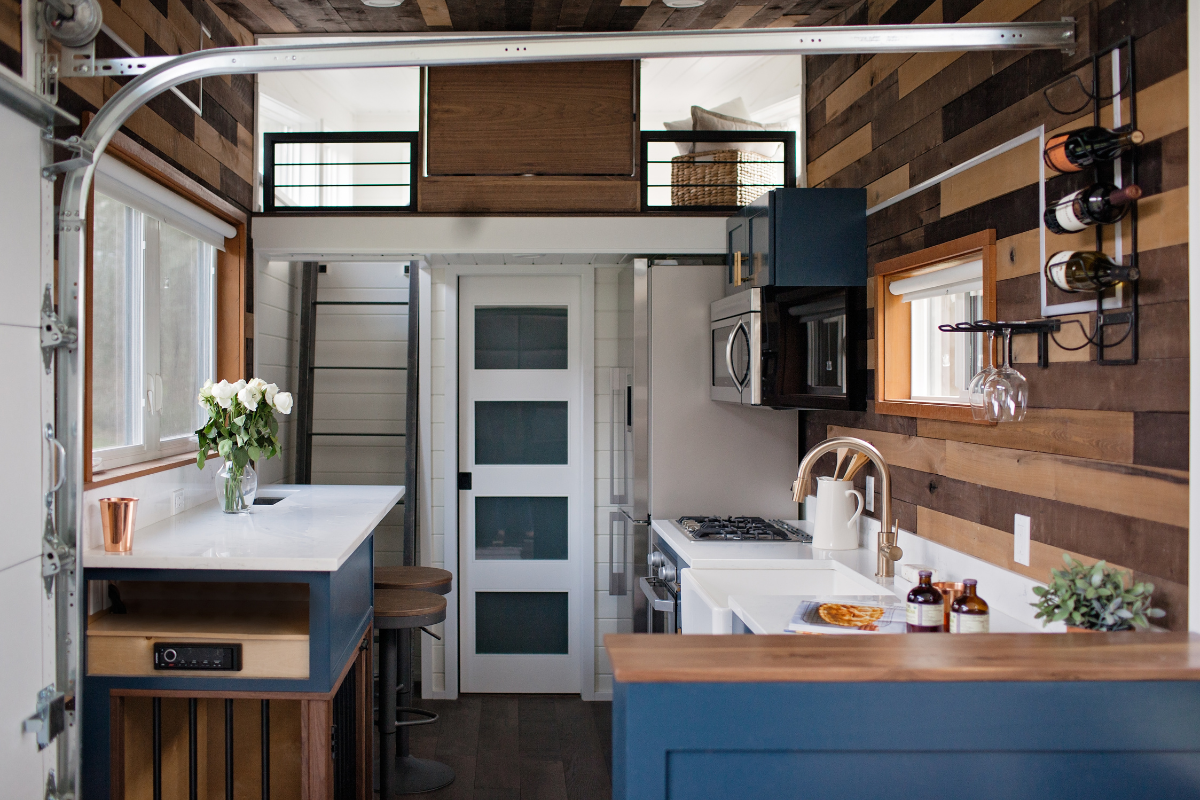
Living small brings clarity. You learn what matters, what fits, and what deserves a place in your home. Yet even the most intentional setup eventually encounters the same challenge: some things simply don’t belong in a 200-square-foot living space. Tools, gear, and seasonal supplies pile up until many tiny house owners find themselves out of room for the essentials that support their lifestyle.
What’s often missing is a quiet but crucial element: functional, external storage that preserves your footprint and your way of living. It rarely gets much attention, but the right solution can mean the difference between constantly managing clutter and actually enjoying the space you’ve created.
Why Storage Matters in Tiny House Living
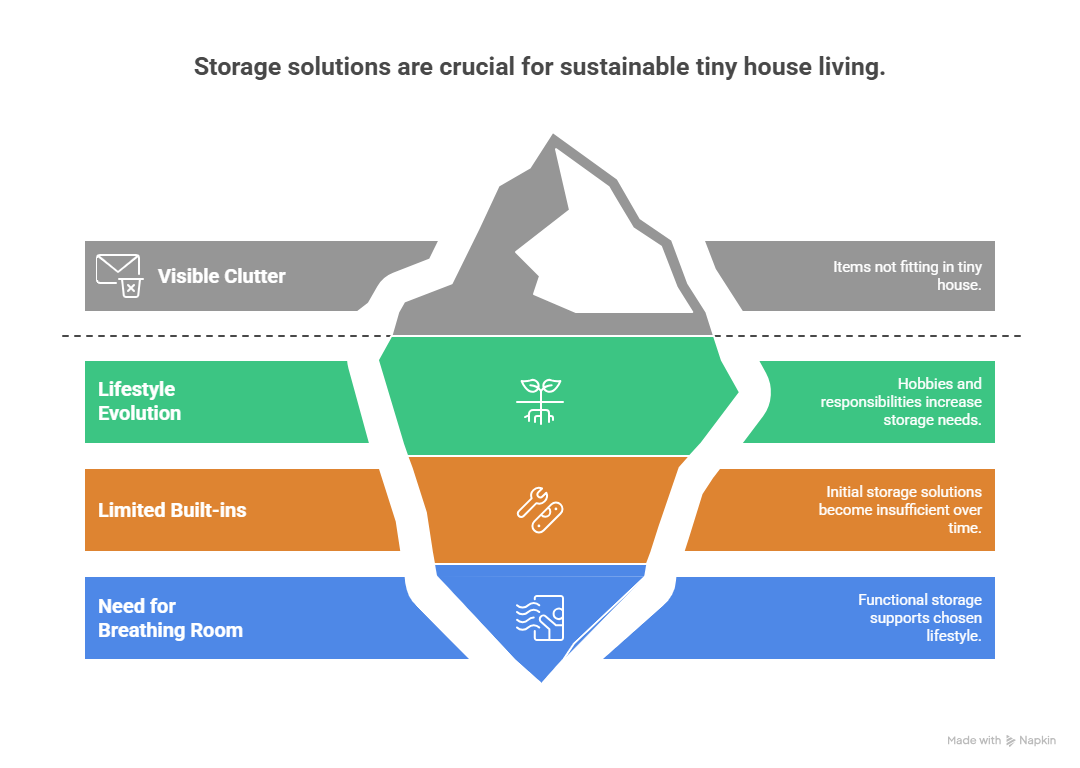
Tiny living works best when every item earns its place. But even the most curated lifestyle has outliers—things you need, just not every day. Gardening tools, off-season clothes, power tools, climbing gear, and emergency supplies. They’re not clutter, but they don’t belong under the bed or stuffed behind the composting toilet.
Some folks rely on clever built-ins or multipurpose furniture, which works for a while. But as time goes on, life grows around the house. Hobbies evolve, responsibilities shift, and storage gets tighter. Suddenly, you're rotating boxes in and out of your loft or wedging gear into corners you swore you'd keep clear.
Having a clean, functional space to store essentials you don’t use daily is less about excess and more about breathing room. It’s a way to support the lifestyle you’ve chosen, not compromise it.
What Are Portable Self-Storage Buildings?
Portable self-storage buildings are standalone, movable structures designed to store equipment, tools, or supplies in a secure, weather-resistant space. Unlike traditional sheds, they’re built with durability and mobility in mind, often using steel frames and high-gauge panels that withstand all seasons.
Think of them as the outbuildings that keep your tiny home functional. They don’t require permanent foundations, which makes them a smart option for anyone living off-grid, leasing land, or maintaining a flexible layout. And because they’re fully enclosed and lockable, they offer peace of mind you won’t get from open-air storage or repurposed plastic bins.
They come in a range of sizes and can be outfitted for specific uses—from a minimalist gear locker to a fully wired workshop or utility room. For tiny house dwellers, the appeal is straightforward: they manage the overflow without disrupting the flow of everyday life.
Benefits of Portable Self-Storage Buildings for Tiny Homes
For tiny homeowners, space is more than a design constraint. It is a daily calculation. That is what makes portable self-storage buildings such a practical and underutilized solution. They offer a secure, dedicated area to store what does not belong inside, without clashing with the minimalist ethos that makes tiny living so appealing.
Durability is a major draw. These buildings are typically constructed from heavy-duty steel and designed to withstand the elements year-round. Rain, wind, and snow are no problem. They are built for real conditions, not showroom floors. For off-grid setups, they provide a secure location to store backup power systems, tools, or emergency supplies, keeping them protected and readily accessible.
Flexibility is another advantage. Because these structures are portable, they work well for people who lease land or move with the seasons. If you need to shift your layout or relocate entirely, the building goes with you. No digging or dismantling is required. Just hitch it up and move.
Unlike standard sheds or flimsy plastic bins, these are designed to withstand the test of time. They are more than a place to hide extra belongings. They are a long-term extension of your living space, able to grow and change in tandem with your needs.
Creative Use Ideas for Tiny Homeowners
Portable storage doesn’t have to mean a plain steel box behind your house. For tiny home dwellers, these structures can take on a range of roles—each one tailored to your lifestyle.
- Tool and Equipment Storage
Whether you're running a small garden, building furniture, or maintaining solar equipment, having a clean and dry place to store your tools makes a noticeable difference. It keeps sharp edges out of reach, rust at bay, and your interior space clutter-free.
- Outdoor Adventure Gear Locker
Skis, bikes, kayaks, climbing ropes—gear like this doesn’t exactly fold into a closet. A portable unit can serve as a dedicated space for storing outdoor equipment so it’s ready when you are. With enough room to hang, mount, or stack gear properly, it also extends the life of your equipment. For many mobile and off-grid homeowners, tiny house storage ideas for outdoor gear have become essential to making small spaces work year-round.
- Workshop or Hobby Room
Don’t want sawdust in your sleeping loft? Set up a workspace outside the house. With insulation and basic electrical hookups, many of these buildings can double as compact studios or workshops—perfect for woodworking, crafting, or even 3D printing.
- Utility Storage
Composting toilets, backup generators, rainwater tanks—off-grid life comes with serious equipment. A dedicated outbuilding makes it easier to access, maintain, and keep these systems running without giving up valuable interior real estate.
When the structure fits your lifestyle, it stops being just storage. It becomes part of how you live.
What to Look for in a Portable Storage Building
Not all storage buildings are created equal—especially when you’re working with a limited footprint or living off-grid. Choosing the right structure means balancing durability, size, mobility, and usability.
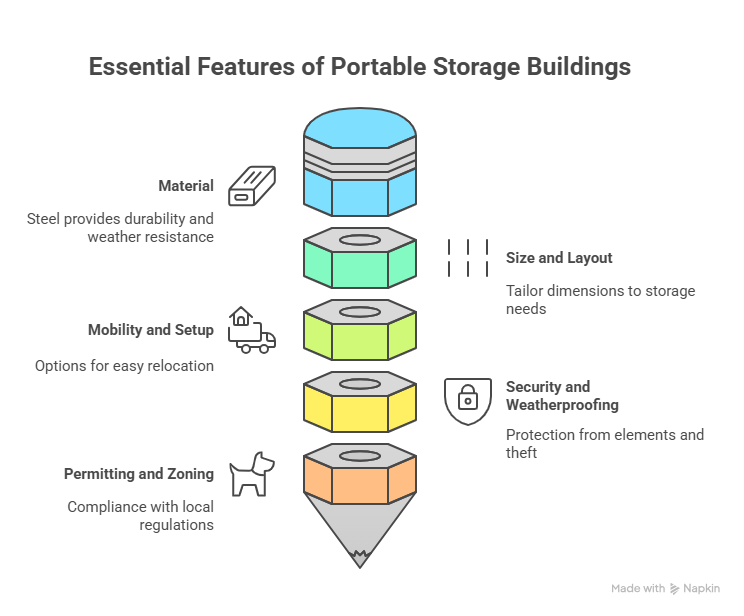
- Material Matters
Steel is the go-to for long-term durability. It handles weather extremes better than wood or plastic and won’t warp, rot, or crack over time. If your storage unit will be exposed to snow loads or strong winds, steel-framed construction is a worthwhile investment.
- Size and Layout
Think beyond just square footage. What are you actually storing? Bikes need vertical clearance. Tools need wall space for hooks or shelving. Choose dimensions that fit your gear, not just your lot.
- Mobility and Setup
One of the biggest advantages of portable buildings is flexibility. Look for models that can be moved without disassembly, especially if you're on leased land or plan to relocate. Skid-mounted or trailer-mounted options can be especially convenient.
- Security and Weatherproofing
A solid lock and sealed seams matter more than you might think. You want peace of mind that your belongings are safe from both break-ins and the elements. Bonus points if the unit has built-in ventilation to manage condensation.
- Permitting and Zoning
Check local guidelines before placing any outbuilding, even a portable one. Some areas have height or square footage limits or require setbacks from property lines. Portable status can simplify the process, but it's still advisable to confirm before delivery.
A good portable storage building should feel like an asset, not a workaround. The right one adds real functionality without getting in the way of your daily life.
Storage Isn’t a Luxury — It’s Smart Tiny Living
Tiny house living invites a different way of thinking—intentional, efficient, rooted in what matters most. But intention doesn't mean going without. It means building systems that support your lifestyle, rather than constantly working around its limits.
Portable storage buildings support that mindset. They give you space to breathe, store, create, and adapt—without crowding your home or stretching your square footage. Whether you need a place to stash winter gear or a quiet corner to tinker and build, having functional space outside the home is part of making small-space living sustainable.
Some storage needs are best met with built-in shelving, multifunctional furniture, or vertical wall systems. Others call for a dedicated structure just a few steps from your front door. Knowing how and when to combine both approaches is key—and it’s something smart storage planning for tiny homes can help you refine.


.svg)
.jpg)
.jpg)
.jpg)