The Rising Appeal of Tiny Living

.jpg)
In a world where square footage has long stood as a symbol of success, a subtle yet powerful shift is underway. Increasingly, homeowners who once relished sprawling layouts grand foyers, expansive yards, and multi-car garages are swapping out their spacious homes for compact, efficient living spaces. It’s a trend that’s gaining momentum, driven not just by practical necessity but by a deeper reevaluation of what “home” really means.
Freedom Over Footprint
At the heart of this shift is a growing desire for freedom freedom from high maintenance, from excessive utility bills, and from the emotional weight of clutter. Taller ceilings and polished marble floors are beautiful, but they require more cleaning, more heating, more care. Tiny living, by contrast, invites a leaner, more intentional lifestyle. Every square inch has a purpose, every item on the shelf earns its place.
The appeal isn’t limited to cost-cutting, though that’s certainly a factor. Many downsizers speak of feeling liberated by the simplicity of their environments. Without the “stuff” that accumulates over decades, there’s room both physically and mentally for what really matters: experiences, hobbies, relationships.
Environmental Mindfulness
Another driving force is the ever-growing awareness of environmental impact. Living in a tiny home usually means drastically less energy consumption. Heating or cooling a small space takes far less power. Some owners take this even further, incorporating solar panels, composting toilets, and rainwater capture systems to minimize their footprint. The shift isn’t just about simplifying; it’s about stewardship choosing a lifestyle that aligns with a global responsibility.
Higher-income homeowners those most likely to be sitting on large assets are uniquely positioned to lead this charge. They have the resources to invest in high-quality, sustainable tiny homes and the professional flexibility (such as remote work) that makes downsizing plausible. They are choosing alternative value systems: of sustainability over status, of minimalism over accumulation.
.png)
A Market Ripe for Reinvention
This migration from large to tiny homes is triggering ripples through the real estate market. Sellers with large properties may find themselves in a different position than before. Instead of upgrading, they’re downsizing, often releasing high-end homes onto markets where demand may be shifting. These listings are no longer just about square footage and manicured lawns; they’re entering a new economy where efficiency, location, and flexibility may hold equal sway.
Mid-size and luxury home markets are being forced to evolve. Real estate agents, once chasing the next quarter-acre sale, are adapting. They’re learning to market efficiency, community, and lifestyle as much as architectural prestige. And as buyers observe the growing movement toward compact living, developers are responding offering multi-unit tiny-home communities, shared gardens, and co-working spaces, bridging private living with communal resources.
Community and Connection in Small Spaces
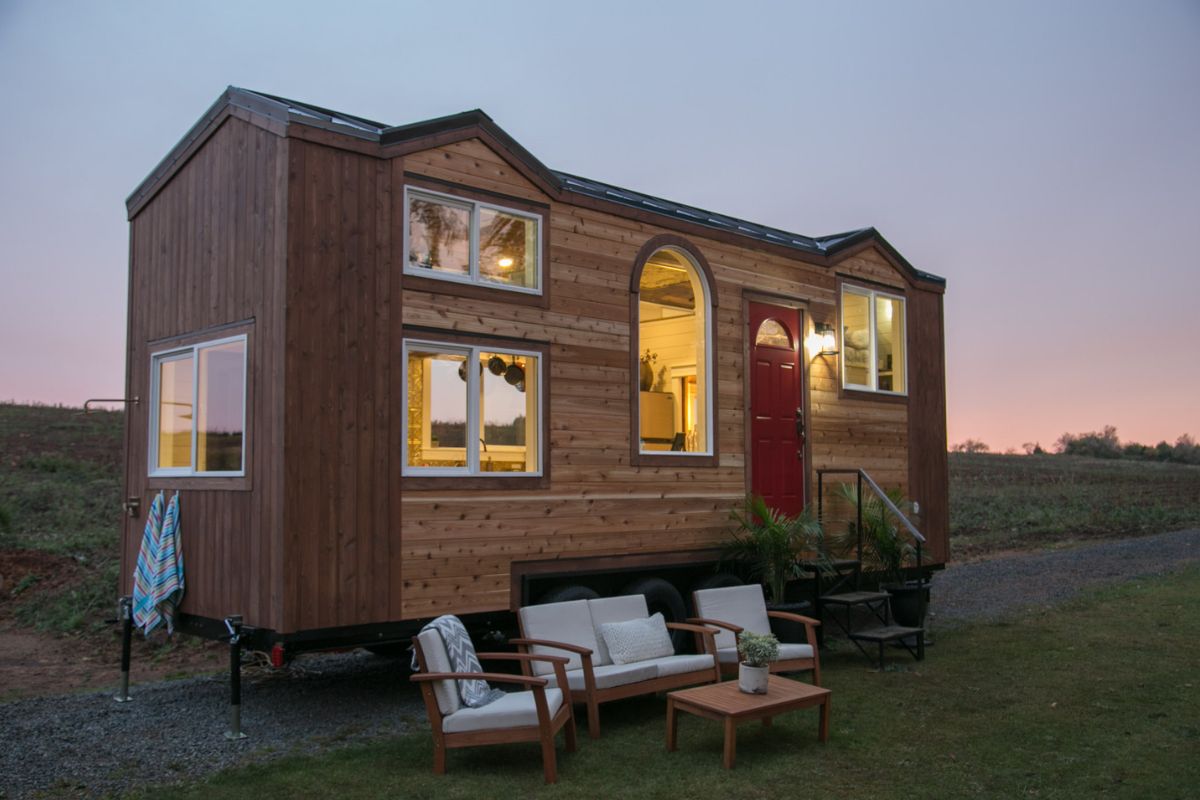
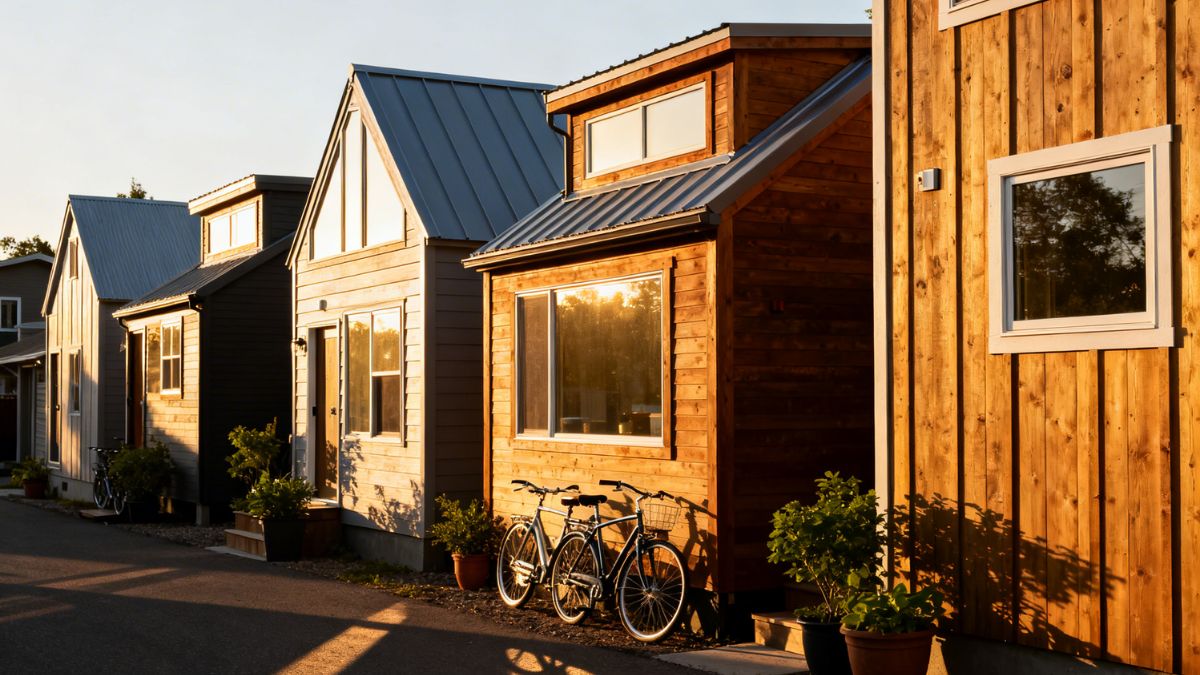
Tiny living is often stereotyped as solitary or austere but that mischaracterizes what many tiny-home communities offer. Yes, the individual dwellings are small, but they're frequently clustered around shared gardens, common lounges, or hobby barns. The intimacy inside the walls is paired with intentional openness outside of them.
For many, this shift is refreshing. After years in large, isolated neighborhoods where neighbors feel distant and connections can be transactional tiny-home communities bring shared values and frequent, impromptu social contact. Neighbors help each other out with harvests, trade crafting skills, host dinners, or share tools. In this way, the downsizing trend is also a kind of social upscaling.
The Middle Ground: A Bridge for Sellers
Real estate agents are filling a crucial gap by helping downsizers navigate both ends of the spectrum. They guide homeowners in decluttering and staging their larger homes and simultaneously help them find efficient, stylish small-scale properties, or even build custom ones.
Some agents use creative program models: they arrange staged “before and after” open houses that showcase the freedom of tiny living, helping prospective buyers visualize more than just the physical structure. It’s a powerful combo offering the emotional release of letting go, alongside the promise of a more mindful, manageable life.
If you’re considering the decision to downsize, there are strategic ways to approach each step. Begin with the intent behind the move whether it’s financial, environmental, or lifestyle-driven then align your path accordingly. Are you looking to unburden yourself? To invest in a smaller, more efficient living space? Or maybe you're simply craving closeness to neighbors, nature, or creativity. And if you’re ready to explore options for selling a house, professionals are ripe with fresh perspectives to support your transition. That means smarter marketing, innovative staging, and connecting you with a new kind of community that values essence over excess.
Reshaping the Future of Housing
As more large households embrace downsizing, we’re likely to see broader ripples in urban planning and policy. Municipalities may start incentivizing tiny-home clusters as tools for smart density. Zoning laws, traditionally favoring sprawled single-family homes, are beginning to catch up allowing accessory dwelling units (ADUs), tiered lot planning, and “pocket” neighborhoods that maintain aesthetics but deliver efficient land use.
This has implications far beyond just individual choice. As people embrace smallness, neighborhoods may shift away from endless avenues of drive-by shows and toward walkable squares with mixed-use charm. Sustainability metrics improve naturally with fewer energy needs, lower infrastructure strain, and more shared resources. Investors and developers see opportunity in flexibility, creating modular homes that can be relocated or reconfigured.
Tiny living may not be for everyone but its growing popularity is sending signals. People are reassessing value: of experiences over estates, of flexibility over formality. And as they do, the landscape of the housing market responds.
.png)
The Human Touch of Downsizing
Perhaps most meaningful of all is the quiet humanity at the core of this trend. Downsizing isn’t just about square feet it’s a recalibration of what matters. It's the decision to spend less time scrambling after things and more time immersed in people and passions. It’s a surrender of expectation in favor of genuine contentment.
For those transitioning from large homes, the adjustment can also be emotional. Deciding what stays and what goes sorting through decades of memories can be a deeply reflective process. But in that unpacking lies growth. Letting go becomes a journey toward what’s essential: not possessions, but presence.
Final Thoughts
As large homeowners step toward tiny living, they are rewriting the narrative around homeownership. The focus shifts from cost and size to clarity and care. The housing market adapts becoming more diverse in its offerings and more thoughtful in its design. Developers, policymakers, agents, and buyers all play parts in this unfolding story.
Tiny homes, with their intentional design and lower impact, spark bigger conversations about community, sustainability, and well-being. They nudge us to ask: what could our lives be like if we obsess less over our square meters and more about the meaning between them?
And if you're pondering whether today might be the day to downsize or to invite someone ready for a lighter footprint into their next chapter you’re stepping into a movement that's reshaping not just how we live, but why.


.svg)
.png)
.jpg)