A Solid Foundation for Your Home Spa – What You Need to Know


You've finally done it. You picked out the perfect spa, and you can already imagine sinking into those warm, bubbling jets after a long day. It's an exciting feeling. But before the delivery truck arrives, we need to talk about something that isn't as glamorous but is absolutely critical: the ground beneath your spa. Getting the base right is one of the most important spa foundation requirements you'll face. A weak or unlevel spot can cause huge problems down the line, so you'll want to make sure your spa foundation requirements are fully met before the hot tub installation begins.
Think about the sheer weight you're dealing with. A small hot tub can weigh over 4,000 pounds when filled with water and people. A larger swim spa? You could be looking at over 20,000 pounds. That's more than the weight of four cars sitting in one spot in your backyard. If the tub foundation isn't up to the task, it might shift or settle over time.
This movement puts a lot of stress on the spa's shell and internal plumbing, potentially leading to cracks, leaks, and other structural damage. Even worse, damage caused by an improper foundation will almost certainly void your manufacturer's warranty, a costly mistake for any hot tub owner. Visit SpaWorld for more advice and information.
Why Your Spa's Foundation Matters So Much
So, you see, a solid foundation isn't just a suggestion; it's a necessity. It's the platform that protects your big investment for years to come. A proper base makes sure your spa stays level and stable, making certain the weight is evenly distributed. This prevents damage to the spa's structure and makes sure it functions correctly.
Before you start any work, it's a really good idea to talk with a local building professional. They understand your local soil conditions and local codes. Every situation is a bit different, and their advice can save you a lot of money and headaches later. They can help you create a stable foundation that lasts.
You'll also need to get the technical sheet for your specific hot tub model. This document gives you the exact dimensions and filled weight. You need this information to plan the right kind of foundation for your hot tub.
The Five Most Common Spa Foundations
You have a few choices when deciding what to put under your new spa. Each one has its own set of pros and cons, depending on your budget, backyard, and style. Let's look at the five most common hot tub foundations people choose.
- Concrete Slabs
- Paved Surfaces
- Wooden Decks
- Crushed Gravel Pads
- Inground Spa Pits
We'll walk through what you need to know for each of these. This will help you make the best choice for your new backyard retreat. Remember, the best of the tub foundations is one that you can set and forget, knowing your spa is safe and secure.

The Gold Standard: A Concrete Slab
For most situations, a reinforced concrete slab is the best choice. It's strong, permanent, and offers incredible stability for all hot tubs. A concrete slab is a flat surface made from poured concrete, giving your spa a perfectly level concrete base that won't shift or sink over time. It is the option most recommended by spa manufacturers, including for high-end brands like Master Spas.
Making a concrete slab involves a bit of work. First, you'll clear and level the area where the spa will go. A solid base of compacted gravel is usually laid down first to help with drainage and add stability.
Then, a wooden frame, called a form, is built to hold the wet concrete. Steel reinforcement, like rebar or a wire mesh, is placed inside the form. This steel gives the concrete the extra strength it needs to support thousands of pounds without cracking. After the concrete is poured, it has to cure, a process that can take up to 28 days for it to reach maximum strength.
How Thick Does a Concrete Slab Need to Be?
The thickness of your slab depends on the size of your spa. It's not a one-size-fits-all situation. For most portable hot tubs, which are generally up to about 11 feet long, a reinforced concrete slab that is at least 4 inches thick is what you need. This thickness, combined with the steel reinforcement, is plenty to support the weight so it's evenly distributed.
But, if you're getting a swim spa or a very large portable spa, you'll need something beefier. For these giants, we recommend a 6-inch thick slab with two layers of reinforcing mesh. This added thickness and strength are needed to safely handle the immense weight of all that water, especially with the dynamic forces created by swimming currents.
What About an Existing Concrete Patio?
Maybe you already have a concrete patio and you're thinking of putting the spa there. This can work, but you have to check a few things first. Many patios are only 2 to 3 inches thick and are not designed to hold a hot tub. You must find out if the slab is thick enough (at least 4 inches) and if it has steel reinforcement. If you're not sure, it's best to consult a professional to assess its strength and confirm the foundation meets the manufacturer's standards.
Using Pavers or a Wooden Deck as Your Base
A concrete base is practical, but maybe it doesn't fit the look you're going for. Paver stones and decks are popular alternatives that can look amazing. But they come with their own set of rules you need to follow.
Placing a Spa on Pavers
A paved surface, using materials like brick or paver stones, can create a beautiful area for your spa. The key to a successful paver foundation is what's underneath them. Pavers must be laid on a well-compacted base of crushed gravel and sand.
If the base isn't solid, the pavers can shift or sink under the spa's weight. This will create an unlevel surface that stresses the spa shell. You should regularly check on the pavers to make sure they remain flat and stable, as shifting can occur over time.
Putting a Spa on a Wooden Deck
Placing a hot tub on a deck is a very popular choice. It can create a seamless transition from your house to your relaxation spot and fits well into many backyard design plans. However, this is also where things can get very serious if not done right. Your average raised deck or existing deck is not built to hold the weight of a filled spa.
You must find out the maximum load capacity of your deck. To be safe, the deck should be designed to support at least 100 pounds per square foot. You will almost certainly need to add more support posts, beams, and joists directly under the spa's location. A great resource is the International Residential Code which provides guidance on deck building.
This is not a DIY job for most people. We strongly suggest hiring a licensed builder or structural engineer to inspect your pre-existing deck and make the necessary reinforcements. They will make sure your deck is safe and complies with local building codes, which is critical for a safe installation.

A Gravel Pad Foundation Alternative
For those looking for a more budget-friendly or DIY-oriented option, a crushed gravel foundation can be a viable choice. This method involves creating a level pad using compacted stone. It's a common hot tub foundation for those who want a solid base without the permanence or cost of concrete.
To build one, you excavate the area to about 4-6 inches deep and build a lumber frame. Then, you fill it with crushed gravel, not pea gravel, as the angular stones lock together better under pressure. The gravel must be thoroughly compacted with a plate compactor to create a dense, stable surface for the spa's base.
While this foundation offers excellent drainage, it may require occasional re-leveling over the years. It's a good solution for many hot tub models, but always check your manual. Some manufacturers may have specific rules about using gravel foundations for their tub installations.
Considerations for an In-ground Hot Tub
An in-ground hot tub offers a sleek, built-in look that blends seamlessly with your landscaping. However, an in-ground hot requires a much more complex installation process. This is far beyond a simple foundation; it involves major excavation and construction.
The process starts with digging a vault or pit to the spa's specifications. A concrete base is poured at the bottom, and the surrounding walls are typically built from concrete or cinder blocks. A critical element for any in-ground spa installed this way is drainage, as you must prevent groundwater from flooding the equipment vault.
You will also need to plan for equipment access. Since the spa is recessed, a technician will need ample space and possibly a trap door or access panel to service the pumps and heater. An in-ground hot tub is a permanent solution with higher installation costs, but it can create a stunning backyard feature.
.jpg)
Your Essential Spa Foundation Requirements Checklist
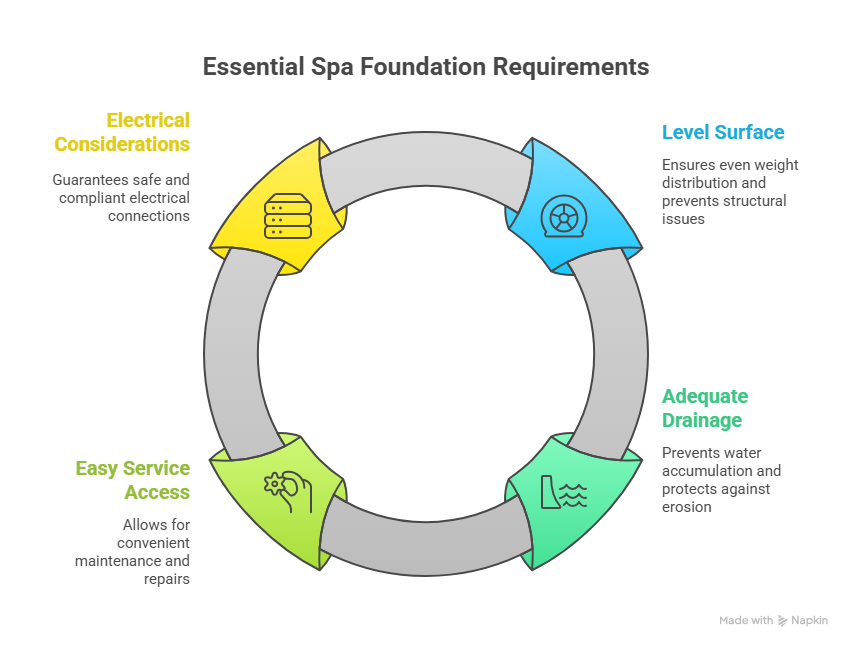
No matter which foundation type you choose, there are a few universal rules you must follow. Getting these details right is at the core of proper spa foundation requirements. It's what separates a smooth, trouble-free installation from a future problem.
A Perfectly Level Surface
This is non-negotiable. Your spa must sit on a surface that is completely flat and level. If the foundation has a slope, the water inside the spa won't be level. This puts uneven pressure on the spa's walls, which can lead to structural failure over time.
Most existing surfaces, like driveways or patios, have a slight slope for water runoff. A fall of more than half an inch across the length of the spa is generally too much. You may need to speak with a builder about using shims or wedges to level the spa, or about building a new level pad on top of the sloped surface.
Adequate Water Drainage
Water and your spa's foundation should not be friends. It's critical that water, whether from rain or splashing, can drain away from the spa. If water pools around the base, it can erode the soil and cause the foundation to shift or sink. Proper drainage protects your foundation from water damage and potential flooding.
The ground around the spa should be graded so it slopes away from the foundation. In some cases, you might need to install a drainage system like a French drain. This is especially important for spas placed in a pit or other recessed area. Remember, flood damage is almost never covered by the spa warranty, so managing water is entirely your responsibility.
Easy Access for Service
This is something people often forget during the excitement of installation. Your spa has pumps, heaters, and other equipment that may eventually need service. The equipment is typically housed behind removable cabinet panels on the sides of the spa. A technician must have easy access to get to and remove these panels.
If you're building a deck around your spa, plan for access hatches or removable sections of decking. Make sure you leave at least 2-3 feet of clearance and ample space around the side with the main equipment pack. Being unable to access the spa for service can turn a simple repair into a very expensive and difficult job.
Electrical Considerations
Your spa needs a dedicated electrical circuit, which must be installed by a licensed electrician. This electrical hookup has to meet safety standards like those found in the National Electrical Code (NEC). It is smart to plan your electrical needs while you are preparing the foundation.
If you're pouring a concrete slab, you can run the electrical conduit through the slab before the pour. This creates a clean installation with no visible wires. Discuss the spa's specific electrical needs with your electrician and spa dealer early in the process for a smooth tub installation.
What About Modular Spa Pads?
You may see plastic, interlocking modular spa pads advertised as an easy alternative to concrete. While they seem convenient, these prefabricated hot tub pads often pose risks. Because these pads are made of many small pieces, they can shift, separate, or sink unevenly over time.
This instability can lead to the very problems a good foundation is supposed to prevent. You could see warping in the spa shell, leaks, or even cracks in the frame. While using one might not void your warranty right away, any damage caused by the unstable base won't be covered.
A single-pour concrete pad is a much safer investment for the long-term health of your spa. It gives you peace of mind that cheaper, less reliable options just can't offer.
Additional Considerations for Your Perfect Hot Tub
Beyond the foundation itself, think about the entire experience. Jacuzzi® Hot Tubs, for example, offer a wide range of models with different space and access requirements. The perfect hot tub or spa pool for you is one that fits both your lifestyle and your backyard's physical constraints.
Also consider hot tub accessories when planning your foundation. You might want space for steps, a cover lifter, or nearby towel racks. Planning for these items from the start makes for a more functional and enjoyable spa area.
If your wellness journey includes more than hydrotherapy, you might be looking at products like Jacuzzi® Infrared Saunas. While infrared saunas have much simpler foundation needs, typically just a level indoor floor, planning a complete wellness space might influence your overall backyard design.
Getting your dream spa is an incredible experience, and you want it to last for many years. Fulfilling the spa foundation requirements is the first and most important step in making sure that happens. A solid, level foundation protects your spa from damage, keeps your warranty valid, and gives you a safe and stable place to relax.
Take the time to plan carefully for all hot tub installations. Always talk to a professional builder about your specific site, and don't cut corners. By building the right base from the very start, you set yourself up for a decade or more of worry-free enjoyment in your new spa.


.svg)
.jpg)