Tiny Homes as Personal Property or Real Estate: What It Means for Your Estate Plan

.jpg)
When considering estate arrangements involving tiny homes, a key factor is whether these dwellings are treated as personal property or real estate. This classification directly affects how they are handled in legal documents and transfers after death. Tiny homes on wheels are often viewed more like vehicles or mobile units, while those fixed on land may fall under traditional property laws.
The rising interest in downsizing and sustainable living has increased the number of individuals choosing tiny houses as affordable housing solutions. However, because tiny homes blur the lines between recreational vehicles and standard residences, estate plans must clearly define their status to avoid legal complications. Those looking to preserve their assets and provide for heirs should seek assistance from professionals and consult an estate planning attorney to ensure clarity and proper structuring of their arrangements.
With thoughtful arrangement, tiny homes can be properly included in wills or trusts, securing their place within a larger plan for family support and long-term care. For personalized help with these matters, consulting with estate planning lawyers can offer valuable guidance tailored to unique living setups.
Tiny Homes as Personal Property or Real Estate: Key Differences
Understanding how tiny homes are classified affects ownership, financing, and legal responsibilities. Their designation influences taxes, insurance, and resale value. Mobility, building standards, and placement play crucial roles in this classification.
Legal Classifications and Definitions
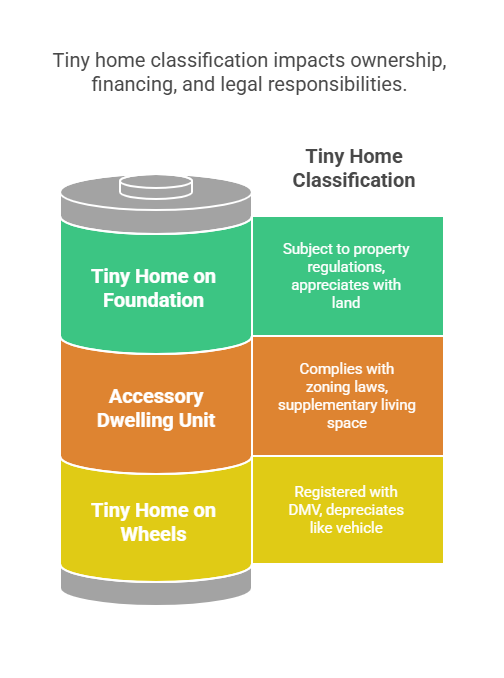
Tiny homes can fall under two main categories: personal property or real estate. If a tiny home is built on a permanent foundation, it is generally classified as real estate. This means it becomes part of the land and is subject to local property regulations.
Homes on wheels that meet standards similar to recreational vehicles are typically considered personal property. This classification subjects them to different rules, often similar to those governing trailers or motorhomes.
Local regulations vary significantly. Zoning laws and building codes in some areas may require a tiny home to meet residential standards, while others treat it as a movable structure. This classification impacts the need for permits and compliance with safety requirements.
Ownership Implications and Rights
Owning a tiny home designated as real estate usually grants rights equivalent to traditional homeowners. Owners can leverage financing such as mortgages, benefit from property tax structures, and may be eligible for homeowners' insurance.
Conversely, tiny homes labeled as personal property are more comparable to vehicles in ownership. Owners typically register them with departments like the DMV and may pay registration fees rather than property taxes.
This distinction impacts transfer and inheritance. Real estate ownership often requires formal deeds and probate processes, while personal property can be transferred with simpler documentation. Ownership rights also affect residency options, such as installing a tiny home on private land or in designated communities.
Impact on Value and Marketability
Tiny homes tied to land may appreciate alongside surrounding real estate, influenced by local market trends and land value. These homes often sell at prices reflecting both structural quality and lot desirability.
Mobile tiny homes classified as personal property generally depreciate, similar to vehicles. Their market value depends on condition, mobility, and demand within niche markets like minimalist or sustainable living.
Financing options also affect marketability. Real estate classification allows access to conventional home loans, often with lower interest rates. Personal property status may limit owners to personal or RV loans, which might have shorter terms and higher rates.
Mobility, Foundations, and Living Benefits
Mobility heavily influences classification. Tiny homes on wheels remain portable, offering flexibility for owners who frequently move or live off-grid. This mobility can limit eligibility for traditional housing loans and bring specific insurance requirements.
Homes on permanent foundations offer stability and integration with utility systems. This often allows customization and adherence to residential building codes, enabling access to municipal services.
Some tiny homes serve as accessory dwelling units (ADUs), requiring compliance with local zoning laws. These provide supplementary living spaces but often must meet stricter construction standards than movable homes.
The choice between mobility and permanence aligns with lifestyle preferences such as downsizing, eco-friendly living, or participation in tiny home communities. Each option poses different challenges for legal compliance and financial planning.
.jpg)
Estate Planning Considerations for Tiny Homes
Estate plans involving tiny homes require attention to ownership status, financial impacts, and ways to maintain the asset’s worth. Decisions on transferring these properties, tax consequences, and ensuring lasting value play key roles for owners balancing affordability and investment return.
Transfer and Inheritance Strategies
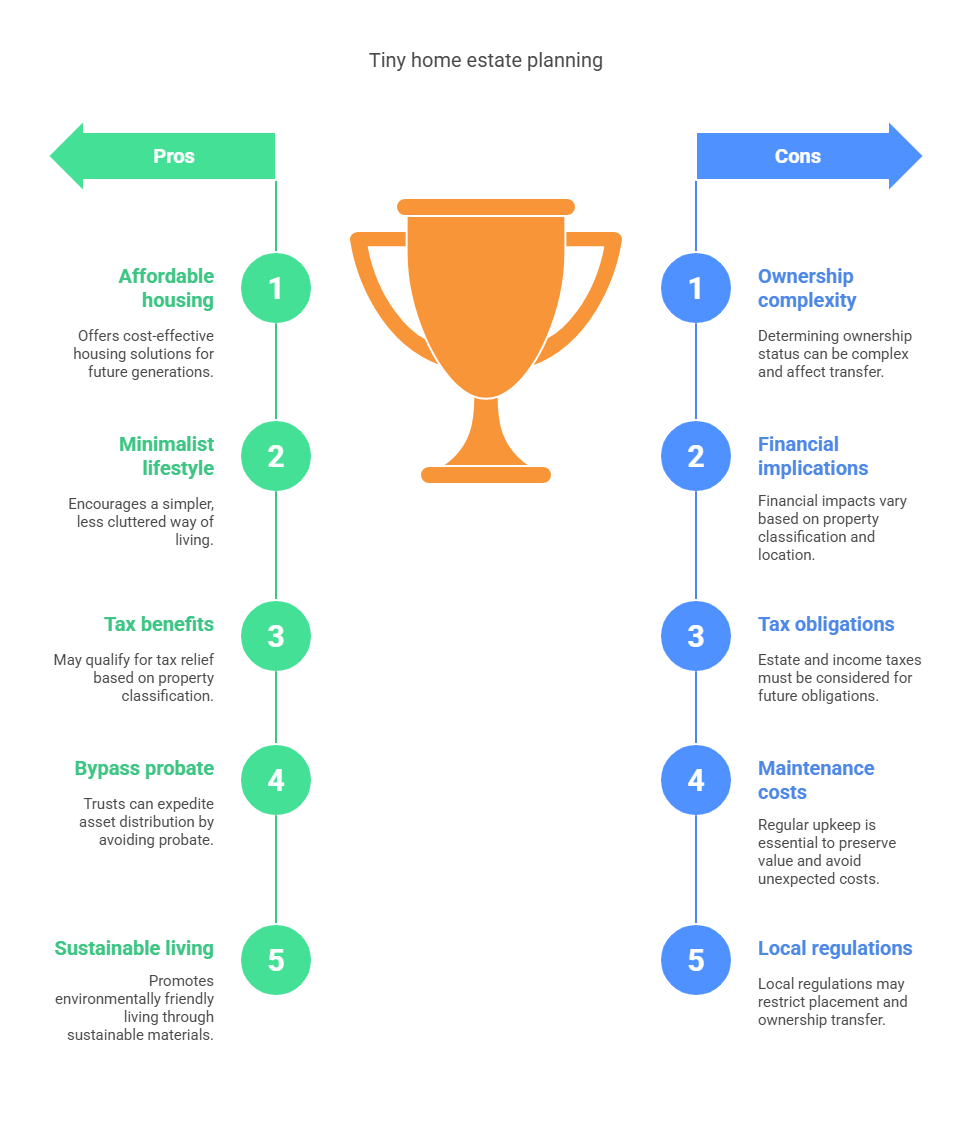
Whether a tiny home is classified as personal property or real estate affects how it is passed on. If it’s on a permanent foundation with owned land, it typically counts as real estate, making it subject to deeds and real estate transfer processes. Otherwise, it may fall under personal property rules, which involve different probate and titling procedures.
Owners should clearly specify the transfer in their estate documents, including wills or trusts, to reduce disputes. Trusts can help bypass probate, speed up asset distribution, and possibly lower transfer expenses. It’s also essential to verify local regulations about tiny home placements, as some areas impose restrictions or require permits affecting ownership transfer.
Financial and Tax Implications
The financial consequences of including a tiny home in an estate plan depend largely on its classification and location. If treated as real estate, the property may be subject to ongoing charges such as property fees and assessments, impacting overall housing expenses. Personal property designation often entails different tax rules and may avoid these charges entirely.
Recent proposals like Trump’s One Big Beautiful Bill Act (OBBBA) have further emphasized the need for property owners to understand changes in tax laws and how these changes can impact them. While OBBBA aims to simplify and consolidate federal tax codes, it also signals potential shifts in how alternative housing—including tiny homes and mobile dwellings—could be assessed for deductions, depreciation, or capital gains. Staying informed about such legislative changes ensures homeowners can adapt their estate and tax strategies proactively.
Income and estate taxes must be evaluated to understand future obligations. Some jurisdictions offer tax relief for smaller residential properties or allow depreciation based on build quality and maintenance records. Properly assessing tiny home value with respect to land prices is important for realistic tax estimates, which supports sound financial planning and helps meet long-term monetary objectives.
Preserving Value for Future Generations
Maintaining the condition and worth of a tiny home involves considering construction quality and material durability. Sustainable building supplies and regular upkeep reduce wear and degradation, safeguarding the housing investment. Defining maintenance responsibilities within estate tools ensures the property is preserved according to the owner’s wishes.
A well-maintained tiny home supports a minimalist lifestyle while offering affordable housing options across generations. Including detailed care instructions in the estate plan helps future beneficiaries avoid unexpected costs or value loss. Strategic planning around these factors protects the asset’s potential for steady return or continued usability.


.svg)
.png)
.jpg)