The Art of Curves: Using Cylindrical Forms in Modern Landscape Design

.jpg)
Modern landscape design is evolving beyond traditional lines and symmetry. As designers seek to create environments that are both functional and visually engaging, curved forms—particularly cylindrical shapes—have taken center stage.
These forms provide a sense of softness and flow that contrasts beautifully with the more angular elements typically found in architecture and hardscaping. Cylindrical elements offer a unique blend of form and function, and when used thoughtfully, they can completely transform the mood and movement of an outdoor space.
The Appeal of Curves in Landscape Architecture
Curved shapes have long played a role in design, from ancient amphitheatres to modern public gardens. Psychologically, curves are associated with comfort, safety, and approachability. In contrast to rigid angles and straight lines, curves suggest movement and natural rhythm. In landscape architecture, this translates to a sense of ease and serenity—elements that are especially desirable in outdoor living spaces.
In contemporary gardens where minimalism often reigns, curved elements like cylinders help break visual monotony. They guide the eye gently through a space and create subtle focal points that don’t overpower the environment. This makes them ideal for both residential and commercial settings where the goal is to create a tranquil, harmonious atmosphere.
Understanding Cylindrical Forms
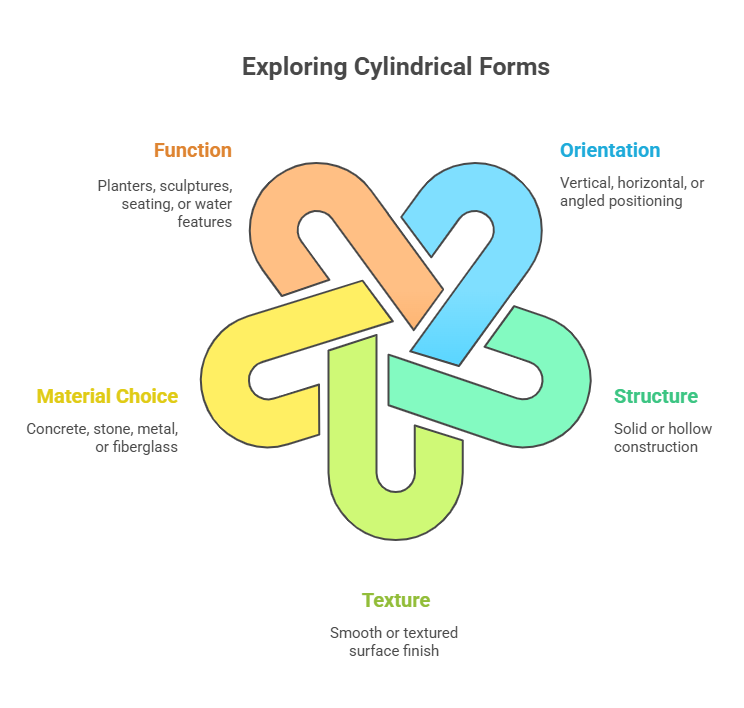
Cylindrical forms are more than just simple tubes. They can vary in orientation—vertical, horizontal, or even angled—and they can be solid or hollow, smooth or textured. This variety makes them incredibly versatile in both design and function. A tall, narrow cylinder might serve as a planter or sculpture, while a shorter, broader form could be used for seating or as a water feature.
Material choice also plays a crucial role. Concrete and stone cylinders convey strength and permanence. Metals like corten steel offer an industrial, weathered aesthetic. Fiberglass, as used in many modern planters, provides a sleek, contemporary look that is lightweight yet durable, making it ideal for both indoor and outdoor use.
Cylindrical Planters and Pots
Among the most common and practical uses of cylindrical forms in landscape design is the planter. Unlike square or tapered vessels, cylindrical planters present a continuous, uninterrupted silhouette that complements a wide range of plant forms. Tall, slender planters draw the eye upward and add vertical interest, making them perfect for flanking entryways or defining the edges of patios.
The Rio Grande Modern Cylinder Planter is a particularly good example of how cylindrical design can elevate a space. Available in various sizes and finishes, it suits everything from small courtyard gardens to expansive commercial terraces. Its clean lines and sculptural form make it just as effective as a standalone feature as it is when grouped in clusters for visual rhythm.
.jpg)
Structural and Sculptural Elements
Cylindrical shapes aren’t limited to planters—they can also function as structural or sculptural elements. Vertical columns can serve both aesthetic and practical purposes, such as supporting overhead structures or marking transitions between garden zones. When used in a more abstract way, hollow or solid cylinders can become sculptural focal points that add personality and dimension to a space.
These forms are particularly powerful in minimalist designs, where a single cylindrical feature can create dramatic contrast against linear walls or flat paving. Cylindrical elements can also be used as bases for lighting or water features, offering a seamless blend of function and artistic expression.
Seating and Functional Forms
Beyond their aesthetic appeal, cylindrical shapes can be functional, too. Cylindrical benches, stools, or even tables offer informal seating options that feel organic and approachable. Their simple shape allows them to blend easily into a variety of settings, from contemporary rooftop lounges to rustic garden nooks.
Material selection is again key. Smooth, rounded surfaces in natural stone or finished fiberglass make these elements both comfortable and weather-resistant. They can be designed to be movable or fixed, depending on the needs of the space.
Creating Flow and Movement
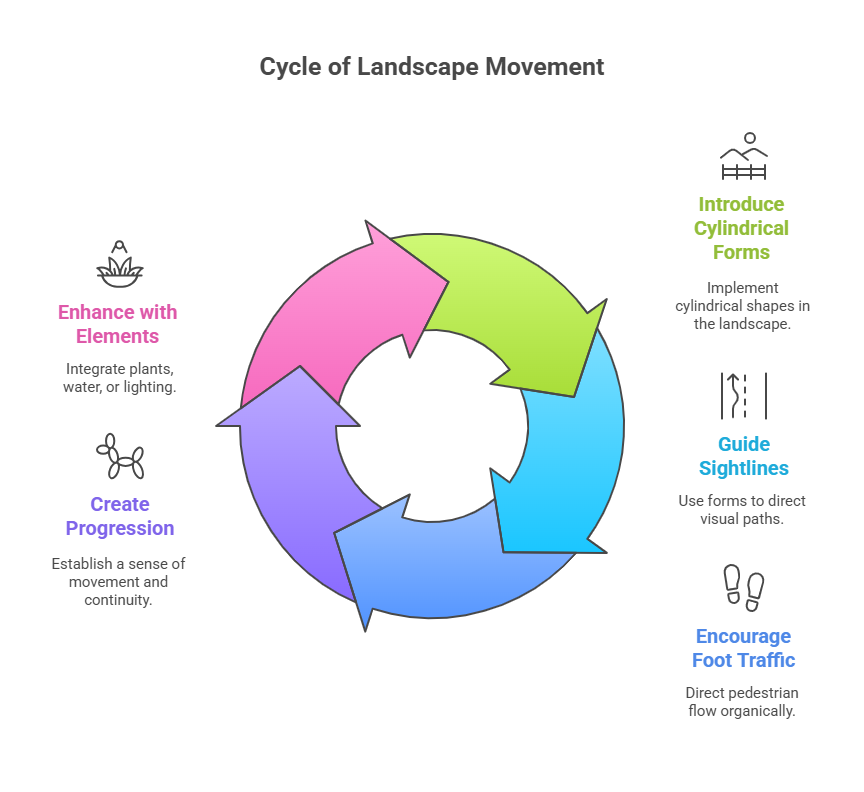
Curves naturally encourage movement. In the landscape, cylindrical forms can be used to direct sightlines and foot traffic in a more organic way than straight edges allow. Repeating cylindrical shapes along a path or around the perimeter of a space creates a sense of progression, almost like punctuation marks in the garden’s narrative.
This design technique is particularly effective when paired with plants, water features, or lighting. A series of evenly spaced cylinder planters filled with grasses or flowering perennials, for example, can gently guide visitors through the space while maintaining an air of calm and continuity.
Pairing Cylindrical Forms with Other Geometry
The beauty of cylindrical forms lies in their ability to complement other shapes. In landscapes dominated by straight lines—walls, fences, decks—cylinders add a welcome softness. This contrast can be subtle or bold, depending on the scale and placement of the elements involved.
For a layered look, cylinders can be mixed with other curved forms like spheres or ovals. When integrated into a rectilinear layout, such as a grid of pavers or a square patio, cylindrical planters or pillars help break the rigidity and create a more dynamic composition.
Conclusion
Cylindrical forms offer much more than just visual appeal—they are tools for creating flow, establishing rhythm, and fostering a deeper connection between people and the spaces they inhabit. From planters and seating to lighting and sculpture, these shapes are incredibly adaptable and impactful.
Incorporating a product like the Rio Grande Modern Cylinder Planter into your design is an easy way to introduce this dynamic form into any outdoor or interior space. Its elegant proportions, durable construction, and wide range of finishes make it a smart and stylish addition to any landscape. Whether you're designing a residential retreat or a public gathering space, cylindrical forms can help you shape a landscape that is both modern and memorable.


.svg)
.png)
.jpg)