
Beyond Looks: Acoustic and Thermal Perks of Wall Decor

.jpg)
Small rooms amplify sound in ways that can surprise. Parallel walls create flutter echo, hard finishes boost mid and high frequency reverberation, and compact dimensions intensify a few boomy bass notes. That cocktail makes conversations tiring, movies harsh, and sleep lighter than it should be.
Soft surfaces change the experience quickly. Dense textiles and fabric covered panels absorb mid to high frequencies where speech lives, cutting the sharpness that bounces between walls. In tests and manufacturer reports, well chosen curtains can trim mid band sound by about 10 to 15 decibels, and wrapped panels often land near an NRC of 0.6 to 1.0. The room feels calm, and words sound clearer.
How soft surfaces quiet tiny rooms and keep them cozy
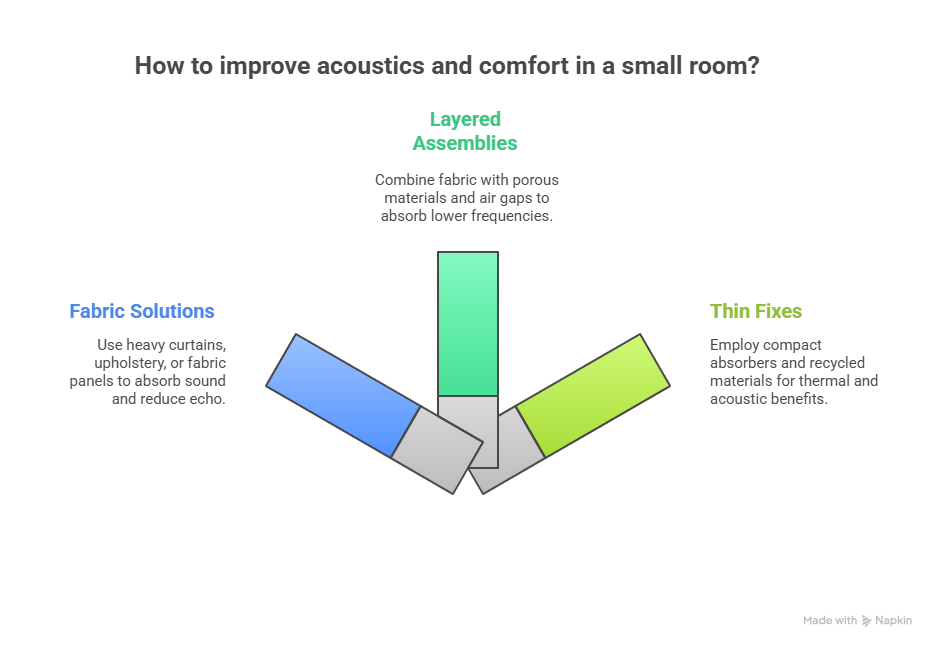
Why fabric brings instant clarity
Porous textiles convert sound energy into a tiny amount of heat, which is why they tame echo so effectively. Heavy curtains, upholstery, and fabric wrapped panels are simple to add, and they work even better with a small air gap. In tiny homes, the benefit shows up as more intelligible conversation and less clang from cookware or hard floors.
Decor can do double duty when chosen with intention. Decor choices like fabric draped panels and modern canvas art prints can introduce sound friendly surfaces without cluttering small walls. Aim for curtains or panels placed 2 to 10 centimeters off the wall to act like tuned absorbers.
For a deeper dive into textiles and performance ratings, see this overview of acoustical panel textiles and testing from Carnegie Fabrics. It explains how fabric openness, fire ratings, and substrates influence real world results.
The bass puzzle, and how layers solve it
Soft materials are strongest above roughly 500 hertz. Laboratory work discussed in MDPI shows porous absorbers lose steam at lower frequencies, which is why small rooms still feel boomy after hanging curtains. The fix is layering. Pair 20 to 25 millimeters of polyester, fiberglass, or open cell foam with an acoustically transparent fabric, then add a 20 to 50 millimeter air cavity. This broadens absorption and nudges performance lower in frequency without heavy construction.
Wrapped panels that combine fabric and a 25 millimeter core can approach NRC values near 0.9 to 1.05, which keeps speech crisp even in lively spaces. Check weight limits for tracks and fasteners in movable dwellings, and when required select Class A, ASTM E84 rated fabrics to support safety.
Thin fixes that warm up walls too
Layered assemblies can pull double duty for comfort. A fabric face, a porous core, and a modest air gap create a thermal break that softens wall temperature swings, especially near windows or thin exterior walls. The same principle reduces drafts by slowing air movement along cold surfaces, which helps a small heater or mini split work more quietly.
Research into compact absorbers hints at even more performance per centimeter. Studies on ultrabroadband and metamaterial stacks report high absorption across wide bands, with some arrays averaging around 90 percent from 500 to 4000 hertz. In practice, hide small tuned resonators behind benches or inside cabinets to calm specific boomy notes. Favor recycled content acoustic blankets where possible to trim embodied carbon, and verify fabric breathability so sound can reach the absorber rather than reflect.
Make small spaces feel calm and warm, one surface at a time
Start with visible comfort, like curtains or panels, for immediate echo control, then add layered elements where bass lingers. A quick clap test or a smartphone reverberation app will confirm the change and point to the next best spot. Small, smart additions can turn a hard little room into a quiet and cozy home.
Enhancing Comfort Beyond Acoustics
.jpg)
Visual Warmth and Texture
Beyond acoustics, wall décor also shapes how a small room feels on a day-to-day basis. The visual and tactile warmth of fabric elements signals comfort the moment you walk in, which can be just as important as measurable sound reduction. Soft textures break up the rigidity of tight layouts, helping the eye relax rather than bounce around shiny surfaces.
Zoning and Privacy with Décor
Another overlooked benefit is how sound-friendly décor helps with zoning. Hanging a thick textile, quilt, or decorative acoustic divider between a sleeping nook and a work desk can create a perceptual boundary without requiring walls or major renovations. Portable acoustic screens or fabric-wrapped frames add privacy and dampen noise transfer within the same room.
Simple Swaps for Everyday Noise
Even simple swaps can make big improvements. Replacing glass-framed art with canvas prints reduces reflective surfaces. Adding a tapestry behind your sofa cuts the slap echo that often appears in narrow living rooms. For kitchens in tiny homes—typically among the noisiest zones—strategic placement of washable fabric boards or cork-backed décor near prep areas can soften high-frequency clatter from utensils, plates, and appliances.
Sustainable and Stylish Choices
Homeowners focusing on sustainability can also choose décor that provides acoustic value while lowering environmental impact. Options like recycled felt panels, hemp-based textiles, and PET acoustic boards made from plastic bottles offer meaningful absorption without sacrificing style.
Lighting That Complements Acoustics
Thoughtful lighting pairs well with acoustic décor to elevate small spaces even further. Soft sconces or wall-mounted LED strips reduce glare on fabric surfaces and prevent harsh reflections from hard décor pieces. When lighting and acoustics work together, rooms feel both quieter and visually softer—two qualities that make a compact space much more inviting.
The Takeaway: Function Meets Style
In the end, wall décor isn’t just about filling empty space. With the right materials, placement, and layering, it becomes a tool for improving comfort, privacy, warmth, and energy efficiency. In small rooms where every detail has an outsized impact, these choices can transform the entire experience of living in the space.


.svg)

.jpg)
.jpg)
.jpg)