
Best Outdoor Materials for Tiny Homes: Durable Decking & Weather-Proof Tiles


Outdoor space is more than a luxury for tiny houses, it’s an important and must have part of making small living feel expansive, breathable, and livable.
Whether your tiny home is on wheels, off-grid, or anchored on a foundation, your deck or patio becomes an extension of your home: an extra dining nook, a morning coffee corner, a workspace, a firepit zone, or even a spot to host friends when your interior is full.
But here’s the truth tiny home dwellers learn quickly: The wrong outdoor materials will age fast, warp, rot, fade, or demand more maintenance than the house itself.
And for tiny homeowners who often prioritize low impact, low waste, and low maintenance living; that’s simply not an option.
This guide breaks down the best outdoor materials specifically suited for tiny homes, including durable decking, weather-proof tiles, and surface choices that hold up to sun, rain, movement, and time.
Whether you're designing a micro-patio, a fold-down deck, an outdoor shower pad, or a compact firepit terrace, these materials will help your tiny home not just look beautiful but stay functional for years.
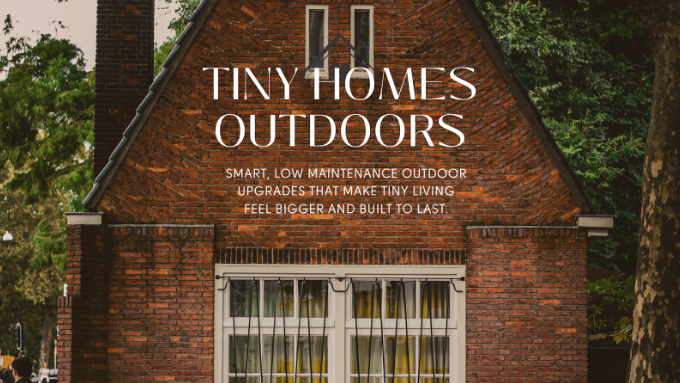
Why Outdoor Materials Matter Even More for Tiny Homes
Tiny homes rely on balance: storage, functionality, movement, and multi-use spaces. Your outdoor space plays a huge role in how “big” your home feels day to day.
Here’s why choice of materials matters:
1. Outdoor spaces expand usable square footage
A well-built deck or an outdoor patio can add 30–70 square feet of comfortable living area; massive for a tiny home.
2. Lightweight but durable materials reduce strain
THOWs (Tiny Homes on Wheels) must use materials that won’t compromise transport safety or exceed weight limits.
3. Weather exposure is harsher on mobile and exposed homes
Tiny homes are more vulnerable to sun, rain, humidity, snow, and movement, so outdoor materials must perform better than average.
4. Low-maintenance is essential in minimalist living
The whole point of tiny living is freedom, not spending weekends sanding, repainting, or resealing exterior surfaces.
That’s why choosing the right outdoor materials is not just a design choice; it’s a lifestyle choice.
The Best Decking Materials for Tiny Homes
Decking is often the first “add-on” tiny homeowners build . It creates a natural transition from indoor to compact outdoor spaces, serves as extra seating, and makes small homes feel grounded.
Here are the materials that perform best in tiny home environments:
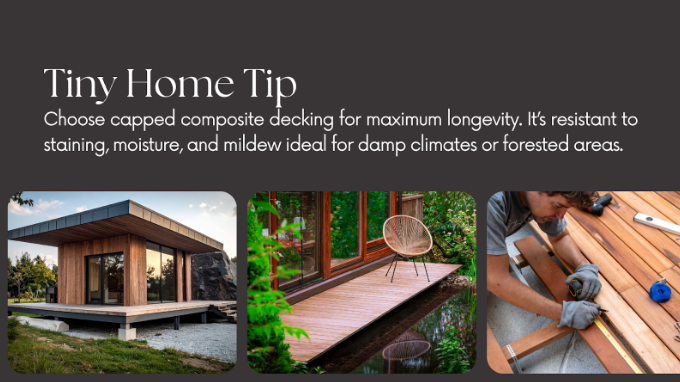
1. Composite decking (Top Pick for Long-Term Durability)
Composite decking has become the gold standard for tiny homes because it solves the problems tiny homeowners face: rot, fading, and maintenance.
Why It Works
- Won’t warp, rot, or splinter
- UV-resistant (key for small homes without shade structures)
- Extremely low maintenance
- Lightweight versions available for THOWs
- Slip-resistant
- Available in natural colors that complement tiny home finishes
Best For
- Permanent tiny home decks
- Ground-level or slightly elevated patios
- Outdoor showers
2. Pressure treated lumber (Good budget option)
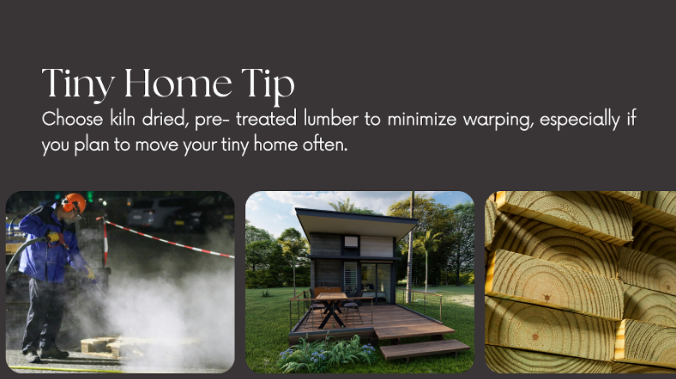
If you’re on a tight budget, pressure-treated wood is still one of the most affordable choices. Pressure-treated wood is regular lumber that has been infused with preservatives to help it resist rot, moisture, insects, and fungal decay.
This treatment is done by placing the wood inside a large pressure chamber that forces protective chemicals deep into the grain far deeper than surface-level staining or painting ever could.
Because of this pressure-infusion process, the wood becomes far more durable than untreated lumber, making it ideal for outdoor structures
Pros
- Very budget-friendly
- Easy to DIY
- Readily available everywhere
- Classic wood look
Cons
- Needs resealing
- Can warp or splinter over time
- Not ideal in high-moisture areas
Best For
- Temporary or movable decks
- Tight budgets
- THOWs parked in dry climates
3. Cedar or Redwood (natural & lightweight)
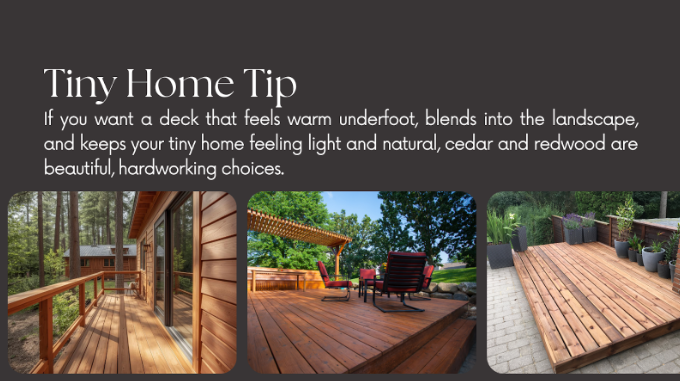
For tiny homeowners who want a deck that feels warm, organic, and timeless, cedar and redwood remain two of the most popular choices. Both of these woods are naturally resistant to moisture, insects, and decay without the need for heavy chemical treatments which makes them ideal for small outdoor spaces where you want healthier, more natural materials.
Pros
- Naturally rot-resistant
- Lighter than most hardwoods
- Aromatic and beautiful
- Ages into a soft grey patina
Cons
- Needs regular oiling
- More expensive than pressure-treated wood
- Softer surface, can dent
Best For
- Decks with heavy visual prominence
- Homeowners prioritizing natural materials
Small porches or fold-down deck sections
4. Aluminum Decking (Ultra Durable & Lightweight)
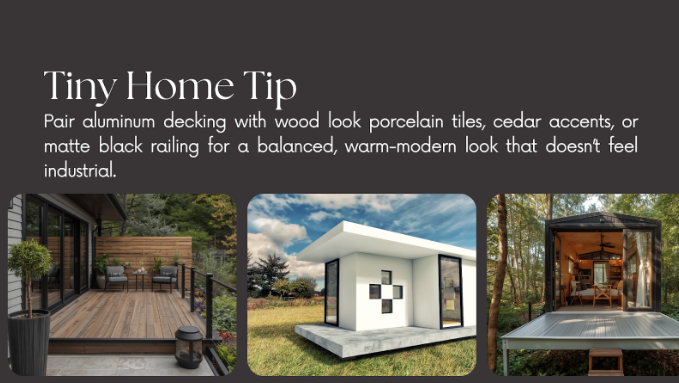
Aluminum might sound industrial at first, but it’s quickly becoming a favorite among modern tiny homeowners, and for good reason. When space is limited and every material needs to work harder, aluminum delivers an unbeatable combination of strength, weather resistance, and surprisingly lightweight performance.
Tiny homes, especially THOWs (Tiny Homes on Wheels), need outdoor materials that won’t rot, warp, or add unnecessary weight. That’s exactly where aluminum shines.
Pros
- Extremely lightweight
- Rust-proof
- Fire-resistant
- No maintenance
- Great for rainy or coastal climates
Cons
- More expensive upfront
- Industrial aesthetic (unless powder-coated)
Best For
- THOWs that move frequently
- Off-grid homes in damp or coastal areas
- Tiny homes with rooftop decks
Weather Proof Tiles (An Underrated Outdoor Upgrade)
Tiny homeowners often overlook tile outdoors, but weather-proof porcelain tiles are one of the smartest upgrades in today's time.
When people imagine outdoor tiles, they often think of heavy stone slabs or delicate indoor ceramics, not exactly ideal for tiny homes. But outdoor-rated porcelain is in a completely different category.
It’s engineered specifically for rain, frost, heat, movement, and everyday wear, making it one of the most durable and low-maintenance materials you can use in a small outdoor footprint.
And for tiny homes, where every square foot must work harder, something like outdoor decorative tiles by OUTERclé tile can work as a unique advantage. The porcelain, patio, or natural stone tiles can make a small patio feel more intentional, more finished, and significantly larger. They’re designed for long-term durability, with features like UV resistance, weather-proof surfaces, and artisan-level textures that hold up beautifully in any climate.
Unlike wood or gravel, tiles create a smooth, continuous plane that adds visual calm and expands the feeling of luxurious space in an outdoor patio. Moreover, they provide:
✔ Durability
✔ Easy cleaning
✔ A premium look
✔ Heat and frost resistance
✔ Zero-maintenance living
And unlike traditional stone, porcelain tile is lightweight, more sustainable, and less prone to cracking or staining.
1. Porcelain pavers
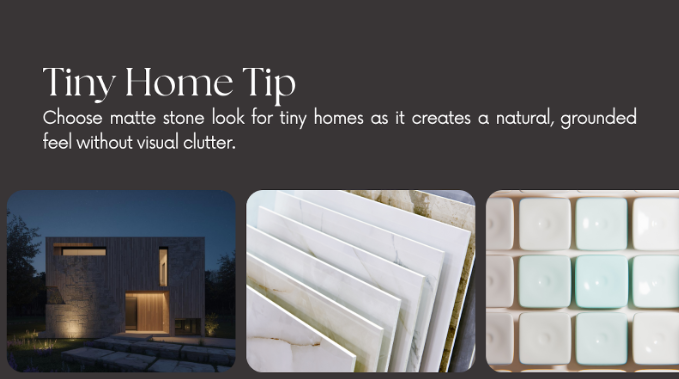
Unlike standard indoor tiles, outdoor porcelain pavers are built to survive the elements year-round. They’re fired at extremely high temperatures, making them dense, durable, and almost completely non-porous. This means they don’t absorb water, won’t crack when temperatures drop, and don’t fade or weaken under direct sun, rain, frost, UV, and foot traffic.
Why Tiny Homes Love Them
- Completely weather-proof
- Slip-resistant (outdoor safety essential)
- Lightweight compared to concrete or stone
- Don’t fade in sun
- Don’t stain (coffee, wine, soil = no problem)
- Work beautifully in small spaces
Where to Use Them
- Small patio pads
- Outdoor showers
- Pathways
- Raised deck surfaces
- Fold-down platforms
- Entry landings
2. High density stone look tiles
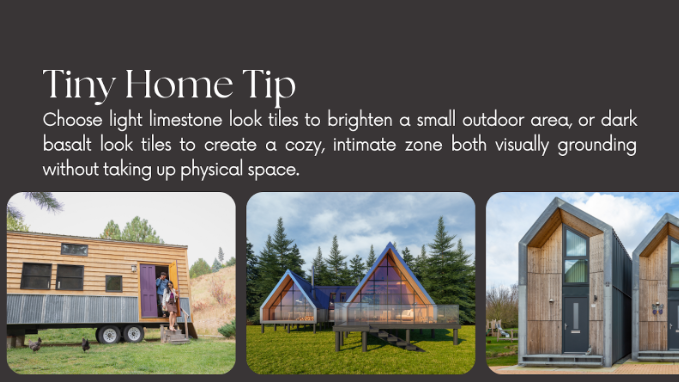
High-density stone-look tiles are one of the best-kept secrets in outdoor design for tiny homes. They capture the beauty of natural materials like limestone, travertine, basalt, or slate, but without the downsides that make real stone difficult to maintain in small, exposed, or mobile living environments.
For tiny homes, often positioned in rural, off-grid, or unpredictable climates; this resilience ensures outdoor surfaces stay beautiful for years.
Why They Work
- Zero maintenance
- Far lighter than real stone
- Ideal for minimalist outdoor spaces
- Provide texture and warmth without bulk
3. Wood look planks (Warm, Zero-Maintenance)
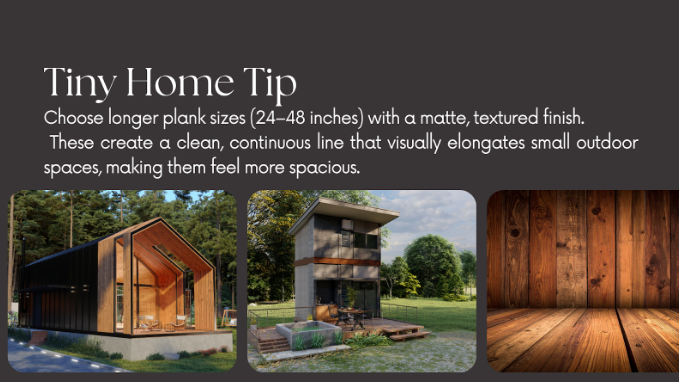
If you love the warmth and texture of wood but don’t want the upkeep that comes with it especially in a tiny home lifestyle wood look planks are the perfect middle ground. They capture the charm of natural timber without any of the vulnerability to moisture, insects, or weather that real wood struggles with outdoors.
For tiny homes (where outdoor areas often double as entryways, living zones, or workspaces), a durable, low-maintenance surface can make everyday living much easier.
Why They Work
- Weather-proof
- No fading or mould
- Excellent for tiny decks, paths, outdoor kitchens
- Works beautifully with Scandinavian or cabin-style tiny homes
4. Anti-slip textured tiles (Safety first in small spaces)
Because tiny homes have compact, high-traffic outdoor areas, slip-resistant tiles play an important safety role. Their textured, grippy surfaces reduce the risk of slipping in wet or moisture-prone conditions making them ideal for outdoor showers, entry steps, raised decks, and homes in rainy or snowy climates. In small spaces where every movement is tighter and transitions are frequent, slip-resistant tiles offer extra traction, durability, and year-round peace of mind.
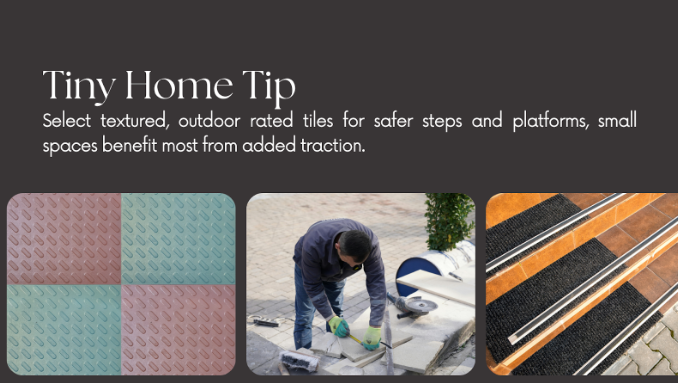
Ideal for:
- Outdoor showers
- Entry steps
- Raised decks
- Homes in rainy or snowy regions
Why They Work
- Provide extra grip in compact outdoor areas
- Reduce slipping on wet surfaces
- Feature a textured finish for added traction
- Ideal for entry steps and landings
- Perfect for outdoor showers where surfaces get soapy or damp
- Improve safety on patios in rainy or snowy climates
- Essential in tiny homes where every square foot is a high-traffic zone
- Make outdoor spaces safer, more practical, and durable year-round
Choosing the Right Material for Your Tiny Home Lifestyle
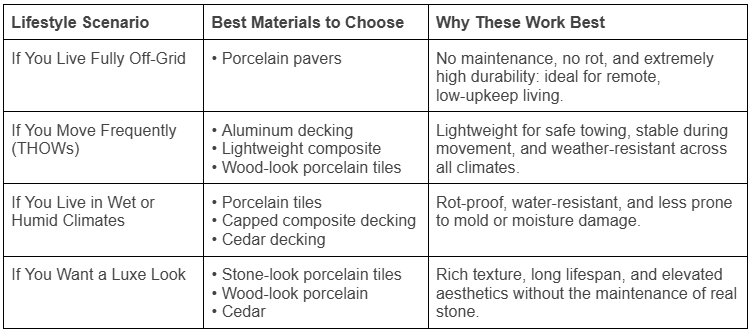
Final Thoughts: Outdoor Materials Can Make Tiny Living Feel Big
For tiny home owners, outdoor design is a crucial part of maximizing space, comfort, and quality of life.
Choosing durable decking and weather-proof tiles ensures your outdoor areas stay functional, beautiful, and low-maintenance for years.
Whether you're building a micro-patio, crafting an outdoor dining corner, or adding a wellness deck for morning routines, the right materials can make even 40 square feet feel like an entire room.
Small home. Big outdoors. Even bigger impact!


.svg)
.jpg)
.jpg)
.jpg)