
Can You Maintain Your Boiler and Furnace? Guide to Keeping Heat On


Boilers and furnaces not only need preventative maintenance, but it is essential to prevent such systems from breaking down, costing a lot of money, or exposing the end user to bodily harm, such as carbon monoxide leakage.
Although the maintenance of boilers and furnaces has certain similarities, their distinctions do count, and the trends indicate that each of them has its own peculiarities appearing. It is the same article that compares the care needed to take care of both, but it also points out the frequent issues that have been observed this year.
Preventative Maintenance: Boilers vs. Furnaces
- Boiler: Check water pressure – Ensure 1-1.5 bar; low pressure signals leaks, common in hard water areas.
- Boiler: Flush system – Clear sediment to prevent corrosion, especially in a high-mineral water area. Plumber London of Superior Plumbing and Heating is one of your best bets when it comes to furnace and boiler repair.
- Furnace: Replace air filters – Swap every 1-3 months; clogged filters strain motors, reducing efficiency.
- Furnace: Inspect ducts – Look for leaks; unsealed ducts waste heat, a growing issue in today's homes.
- Both: Test safety features – Check CO detectors and shut-off valves; critical for safe boiler and furnace repair.
How Boiler Maintenance Differs from Furnace Care
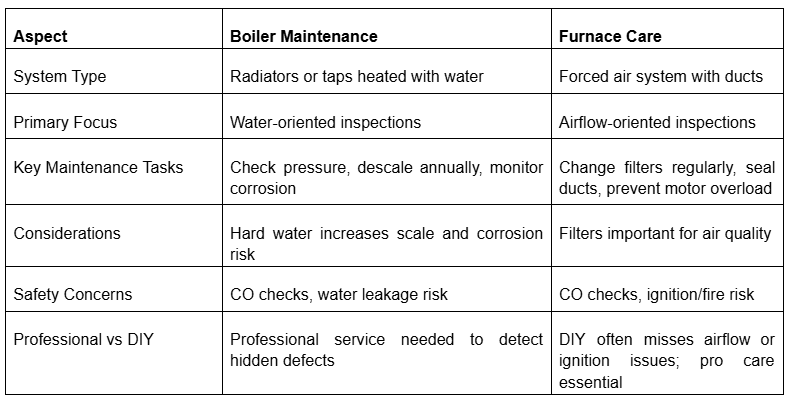
Common Boiler Issues: What’s Trending
In 2025, boiler issues reflect local conditions. Hard water scale in heat exchangers tops the list, clogging systems and causing pressure drops. Leaking pressure relief valves, often due to high municipal water pressure, are spiking in urban areas.
Short cycling from miscalibrated thermostats wastes fuel, seen in older combi units. Blocked condensate drains in high-efficiency boilers back up acidic water, corroding parts—a growing problem noted in industry reports. These require pro tools like descaling pumps, highlighting why boiler repair needs experts.
Common Furnace Issues: Emerging Patterns
- Clogged air filters: Reduce airflow, overworking blowers; a top issue in dusty homes this year.
- Faulty ignitors: Electronic ignitors fail in older furnaces, causing no-heat calls.
- Cracked heat exchangers: Aging units leak CO, a safety hazard spiking in 2025 inspections.
- Thermostat malfunctions: Misreadings cause uneven heat, common in smart systems misconfigured.
- Duct leaks: Unsealed joints waste 20% of heat, a trend in aging homes.
Climate Crunch: Timing Your Boiler and Furnace Checks
The extreme weather conditions, i.e., freezing in London in winter and humid in summer, put the boilers and furnaces to the test and increase the magnitude of the problems, such as corrosion and clogged filters.
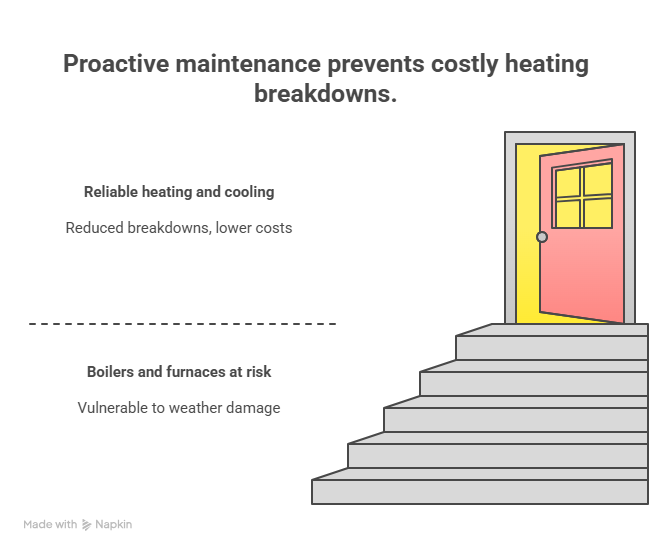
Experts emphasize that routine maintenance reduces breakdown risks by more than 25 percent, sparing homeowners expensive downtimes.
Maintenance Differences: Why Pros Make the Difference
The maintenance of boilers is based on water chemistry, such as descaling and pressure tests, which require professional tools, such as pH testers that are not available to DIY. Furnaces require knowledge of airflow; experts use anemometers to identify leaks in ducts, which are prevalent in older homes. Both systems require testing of CO, although more attention should be given to the water seals of boilers and ignition checks of furnaces.
Your Boiler and Furnace Survival Plan
Don’t get caught by winter and have your boiler or furnace deal with the build-up of scale, clogged filters, and secret leaks, which can get out of control. Routine inspections that suit the requirements of your respective system keep your home welcoming and secure; however, elaborate repairs require professional skills.


.svg)

.jpg)
.jpg)
.jpg)