
The Housing Squeeze: How Cities Are Forcing Americans to Rethink Space

.jpg)
In San Francisco, the average rent for a one-bedroom apartment still hovers around three thousand dollars. In New York, renters routinely spend more than half their income just to secure a few hundred square feet of living space. The paradox is clear. In some of the wealthiest regions of the country, residents are living smaller than ever.
This is not a passing inconvenience. It is a structural shift in how Americans define home. Rising costs, limited supply, and cultural change are compressing square footage and reshaping expectations. The housing squeeze has arrived, and it is rewriting the American dream one room at a time.
Why Less Has Become the New Normal
The story begins with economics. According to the Harvard Joint Center for Housing Studies, nearly half of all renters in the United States are cost-burdened. In high-cost metros like San Francisco and Los Angeles, the proportion is even higher. Developers have responded with smaller units that maximize efficiency and affordability.
What used to be dismissed as cramped or inadequate is now marketed as “micro-living.” Design magazines praise hidden storage and fold-down furniture. On TinyHouse.com, resources such as the planning guide explain why intentional design has become essential in a market where space is scarce and every square foot carries a premium.

The Migration Response
Not everyone adapts by living smaller. Many Americans are leaving high-cost metros for more affordable states. Census data shows California, New York, and Illinois consistently losing residents, while Texas, Florida, and North Carolina are gaining. This shift has created a two-track housing story.
In places like Dallas or Charlotte, families often find they can move into larger homes for a fraction of what a studio would cost in San Francisco. But for those who remain in expensive coastal cities, downsizing is unavoidable. In San Francisco, families often rely on San Francisco moving services to handle relocations into smaller apartments or co-living arrangements. These moves are not only logistical but symbolic of a broader cultural reset: space has become a privilege, not a guarantee.
Culture Is Catching Up
For decades, American housing culture glorified more space. The postwar boom created sprawling ranch homes, and the 1990s McMansion era equated success with square footage. But that narrative is fading in urban centers.
Brooklyn residents turn 300-square-foot lofts into showcases of minimalism. In Los Angeles, the legalization of ADUs has led to a wave of backyard studios and secondary homes that redefine family property, documented by California’s Housing Department. In Washington DC, zoning reforms are opening the door to basement apartments and carriage houses.
The conversation has shifted. Small is no longer necessarily a compromise. It is increasingly seen as a design-driven choice, part of a cultural rebranding of less as more.
The Psychology of Downsizing
Economists are not the only ones tracking the squeeze. Psychologists note that smaller living environments push people toward minimalism and intentionality. The popularity of Marie Kondo’s decluttering philosophy and the pandemic-era embrace of “simplify your life” messaging reflect this shift.
Smaller spaces can mean fewer possessions, less upkeep, and more freedom. For some, that freedom comes in the form of mobility. For others, it is financial clarity. Either way, downsizing is no longer just a response to high costs. It has become a lifestyle choice with its own values and identity.

When Less Costs More
Yet the squeeze is not without contradictions. A smaller apartment in San Francisco may cost as much as a suburban home in North Carolina. Downsizing in this context is not about affordability alone. It is about access to jobs, culture, and communities that continue to cluster in expensive metros.
This is why the housing squeeze feels so profound. It is not merely economic pressure; it is a trade-off between financial strain and cultural opportunity. And while some escape to cheaper states, others accept smaller spaces as the price of admission to the lives they want.
What the Future Holds
The forces behind the squeeze show no sign of letting up. Limited supply, restrictive zoning, and high interest rates will keep space at a premium in many cities. Climate migration will add new pressure as coastal and heat-vulnerable areas reshape where people can live.
But within this challenge lies innovation. Smarter design, flexible housing models, and cultural acceptance of small spaces will become central to the housing story. On TinyHouse.com, guides like How Much Does It Cost to Build a Tiny House show how intentional construction can deliver stability even in turbulent markets.
The future of housing may not be measured in square footage. It may be measured in adaptability.
Closing Thought
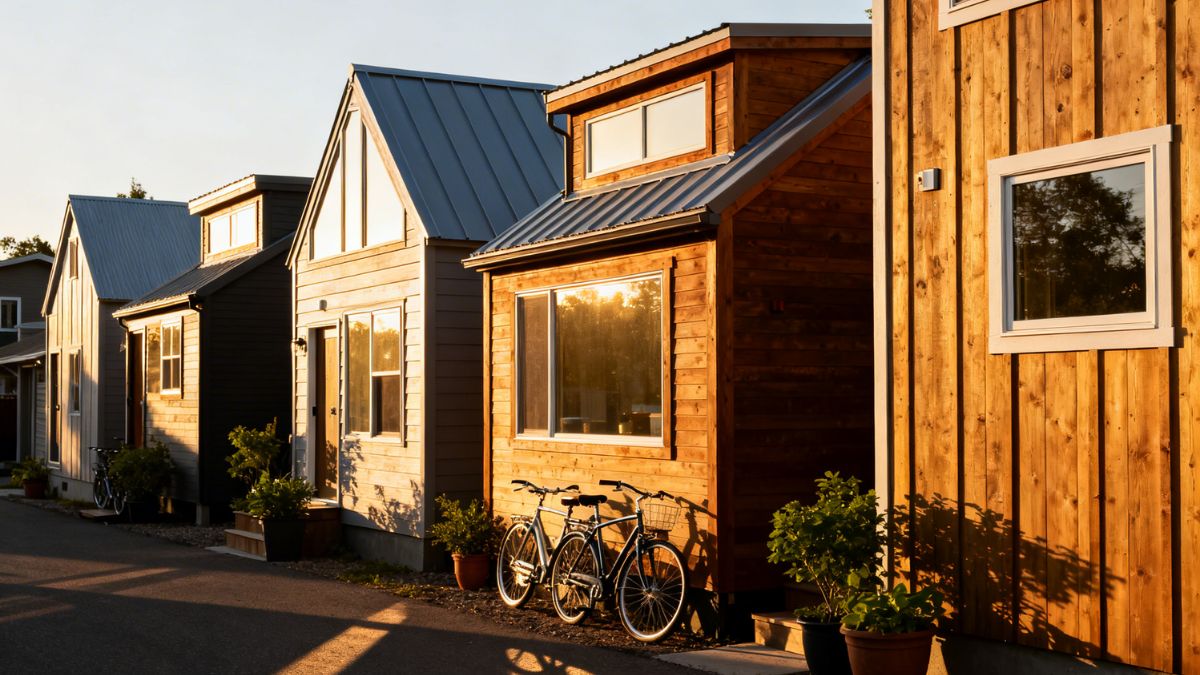
The housing squeeze is more than a real estate issue. It is a mirror of how Americans are redefining home, identity, and value. Whether through micro-apartments in San Francisco, accessory units in Los Angeles, or intentional communities built around tiny homes, the message is the same.
We are learning that space is not infinite, and neither is affordability. The question is no longer how much house we can buy, but how much space we truly need to live well.


.svg)
.jpg)
.jpg)
.jpg)