
How to Create a Functional Tiny Home Entryway with Hall Seats and Storage Benches

.jpg)
A tiny home entryway fills up faster than most people expect. Shoes gather near the door, bags slide into corners, and outdoor gear quickly runs out of places to land. Because tiny homes rely on every inch, the entryway should support daily routines rather than work against them. Hall seats and storage benches make this area more predictable by combining seating with a place to store the things that tend to collect near the door. When this zone works well, the rest of the home feels calmer and easier to live in.
Why Entryway Design Matters in Tiny Homes
In many tiny homes, the entryway blends directly into the living space. When this area becomes cluttered, the rest of the interior feels smaller and more chaotic. A defined entry supports calmer mornings and easier home maintenance. Good design helps people move through the space without bumping into piles of shoes or bags, and it also sets a tone that carries into the rest of the home.
When belongings have a place to land, the space feels settled instead of scattered. This small section of the home can also serve as a buffer between the outdoors and the indoors. A tidy entryway helps limit how much dirt spreads into living areas and keeps daily activities from feeling cramped. Over time, a well-planned entry supports a smoother rhythm in the home.
The Benefits of Hall Seats and Storage Benches for Small Spaces
Storage That Reduces Daily Clutter
Hall seats and storage benches make it easy to keep shoes, gloves, small accessories, and everyday items contained. When clutter stays hidden, the home feels more open and intentional. This kind of concealed storage is especially helpful in homes where the entryway sits only a few steps from the main seating or kitchen area.
Seating That Supports Everyday Comfort
A bench near the door makes simple tasks easier. Putting on and taking off shoes becomes a comfortable pause rather than a balancing act. This single addition often changes the feel of the entryway by giving it a clear purpose rather than letting it develop into a drop zone.
A Practical Fit for Narrow Entryways
Most tiny home entryways are narrow or irregularly shaped. A slim bench or hall seat sits well in these tighter spots without blocking movement. Many homeowners prefer sturdy pieces that can withstand everyday wear, and collections from Covered Bridge Furniture offer solid wood benches and hall seats in multiple sizes that fit smaller entryways without overwhelming the space. Choosing one well-built piece that fits the space often works better than using several smaller items that do not provide meaningful storage.
Choosing the Right Hall Seat or Storage Bench for Your Tiny Home
Material quality shapes how well a piece holds up to daily activity. Solid wood handles frequent use, maintains its structure, and develops a natural patina that suits a compact home. For readers interested in learning more about how different woods perform, this Better Homes & Gardens article on furniture materials worth investing in explains which materials provide longevity and consistent support. This type of background knowledge helps people focus on pieces that will last rather than those that look worn after a short time.
Size directly influences how the entryway works. Measuring the available depth and width helps prevent crowding. It is important to allow enough clearance for doors, lids, or drawers so the furniture remains useful rather than frustrating. A quick sketch of the space, along with measurements taken at floor level and at hip height, makes it easier to understand how the bench will work in daily routines.
Features also matter. Lift top benches store items out of sight, while open cubbies keep essentials ready for quick use. Hall seats may include hooks for coats and bags or small compartments for accessories. Cushions bring comfort to the space, and mirrors brighten an area that often lacks natural light. Matching these features to daily habits helps the entryway stay organized without extra effort. A family with children might prioritize open cubbies that are easy to reach, while someone who works outdoors may want deeper compartments for heavier gear.
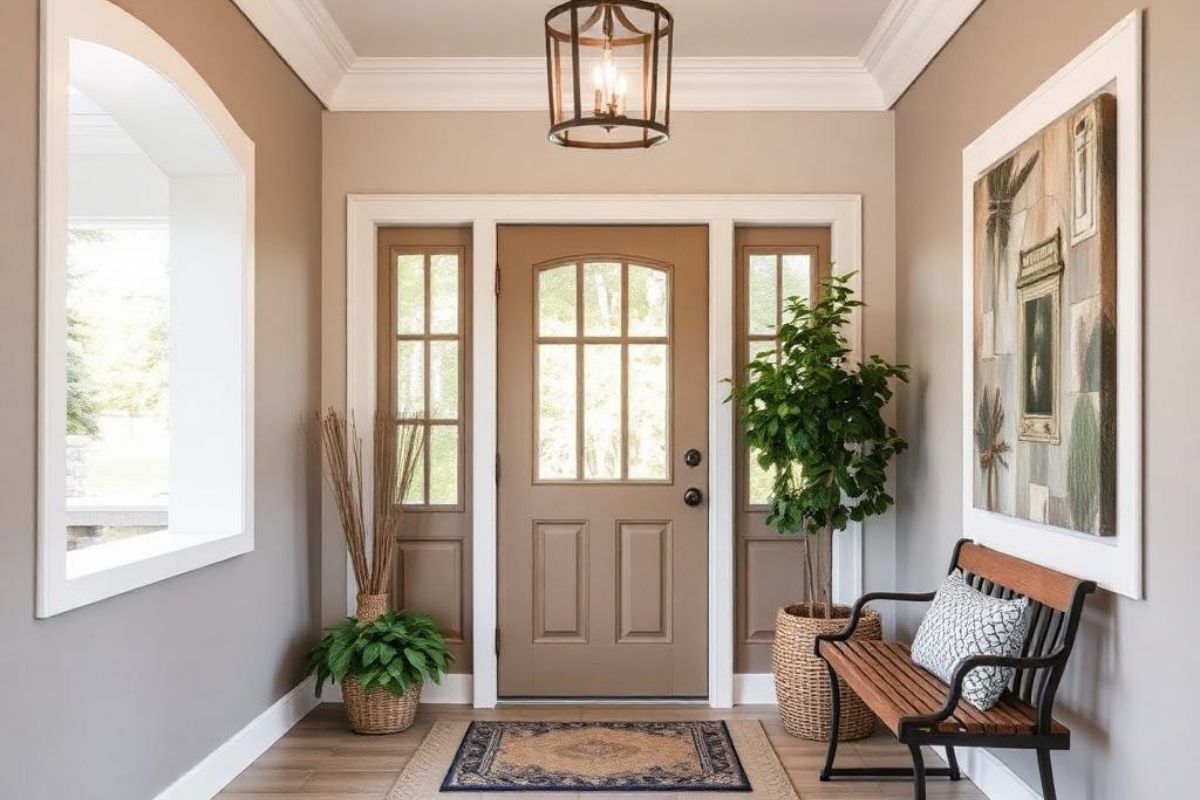
Layout Ideas for Different Tiny Home Entryways
A single-wall entryway is one of the simplest layouts. Placing a narrow bench along the wall keeps the walkway clear while providing a reliable place for daily belongings. Hooks or small shelves above the bench complete the area without adding clutter. A small tray or mat in front of the bench can help contain dirt near the door.
Corner entryways can benefit from an angled bench or a hall seat that fits naturally into the available space. Corners are often underused, and this layout type provides a helpful starting point for entering the home. A tall hall seat with hooks and an upper shelf can turn a tight corner into a compact mudroom.
Homes with lofts sometimes position the entry under the staircase. This tucked-away spot often accepts a bench comfortably since the stairs serve as a natural boundary. Placing hooks along the side of the staircase and a shallow bench below creates a compact zone that feels intentional rather than leftover space. For readers who want additional ideas for compact storage, this tiny home storage guide shares strategies that work well with these layouts. Any layout works more effectively when it reflects the household's patterns. When the furniture matches how people actually move through the space, it becomes easier to keep the area tidy without constant attention.
Styling Tips to Keep the Entryway Warm and Organized
Light colors and soft textures help a small entryway feel open and welcoming. A narrow rug or a cushioned seat adds comfort without overwhelming the space. Keeping decorative items minimal prevents the area from looking crowded, especially when it connects directly to the living room or kitchen. A single framed print or a small plant adds character without cluttering.
Hooks work well when used thoughtfully. A few placed at practical heights help organize coats and bags, and limiting the number prevents overcrowding. Baskets under the bench provide a home for smaller items while adding warmth with natural materials. Choosing storage in similar colors helps the space feel unified and calm.
Lighting also shapes how the entryway feels. A warm light source creates a sense of ease the moment someone steps inside. Mirrors brighten shadows and make the area appear larger. If natural light is limited, a compact wall sconce or a small lamp on a nearby surface can shift the mood of the space. Good styling supports daily use rather than complicating it. A few well-chosen elements help the entryway feel cared for without demanding much attention.
Simple Habits That Keep the Entryway Manageable
A tiny home entryway stays functional with steady, simple habits. Returning items to their place each day helps prevent the pileup that often happens near the door. Shoes can go into cubbies or baskets, and bags can move to hooks instead of nearby chairs or counters. Taking a brief moment to clear the bench surface each evening helps the next day begin more smoothly.
A weekly reset keeps the area in shape. Sorting out mail, outdoor accessories, or stray items gives the entry a clean look again. Checking baskets or compartments for items that no longer belong there helps improve storage efficiency. The weekly reset is also a good time to sweep or wipe the floor so dirt does not spread to the rest of the home.
Seasonal adjustments support comfort as well. Rotating coats and footwear prevents the entryway from becoming overcrowded. Each season brings different needs, and adjusting the area keeps it aligned with daily routines. During colder months, heavier coats and boots may require more space, while warmer seasons call for lighter outerwear and simpler storage.
Conclusion
A small entryway does not need to feel cramped or chaotic. With a hall seat or storage bench as the foundation, the space can support daily habits while keeping clutter out of sight. Careful sizing, practical features, and a layout that matches the home's shape help the area function smoothly. Paired with steady habits and thoughtful styling, the entryway becomes a calm starting point that benefits the entire house.


.svg)
.jpg)
.jpg)
.jpg)