How to Prepare for a Move Into Tiny Living


Moving into a tiny home is not just a change in square footage. It changes how you store belongings, use appliances, manage utilities, plan routines, and think about ownership. A smaller home can reduce costs and simplify daily life, but only if the move is planned carefully.
Tiny living works best when the home is designed around real habits, not idealized minimalism. Before downsizing, you need to understand what you use, what you can release, and what systems will support comfort in a compact space.
The goal is not to own nothing. The goal is to own what fits your life and your home.
Start With the Reason for Downsizing
Before choosing a tiny home layout, define why you want to move. Some people want lower housing costs. Others want less maintenance, mobility, environmental efficiency, or a simpler lifestyle.
Your reason affects every decision.
If affordability is the goal, the budget should include land, utilities, permits, insurance, transport, maintenance, and storage. If mobility is the goal, weight, towing capacity, and road regulations matter. If simplicity is the goal, storage and daily routines need close attention.
A clear reason helps you avoid building a tiny home that solves the wrong problem.
Decide What to Do With Your Current Home
Many tiny living transitions begin with a larger property that no longer fits. Selling, renting, or keeping that property changes the financial plan.
A traditional sale may work if you have time to prepare, list, show, negotiate, and close. Renting may provide income but adds management responsibility. A direct sale may be useful when speed or simplicity matters.
For example, homeowners researching we buy houses Odessa TX services may be comparing faster sale options if they want to move into tiny living without managing repairs, staging, and repeated showings.
The right path depends on equity, property condition, timeline, and how much cash you need for the tiny home move.
.jpg)
Measure Your Real Space Needs
Tiny living requires precision. Guessing how much space you need usually leads to frustration.
Track how you use your current home for two weeks. Note where you cook, work, sleep, store tools, fold laundry, read, exercise, and relax.
Then compare those habits with your proposed floor plan.
A tiny home should support daily life. If you work remotely, you need a real work zone. If you cook often, you need counter space and pantry planning. If you have pets, their food, bedding, and movement paths need to fit too.
Declutter by Function, Not Emotion
Downsizing works better when you sort belongings by use. Start with categories such as clothing, kitchen tools, books, tools, documents, hobby gear, furniture, linens, and seasonal items.
Ask one practical question: will this item have a defined place and regular use in the tiny home?
Sentimental items should be edited carefully, not rushed. Keep the pieces that carry the most meaning. Photograph items you do not need to physically keep.
Categories to Review First
Start with items that take the most space:
- Duplicate kitchen tools
- Oversized furniture
- Extra linens
- Unused clothing
- Old paperwork
- Holiday decor
- Large hobby equipment
- Books you will not reread
- Storage bins of unknown items
Tiny living becomes easier when every item has a reason and a location.
Build Storage Into the Design
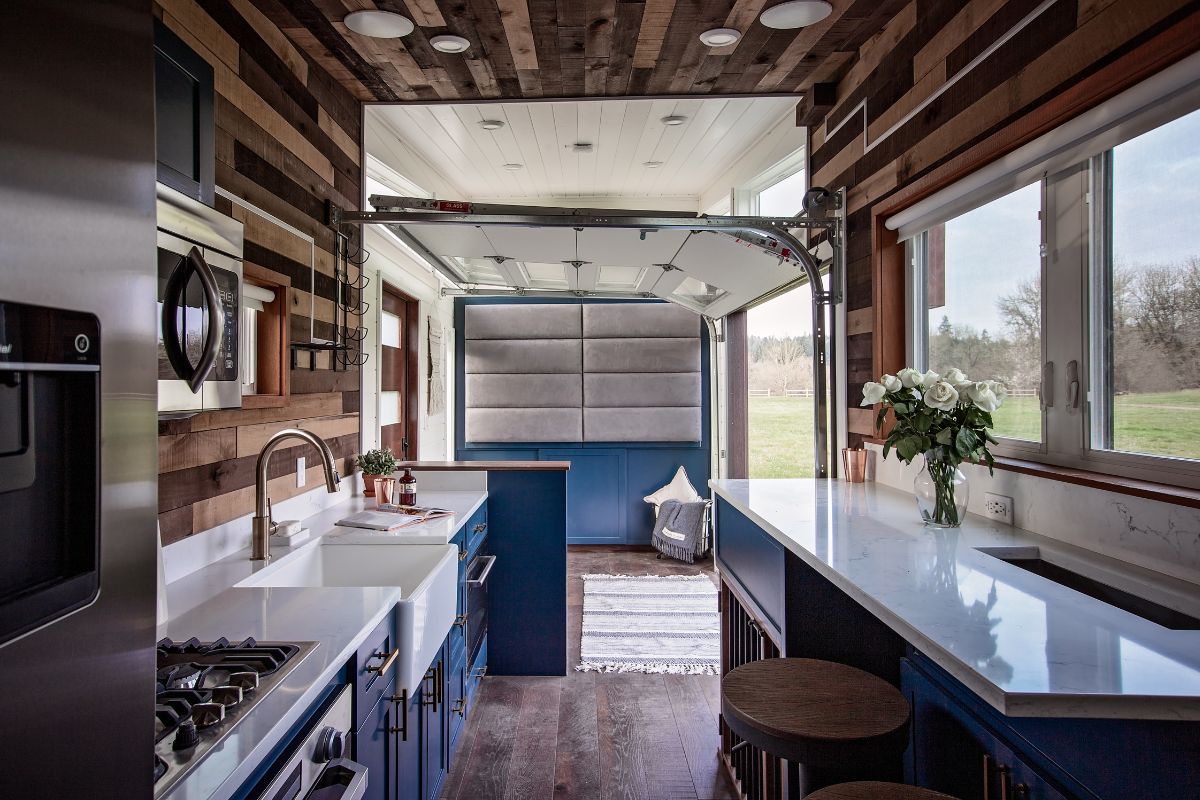
Storage in a tiny home should be intentional. Loose storage bins and random hooks will not solve the problem.
Use vertical space, toe-kick drawers, under-bed storage, wall-mounted shelves, built-in benches, fold-down desks, magnetic strips, and ceiling-height cabinets.
Open storage should be limited. Too many visible items make a small space feel cluttered.
Closed storage helps the home feel calmer, but it must be easy to access. Deep cabinets can become wasted space if items disappear behind each other.
Choose Appliances Carefully
Appliances shape tiny home function. A refrigerator, cooktop, washer, water heater, HVAC unit, and ventilation system all affect layout, power load, water use, and storage.
Small appliances are not always better. A unit that is too small may create daily frustration. A unit that is too large may waste space and energy.
Refrigeration deserves extra attention because food storage affects shopping habits and meal planning. Choose a refrigerator based on how often you cook, how far you live from stores, and whether you need freezer space.
If you are moving into a used tiny home or downsizing with existing appliances, check service history and performance. Reliable support for refrigerator repair TX can be useful when evaluating whether to repair an existing unit or replace it before the move.
Appliances should be selected before finalizing cabinetry, plumbing, and electrical plans.
Plan Utilities Before Move-In
Tiny homes can use grid connections, off-grid systems, or hybrid setups. Each option affects cost and daily routines.
Electricity, water, sewage, internet, propane, heating, cooling, and waste disposal all need clear plans.
A beautiful tiny home will not function well if the utility setup is incomplete.
Utility Questions to Answer
Before moving in, confirm:
- Where will water come from?
- How will wastewater be handled?
- Is the electrical load sufficient?
- Will you use propane or all-electric systems?
- How will heating and cooling work?
- Is internet reliable enough for work?
- Are permits or inspections required?
- Is trash and recycling service available?
Utility planning should happen early because changes can be expensive after construction.
Test Your Layout Before Committing
A tiny home floor plan can look efficient on paper but feel tight in real life. Test dimensions before committing.
Use painter’s tape on the floor to mark bed size, kitchen counters, bathroom space, desk area, and walking paths. Practice opening cabinet doors, moving around the bed, and using the kitchen.
Check whether two people can pass each other. Check whether pets have room to move. Check whether you can carry groceries, laundry, or tools through the space.
A few inches can make a major difference in a tiny home.
.jpg)
Prepare for Lifestyle Changes
Tiny living changes habits. You may shop more frequently, clean more often, own fewer backups, and spend more time outdoors.
Noise, clutter, and moisture become more noticeable in a small space. Ventilation matters. So does daily tidying.
Shared tiny living also requires communication. Couples, families, or roommates need clear expectations about privacy, chores, storage, and quiet time.
The home may be small, but the routines need to be well designed.
Create a Transition Timeline
Do not treat the move as one big event. Break it into stages.
First, decide what will happen to your current home. Then reduce belongings, finalize the tiny home plan, confirm utilities, schedule transport or setup, arrange insurance, update addresses, and prepare move-in essentials.
Move only what you know will fit. Avoid bringing “maybe” boxes into the tiny home. They will create clutter immediately.
Final Thoughts
Moving into tiny living requires practical preparation. You need a clear reason, a plan for your current home, realistic space measurements, careful downsizing, built-in storage, properly sized appliances, and reliable utility systems.
Tiny living is not about squeezing a full-size lifestyle into a smaller shell. It is about designing a home around what you actually use.
When the move is planned with discipline, a tiny home can feel efficient, comfortable, and freeing instead of restrictive.


.svg)
.jpg)