
Impact Socket vs Standard Socket: Key Differences You Should Know

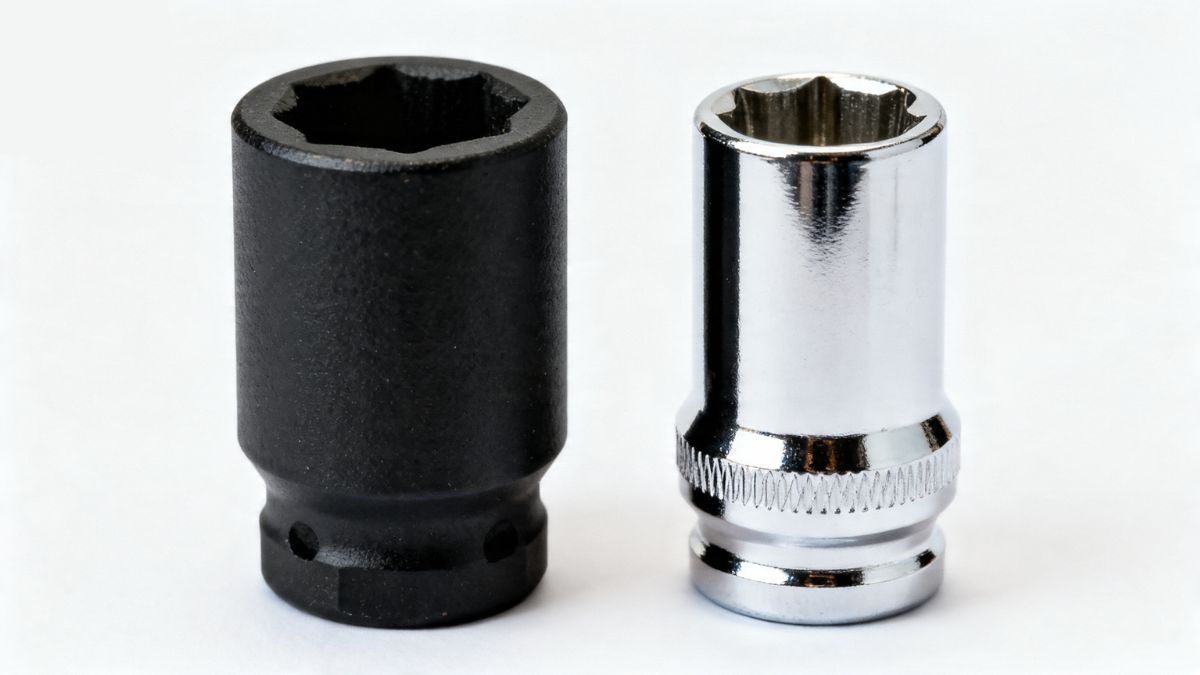
Sockets may look similar at first glance, but the difference between impact and standard sockets can affect your safety and the life of your tools. Impact sockets are made from chrome molybdenum steel and designed to handle the high torque and force from power tools, while standard sockets use chrome vanadium steel and work best with hand tools. If you use the wrong type of socket, you risk cracks, breaks, and damaged equipment.
Many people grab whatever socket fits their bolt without considering what tool they use to turn it. However, this common mistake can lead to dangerous failures and costly repairs. Impact wrenches and air tools create intense force that standard sockets cannot withstand over time.
This guide will help you understand what sets these two socket types apart and how to choose the right one for each job. You will learn about their materials, design features, and the specific situations where each type performs best.
Key Differences Between Impact Sockets and Standard Sockets
Impact sockets and standard sockets differ in their materials, construction methods, and surface treatments. These variations affect how each type performs under different levels of force and which tools you should use them with.
.jpg)
Material Composition and Hardness
Impact sockets use chrome molybdenum steel as their base material. This metal provides better flexibility and shock absorption compared to the chrome vanadium steel found in standard sockets. The chrome molybdenum construction allows the socket to bend slightly under extreme force rather than crack or shatter.
Standard sockets rely on chrome vanadium steel, which offers excellent hardness for hand tool applications. However, this same hardness becomes a weakness under repeated impacts. The material can't absorb the shock from power tools effectively.
Manufacturers treat impact sockets through a heat process that makes them softer than standard sockets. This reduced hardness helps the socket flex and return to its original shape. Standard sockets go through different heat treatments that prioritize surface hardness over flexibility.
Coating and Finish
Impact sockets receive a black oxide or phosphate coating that protects against corrosion. This dark finish results from a carbonization process applied to the chrome molybdenum base. The coating also helps you identify impact-rated tools quickly in your toolbox.
Standard sockets typically have a bright chrome plating that's easy to clean and looks professional. If you have an impact socket set with chrome vanadium finish, you're likely dealing with standard sockets that manufacturers have incorrectly labeled. The chrome finish on standard sockets can chip or crack under impact tool use, which creates sharp edges and potential safety hazards.
Wall Thickness and Design
Impact sockets feature thicker walls throughout their structure. The extra material provides added strength to handle the torque from impact wrenches and air tools. You'll notice impact sockets feel heavier in your hand due to this additional metal.
The design also includes a different internal structure. Impact sockets distribute force more evenly across the socket walls. This prevents stress concentration points that could lead to cracks.
Standard sockets have thinner walls to reduce weight and cost. This works fine for hand tools that apply steady, controlled force. The thinner design also allows better access in tight spaces.
Cost and Value Considerations
Impact sockets cost more per piece than standard sockets. The price difference stems from the specialized materials and manufacturing processes required. A six-point impact socket might cost two to three times what you'd pay for a comparable standard socket.
Standard sockets offer an economical choice for general maintenance work. If you only use hand tools like ratchets and breaker bars, standard sockets provide adequate performance at a lower price point.
The value equation changes with your tool usage. Impact sockets last longer under power tool stress and prevent the replacement costs associated with broken standard sockets. You also avoid the downtime and potential injury risks that come from socket failure during high-torque applications.
Choosing the Right Socket for Your Needs
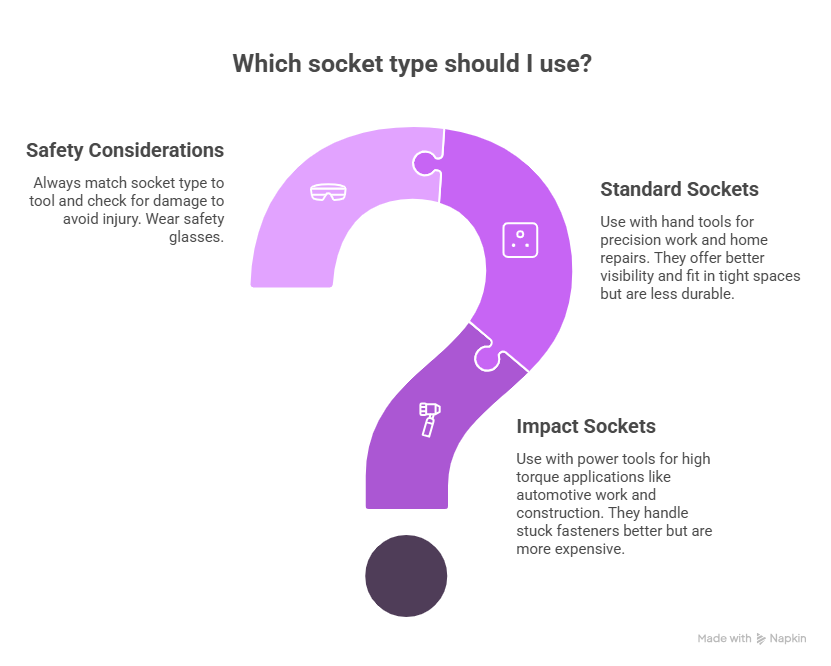
Your choice between impact and standard sockets depends on the tools you use and the type of work you plan to do. Power tool applications require different socket properties than hand tool work, and you need to match your socket type to your equipment for safe results.
Applications for Impact Sockets
You should use impact sockets with any air-powered or electric impact tool. These sockets work best with impact wrenches, impact drivers, and air ratchets because they can handle the repeated stress these tools create.
Impact sockets are the right choice for automotive work that needs high torque. You'll find them necessary for lug nuts, suspension bolts, and engine components that need significant force to remove or tighten. The construction industry also relies on these sockets for structural steel work and heavy equipment maintenance.
These sockets handle stuck or rusted fasteners better than standard versions. However, you don't need them for every job. Light-duty tasks with low torque requirements work fine with standard sockets, even if you have an impact wrench available. The extra durability comes at a higher cost, so save impact sockets for jobs that actually require their strength.
Best Uses for Standard Sockets
Standard sockets work perfectly with hand tools like ratchets, breaker bars, and torque wrenches. You should use these for any precision work that requires specific torque values. Torque wrenches perform most accurately with standard chrome sockets rather than impact versions.
Most home repair projects need only standard sockets. Tasks like furniture assembly, appliance repair, and general household maintenance involve lower torque levels that standard sockets handle without problems. You can also use them for automotive work that doesn't require power tools, such as interior trim removal or light engine bay work.
Chrome sockets give you better visibility in tight spaces because their shiny finish reflects light. This makes them useful for detailed work under hoods or inside cabinets. The thinner walls on standard sockets also fit better in confined areas where impact socket walls might be too thick.
Safety Considerations When Select Sockets
Never use standard sockets with impact tools. The brittle chrome finish can crack and send sharp metal fragments toward you or others nearby. This creates a serious injury risk that you can easily avoid by simply matchting the right socket type to your tool.
Check your sockets before each use for cracks, chips, or deformation. Damaged sockets of either type pose safety hazards and should be replaced immediately. Impact sockets can fail too if they've been overloaded or dropped repeatedly on hard surfaces.
You must also verify that your socket size matches both the fastener and your tool's drive size. A loose fit can cause the socket to slip off and round the fastener head. This damages your work and can cause the tool to kick back unexpectedly. Always wear safety glasses regardless of which socket type you use, as metal-on-metal contact can produce flying debris.
Conclusion
The right socket choice comes down to your specific task and tool requirements. Impact sockets work best with power tools because they handle high torque and resist shattering under stress. Standard sockets suit hand tools and lighter jobs where precision matters more than raw force.
You should never use standard sockets with impact wrenches, as this creates safety risks and leads to tool damage. However, you can safely use impact sockets with hand tools, though they cost more than standard options. Match your socket type to your tool and job demands to protect both your equipment and yourself.


.svg)


.jpg)
.jpg)