
The Moisture Barrier: Why High-Performance Shower Seals are a "Must-Have" for Tiny Home Longevity

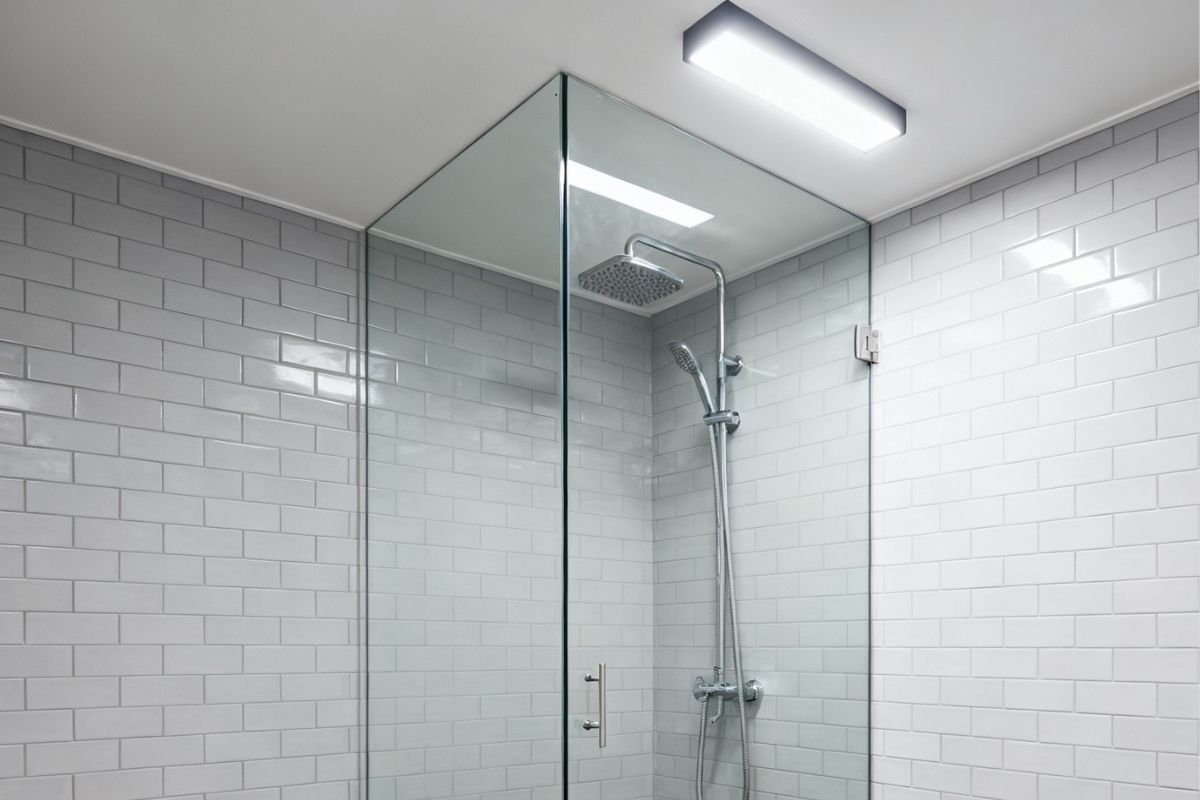
The tiny house movement has fundamentally redefined our perception of domestic space, pushing the boundaries of architectural efficiency and minimalist living.
However, condensing a fully functional lifestyle into less than 400 square feet introduces unique engineering challenges—most notably in the "wet zone."
In a traditional brick-and-mortar home, a minor shower leak is a mere inconvenience; in a tiny home, it can escalate into a structural catastrophe.
For tiny house owners and builders, the bathroom is often the most complex and proportionately expensive area to design.
True relaxation at the end of a busy day depends on a flawless waterproofing system.
Today, we delve into a frequently overlooked component that acts as the final line of defense: the shower door seal.
The Vulnerability of Tiny Footprints
In a standard residential setting, bathrooms are typically constructed over concrete slabs or heavy timber joists with significant buffer zones between the shower and the rest of the living space. In contrast, many tiny homes—especially Tiny Houses on Wheels (THOWs)—utilize lightweight timber frames or Steel Structural Insulated Panels (SIPs).
These structures are far more sensitive to moisture ingress. A failed seal that allows even a few ounces of water to seep into the subfloor daily can lead to localized rot, delamination of plywood, and the rapid proliferation of black mold within wall cavities. Because the living area, kitchen, and sleeping loft are often only inches away from the shower tray, the relative humidity and structural risk factors are significantly amplified.
One factor that sets tiny home bathrooms apart from traditional ones is movement. For those living a nomadic or semi-permanent lifestyle, their home is subject to the stresses of road vibration, wind loads, and thermal expansion/contraction.
Static bathroom fixtures are suddenly transformed into dynamic components. A standard, rigid shower seal that performs adequately in a stationary apartment may fail when subjected to the micro-flexing of a tiny house chassis. If the seal does not possess the necessary durometer (material hardness) to maintain a grip on the glass while remaining flexible enough to absorb movement, the "water-tight" barrier is quickly compromised.
The Hidden Cost of "Universal" Solutions
Many DIY enthusiasts, in an attempt to manage build costs, turn to "universal" seals found in local big-box hardware stores. However, these products are often manufactured from low-grade PVC lacking essential UV stabilizers.
In a tiny home, where natural light is maximized through strategic window placement, these inferior seals tend to become brittle and yellow within months due to UV exposure. Furthermore, large retailers rarely stock precise specifications for varying glass thicknesses and gaps. This leads to a "one-size-fits-none" scenario where over-extended fins are forced into awkward angles, creating excessive pressure that accelerates material fatigue and failure.
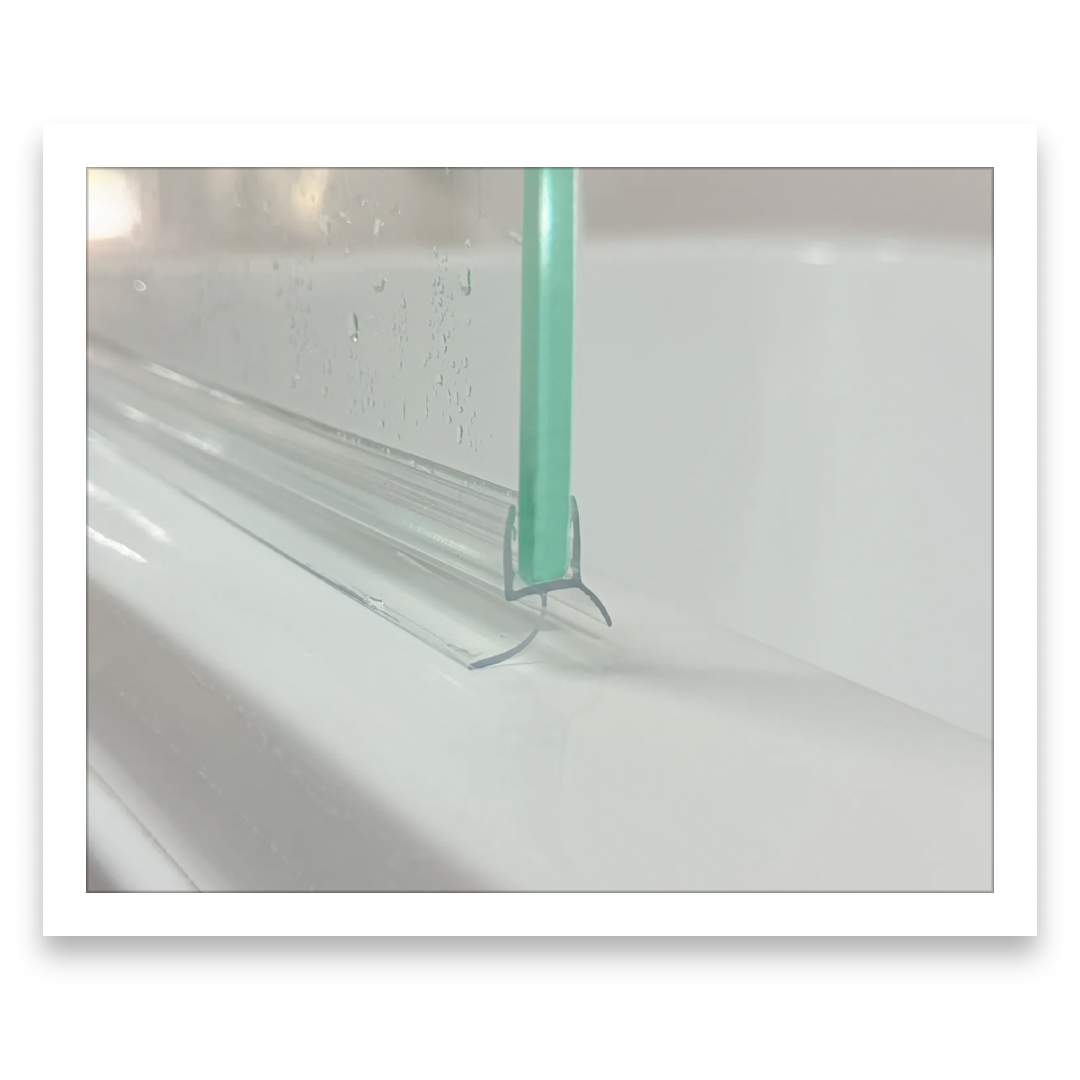
To ensure long-term structural integrity, many professional builders now specify SIMBA professional grade shower door seals].
Unlike general retailers, specialist manufacturers focus exclusively on water containment, offering a diverse range of profiles tailored to specific gaps and door types.
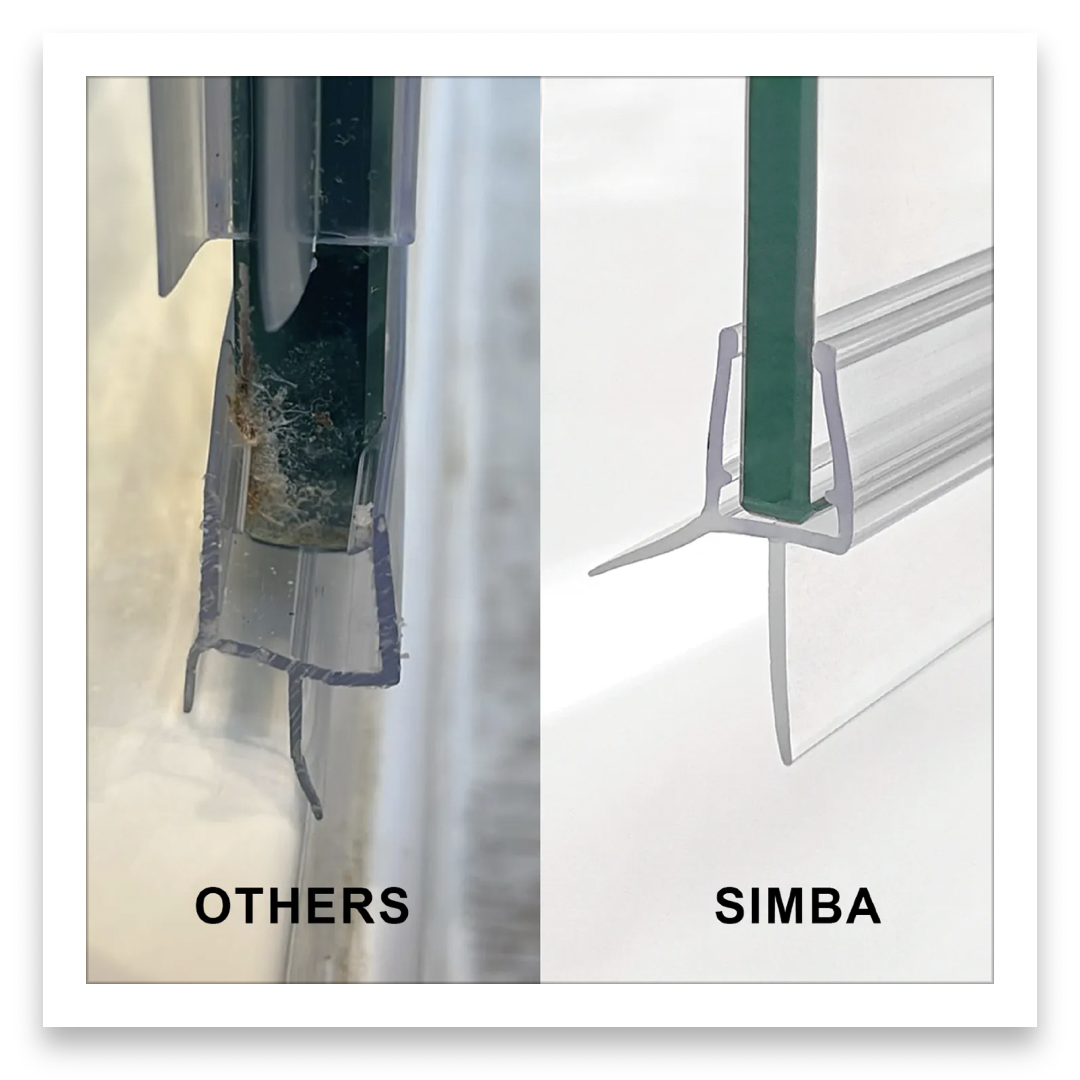
These high-performance components utilize 100% virgin, UV-resistant PVC. By employing a dual-material design—a rigid "spine" for secure glass attachment and soft, flexible fins for water deflection—they provide the precision required to prevent capillary action from drawing water outside the shower zone.
Gravity and Leveling: The Off-Grid Challenge
Living in a tiny home often means parking on terrain that isn't perfectly level. Even with stabilizers, a 1- or 2-degree tilt can completely redirect the path of gravity-fed water.
A standard bottom seal designed for a perfectly level tray may allow water to "pool" and eventually bypass the barrier if the house is slightly pitched. Professional-grade systems, such as those from SIMBA, address this through a sophisticated multi-fin redirection design:
The Primary Drip Rail: An elongated side rail that deflects the majority of the water-flow back into the tray.
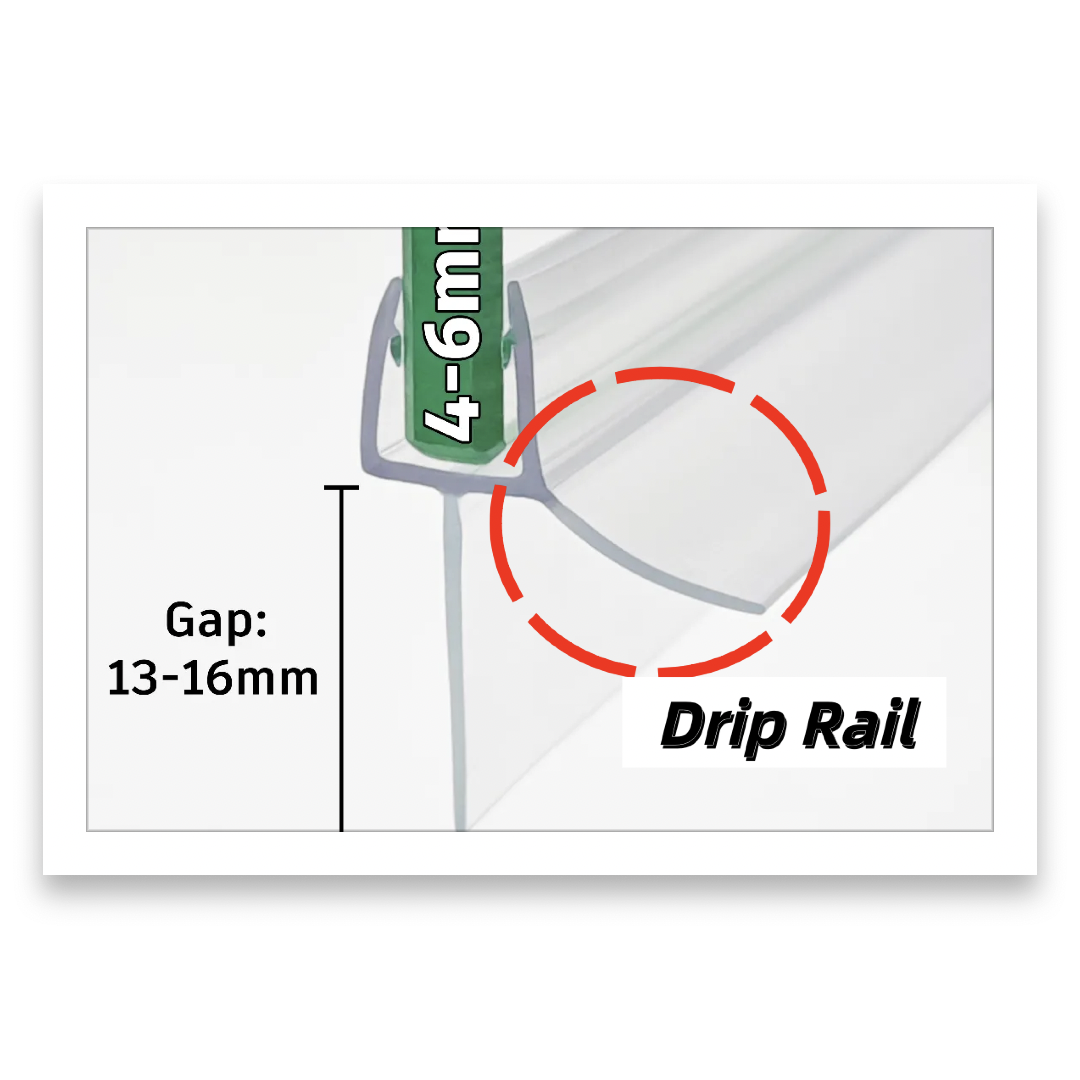
The Secondary Soft Fin: A bottom fin that catches residual spray and directs it toward the drain.
The Threshold Barrier: Advanced sealing systems, such as those developed by specialists like SIMBA, now often incorporate secondary transparent threshold guards to create a 'triple-layer' failsafe.
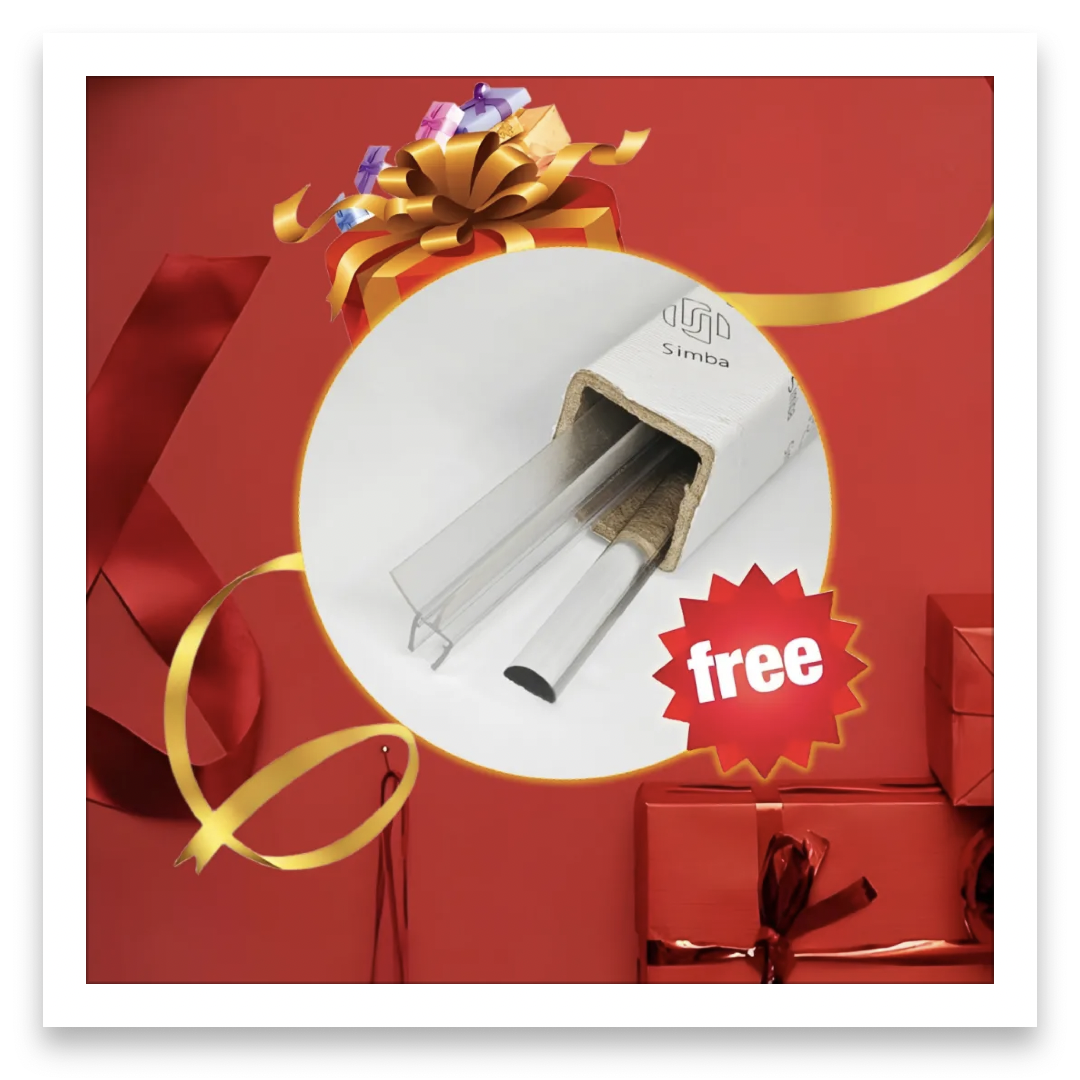
This level of engineering ensures that even if you are showering on a slight incline, the structural subfloor remains protected.
Maintenance and Longevity: A Sustainable Approach
The tiny house philosophy is rooted in sustainability and waste reduction. Low-quality seals are contrary to this ethos, often requiring replacement in less than a year. Professional-grade PVC seals are tested for over 30,000 cycles, ensuring years of reliable use.
Technical Note: Since these seals are made of high-purity PVC, they have a maximum thermal threshold of approximately 70°C. Avoid direct contact with boiling water to maintain the material's structural memory.
DIY Installation Tips for Tiny Bathrooms
If you are currently finishing your compact bathroom, follow these professional tips for a perfect seal:
Precision Measurement: Use a digital caliper to measure your glass thickness (typically 6mm, 8mm, or 10mm). The seal must be an exact match for the glass. A loose fit allows water to be trapped against the glass, leading to limescale buildup or the seal slipping off during door operation.
Surface Preparation: Before installation, clean the glass edge with a 1:1 mixture of water and white vinegar to remove invisible residues and oils.
The Proper Cut: Use heavy-duty shears or garden secateurs for a clean cut. To avoid frayed edges, ensure the rigid U-channel is facing upwards and the soft fins downwards during the cutting process.
The "Pre-load" Check: Ensure the bottom fin has a slight "pre-load" (light pressure) against the threshold, but not so much that it causes the door to bind or strain the hinges.
Conclusion
In the realm of tiny house construction, success is found in the details. While solar arrays and clever storage solutions often grab the headlines, it is the humble shower seal that quietly protects the home's structural integrity. By investing in professional-grade components, builders can ensure their sanctuary remains dry, healthy, and rot-free for decades to come.
Article provided by SIMBA, a specialist UK manufacturer with 25+ years of experience in waterproof containment for high-end and compact bathroom environments.


.svg)

.jpg)
.jpg)
.jpg)