
Protecting Tiny Homes From Water and Moisture Damage


Tiny homes offer simplicity and efficiency, but their compact design makes them more vulnerable to moisture and water damage. Even minor leaks or high humidity can cause issues to spread quickly across the limited living area. Preventative action and careful planning are essential to maintain a healthy, safe, and comfortable environment in these small dwellings.
Why Tiny Homes Face Unique Moisture Challenges
Moisture problems are intensified in small spaces. Limited air circulation means condensation builds up easily during cooking, showering, or even daily living activities. Kitchens and bathrooms are positioned close to living and sleeping areas, which allows humidity to travel fast.
Some basement moisture control & flood prevention tips can also apply to tiny homes, though adjustments are needed to suit the scale and layout. Foundation type influences exposure, with trailer-based homes facing splashback and ground moisture, while pier foundations may allow dampness to rise underneath.
Without strong ventilation, these challenges can quickly lead to mould, mildew, and damage to building materials. Addressing air movement and drainage from the outset provides a strong foundation for long-term protection.
Common Water Entry Points in Tiny Homes
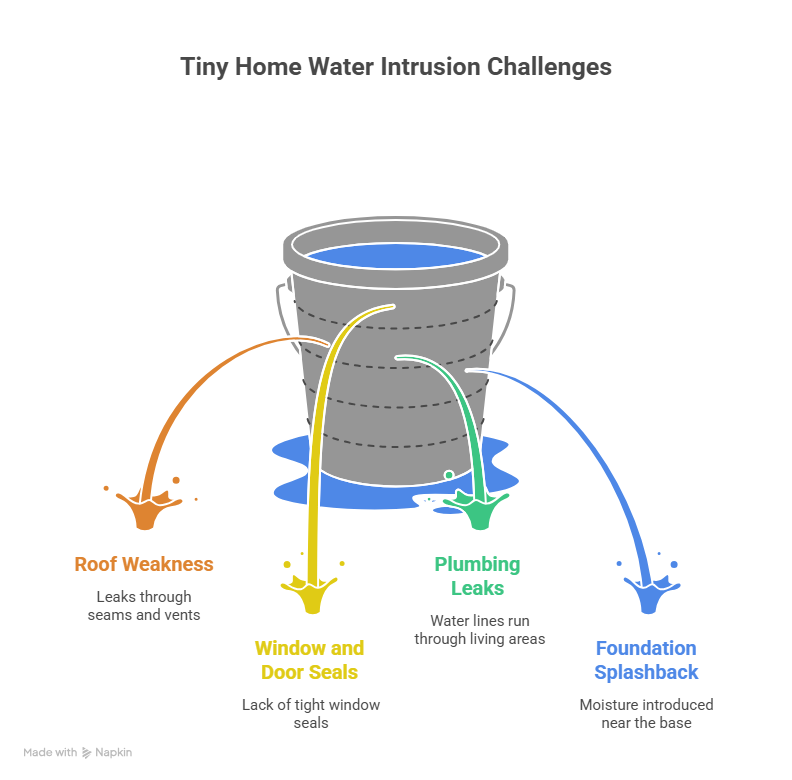
Roofs, windows, and doors are the most common entry points for water. Seams around skylights or vent pipes often weaken, while reused or custom windows may lack tight seals. Regular resealing and maintenance are essential.
Plumbing also presents risks in such compact layouts. Water lines often run through living areas rather than behind walls, making leaks visible but also immediately damaging. Installing shut-off valves near sinks and appliances helps reduce impact.
Even the base of the home can allow water to enter. Splashback from roads or heavy rains near the foundation introduces moisture unless gutters, barriers, or proper drainage are in place.
Signs of Hidden Moisture Problems
Tiny homes can show signs of moisture damage in both obvious and subtle ways. Water stains on ceilings and walls often reveal roof leaks, while swelling or buckling in building materials points to hidden dampness. These visual clues are often the first signal that something needs attention.
Odours can be just as telling. A persistent musty smell often indicates mould or mildew growth, even if no visible signs are present. Health issues such as allergies or respiratory discomfort that ease when leaving the home but return inside also suggest hidden problems with dampness.
Regular inspections are critical because the confined size of tiny homes means damage spreads quickly. Checking under sinks, around windows, and in corners where air circulation is weakest helps identify problems before they escalate. Acting on these early warnings prevents larger and more expensive repairs later.

Space-Efficient Waterproofing Solutions
Protecting a tiny home from water intrusion requires creative solutions that make the most of limited space. Using marine-grade sealants and closed-cell insulation during construction provides long-lasting resistance to moisture. Choosing water-resistant materials for cabinetry, flooring, and walls further reduces the risk of long-term damage.
Technology also offers valuable tools. Compact dehumidifiers, either portable or wall-mounted, remove excess humidity without occupying much space. Wireless moisture sensors can be installed near plumbing, windows, and other vulnerable areas. These devices connect to smartphones, giving instant alerts that allow owners to act before small leaks develop into serious problems.
Ventilation is another essential defence. Exhaust fans in kitchens and bathrooms should be sized appropriately for the small footprint of a tiny home. Heat recovery ventilators offer continuous airflow while retaining energy, making them particularly useful in tightly built homes where natural ventilation is limited. Together, these measures help maintain a dry and healthy environment.
DIY vs Professional Waterproofing
Many preventative steps are well suited to hands-on homeowners. Applying sealants to exterior joints, installing gutter extensions, or setting up dehumidifiers are straightforward tasks that can make an immediate difference. Compact moisture meters are affordable and allow residents to test walls and hidden corners for dampness without specialist tools.
Construction choices also play an important role. Using marine-grade plywood or epoxy-based coatings, which are designed to withstand high moisture conditions, improves durability in areas most exposed to water. Small upgrades in materials during construction or renovation can significantly reduce future risks.
There are, however, limits to what can be managed without professional support. Persistent leaks, sagging floors, or mould within wall cavities require experienced contractors. Professionals with knowledge of small-space construction can provide solutions that address the root cause, protecting both the structure and the health of those living inside.
Seasonal Moisture Control Strategies
Different times of year bring different challenges for tiny homes. In winter, condensation forms as warm indoor air meets cold surfaces, leading to damp windows and walls. Using insulated curtains and running a small dehumidifier helps keep these areas dry.
Spring often brings heavy rainfall, which increases the risk of flooding or water pooling near the home. Elevating mobile units on blocks prevents splashback, while stationary homes benefit from properly designed drainage systems that direct water away from foundations.
Summer introduces higher humidity levels, making dehumidifiers and air conditioning especially useful. Autumn is a good time for preventative maintenance, such as resealing roof seams, refreshing exterior coatings, and inspecting window seals before storms arrive. A seasonal checklist ensures these tasks become routine rather than reactive.

Long-Term Protection Planning
Moisture prevention is most effective when it becomes part of a long-term plan. Routine checks such as monthly plumbing inspections, quarterly reviews of seals and ventilation, and annual roof assessments create a strong maintenance cycle. This proactive approach ensures small issues are resolved quickly before they grow into larger concerns.
Simple upgrades provide additional resilience. Installing gutters, adding roof overhangs, or applying waterproof coatings all help shield the home from heavy rain. Landscaping also matters: sloping soil away from the structure and using gravel beds or French drains prevents water from pooling around the base of the property.
Keep Your Tiny Home Safe with Smart Moisture Protection
Protecting a tiny home from water and moisture damage requires consistent attention, regular inspections, and smart design choices. By applying targeted prevention strategies and learning from proven practices, homeowners can maintain comfort and protect their investment. Taking action now with effective waterproofing, ventilation, and maintenance ensures a secure and long-lasting home.


.svg)

.jpg)
.jpg)
.jpg)