
Windows That Don’t Get in the Way: Space-Saving Double-Hung Ideas for Tiny House Layouts

It is such that in a small house, the manner of opening of a window is of equal importance as the view that it presents. For example, a window which opens towards the inside can easily be damaged if the arm of the sofa is placed against it, or if the edge of a desk is used for scraping, or even if it is hit by a loft ladder. A sash that swings outward can clip a deck chair, jut into a narrow side path or brush against bushes and branches. Sliding windows stay closer to the wall, yet the open panel still occupies visual space and can interfere with shelves, wall lights or overhead cabinets when every centimeter counts.
Movement through the room is tighter as well. In a slim hallway, beside a ladder or near the foot of the bed, a projecting sash turns into an obstacle that people squeeze past, duck under or bump into.
Over time, that turns normal routines into small negotiations with the building, where opening a window means shifting a chair, folding a table or asking someone to move aside. When windows stay out of the way of daily traffic, the whole tiny house feels more settled, spacious and easy to use, even if the actual floor area is very small.
How Double-Hung Windows Free Up Space in Tight Layouts
Double-hung windows solve a lot of these layout headaches by moving straight up and down. Because the sashes slide within the frame, they do not swing into the room or out over the deck, which is exactly why many compact homes and projects looking at double hung windows ottawa options treat vertical movement as a space-saving feature, not just a style choice. You can place a bench, counter or desk close to the wall without worrying that an open sash will invade that zone.
On the outside, double-hung windows are gentle on tight spaces. They stay within the wall line instead of sticking out into a slim side yard, catching people on a path or hitting railings on a small porch. That keeps walkways and outdoor areas clearer, even when there is very little room to spare.
Room-by-Room Space-Saving Ideas
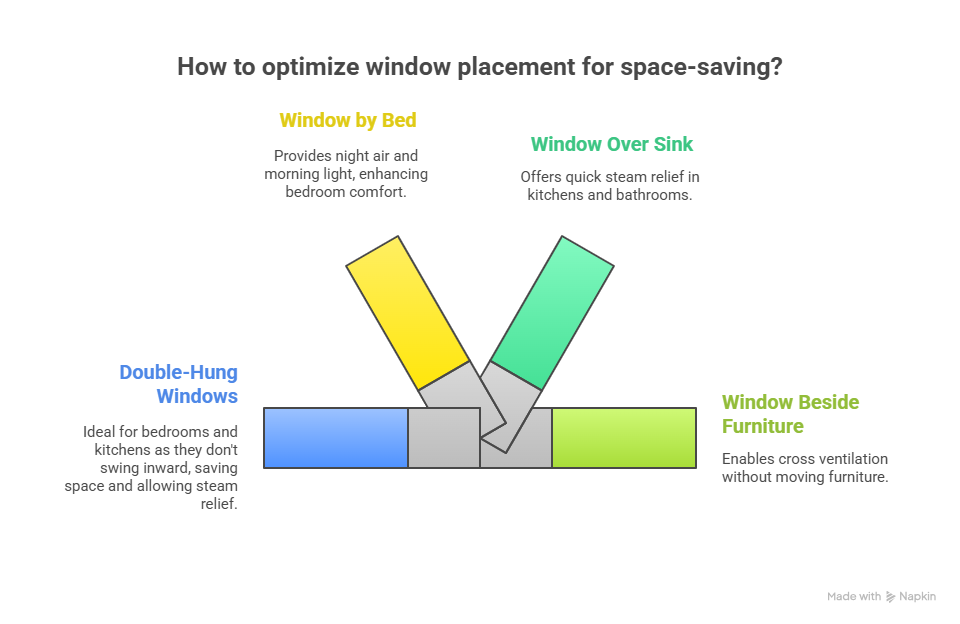
The window which swings inward in a loft or a small bedroom becomes an obstacle you have to avoid. A double-hung window over or next to the bed just goes up and down, thus it doesn’t cut across the pillows, block the ladder or make the headboard unusable. The same concept is pretty useful in kitchens and bathrooms as well. When the sash is sliding vertically instead of coming into the room, it stays at the same level with the wall, steam can get out without any problem and the handle remains easy to grab even when the sink is full and the floor is covered with baskets and towels.
One of the easiest ways to figure out the layout of these areas is by determining the primary function for each window in the room:
- By the bed for night air and gentle morning light.
- Over the sink or in the bathroom for quick, reliable steam relief.
- Beside a sofa, table or desk for soft cross ventilation without rearranging furniture.
When windows are given specific jobs like these, they stop fighting the layout and start working with it. Instead of being something to work around, they turn into quiet helpers that make tiny rooms feel more breathable, more flexible and much easier to live in every day.
Design Details That Keep Double-Hung Tiny-House Friendly
Once you know where windows should go, proportions start to matter. Sill height can decide whether you can sit underneath, place a counter across the wall, or keep storage low without blocking light. A slightly higher sill works well over a kitchen worktop, while a lower one suits a bench or daybed along the wall.
Screens, locks, and cleaning are practical details that have a big impact in a small footprint. Removable or well-fitted insect screens keep ventilation usable without turning the room into a bug corridor. Solid, easy-to-use locks support security when your house is parked or remote. Tilt-in sashes simplify cleaning, so you do not have to set up ladders every time you want clear glass.
Glazing and seals are especially important in a tiny volume, because a quick breeze can change the indoor temperature quickly. Good weatherstripping and modern glass help you air the space on your terms instead of losing heat or cooled air every time you crack a window. In practice, that means fewer sudden drafts across the bed, a more stable temperature at desk height and a loft that does not swing from stuffy to chilly every time the sash moves.
Planning and Upgrading Without Wasting Space
Fitting double-hung units into a new build is usually easiest, because you can draw sill heights, framing, and furniture together from the start. In existing tiny houses, it can still be worth replacing casements or awnings that constantly clash with doors, ladders, or outdoor furniture, even if the work happens one wall at a time.
When budget is on the table, it helps to think in hours rather than hardware. Windows that open and close every day shape sleep, cooking, working and relaxing far more than an extra cabinet or side table that has to be squeezed in. A layout that stops fighting the way the house is used is a big part of what makes small-space living sustainable.
Phasing also keeps upgrades manageable. Many owners start with the most “annoying” spots: the loft window that bangs into the ladder, the kitchen sash that hits a tap, or the bathroom unit that never opens properly. For homes in tougher climates, like Ottawa, working with local suppliers who understand both weather and tight layouts makes planning easier. A company such as Buildmart that deals with compact homes and long winters can suggest double-hung configurations that respect structure, insulation and the reality of living small, so each change moves the space closer to calm rather than adding new compromises.


.svg)
.jpg)
.jpg)
.jpg)