Strange Appliance Sounds: What They Mean and When to Worry


Your refrigerator starts making a noise you've never heard before. A rhythmic clicking that repeats every few seconds. You stand in your kitchen listening, trying to decide if it's normal or concerning. The fridge still keeps food cold, so maybe it's fine?
That clicking is your refrigerator's compressor trying to start, failing, and trying again. It's not fine. It's a warning that repair costs are coming soon, and the longer you ignore it, the more expensive those repairs become.
Appliances communicate through sounds. Most noises are normal operational sounds you've learned to ignore. But new sounds, changed sounds, or sounds growing louder over time are your appliances telling you something's wrong. Learning this language helps you catch problems early when repairs are simpler and cheaper.
This guide explains what different appliance sounds actually mean, which noises demand immediate attention, and which ones you can monitor before calling for service. Understanding these audio warnings saves you money and prevents complete appliance failures.
Refrigerator and Freezer Sounds
Refrigerators run constantly, so you're used to their normal hum. Changes to that familiar sound pattern reveal developing problems worth investigating.
Clicking That Won't Stop
Refrigerators click occasionally during normal operation. The thermostat clicking, the defrost timer switching, the compressor starting. These are brief single clicks you barely notice.
Continuous repetitive clicking every few seconds means your compressor is trying to start but can't. This happens when the compressor motor struggles, the start relay fails, or capacitors weaken. Each failed start attempt creates another click as the system tries again.
This clicking wastes electricity as the compressor draws power repeatedly without actually running. More importantly, it signals imminent compressor failure. Compressors are expensive components. Catching this early might mean replacing a $50 relay or capacitor instead of an $800 compressor.
Buzzing or Humming Louder Than Normal
All refrigerators hum from compressor and fan operation. When that hum becomes noticeably louder or changes pitch, something's working harder than it should.
Loud humming often indicates the compressor struggling due to low refrigerant, worn motor bearings, or restricted airflow from dirty condenser coils. The compressor works harder trying to maintain proper cooling, generating more noise in the process.
Buzzing might also come from the ice maker water valve vibrating, the evaporator fan hitting ice buildup, or the condenser fan hitting accumulated debris. These problems need attention before components fail completely.
Gurgling or Bubbling
Gentle gurgling as refrigerant flows through coils is normal, especially after the compressor cycles on. Loud excessive gurgling suggests refrigerant problems, possibly from leaks reducing refrigerant levels.
Bubbling combined with poor cooling performance definitely indicates refrigerant issues requiring professional attention. Refrigerant work requires licensed technicians with proper equipment. Don't ignore gurgling that seems excessive compared to your fridge's normal operation.
Grinding or Scraping
Grinding noises from refrigerators are never normal. They indicate the evaporator or condenser fan blades hitting something, worn fan motor bearings, or compressor internal damage.
Fan blades might hit ice buildup from defrost system failures. They might rub against accumulated dirt and debris. Either way, the grinding damages fan motors and creates metal particles that contaminate other components.
Compressor grinding is more serious, suggesting internal bearing failure or moving parts wearing badly. This grinding accelerates compressor death. Address it quickly or face complete compressor replacement soon.
Washing Machine Noises
Washing machines make various sounds during different cycle phases. New sounds during familiar cycles signal problems developing.
Loud Banging During Spin Cycle
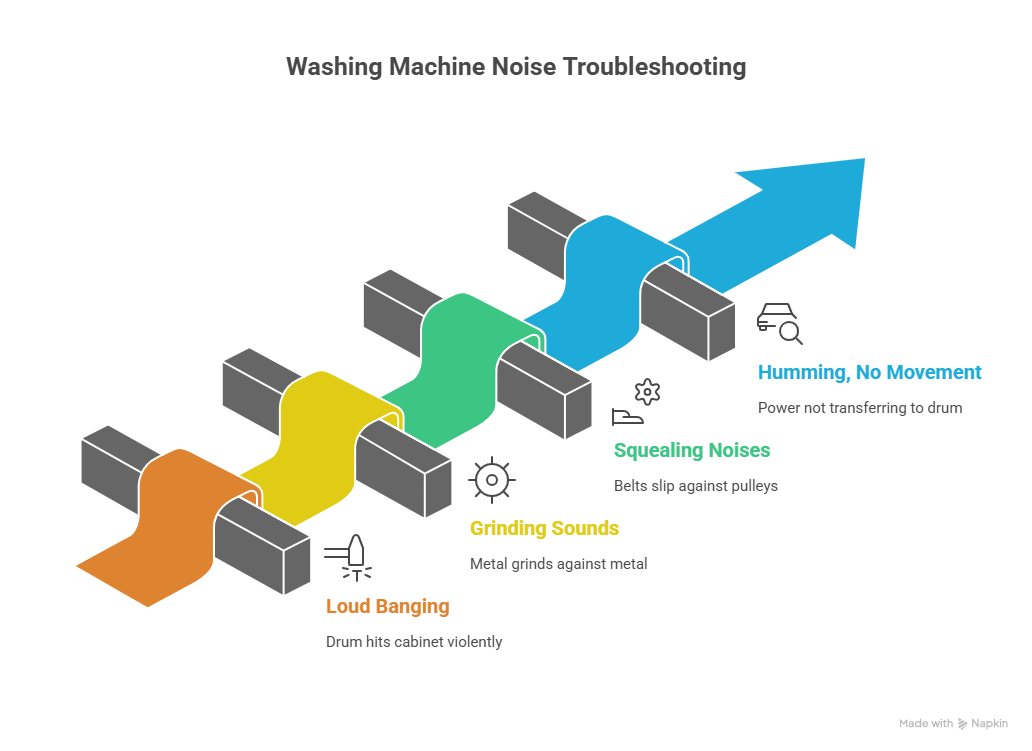
Occasional gentle thumping from unbalanced loads is normal. Loud violent banging that shakes the entire machine indicates serious problems.
Worn shock absorbers or suspension springs allow the drum to move excessively during high-speed spinning. The drum bangs against the machine cabinet, damaging both the drum and the cabinet structure.
Failed drum bearings create similar violent movements. The drum no longer spins smoothly on its axis but wobbles dramatically, creating a dangerous imbalance that damages multiple components.
Don't ignore violent banging. It's not just annoying noise. It's your machine destroying itself and potentially damaging your laundry room floor and walls from vibration.
Grinding During Agitation or Spinning
Grinding sounds during washing machine operation suggest bearing problems, transmission issues in older machines, or foreign objects trapped between the drum and tub.
Drum bearings wear over time from constant use and water exposure. As they degrade, metal grinds against metal instead of rolling smoothly. This creates loud grinding that worsens progressively until bearings seize completely.
Check pockets before washing. Coins, keys, and small metal objects fall through drum holes and get trapped in spaces where they grind against moving parts. This foreign object grinding damages the drum, tub, and whatever component the object lodges against.
Squealing or Screeching
High-pitched squealing usually indicates belt problems in belt-driven washing machines. Worn belts slip against pulleys instead of gripping properly, creating squealing friction sounds.
Squealing can also come from worn motor bearings or pulleys that need lubrication. These sounds start intermittently but become constant as wear progresses. By the time squealing is continuous, component damage is significant.
Replace worn belts promptly. They're inexpensive parts that prevent motor and pulley damage. Ignoring belt squealing leads to complete belt failure mid-cycle and potential motor damage from the sudden load change.
Humming Without Movement
If your washing machine hums but the drum doesn't move, the motor runs but power isn't transferring to the drum. This indicates belt failure, seized transmission, or broken drive coupling.
The motor trying to move a drum that can't turn draws excessive current and generates heat. This situation damages motors quickly. Don't repeatedly try starting a humming machine that won't move. You're killing the motor with each attempt.
Dryer Warning Sounds
Dryers are simple mechanically but their sounds reveal important information about condition and safety.
Thumping or Rattling
Rhythmic thumping in time with drum rotation suggests worn drum support rollers. These rollers support the drum's weight as it rotates. When they wear, the drum drops slightly and thumps with each rotation.
Worn rollers also create excess friction, forcing the motor to work harder. This increased load shortens motor life while the thumping noise drives you crazy.
Rattling that's not rhythmic often indicates loose items in the drum, failing drum seals, or loose mechanical components. Check for lost coins, buttons, or other items rattling around. If you can't find loose items causing the sound, internal components need inspection.
Squealing or Squeaking
Dryer squealing typically comes from worn drum support rollers, a worn drive belt, or a failing idler pulley. These components create friction sounds as they deteriorate.
The drive belt, rollers, and idler pulley are related components often wearing together. When one squeals, the others are likely also worn. Address squealing promptly because belt failure stops the dryer completely, and continuing to run a squealing dryer damages additional components.
Grinding or Scraping
Grinding from dryers suggests the drum scraping against the cabinet, worn drum bearings, or the blower wheel hitting lint buildup. All these problems need immediate attention.
Lint buildup around the blower wheel creates fire hazards. The friction from grinding generates heat in an environment full of highly flammable lint. This is genuinely dangerous, not just annoying.
Drum grinding against the cabinet damages both surfaces and creates metal particles that contaminate your clothes. Stop using a grinding dryer until you identify and fix the cause.
Loud Rumbling
Rumbling that increases over time often indicates the blower wheel loosening on its shaft or bearing failures. The unbalanced blower creates vibration and noise while reducing airflow efficiency.
Reduced airflow from blower problems extends drying times, wastes energy, and increases fire risk from overheating. Address rumbling before the blower fails completely or causes dryer fires.

Dishwasher Sounds
Dishwashers spray water forcefully while running pumps and motors. Their normal operation is noisy, but certain sounds indicate problems.
Grinding During Wash Cycles
Grinding during dishwasher operation usually means the pump or spray arms are hitting something. This could be improperly loaded dishes blocking spray arm rotation or debris in the pump area.
Check that large items aren't blocking spray arms before running cycles. If spray arms rotate freely but grinding continues, food particles or broken glass in the pump housing might cause the noise.
Hard water mineral buildup can also cause grinding as pumps work against accumulated deposits. This grinding damages pump components and reduces washing effectiveness. Regular cleaning and potentially water softening prevent this problem.
Loud Humming Without Water Flow
Dishwashers that hum loudly but don't fill with water or spray properly have circulation pump problems. The motor runs but seized pumps can't move water, creating loud humming from the struggling motor.
This condition damages motors quickly. The motor pulling maximum current trying to move a seized pump overheats and burns out. Stop using a humming dishwasher that isn't washing and call for service.
Squealing or Screeching
High-pitched squealing from dishwashers often comes from worn wash pump bearings or spray arm bearings. Water pump seals can also create squealing as they deteriorate.
These sounds indicate components wearing out from use and water exposure. They need replacement before complete failure leaves you with a dishwasher full of dirty water and dishes.
Banging or Clanking
Banging during dishwasher cycles usually means spray arms hitting dishes or the spray arm support loosening. Ensure proper dish loading so spray arms can rotate freely.
Clanking might indicate the wash pump impeller breaking apart, which creates serious damage potential. Broken impeller pieces circulating through the system damage pump housings, spray arms, and seals. Address clanking immediately.
Climate Control System Sounds
Heating and cooling systems make various operational noises, but changes to familiar sounds reveal developing problems.
Clicking at Startup
Single clicks as thermostats engage or compressors start are normal. Rapid clicking that repeats without the system starting indicates electrical problems with relays, contactors, or capacitors.
Failed start components prevent compressors from running. The system tries repeatedly, creating continuous clicking while never actually starting. This wastes electricity and prevents proper heating or cooling.
For complex systems, services specializing in heat pumps Auckland can diagnose electrical component failures and restore proper operation before complete system failure occurs.
Squealing When Starting
Brief squealing as compressors start might indicate belt issues in older systems or compressor bearings wearing in newer systems. Continuous squealing suggests serious mechanical problems.
Squealing that lasts throughout operation indicates failing blower motor bearings, loose blower wheels, or extremely dirty filters restricting airflow. The motor works harder against resistance, creating squealing sounds from the extra load.
Grinding or Rattling
Grinding from climate control systems often comes from failing blower motors, compressor problems, or fan blades hitting debris. These sounds indicate mechanical failures needing prompt attention.
Rattling might be loose panels, debris in the system, or refrigerant flow issues in systems with refrigerant problems. Identify rattling sources quickly because loose components can damage other parts through vibration.
Banging or Clanking
Loud banging from climate control systems when they start or stop suggests mounting issues, ductwork problems, or compressor internal damage. The system shouldn't make violent sounds during normal operation.
Ductwork banging from pressure changes indicates improperly secured ducts or undersized return air ducts creating excessive pressure. These problems reduce efficiency and damage ductwork over time.
When Sounds Demand Immediate Action
Not all strange sounds require dropping everything to call repair services, but some do. Understanding urgency helps you prioritize appropriately.
Stop Using and Call Immediately
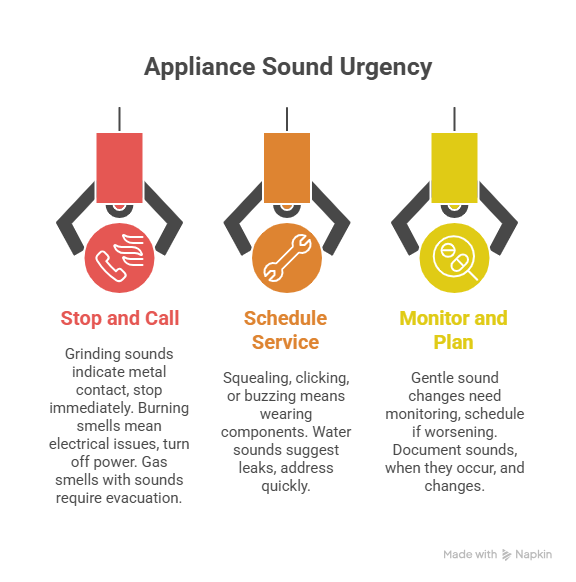
Grinding sounds from any appliance indicate metal-on-metal contact damaging components. Stop using grinding appliances immediately. Continued operation accelerates damage and dramatically increases repair costs.
Burning smells accompanying any sounds mean electrical problems or overheating creating fire hazards. Turn off power to the appliance and don't use it until professionals inspect.
Gas appliance sounds combined with gas smells require immediate action. Shut off gas, evacuate, and call gas company emergency lines. Don't delay addressing gas appliance sound problems.
Schedule Service Soon
Squealing, clicking, or buzzing that's new or increasing in volume indicates wearing components approaching failure. Schedule service within days to catch problems before complete failure.
Water-related sounds like excessive gurgling, sloshing, or running water noises that shouldn't occur suggest leaks developing. Address these quickly to prevent water damage beyond appliance repairs.
Monitor and Plan
Gentle changes to normal operational sounds might not require immediate service but deserve monitoring. If sounds continue worsening, schedule service. If they stabilize or improve, continue monitoring.
Document when sounds occur, what you're doing when they happen, and how they change over time. This information helps technicians diagnose problems faster when you do call for service.
Stop Ignoring What Your Appliances Are Telling You
Strange appliance sounds aren't mysteries or random occurrences. They're specific warnings about specific problems developing inside your appliances. Learning this language helps you address problems early when repairs are simpler and cheaper.
Pay attention when familiar appliance sounds change. New sounds, louder sounds, or sounds occurring at wrong times all signal problems worth investigating. Your appliances are trying to tell you something's wrong before complete failure occurs.
Don't normalize progressive noise increases. Just because you've gotten used to grinding doesn't mean it's acceptable. It means the problem's been damaging your appliance for so long you've stopped noticing. That damage is still occurring and still costing you money in reduced efficiency and approaching repairs.
Act on concerning sounds promptly. Working with an appliance repair specialist when problems first announce themselves through sounds prevents the cascade of failures that turn simple repairs into complex expensive projects.
Trust your ears. If an appliance sounds wrong, something is wrong. Stop convincing yourself weird noises are probably fine. They're not fine. They're early warnings giving you the chance to address problems before they become emergencies. Listen to what your appliances are trying to tell you and act on that information before those warning sounds become the sound of complete appliance failure.


.svg)

.jpg)