Tiny Home Electrical: What You Need to Know Before You Plug In

Tiny homes promise a simpler life — less square footage, lower costs, and a smaller footprint. But "smaller" doesn't mean "simpler" when it comes to electricity. In fact, the electrical system is one of the trickiest parts of any tiny home build, precisely because you're trying to fit the power needs of a full household into a fraction of the space, often with limited supply and big questions about how the home will actually be powered.
Whether you're building a tiny home on a foundation, on a trailer, or planning to live off-grid, getting the electrical right is what separates a comfortable, safe little house from a frustrating — or dangerous — one. This is also the area where building it correctly the first time matters most, which is why so many owner-builders bring in a professional electrician to handle the wiring before they ever close up a wall. Here's what you need to understand before you plug in.
How will the tiny home get its power?
The very first decision shapes everything else: where the electricity comes from. Tiny homes generally fall into three camps.
Grid-connected
The simplest and most reliable option is connecting to the utility grid, the same as a conventional house. For a tiny home on a foundation, this means a proper service connection and panel. For a tiny home on wheels, it often means an RV-style shore power connection — typically a 30-amp or 50-amp plug — that ties into a pedestal or an outlet at a host property. This is the most forgiving setup for everyday living, but the amperage of that connection sets a hard ceiling on how much you can run at once.
Off-grid (solar and battery)
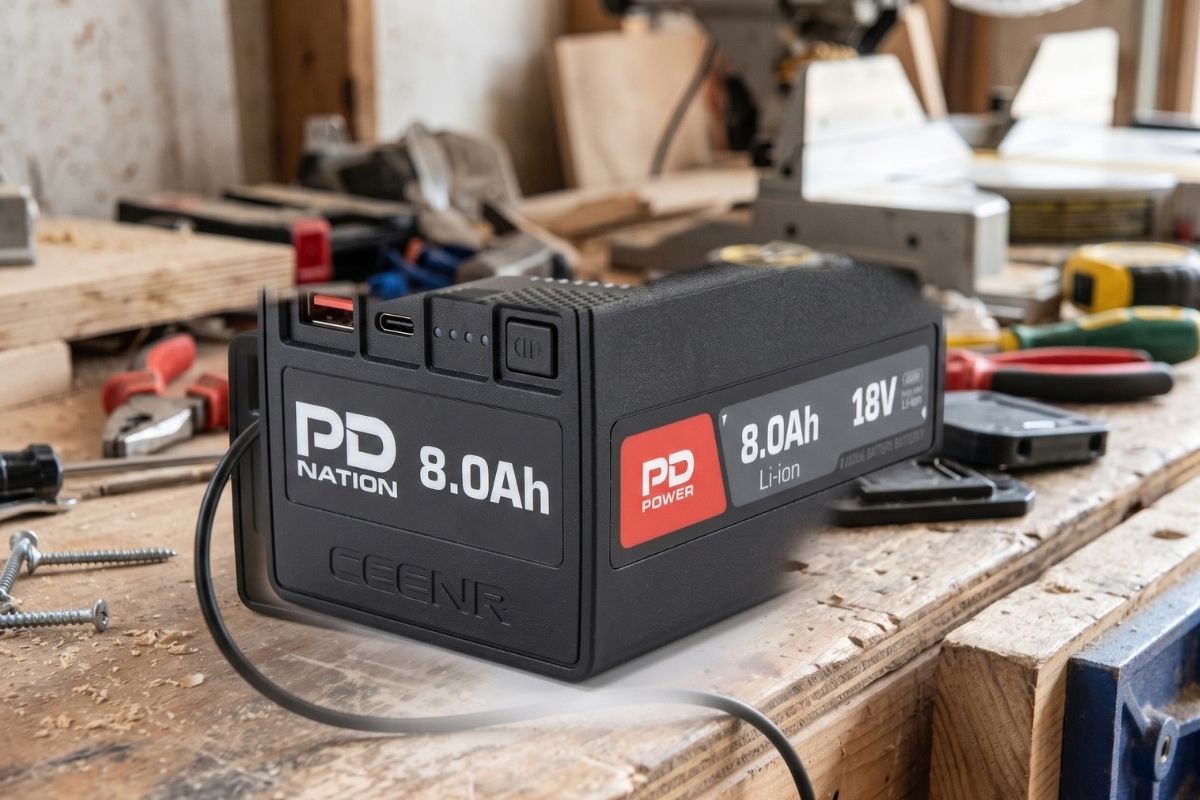
Many tiny home owners are drawn to off-grid living powered by solar panels, a battery bank, a charge controller, and an inverter. This is absolutely achievable, but it demands honest math: solar systems are sized to your actual daily energy use, and underestimating that use is the most common mistake. Resources from the U.S. Department of Energy offer solid, unbiased guidance on understanding your home's real energy consumption — a smart starting point before you buy a single panel. For the technical side of sizing a solar array and battery bank, the National Renewable Energy Laboratory publishes some of the most trusted research available.
.png)
Hybrid
Plenty of tiny homes use a mix: grid power when it's available, with solar and battery backup, or a generator for the gaps. This offers flexibility but adds complexity, since the system has to safely manage switching between sources.
Sizing the system to how you actually live
The classic tiny home electrical mistake is assuming small space equals small power needs. It doesn't. What drives your needs is what you plan to run — and heating, cooling, cooking, and hot water are the heavy hitters regardless of square footage.
An all-electric tiny home with an electric range, electric water heater, air conditioning, and electric heat will need substantially more capacity than one that uses propane for cooking, heating, and hot water. Many tiny home builders deliberately offload those big loads to propane specifically to keep the electrical system — and an off-grid solar array — manageable. Before you finalize anything, it's worth listing every appliance and device you'll use, noting its wattage, and being realistic about what runs at the same time. Peak simultaneous demand, not total wattage, is usually what trips up an undersized system.
Safety doesn't shrink with the house
It's tempting to think a small home means small electrical risk, but the opposite can be true. Tight spaces, do-it-yourself builds, and the vibration of a home on wheels all introduce hazards a conventional house doesn't face. Improperly installed wiring is a well-known cause of home electrical fires, and cramming wiring into tight cavities or skipping proper connections only raises that risk.
A few safety essentials apply to every tiny home. Wiring must be properly sized for its load and protected by correctly rated breakers. Wet areas like the kitchen and bathroom need GFCI protection, and modern codes call for arc-fault protection on many circuits — requirements set out in the residential building and electrical codes maintained by the International Code Council, which now includes provisions specifically for tiny houses. A home on wheels needs wiring and connections that can tolerate movement and vibration without working loose over time. And any off-grid system needs proper grounding, the right inverter, and safe battery placement with adequate ventilation. None of these are details to improvise.
%20(1).jpg)
What you can do yourself — and what you can't
Tiny home culture celebrates the DIY spirit, and there's plenty you can sensibly do: planning your layout, choosing fixtures, mapping where outlets and lights should go, and researching your power options thoroughly. Those decisions are yours to own.
But the actual electrical work — sizing and installing the panel, running and connecting wiring, tying into shore power or the grid, and wiring an inverter and battery bank — is genuinely high-stakes. Electricity carries enough voltage to injure or kill, and mistakes hidden inside finished walls can smolder for a long time before they're discovered. Many regions also require electrical work to be done or inspected by a licensed professional to meet code, pass inspection, and keep insurance valid. The cost of doing it right is small next to the cost of getting it wrong in a home you sleep in every night.
When to bring in a licensed electrician
Bring in a professional when it's time to size and install your panel, connect to grid or shore power, design or wire an off-grid solar and battery system, or simply verify that a plan you've drawn up is safe and up to code. A good electrician can also help you right-size the whole system so you're not paying for capacity you'll never use — or, worse, living with a system that can't keep up.
A tiny home can absolutely have safe, reliable, even off-grid power — it just has to be designed and installed with the same care as any home, scaled to how you really live. Plan the layout, do your homework on power options, and leave the wiring itself to someone qualified. Get that balance right, and your tiny home will deliver exactly the simpler life you were after.


.svg)
.jpg)