
How the CEENR PD 8.0Ah Helps Tiny House Builders Manage Multiple Tools

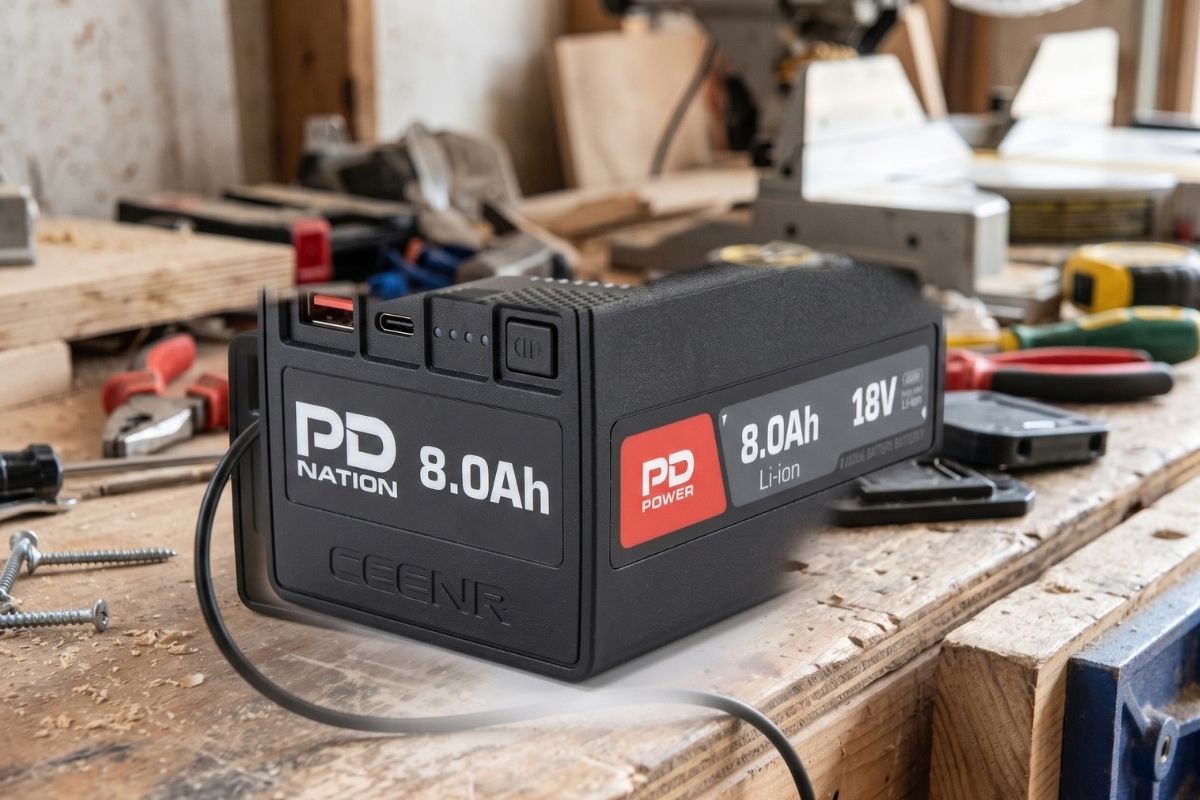
Building a tiny house often means handling several jobs with a small set of tools. One day, you may use a drill and circular saw for framing. The next day, you may need a sander or trim tool for interior work. The CEENR PD 8.0Ah battery helps simplify this setup with adapter heads for DeWalt, Ryobi, Makita, Milwaukee, and Bosch tools. One battery can support tools across these brands without forcing you to keep a separate battery system for every tool.
Why Tiny House Builds Collect So Many Batteries
Most builders do not plan to own several tool brands. The collection usually grows over time. A good drill may come with one purchase, while a circular saw may come with another. You may also buy a sander at a good price or keep a tool that you already owned before the tiny house project started.
This creates a problem on a small build site. A tiny house has limited floor space and storage space. Several cordless tool batteries and chargers can quickly take over a workbench or trailer shelf. Remote builds create another concern since you may have only a few usable outlets or limited generator capacity.
A typical setup may include:
- A drill for screws and small holes
- A circular saw for framing cuts
- An impact driver for heavier fastening
- A sander for interior surfaces
- A trim tool for detailed finish work
Each tool may normally need its own battery platform and charger. Keeping track of all those systems adds another task to a project that already has plenty to manage.
How the CEENR PD 8.0Ah Works Across Brands
The main idea behind the CEENR PD 8.0Ah comes down to its adapter system. The battery remains the same while the builder changes the adapter head to match the tool brand. The correct adapter head connects the battery to the tool mount.
This setup gives builders one main battery system for several power tool brands. Instead of keeping four or five battery types on the job site, you can use the same CEENR battery with the suitable adapter head for each compatible tool.
The benefit goes beyond saving shelf space. A builder also has fewer chargers to organize and fewer battery types to check before starting work. That matters on a tiny house site where every bit of storage space has a purpose.
Battery Power During Framing Work
Framing often puts more demand on cordless tools. A circular saw may handle repeated cuts for wall sections, roof parts, floor framing, and other structural work. An impact driver also gets regular use when you fasten framing members and other hardware.
A large capacity battery, such as an 8.0Ah battery, gives the builder a larger power reserve for demanding work. You still need to watch the battery level and charge it when needed. The main difference comes when several compatible tools share one battery system.
Imagine stopping halfway through a framing task because the battery for one tool needs a charge. You may have another battery nearby for a different brand, yet that battery cannot normally fit your current tool. An adapter based system reduces that problem and gives you more flexibility across your cordless tools.
.jpg)
Interior Work Needs a Different Tool Setup
The work changes once the walls and main structure take shape. Interior finishing often calls for smaller tools that offer more control. Drills handle cabinet hardware and fixtures. Sanders helps prepare wood surfaces. Trim tools help with detail work around panels and fittings.
These jobs may not draw power as heavily as framing. They still happen over many work sessions. A tiny house project may continue for weeks or months. Keeping one charger and one main battery system within reach makes daily tool preparation easier.
You also spend less time checking which charger belongs to which battery. That small saving adds up across a long build. More importantly, your limited work area stays easier to manage.
A Practical Choice for Off Grid Tiny House Builds
Some tiny houses start on land without a full electrical hookup. Other projects happen during weekend visits to a remote site. A builder may rely on a portable generator, solar power, or another limited charging setup.
Charging several different battery systems under these conditions creates extra work. Every battery needs its own charging time and a suitable charger. A shared battery system reduces the number of charging devices you need to carry.
The CEENR setup also helps keep the charging area smaller. One main battery can support compatible tools across several major brands with the right adapter head. That makes sense for builders who work inside a trailer or carry their equipment between a workshop and a remote build site.
Less Tool Clutter During the Build
Tiny house construction already requires careful use of space. Lumber, fasteners, hand tools, electrical supplies, and finishing materials all need a place. A collection of batteries and chargers adds clutter without helping with the actual construction work.
The CEENR PD 8.0Ah offers a simpler way to handle multi brand cordless tools. One battery system can support tools across several brands. That gives builders more freedom to keep useful tools they already own instead of replacing them just to match one battery brand.
A cleaner setup also makes it easier to prepare for the next task. You know where the main battery goes, and you only need the correct adapter head for the tool in use.
Conclusion
A tiny house build involves hundreds of small tasks. Tool charging should not become another source of clutter or delay. The CEENR PD 8.0Ah gives builders a practical way to manage DeWalt, Ryobi, Makita, Milwaukee, and Bosch tools with one battery system and brand specific adapter heads.
The result comes down to simple benefits. Fewer chargers take up less space. Fewer battery types make tool storage easier. Better access to compatible cordless tools helps keep the work moving across framing, finishing, and remote building stages.


.svg)

.jpg)
.jpg)