The Ultimate Checklist for Sourcing the Perfect Replacement Windows

.jpg)
According to Natural Resources Canada (NRCan), windows can account for up to 35% of a home's heat loss. Property owners evaluating replacement windows in Kingston must recognize that rising energy costs and stricter building efficiency standards are driving a significant increase in demand for high-performance replacement windows across North America in 2026. Upgrading a home's building envelope is no longer merely an aesthetic choice; it is a critical, strategic decision to mitigate persistent inflation and escalating utility costs.
Assessing Energy Efficiency and Performance Metrics in 2026
The Financial Impact of High-Performance Glazing
Analyzing the financial return of energy-efficient windows requires reviewing verified performance data. Upgrading to ENERGY STAR® certified windows can lower annual heating and cooling bills by an average of up to 13% nationwide when replacing single-pane units. These products are specifically tested to meet or exceed strict energy efficiency guidelines for the Canadian climate. Furthermore, units earning the "Most Efficient" designation represent the year's best in innovation, offering the highest potential for long-term savings and year-round interior comfort.
Understanding R-Values, U-Factors, and Advanced Tech
Homeowners should evaluate energy efficiency using the U-factor and Energy Rating (ER) metrics. While R-value measures thermal resistance (where higher is better), it is primarily used for wall insulation. For windows, the U-factor measures the rate of heat transfer; a lower number signifies better insulating properties and less heat loss.
In 2026, the Canadian market relies on advanced glazing technologies to meet strict ENERGY STAR® requirements. This includes double- and triple-pane systems equipped with low-emissivity (Low-E) coatings and argon or krypton gas fills. These specialized gases are denser than air, creating an insulating barrier that reduces heat transfer. Combined with Low-E coatings, these technologies mitigate solar heat gain in summer and prevent heat loss during harsh Canadian winters, ensuring year-round interior comfort and lower utility costs.
.jpg)
Evaluating Window Materials for Longevity and ROI
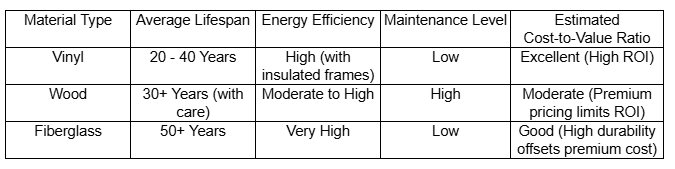
Selecting the correct window frame material directly impacts both upfront costs and resale value. According to the 2025 Remodeling Impact Report, homeowners can expect a 74% cost recovery for vinyl windows and a 71% return for wood. Vinyl offers a cost-effective, low-maintenance profile that resists fading, while wood provides a premium, classic aesthetic that requires more rigorous upkeep. Though fiberglass commands a higher upfront price, it offers the market's highest thermal stability and durability.
The Vetting Framework for Local Manufacturers and Installers
Key Trust Signals in the Window Industry
The highest quality materials will fail predictably if they are poorly manufactured or improperly installed. Experts warn homeowners to thoroughly verify contractors, as poor installations negate the thermal benefits of advanced windows.
For property owners sourcing replacement windows in Kingston, engaging directly with a manufacturer-installer like Clera Windows + Doors eliminates the middleman markup and reduces liability. Clera operates as a family-owned Ontario business with an established history spanning over 45 years. This extensive multi-decade track record signals profound market stability, proving they possess the financial health to honor their commitments long after the initial installation.
Clera Windows + Doors exclusively manufactures ENERGY STAR-certified products, strictly aligning with the top-tier efficiency metrics required in 2026. They back their manufacturing and installation processes with a true, non-prorated lifetime warranty. This comprehensive coverage acts as a critical safety net for investors, ensuring that parts, labor, and glass remain protected without depreciating coverage over time.
- Direct Manufacturer Control: Does the company manufacture and install their own products to ensure strict quality control?
- Warranty Depth: Is the warranty non-prorated, and does it comprehensively cover parts, labor, and glass?
- Third-Party Certification: Are the products ENERGY STAR certified and independently tested to withstand local climate extremes?
- Established History: Does the firm demonstrate a multi-decade track record confirming they will remain operational to honor their warranty?
.jpg)
Installation and Emerging Smart Home Integrations
Securing reliable installation crews requires early planning due to heightened market demand. In recent surveys, 17% of homeowners prioritize window and door replacements, making scheduling top-tier installers highly competitive. As the physical installation concludes, property owners are increasingly connecting their new building envelope to automated property management systems.
Home design trends in 2026 are moving beyond basic aesthetics into autonomous synchronization. Today's high-performance window upgrades are increasingly integrated into broader smart home networks, incorporating features like app-controlled blinds and sensor-driven ventilation units. These connected systems dynamically adjust based on prevailing weather conditions to optimize HVAC efficiency, reducing the property's overall carbon footprint.
The Long-Term Outlook on Property Upgrades
Gemini said Sourcing the perfect windows requires a disciplined balance of material science, verifiable energy data, and strict manufacturer vetting. Historical incentive programs, such as the Canada Greener Homes Grant, which offered up to $5,000 for green retrofits, demonstrate the enduring governmental push toward residential efficiency. Although the program abruptly closed to new applicants in February 2024 due to its immense popularity, it successfully catalyzed a market-wide shift.
Upgrading a property's building envelope yields measurable financial and operational advantages in 2026. Executing this process correctly remains one of the most reliable methods to preserve capital, reduce operating expenses, and secure a home's overall market value.
Disclaimer: All insights shared here are purely informational. This is not a substitute for expert financial advice or personal investment strategy. The author may or may not hold positions in the securities or companies mentioned. All homeowners and investors should conduct their own due diligence before making any purchasing decisions.


.svg)
.jpg)
.jpg)
.jpg)