Decking for Tiny Homes and Compact Builds: Why Your Species Choice Matters More Than You Think

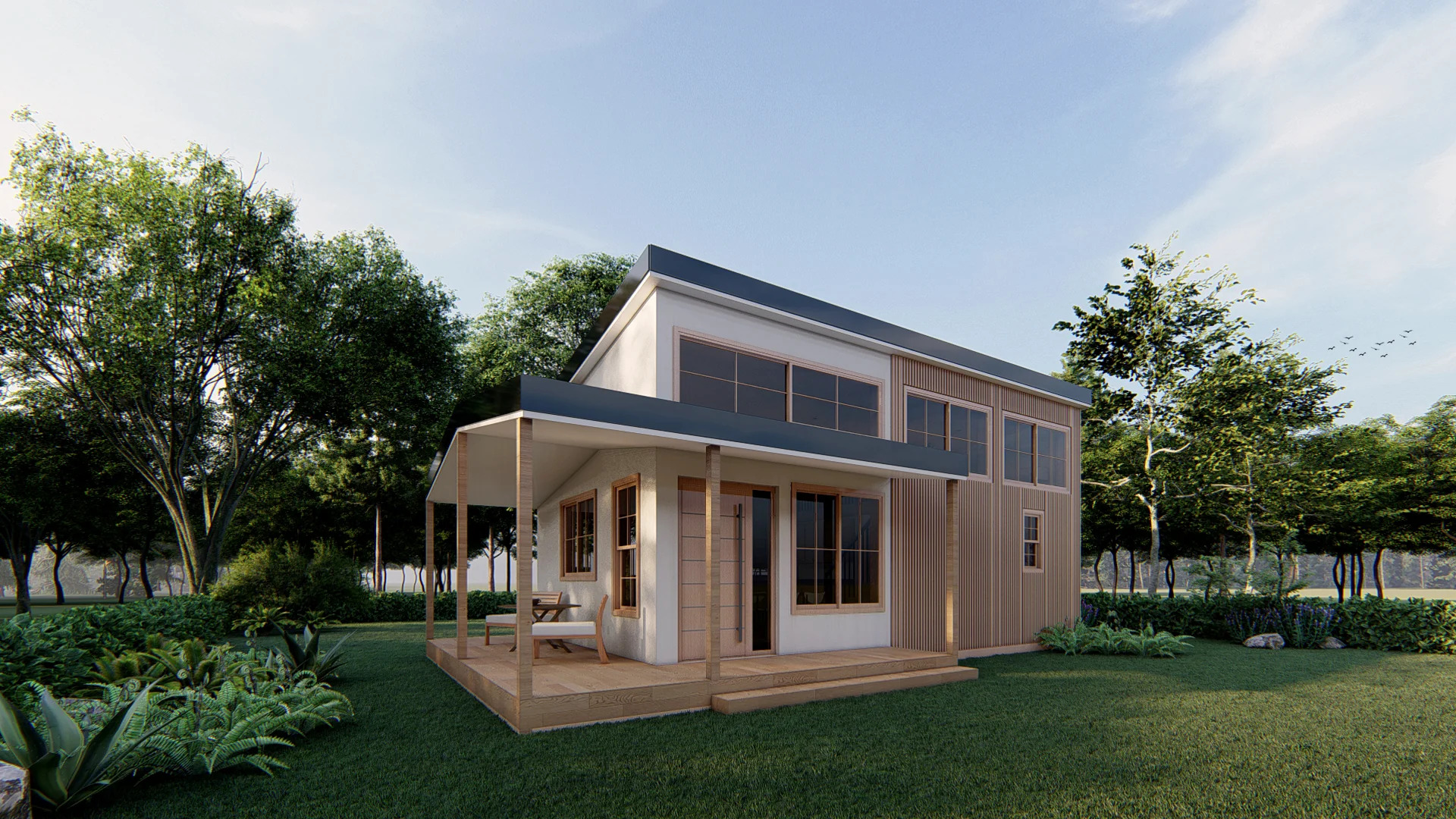
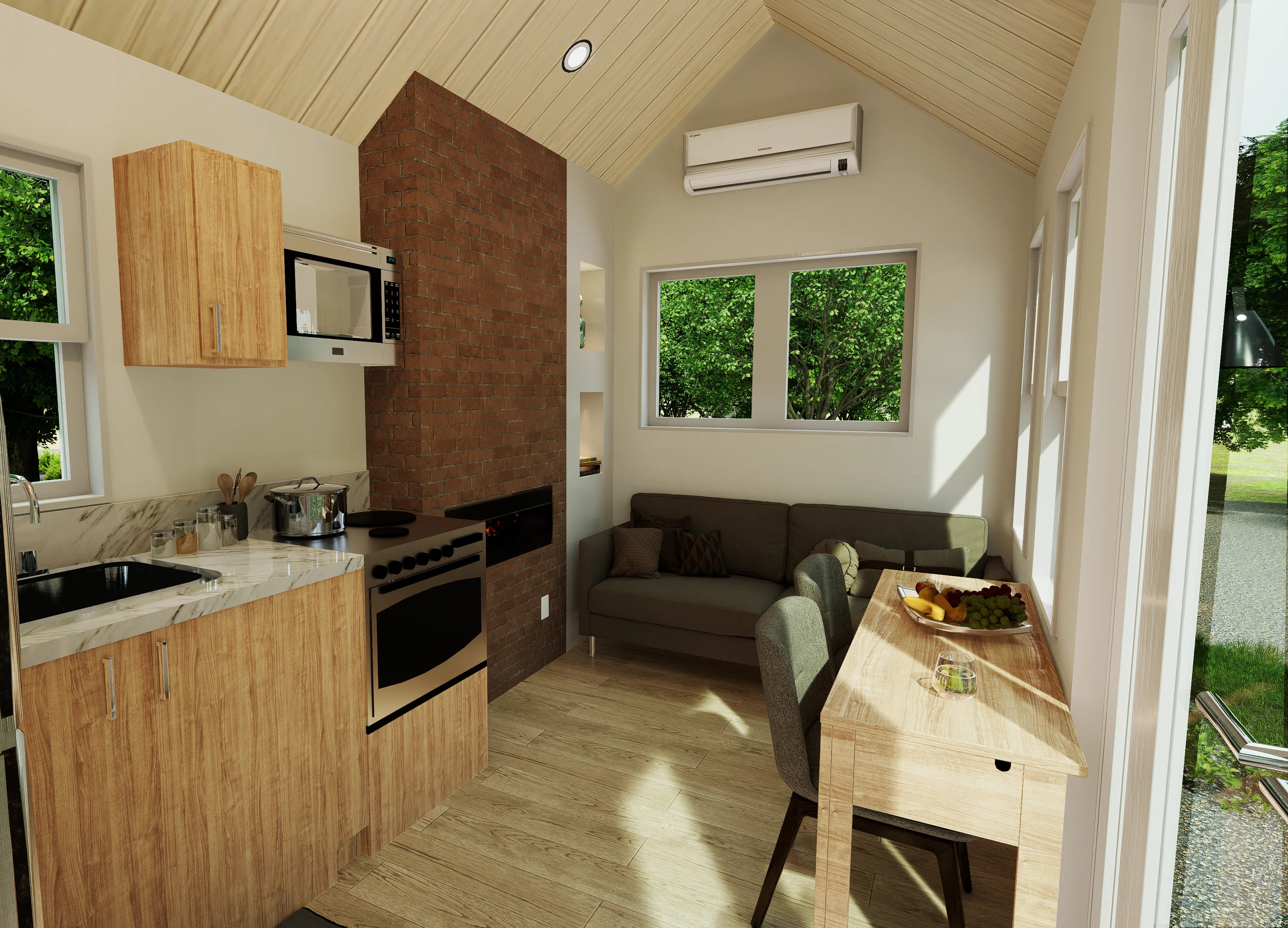
In a tiny home or compact build, every material decision is amplified. There is less building to look at, less space to absorb the consequences of a poor choice, and less margin for the kind of remedial work that full-size homes can accommodate without major disruption. Nowhere is this more true than in decking — the outdoor surface that, in many compact living projects, functions as the primary living space extension, the connection between interior and landscape, and the material that sets the first impression of the entire build.
The decking species decision for a tiny home is therefore more consequential than it appears at first glance. The difference between a good choice and a poor one is not just aesthetic — it is the difference between a surface that looks better every year and one that requires remedial attention within three seasons. For owner-builders managing their own projects and their own maintenance, this difference is measured in weekends and money over the next two decades.
Why Standard Pressure-Treated Decking Fails Tiny Home Builders
Pressure-treated pine decking is the default choice for most garden and compact build projects in the UK. It is widely available, competitively priced, and achieves adequate durability through chemical preservative impregnation. But it has a fundamental problem for tiny home applications that becomes clear within the first few years: it requires active, regular maintenance to sustain its performance, and it deteriorates visibly when that maintenance is missed.
The annual maintenance cycle for pressure-treated softwood decking — power washing to remove biological growth, sanding or abrading the surface, applying preservative oil or treatment — takes a full day for a 15 to 20 square metre deck and needs to be repeated every one to two years. Miss a season and the greening accelerates. Miss two and the surface begins to check and grey unevenly, the fixing points start to corrode and stain, and the boards begin to cup at their edges. For a tiny home where the deck is used daily and visible from every angle of the build, this deterioration is immediately and continuously apparent.
The alternative is to specify a species that does not require this maintenance cycle — one that achieves its durability through natural properties or a modification process rather than through chemical treatment that degrades over time. Two species meet this requirement convincingly: Siberian larch and ThermoWood.
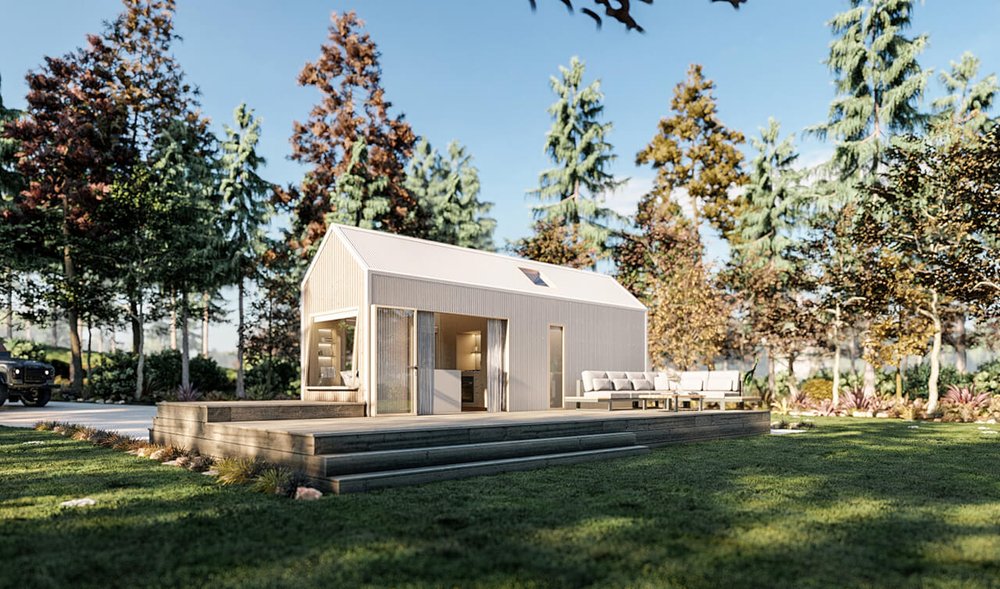
Siberian Larch Decking: Natural Durability for Compact Builds
Siberian larch achieves Durability Class 3 without any chemical treatment, courtesy of its naturally high resin content and tight growth ring structure. Above ground in UK conditions, this translates to a service life of 25 to 30 years without preservative treatment. The resin that gives larch its durability also makes it naturally hydrophobic — it repels water rather than absorbing it, which is the fundamental property that prevents biological decay in exposed conditions.
For tiny home and compact build decking, larch's low maintenance characteristic is its primary advantage. Left untreated, it weathers from its initial warm golden tone through an amber phase before settling into an even silver-grey patina that suits the natural, landscape-connected aesthetic of most compact living builds exceptionally well. This weathering requires nothing from the owner — no treatment, no intervention, no maintenance beyond annual inspection. If retaining the original warm colour is preferred, a natural decking oil applied every two to three years maintains it effectively.
Larch decking is available in smooth and ribbed profiles. Smooth boards suit decks where a contemporary, level surface is the priority. Ribbed boards add grip — relevant for elevated decks or outdoor showers where slip resistance matters — and introduce linear texture that catches light pleasingly across the deck surface.
For tiny home and compact build projects, Siberian larch decking boards UK are available in smooth 28x140mm and ribbed 27x142mm profiles from UK stock, with both standard AB grade and premium A grade options. The premium grade boards offer tighter grain, more consistent colour, and reduced knot frequency — worth specifying for a compact build where the deck surface is always visible at close range.
ThermoWood Decking: The Highest Performance Natural Option
ThermoWood takes the low maintenance philosophy of natural timber and extends it further through the thermal modification process. Heating Nordic pine or spruce to between 185 and 215 degrees Celsius using only steam — no chemicals, no preservatives — permanently reduces moisture absorption by up to 50 percent and improves durability to Class 2, surpassing Siberian larch on both measures.
For tiny home decking applications, ThermoWood's superior dimensional stability is its most practically important advantage. Boards that absorb half as much moisture as standard softwood move half as much across seasonal cycles. On a deck where boards are butted tightly together or cut around structural posts, this reduced movement means joints stay consistent, gaps remain predictable, and the surface retains its flat profile year after year in a way that less stable species cannot.
.webp)
ThermoWood decking is available in smooth, grooved, and brushed profiles, with secret fix options that eliminate visible surface fixings entirely. For a tiny home where the deck is a design feature as much as a functional surface, the clean, uninterrupted deck surface produced by a secret fix installation is a meaningful aesthetic upgrade over face-fixed alternatives.
The complete range of ThermoWood decking boards UK includes smooth 26x117mm, secret fix grooved 26x117mm, secret fix smooth 26x140mm, and secret fix brushed 26x140mm profiles — all available from UK stock. For tiny home builders specifying their first ThermoWood deck, technical installation guidance and fixing specifications are available with every order, and samples can be requested to assess grain and colour before committing to a full supply.
The Specification Decision That Pays Off
The upfront cost difference between pressure-treated pine and Siberian larch or ThermoWood decking for a 15 square metre tiny home deck is typically in the range of £300 to £600 at supply. Set against the annual maintenance cost of pressure-treated softwood — power washing equipment, treatment products, and several hours of labour every one to two years — this premium pays for itself within five to seven years and continues delivering savings for the remaining 20 or more years of the deck's service life.
For owner-builders and tiny home enthusiasts who have invested significant time and thought into every other aspect of their build, the decking specification deserves the same level of consideration. The material that forms the floor of your outdoor living space is not the place to compromise on quality.


.svg)