
How to Estimate Solar Energy Harvest for a Weekend Trip

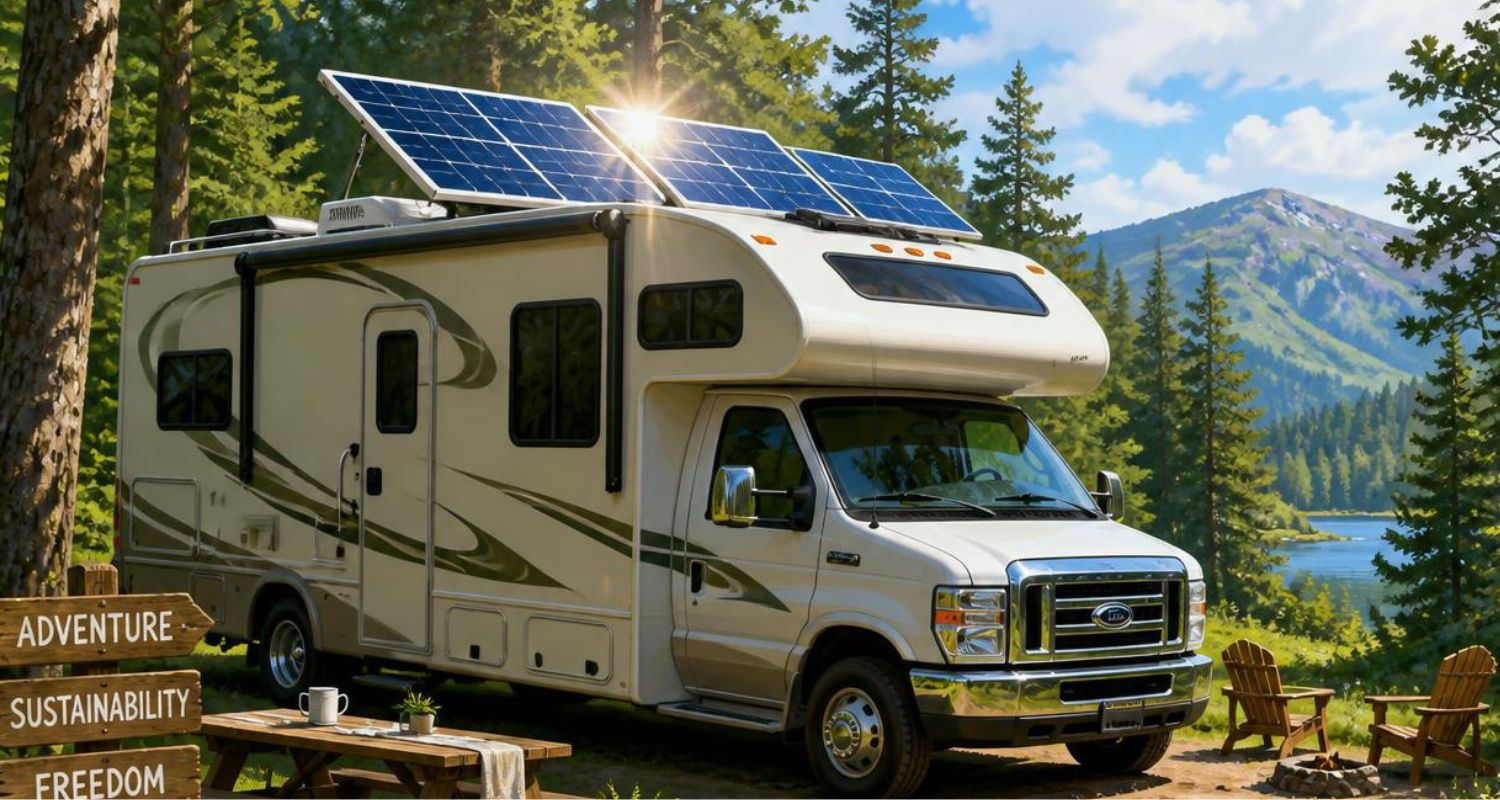
A solar plan should answer two questions: how much energy the trip will use and how much the panels are likely to replace. A solar generator connects those budgets, but it cannot make an optimistic forecast come true.
The unit is the watt-hour. It links device power, runtime, battery capacity, and daily solar harvest in one calculation. Once every item uses the same unit, tradeoffs become visible before the vehicle is packed.
Build a base estimate, test the equipment at home, and keep a weather reserve. The goal is not perfection. It is a plan that still works when clouds, shade, or longer device runtime reduce the expected margin.
Start With the Weekend Energy Budget
List every load and multiply its operating watts by expected hours of use. For devices that cycle, such as a portable refrigerator, measure energy over a representative day instead of multiplying the highest label wattage by 24 hours.
Add the daily watt-hours, separate essential from optional loads, and multiply by the number of trip days. A solar generator should retain a planned reserve, so do not treat every advertised watt-hour as available for discretionary use.
Before leaving, compare the planned total with measured usable battery energy under variable weather. The solar generator display can help confirm how much capacity remains after a normal day. If the load budget consumes the reserve without solar, revise the plan or the second night may begin short.
Build the Load Estimate Device by Device
A solar generator works best when loads are known rather than guessed. Measure AC devices at the outlet when possible, and use the station's energy history for DC or USB loads during a realistic test.
Power Is Not Energy
Watts describe the rate a device draws power. Watt-hours describe consumption over time. A 40-watt device used for five hours consumes about 200 watt-hours, while the same device used for one hour consumes about 40.
Account for Duty Cycles
Refrigerators, pumps, and heated gear may switch on and off. Their average energy depends on ambient temperature, settings, insulation, and usage. A full-day measurement under similar conditions is more defensible than assuming the compressor runs continuously.
Include Conversion Overhead
AC inversion and voltage conversion consume some energy, and the exact amount depends on the equipment and load. Use measured battery change when available. Otherwise, add a conservative margin without presenting one universal efficiency value as fact.
Separate Essential Loads
Phones, navigation devices, medical equipment, and required lighting may deserve protected capacity. Entertainment and convenience loads can use the remaining budget. This distinction creates a clear response if solar harvest runs below the forecast.
Count Charging You Can Avoid
Some devices can start fully charged and may not need daily energy. Power banks, camera batteries, and headlamps can shift demand away from the solar window. Avoid counting energy twice when one battery charges another device.
Estimate the Available Solar Resource
Rated panel watts are not daily watt-hours. A planning estimate multiplies array watts by equivalent peak-sun hours, then applies a system factor for temperature, angle, soiling, wiring, controller behavior, and other losses. Use location-specific historical data when possible.
- Find a reputable solar-resource estimate for the destination and travel month.
- Enter or note the panel tilt and direction expected at camp.
- Multiply rated array watts by the location's daily solar-hours estimate.
- Reduce the result with a documented planning factor and weather reserve.
Use Historical Data Carefully
NREL's PVWatts tool estimates photovoltaic energy from location, array orientation, and system inputs using historical weather data. It is designed for grid-connected systems, so a portable setup still needs adjustments for moving shade, temporary placement, and battery limits.
Distinguish Forecast From Guarantee
Historical averages describe what is typical across many observations. A particular weekend can be darker or brighter. Use the estimate to set a range, then check the short-term forecast without converting it into a guaranteed energy number.
Match the Actual Solar Window
A campsite may receive fewer usable hours than an open map location because trees, hills, vehicles, or quiet-hour routines constrain panel placement. Count only the period when panels can remain deployed, secure, and substantially free of shade.
Turn the Estimate Into a Weekend Balance
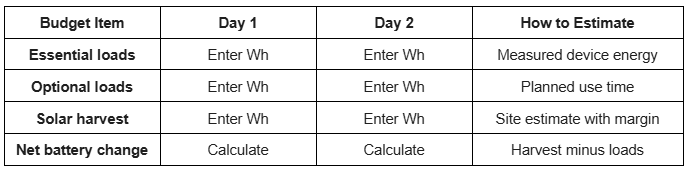
Compare projected harvest with projected consumption for each day, not only for the full trip. Day-by-day tracking reveals whether the solar generator reaches the second night with enough reserve after a weak first afternoon.
Use a Simple Planning Table
Run a Conservative Example
Assume a 400-watt array, four equivalent peak-sun hours, and a planning factor of 0.70. The estimated harvest is 1,120 watt-hours. These are example assumptions only; replace all three inputs with the trip's actual equipment and site data.
Respect Charging Constraints
The panel array must remain inside the station's solar voltage, current, and wattage limits. Harvest can also be curtailed when the battery is full. An oversized forecast is useless if the solar generator cannot accept the proposed array output.
Test the Plan Before Departure
Run the intended loads for a full day, recharge with the planned panels, and compare measured watt-hours against the spreadsheet. Repeat under less-than-perfect sunlight if time allows. A test exposes cable, shade, angle, and duty-cycle assumptions.
- Begin at a recorded battery state of charge.
- Operate the real devices on their expected schedules.
- Log energy used, solar energy received, and weather conditions.
- Revise the weekend budget from measured results.
Pack the solar cable, adapters, extension, and panel anchors. Keep connectors dry and inspect polarity. Store the solar generator in a ventilated location protected from rain while the panels remain positioned for open sunlight. Clearly labeling each cable can prevent rushed setup errors at camp after dark or during a sudden weather change.
Leave Room for the Unexpected
A reliable weekend estimate combines measured load energy, location-specific solar data, compatible equipment limits, and a reserve. Each input can change, so a range is more honest than a single exact harvest number.
If the conservative case cannot cover essential loads, reduce demand, add compatible collection capacity, or arrange another approved charging method. The best solar generator plan protects the trip's priorities even when the second day produces less energy than expected or the panels must be packed early because wind or rain arrives.


.svg)


.jpg)