
The Furniture Tricks That Make a Tiny Home Feel Bigger

.jpg)
A tiny home can feel far larger than its floor area, or far smaller, and the furniture decides which. The difference is rarely about how much you own. It is about what the eye can see: the floor, the light and the lines running through the space. Get those right and a compact home feels open and calm. Get them wrong and the same square footage feels boxed in. Here are the tricks that actually work.
Keep the floor visible
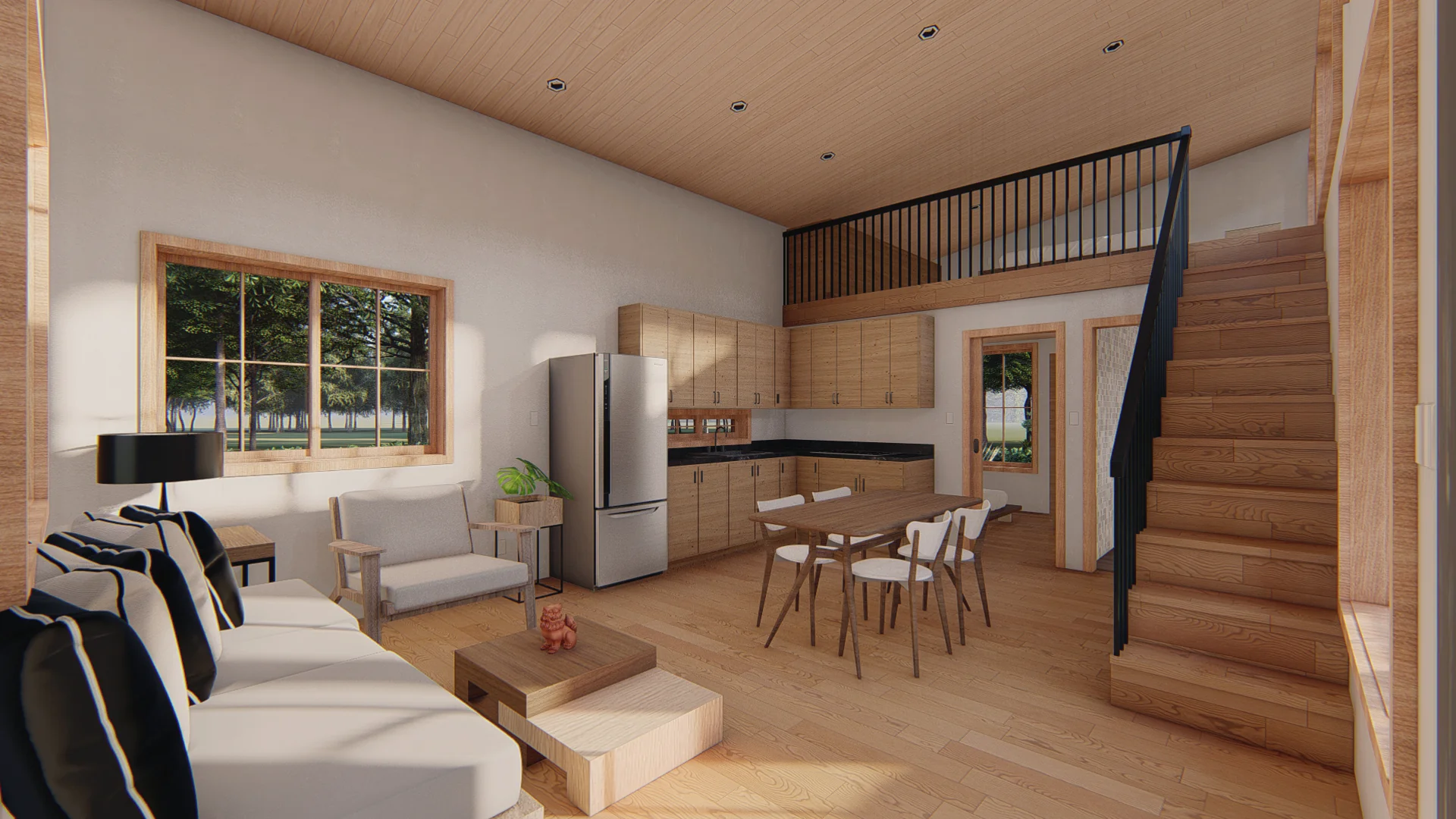
The single most effective trick is to keep as much of the floor in view as possible. The eye reads visible floor as space, so furniture that sits up on legs, letting you see the floor continue beneath it, makes a room feel larger than furniture that meets the floor in a solid block.
A sofa on raised legs, a table with slender supports, a bed with a visible base: all of them keep the floor reading as one continuous surface. Skirted, floor-hugging pieces do the opposite, chopping the floor into smaller visible patches and shrinking the room.
The same logic applies to how much floor a piece stands on. A chair on four fine legs touches the ground at four small points; a heavy armchair on a solid plinth blots out a whole patch of it. Choose the lighter footprint wherever comfort allows, and the room quietly gives you back the space the furniture appeared to take.
Go vertical, not horizontal
In a small footprint, the floor is precious and the walls are wasted. Use height. Tall, narrow storage holds as much as a long low unit while taking far less floor, and it draws the eye upward, which makes a ceiling feel higher and a room feel bigger.
Shelving that runs up towards the ceiling, wall-mounted fittings that free the floor beneath, a loft used for what a footprint cannot spare: the vertical dimension is where a tiny home finds its extra room.
Use transparency and reflection
Anything the eye can see through or past preserves the sense of space. A glass or acrylic table, an open-frame chair, a slim metal base rather than a solid one: these occupy the room physically without blocking it visually. A well-placed mirror does the same by borrowing light and view from elsewhere. The aim is furniture that holds its function without building a wall in the middle of the room.
One bigger piece beats several small ones
This one feels wrong but holds up. A single, properly scaled piece reads as calmer than a scatter of small ones, because the eye counts outlines, and fewer outlines feel more restful. Three little chairs, two tiny side tables and a small sofa create a busy, cluttered picture; one good sofa and one good table create a composed one. In a tiny home especially, resist the instinct to buy small. Buy few, and buy the right size.
Small furniture is also a false economy of space. Under-scaled pieces rarely do their job properly, so they get supplemented by more small pieces, and the room fills up with things that each half-work. One chair you actually want to sit in beats two you tolerate, and it takes up less visual room than the pair.
Keep the sightlines and palette open
Protect the longest view across the space. The diagonal from one corner to another is usually a small home's greatest asset, so keep it clear rather than parking a tall piece across it. Keep most furniture below eye level from the seated position, so you can see over it, and hold the palette light and consistent so the room reads as one space rather than a set of competing zones. Continuity is what makes a small home feel whole.
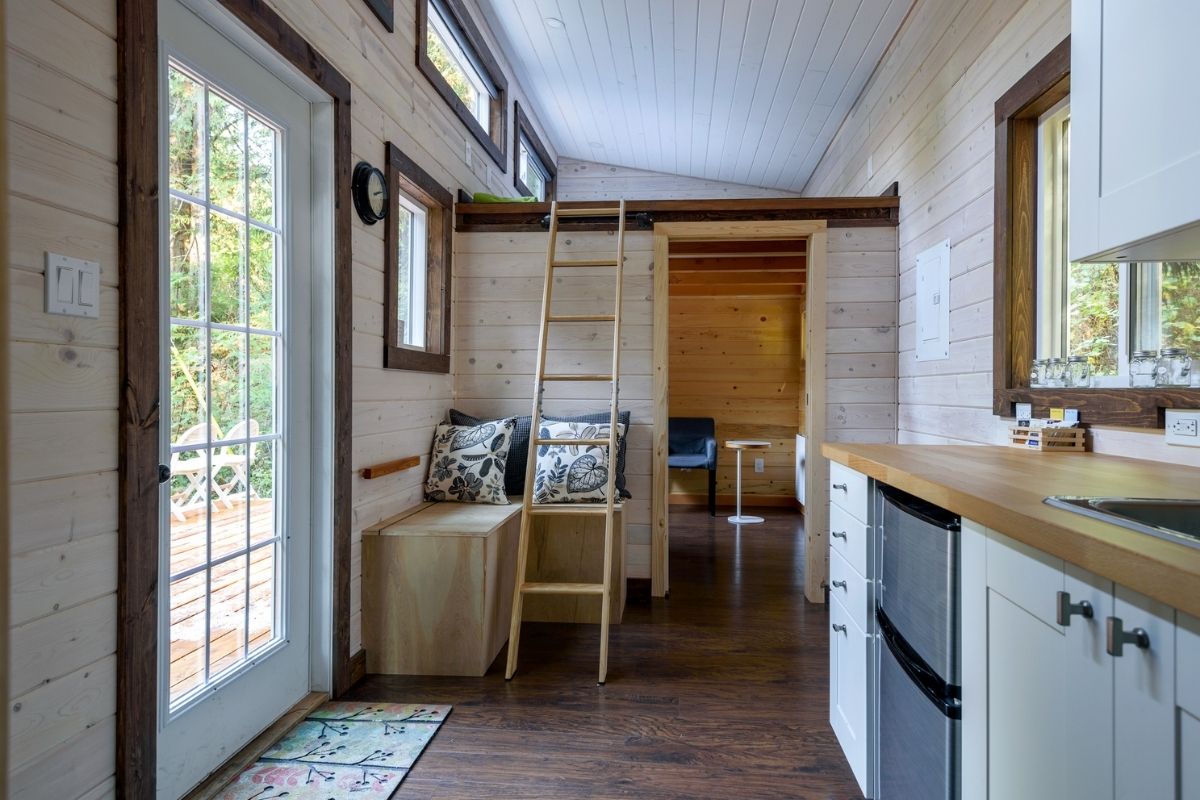
Where you can, borrow the view outside as well. A seat placed to look through a window rather than at a wall makes a room feel as though it extends past its own walls, which in a tiny home is the most generous illusion of all.
Choose well, because every piece shows
In a tiny home there is nowhere for a bad piece to hide. Each item is on display and in use constantly, so design and quality matter more here than in a large house, not less. That is an argument for fewer, better things, and for choosing pieces whose shape earns its place.
Design classics suit small spaces for exactly this reason: their forms are resolved, often light and leggy, and they reward the close attention a compact home puts on everything in it. Faithful reproductions from Mobelaris make those designs affordable, sold honestly as reproductions, so a small home can be furnished with pieces that look right from every angle without a large outlay. Keep the floor and the sightlines open, go vertical, favour a few well-scaled pieces, and a tiny home will live much bigger than its measurements suggest.


.svg)
.jpg)
.jpg)