
House Fencing: Privacy, Codes and Low-Maintenance Boundary Options

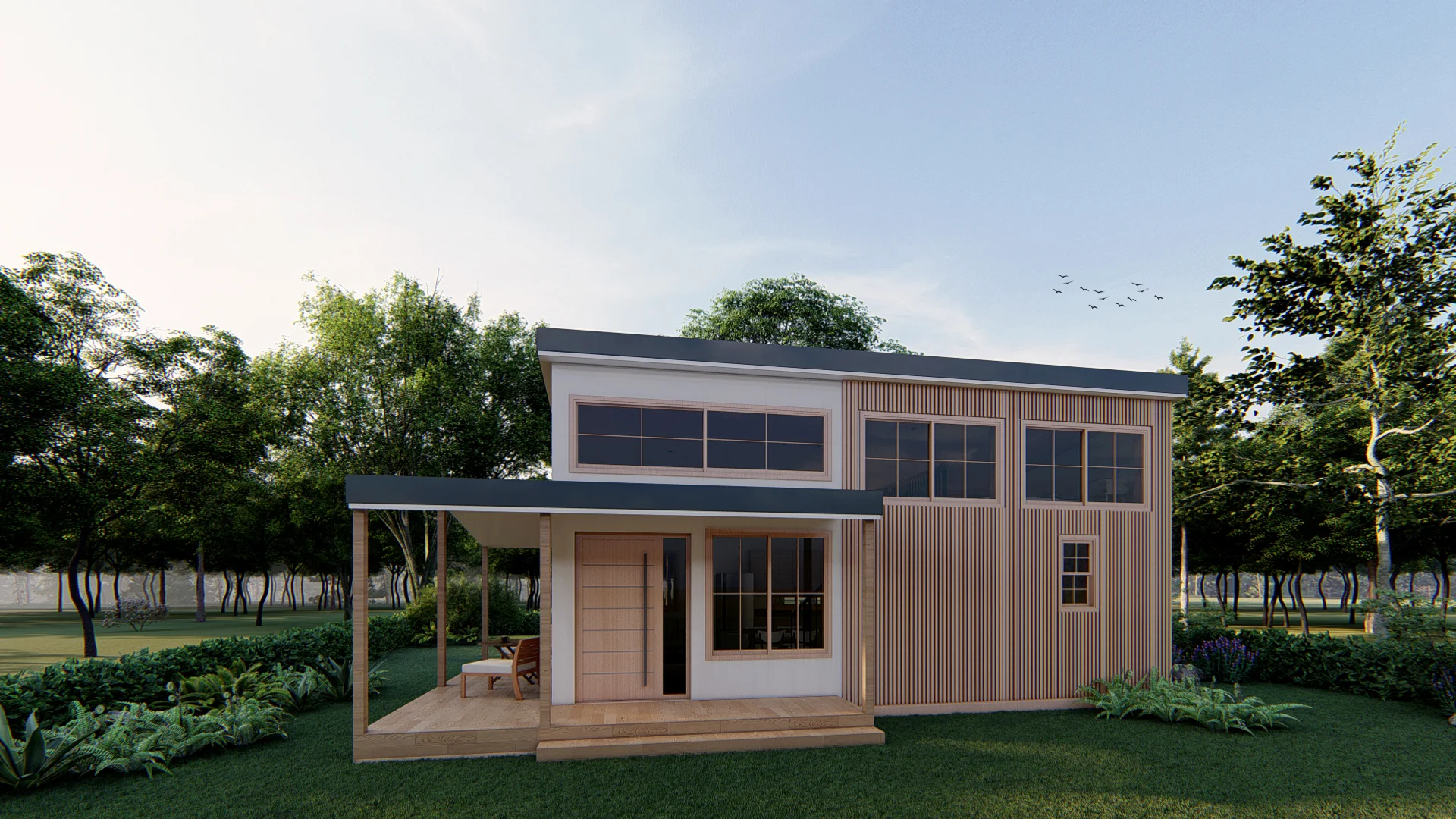
When you live in 300 square feet, the yard is not the yard. It is the living room, the dining room, the laundry, the workshop and most of the storage. Which means the boundary around it is not a property line marker. It is the wall of the room you actually spend your time in.
This is the part of small-footprint living that gets underdiscussed. Enormous attention goes into the interior: the fold-down table, the stair storage, the composting toilet, the 24-inch range. Comparatively little goes into the 40 or 60 linear feet of boundary that determines whether the outdoor space is genuinely usable or just a strip of ground you walk across to get to the door.
Having watched a number of these builds go up and then be lived in, the boundary decisions that cause regret are consistent. Here is what to think about before anything gets set in concrete.
How High Should a Tiny House Fence Be?
Standard fence height logic comes from standard houses, where the privacy question is about what neighbours see through windows. On a tiny lot the question is different: what can people see of you, sitting outside, four feet from your own front door.
Seated eye height for most adults is around 45 to 48 inches. Standing eye height is around 60 to 65. A 6-foot fence, the usual residential maximum for rear and side boundaries in most US jurisdictions, blocks both comfortably. A 4-foot fence, which is what many places permit in a front setback, blocks neither.
So the practical sequence is: figure out where you will actually sit, sit there, and look. The sightline that matters is from your chair to the thing you do not want to see, or that you do not want seeing you. Often it turns out you need full height on one short run and almost nothing on the rest, which saves both money and the closed-in feeling that a full-height boundary on all four sides produces on a small lot.
Two refinements worth knowing:
Two Refinements Worth Knowing
Distance beats height. A 5-foot fence 3 feet from your chair blocks far more than a 6-foot fence 15 feet away. On a tiny lot you are usually close to the boundary, which works in your favor. You can often achieve complete seated privacy at a lower, less oppressive height than you would expect.
Partial screening often beats full. A semi-private boundary, slats or pickets with a deliberate gap, blocks the direct sightline while admitting light and air and keeping the space feeling open. On a lot measured in hundreds of square feet, the difference between a solid wall and a screened wall is the difference between a courtyard and a cell.
.jpg)
The Maintenance Trap on a Small Lot
Here is the one that catches people, and it is specific to small-footprint living.
On a conventional lot, a fence sits well away from the house. When it needs repainting or restaining in five to seven years, you set up a ladder on both sides and do it. On a tiny house lot, the dwelling is frequently within two or three feet of the boundary, sometimes less, if you are on a leased pad or in a tiny house community with tight spacing.
At that distance, the far face of the fence is accessible and the near face effectively is not. You cannot get a ladder, a sprayer or a brush into an 18-inch gap and do a competent job. Which means a wood fence installed three feet from your tiny house is a fence whose inner face will be refinished badly, if at all, for the rest of its life.
This single constraint should drive the material decision more than appearance or cost. If you cannot physically maintain a surface, you need a material that does not require maintaining.
That rules out, or at least complicates:
- Untreated or stained softwood, which needs recoating every few years to avoid gray-out and rot.
- Painted timber, which needs more frequent attention than stained.
- Raw steel or anything requiring rust management.
And it favors materials whose weathering performance is built in: powder-coated metal, composite, and vinyl.
Vinyl and PVC Fencing for Tiny House Lots
Vinyl fencing, PVC fencing, in most of the world outside North America, is the most commonly recommended answer to the maintenance-access problem, and mostly deservedly. It also attracts more unexamined criticism than almost any other fencing material, so it is worth separating the real limitations from the folklore.
What Vinyl Fencing Does Well
Vinyl never needs painting or staining. It does not rot, and moisture contact at the base, the thing that kills wood posts, is irrelevant to it. It cleans with a hose and occasionally a mild detergent. It does not splinter, which matters if kids or dogs use the space. And because it is light, it imposes less load on posts and footings than equivalent timber, which can simplify installation on a constrained site.
How to Tell Good Vinyl Fence From Cheap
Cheap vinyl fails in two predictable ways. First, UV embrittlement: PVC without adequate ultraviolet stabilizers chalks, yellows and becomes brittle. Second, impact brittleness in cold, where low-grade material cracks rather than flexes.
Both are a function of product quality, not of the material category. The things that separate a 25-year vinyl fence from a 7-year one:
- Co-extruded construction with a UV-resistant outer layer, rather than a single-layer extrusion relying on pigment alone.
- Titanium dioxide content in that outer layer, the actual UV blocker. Suppliers who know their product will tell you; suppliers who do not, will not.
- Wall thickness. This is the cheapest thing to cut and the most consequential. Thin-walled rails flex, sag between posts and crack at fixings.
- Internal reinforcement in rails and gate stiles, usually aluminum, on anything spanning more than about 6 feet.
- Warranty terms you can actually read, specifically whether the warranty covers discoloration and brittleness, or only structural failure.
The hot, high-UV markets are where this gets stress-tested hardest. In Western Australia, where UV indices run extreme for much of the year, installers treat UV grade as the primary selection criterion rather than a footnote. Perth-based FencrGatr, for instance, specifies PVC fencing by stabilizer package and wall thickness rather than by appearance, because the climate exposes thin, under-stabilized product within a couple of summers. If you are siting a tiny house anywhere with serious sun exposure, the same logic applies: the spec sheet matters more than the showroom panel.
The limitation that is simply true: color range is narrower than painted or powder-coated alternatives, and you cannot change it later. White, tan, gray and a handful of woodgrain finishes cover most of the market. If you want a specific dark color, vinyl is probably not your material, dark PVC also runs hot and moves more thermally.
Fence Codes, Permits and HOA Rules for Tiny Houses
Tiny house legality is complicated, and it is easy to focus so hard on whether the dwelling is permitted that the boundary rules get overlooked. The fence has its own set, and they are usually simpler and more strictly enforced.
Common provisions across US jurisdictions:
- Height limits by location. Typically 6 feet for rear and side boundaries, 3 to 4 feet within the front setback. Corner lots often have additional sight-triangle restrictions at the intersection.
- Setback and property line. Whether the fence may sit on the line or must be set back varies, and a fence built on a boundary you got wrong is a fence you may have to move. A survey is cheaper than a relocation.
- Finished side out. Many jurisdictions and most HOAs require the better-looking face toward the street or neighbor.
- Pool barrier rules, which are separate, stricter, and apply to any water over a trivial depth, including some stock-tank setups.
- HOA and community covenants, which routinely restrict material and color beyond what zoning requires.
If you are on leased land or in a tiny house community, the operator's rules govern, and they often prohibit permanent footings entirely. That constraint points toward a different kind of boundary: freestanding screens on weighted bases or ground spikes, demountable panel systems, or large planters doing the screening work. Design for removal from the start if removal is a possibility, retrofitting a demountable solution after you have set posts in concrete is a wasteful way to learn the lesson.
Wind Loading on Exposed Tiny House Sites
Two things make wind a bigger factor here than on a typical suburban lot. Tiny houses are frequently sited on open land, exposed pads or rural parcels without the windbreak effect of surrounding buildings. And a solid privacy fence is, aerodynamically, a sail.
A fully solid 6-foot fence in an exposed location imposes substantial load on posts and footings, and it also creates turbulence and a low-pressure zone on its lee side, which is often exactly where you have put the seating area. The counterintuitive result is that a solid windbreak can make a space less comfortable than a permeable one.
Semi-private configurations, slats or pickets with roughly 20 to 30 percent open area, reduce both structural load and downwind turbulence while still blocking sightlines. On an exposed site this is usually the better engineering answer and, as noted earlier, often the better spatial answer too.
Gates and Access Clearance on a Small Lot
Gate sizing on a tiny lot follows a different logic from a conventional property, because you are not just driving a car through. You are moving the entire contents of a small dwelling through, repeatedly.
Things that will need to pass through your boundary over a few years of tiny living: a full-size mattress, a washing machine, sheets of plywood for the inevitable project, a wheelbarrow, bicycles, propane tanks, solar panels, and quite possibly the dwelling itself if it is on a trailer and you relocate.
A 36-inch pedestrian gate handles a person and not much else. A 48-inch gate handles most furniture and a wheelbarrow comfortably. If the house is mobile, the access route needs to accommodate the trailer and the tow vehicle, with turning clearance, which is usually a function of the whole site layout rather than the gate alone, and is worth drawing before the posts go in.
Two details that cause disproportionate annoyance:
Gate swing clearance. A gate that opens inward on a small lot sweeps a quarter-circle through space you were using. On lots this size that is often the difference between a usable corner and a dead one. Outward-opening gates avoid it, but check the rules, some jurisdictions and most pool barrier codes dictate swing direction.
Latch height and glove operation. A latch you need two hands and clear fingers for is a latch you will resent in winter with an armful of firewood. Gravity latches operable with an elbow are worth the small premium.
Fencing a Tiny House Yard With Dogs
If a dog shares the space, the boundary spec changes in two specific ways that are easy to miss.
Gap width at the base matters more than overall height for small and medium dogs, a determined dog will go under long before it goes over. A base rail set close to grade, or a gravel board, closes that path. On a vinyl or picket system, check the gap between pickets against your dog rather than against a standard: the manufacturer's spacing is set for appearance and wind load, not for a whippet.
Height, meanwhile, is less about the number than about take-off room. A dog needs a run-up, which on a tiny lot it may not have, meaning a 5-foot boundary three feet from the house can contain a dog that would clear the same fence in an open yard. Worth considering before you pay for height you do not need.
.jpg)
Making a Small Boundary Do More Than One Job
On a lot this size, every surface should be doing more than one job. The boundary is the largest vertical surface you own, and it can absorb functions that would otherwise consume floor area:
- Vertical growing. A boundary with a trellis or wire system takes food production off the ground entirely. Beans, peas, cucumbers and tomatoes all go up.
- Tool and equipment storage. A shallow cabinet against the fence costs you 10 inches of depth and removes the need for a separate shed.
- Fold-down work surface. Hinged to the boundary, dropping flat when not in use.
- Utility screening. Water tanks, propane, batteries, the composting setup. Screen them with a removable panel so you retain access.
- Lighting mount. Linear low-level lighting on the boundary lights the space without the glare of a single overhead fixture.
Plan these before installing, because most of them need a post or a rail in a specific place. Bolting a cabinet to a fence not designed to carry it is how you discover the wall thickness question the hard way.
Tiny House Fencing Checklist
Sit in your chair and look before deciding anything about height. Assume you will never again reach the inner face of a boundary within three feet of your dwelling, and choose a material accordingly. If you go vinyl, buy on the stabilizer package and wall thickness rather than the showroom sample. Check the fence rules separately from the dwelling rules, because they are separately enforced. Build permeable if you are exposed. And give the boundary at least two jobs, because on a lot this size nothing gets to do only one.


.svg)
.jpg)
.jpg)