Going Tiny in Portugal: How Alternative Housing Lets You Own a Piece of Europe

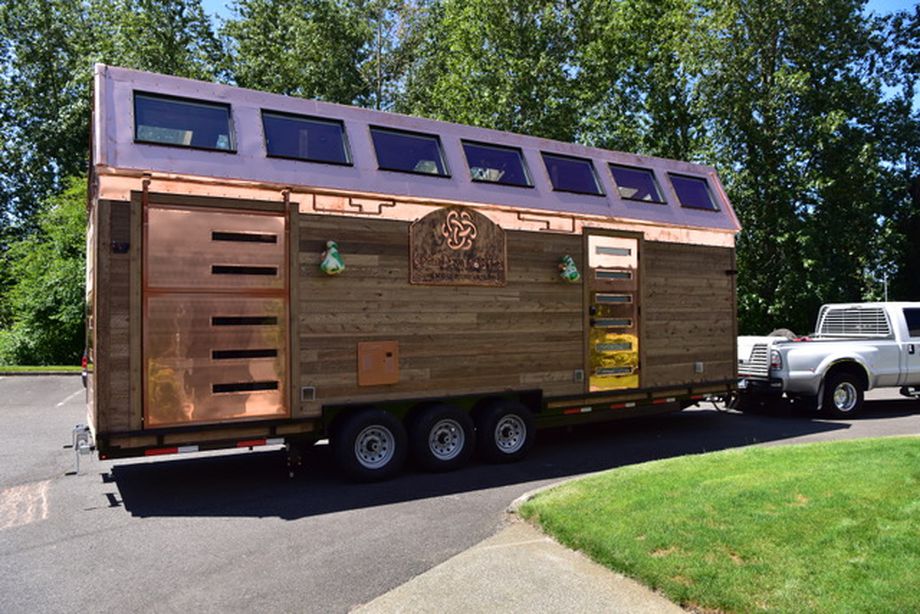
If you’re drawn to accessory dwelling units (ADUs), tiny homes, and the minimalist movement, you’re not alone. The global tiny homes market was worth about $5.95 billion in 2024, projected to exceed $8 billion by 2033. Soaring real estate costs and a growing desire for sustainable resilience are helping fuel this lifestyle shift, embraced equally by millennials and retirees.
Why Now Is a Good Time to Think Beyond Compact Living
As mortgage rates hover around 4% in Portugal and global housing affordability worsens, tiny-home thinking goes beyond aesthetic. Scaled‑down living isn’t just cost-efficient - it’s strategic, especially in Europe. Rather than being tied to a typical long-term mortgage, many are opting for smaller properties and international flexibility.
What Makes Portugal a Top Pick for Tiny Living
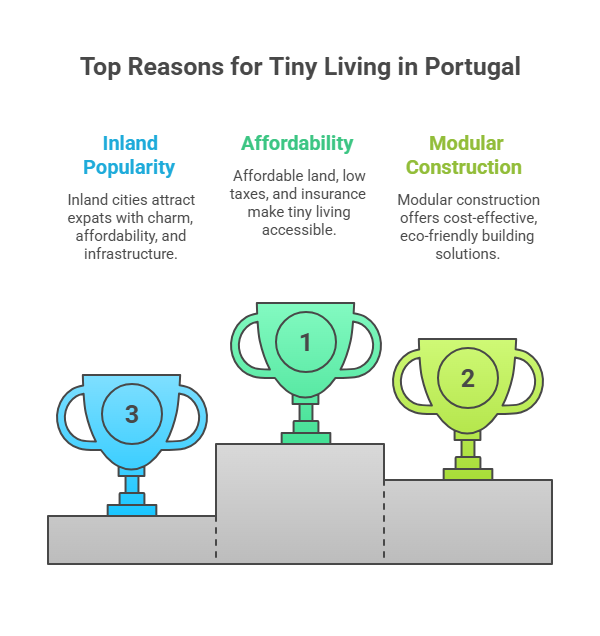
1. Affordability Meets Quality of Life
- Land prices range from under €1,500/m² in rural zones to around €2,700/m² on average nationwide.
- Annual housing tax (IMI) rates sit as low as 0.3–0.45%, and basic homeowner insurance can cost as little as €70.
2. Modular & Prefab Construction Takes Off
Earlier in 2025, one report noted a 221% uptick in modular construction requests, with many clients seeking homes between 50‑130 m² - signaling strong interest in controlled-cost, eco-friendly building solutions.
3. Inland Regions Are Gaining Popularity
Cities like Braga, Évora, and Viseu are seeing rising interest from expats and remote workers. Their appeal: historic charm, affordable land, and growing infrastructure. Coastal towns like Cascais remain strong, but inland offers affordability and sustainable potential.
4. Legal Framework: Fragmented but Navigable
Portugal doesn’t have a national "tiny home law." Local allowances vary - urban zoning usually permits ADUs under building codes, while rural or tourism-linked models require pre-approval via a PIP or zoning project.
Portugal’s Housing Market & Migration Policies: What Has Changed
Real Estate Trends & Affordability Pressures
In Q4 2024, national home prices climbed 11.6% year-on-year, especially in Lisbon where prices exceed €4,000/m². Steady foreign interest continues, though slower growth is expected in 2025.
Government Reforms: Redirecting Investment
Portugal’s 2023 "Mais Habitação" law removed real estate as a qualifying option for the Golden Visa. The goal: steer foreign capital toward investments in ventures, innovation, heritage preservation, and social infrastructure (source: Global Citizen Solutions)
The Golden Visa remains active and competitive - but now centers on strategic investment rather than property purchase.
Processing Backlogs & Administrative Transition
With the dissolution of SEF and the rise of AIMA, Portugal inherited a backlog of hundreds of thousands of residency applications. As of early 2025, the immigration authority has processed over 200,000 cases and extended automatic legality for expired permits through mid-2025.
Staying in Portugal: Legal Visas That Pair with Tiny Homes
Golden Visa (Reformed) via Investment Funds, Heritage & Social Projects
Despite restricted real estate, the Golden Visa continues. Now qualifying investments include cultural donations (€250k), research contributions (€500k), job-creating ventures, or approved investment funds. Investor candidates are encouraged to act quickly given proposals to extend the naturalisation period.
D7 Passive Income Visa
With real estate options closed, many are turning to the D7 visa - ideal for retirees or remote workers earning steady income (minimum €870/month, €10,400 in reserves). It provides residency, healthcare access, and eventually citizenship.
How Tiny‑Home Living Intersects with Portugal’s Residency Options
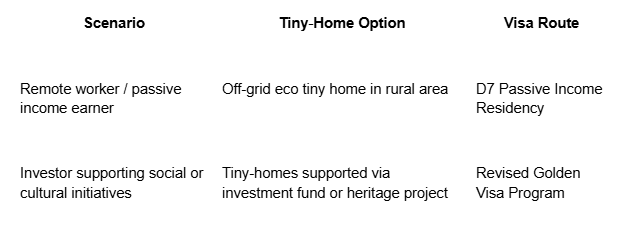
This alignment positions tiny‑home ownership not just as sustainable housing but potentially part of a broader lifestyle and residency strategy.
Local & Eco‑Centric Tiny‑Home Projects to Watch
Portugal boasts recent experimental communities merging sustainable micro‑living with ecological stewardship. A notable development in Alentejo is a “sustainable utopia” combining craftsmanship and tiny‑home dwellings in harmony with nature and regenerative agriculture.
Getting Started: Practical Steps Toward Tiny‑Home Ownership
- Research zoning and planning requirements with the local Câmara Municipal.
- Secure land - favor off-grid or modular‑friendly zones.
- Confirm eligibility if pairing with a visa route (D7 or Golden Visa).
- Partner with prefab builders or eco‑contractors for sustainable construction.
- Finalize permits, utilities, and energy systems like solar or greywater recycling.
Final Thoughts
Portugal offers a unique confluence of affordability, eco‑awareness, and legal pathways for long-term residency. With the right planning and alignment between tiny‑home benefits and updated visa options, minimalist living in Portugal can open the door to financial, personal, and geographical freedom.


.svg)
.jpg)