
How Frameless Glass Balustrades Change a Space

.jpg)
Architecture is shaped as much by what it leaves out as by what it adds. A solid wall may provide safety and separation, but it also interrupts light, narrows sightlines and creates a clear visual boundary. Frameless glass balustrades take a different approach. They perform the necessary protective function while remaining deliberately unobtrusive.
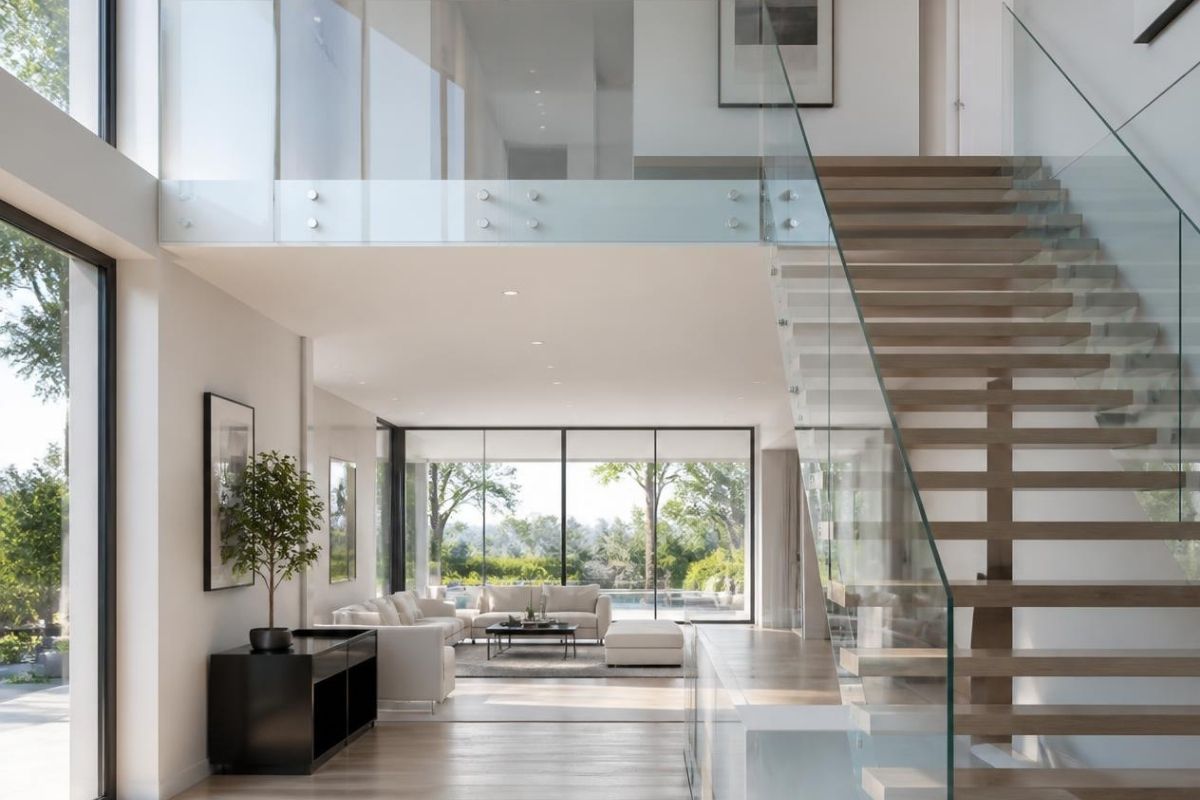
That distinction can transform how a space looks and feels. Whether installed around a staircase, balcony, terrace or mezzanine, a well-designed glass balustrade can improve visual continuity, make confined areas feel more generous and give surrounding materials greater prominence. The effect is subtle, but it influences the entire character of a room or outdoor setting.
Preserving Light and Long Sightlines
Natural light does more than illuminate a space. It affects colour, depth and the way architectural details are perceived. Traditional balustrades, particularly those with closely spaced uprights or opaque panels, can cast shadows and create visual clutter. Glass allows light to travel with fewer interruptions.
Making compact interiors feel more open
This quality is especially useful in smaller homes. On a narrow landing, for example, a solid stair wall can make the circulation space feel enclosed. Replacing that visual barrier with clear glazing does not increase the floor area, but it allows the eye to travel into adjacent rooms or down through the stairwell. The result is a stronger sense of openness.
The same principle applies to mezzanines and split-level interiors. Instead of visually dividing the upper and lower floors, glass helps them read as parts of one connected volume. This can make even modest ceiling heights feel more dramatic.
Protecting the view outdoors
On balconies and terraces, the advantage is straightforward: glass preserves the outlook. A garden, rural landscape or city skyline remains visible when occupants are seated, rather than only when they stand above a conventional railing.
There is also a useful connection between indoor and outdoor spaces. Where large windows or sliding doors face a glazed terrace, uninterrupted sightlines can make the exterior appear like an extension of the room. That relationship is increasingly important in contemporary renovations, where owners often want living spaces to connect naturally with gardens and patios.
Creating a Quieter Visual Language
Frameless systems are sometimes described simply as “modern”, but their impact is more nuanced. Their defining characteristic is visual restraint. By reducing posts, rails and brackets, they allow other design decisions to take the lead.
In a period property, that may mean preserving a view of original brickwork, timber stairs or decorative flooring. In a new-build home, it could allow strong geometry and clean junctions to remain legible. For projects where an uninterrupted outlook is central to the design, minimalist frameless glazing solutions can provide the necessary guarding without introducing a competing architectural feature.
That does not mean glass is visually neutral in every context. Its edges, reflections and fixing details still matter. A poorly coordinated channel or an awkward transition at floor level can undermine the simplicity the designer is trying to achieve. Minimalism depends on precision; fewer visible components give each remaining detail more importance.
Letting Materials Work Together
Glass is unusually adaptable because it sits comfortably beside contrasting materials. With timber, it can temper a traditional staircase without concealing the grain and craftsmanship. Alongside steel, it reinforces an industrial or contemporary aesthetic. Next to stone, concrete or porcelain paving, it introduces transparency without weakening the sense of solidity elsewhere.
Clear glass is not the only option
The correct specification depends on the setting. Low-iron glass reduces the slight green tint commonly visible along standard glass edges, which may be desirable where colour accuracy is important. Frosted or patterned finishes offer greater privacy, while tinted glass can soften brightness and alter the mood of an exterior scheme.
These choices should be made in relation to the entire space, not in isolation. Frosted glazing may work well beside an overlooked boundary, for instance, but could defeat the purpose of a balcony intended to frame a long-distance view.
.jpg)
Safety Must Shape the Design
A balustrade is first and foremost a safety barrier. Its appearance matters, but structural performance cannot be treated as an afterthought. Glass type, thickness, panel dimensions, fixing method and anticipated loads must all be considered together.
In the UK, balustrade design is informed by requirements including Approved Document K and relevant standards such as BS 6180. The required performance varies according to location and use: a private domestic stair does not necessarily face the same loading conditions as a busy public terrace. For that reason, specification should be based on the particular installation rather than a generic assumption about glass thickness.
Toughened and laminated glass may be used in different configurations, and laminated constructions can offer additional post-breakage security by retaining fragments within an interlayer. Edge protection, handrail requirements and the supporting substrate also need careful assessment. Even the best glass panel cannot compensate for inadequate fixings or an unsuitable base.
Planning for Everyday Use
Transparency brings practical considerations. Fingerprints, rain marks and dust tend to be more noticeable on glass than on opaque materials, particularly in areas with heavy use or hard water. Easy access for cleaning should therefore be considered during design rather than after installation.
External panels may need more frequent attention if they sit close to planting, swimming pools or exposed roads. Indoors, a good-quality microfibre cloth and suitable glass cleaner are usually sufficient. Protective surface treatments can reduce residue, but they do not eliminate routine maintenance.
It is also worth observing the space at different times of day. Reflections that are barely visible in soft morning light may become prominent under bright afternoon sun or artificial lighting. Thoughtful positioning can prevent glare and ensure the balustrade remains visually calm.
A Change Defined by What Remains Visible
Frameless glass balustrades do not transform spaces by demanding attention. They do it by removing interruption. Light continues to travel, views remain open and materials beyond the barrier retain their presence.
The most successful installations balance that visual lightness with rigorous technical design. When proportion, glass specification, fixings and maintenance are considered together, the balustrade becomes more than a contemporary finishing touch. It becomes an architectural tool—one that creates safety while allowing the space itself to stay centre stage.


.svg)


.jpg)