
How to Choose the Right Small Whole-House Solar Generator for Your Home

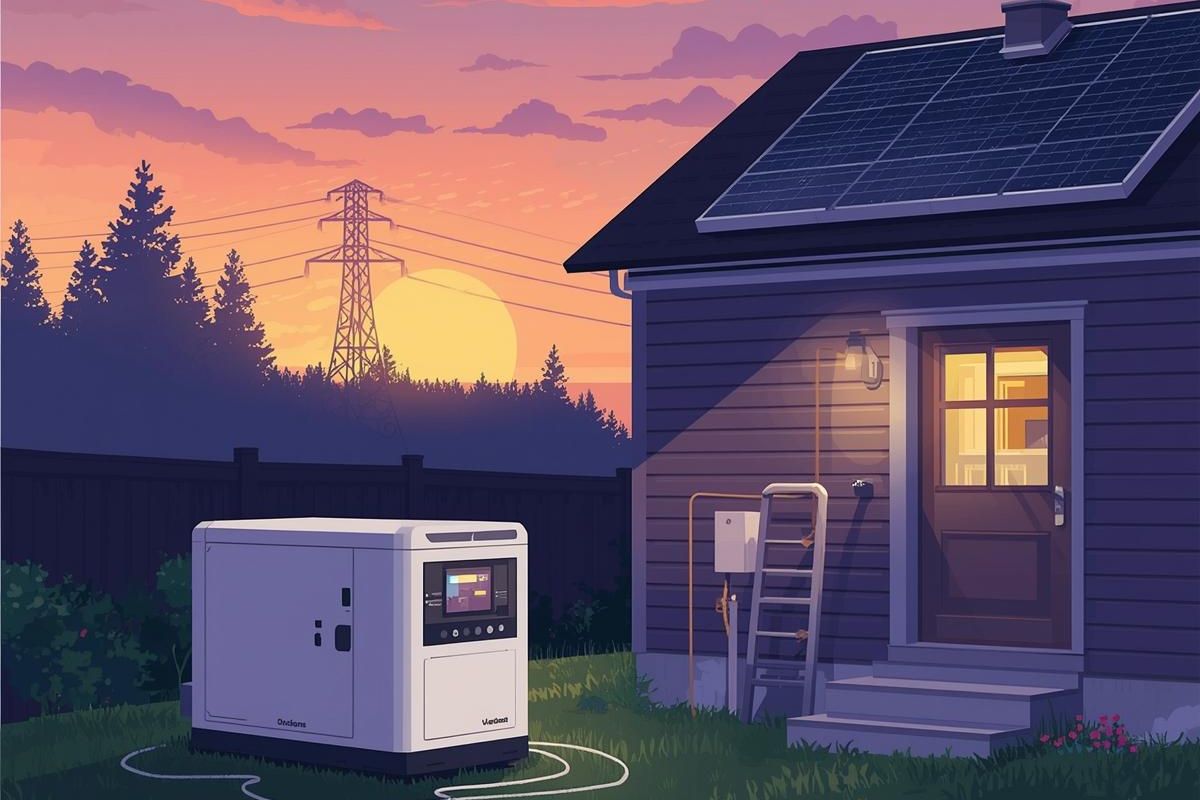
In the era of increasing energy prices and regular power outages, one of the most intelligent decisions to make is to invest into a small whole-house solar generator, a way to be energy-independent and sustainable. A solar generator will give you a reliable backup source of power whether you live in an off-grid cabin, a suburban house, or a small city dwelling and will also allow you to minimize your carbon footprint.
Nevertheless, selecting the adequate system to your house may be rather confusing- there are numerous brands, capacities and technical specification availed in the market, and it is effortless to be confused. This is the guide to help you make your decision; in a manner that will make sure you select the right solar generator to power your household.
What a Whole-House Solar Generator Is
A solar generator is a small self-contained power plant that is used to supply electricity, store and distribute electrical power based on solar energy. When compared to portable generators, which operate using gas and propane, solar generators have solar panels which trap sunlight and transform it to electricity. The energy is stored in high capacity lithium or lead-acid batteries which are called upon whenever they are required.
A small whole house solar generator is usually 2,000 to 10,000 watts, which is sufficient to supply power to the main items used in the home, including lights, refrigerators, fans, Wi-Fi routers and even small air-conditioning units.
What is the Reason to pick a Small whole-house Solar Generator?
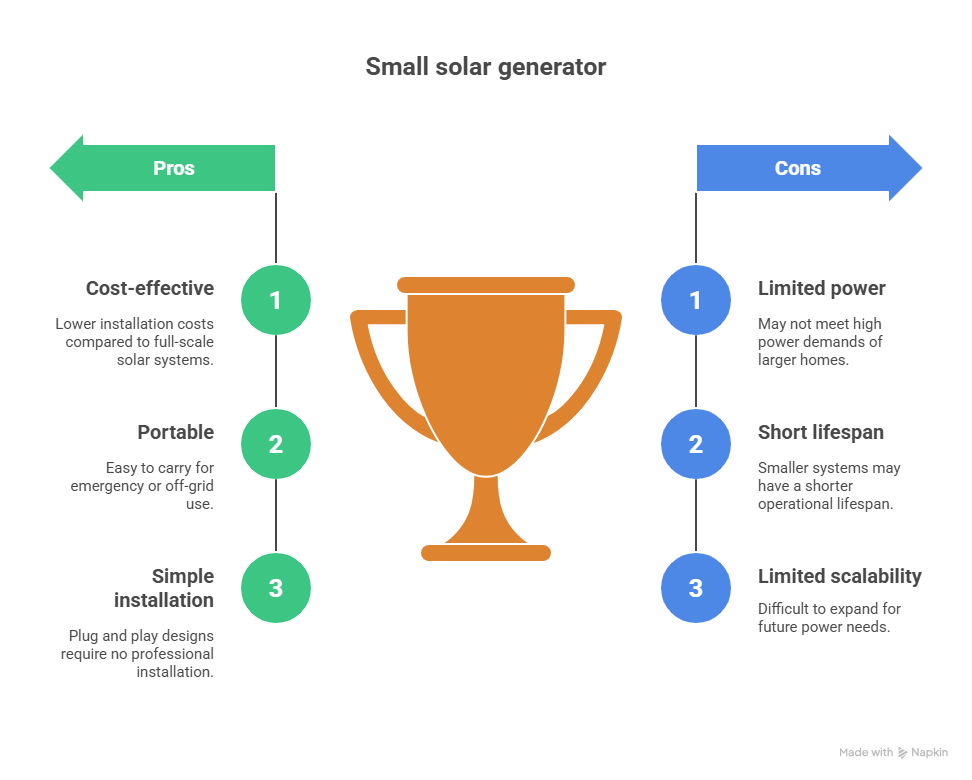
Smaller systems can best serve homes that do not need such power on a large scale as well as serving households that want a low-cost environmentally-friendly system of providing backup power. Some key benefits include
- Reduced Cost: Smaller systems are cheaper to install than full-scale solar systems.
- Portability: A lot of compact models are easy to carry around, which is why they are perfect in the case of emergency applications or off-grid systems.
- Simple to install: Most plug and play designs are easy to install- no wiring or professional installation in most applications.
Solar generators have zero emissions and low noise.
Independence on power supply: You are not so tied to power supply, particularly in case of blackout or emergencies.
Step 1: Evaluate Your Home Energy Requirement.
The first thing to do before selecting a generator is to calculate the amount of power your home needs. The first thing you can do is to make a list of all the vital devices that you would like to use during a blackout and add their total wattage.
For example:
Refrigerator Appliances (150-300 W LED Lights 5-10) 60-120 W Laptop 60-100 W Router 20 W TV100-200 W Small AC (optional) 500-1,000 W
At approximately 2,000 watts, then a 3,000-4,000-watt generator would prove to be the best. At all times, it is advisable to use a generator with a minimum of 20-30 percent more than your average load to avoid overloading.
Step 2: Monitor the type and capacity of the battery.
The capacity of the battery will decide the duration of time your solar generator will serve your home. It is in watt-hours (Wh) or kilowatt-hours (kWh).
A 2,000 Wh generator should theoretically be able to run a 100 W device 20 hours (2,000/100=20).
In the case of small houses or apartments, a system of 3-5 kWh storage of daily essentials should be attempted.
- Most modern solar generators use: when it comes to battery types.
- Lithium-Ion (LiFePO4): The light and long lasting and efficient type. Can last 10+ years.
- Lead-Acid: cheaper, heavier, and less life span. Suitable for occasional use.
LiFePO4 batteries are the most suitable long-term investment as their performance and durability are better.
Step 3: Assessment of Solar Input and Charging.
The speed and efficiency with which your solar generator charges is a critical determinant of your solar generator performance.
Check for:
- Solar Input Capacity: The greater the input (in watts) the quicker the charging is done by solar panels. As an illustration, a battery with 3 kWh of capacity can be replenished in 3-4 hours by a 1,000 W of sunlight in conditions that are optimal.
- Several Charging Options: The most advanced generators may be recharged by means of solar panels, AC outlets or even your car 12V socket. This is flexible so that you do not go without power.
- Expandable Systems: In some of these models, you can easily increase the number of solar panels or batteries, so as to enable your system to expand as you need it.
Step 4: Take into account the Inverter Power Output.
The inverter is used to convert the DC power stored in the battery to AC power to be used in your home appliances.
Two key ratings matter here:
- Continued Output (Running Watts): The power output that the generator can provide at a given time.
- Surge Output (Peak Watts): this is the amount of power required to start heavy appliances such as refrigerators or pumps in the short term.
The minimum power requirement is 2,000-3,000 W at constant and 4,000-6,000 W surge on a small home. It is also important to always ensure that the inverter is generating pure sine wave output as this is the only way to guarantee a safe operation of delicate electronics.
.jpg)
Step 5. Portability and Design:
Although you are selecting a whole-house-generator, smaller generators can be lightweight and portable.
- Weight and Size: Systems that are less than 100 lbs are small enough to make their movement easy.
- Inbuilt Handles or Wheels: Have an easy time with transportation and set up.
- Small Size: It fits well in a small area or an apartment.
Portability will be a significant benefit in case you intend to go out on a trip or RV trip.
Step 6: Safety Functions and Endurance.
A good solar generator would not only have an inbuilt protection system like
- Overcharge and over-discharge cover.
- Short-circuit protection
- Temperature control
- Dustproof and waterproof construction (in outdoor application)
Enquire whether the manufacturer offers at least 2-5 year warranty. It is common to have premium models with smart functions such as Bluetooth monitoring, touchscreen displays and mobile apps to track the vehicles performance in real time.
Step 7: Brands and Customer Support Comparison.
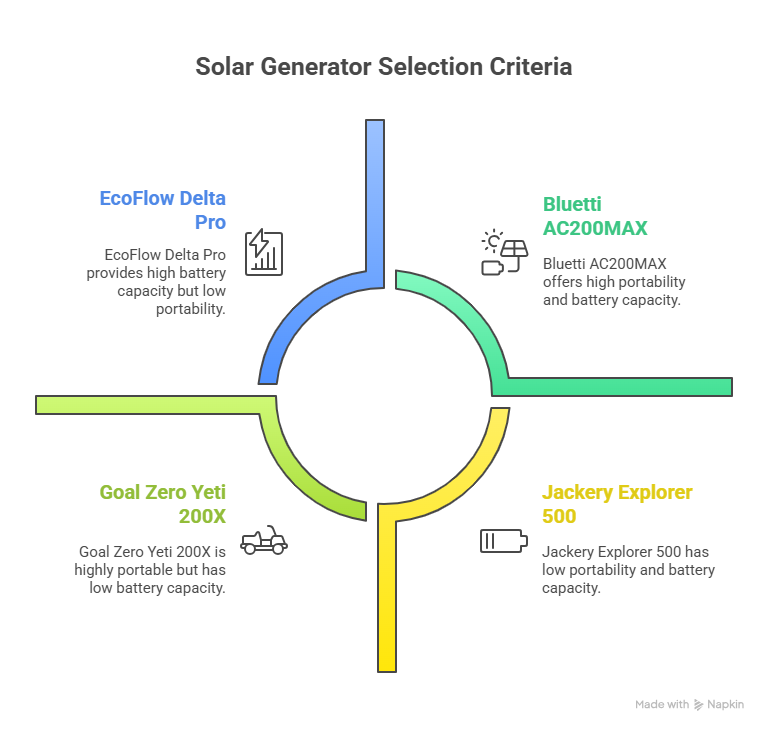
Solar generators are not equally made. Some of the trusted brands are Bluetti, EcoFlow, Jackery, Goal Zero, and Anker, which are reputed at good components and good warranties.
Reviews of the customers, comparing after sales service and ensuring the availability of spares or additional batteries are easy before making the purchase. Receptive customer service team can be the difference between a great long-term experience and another.
Step 8: Long-Term Value and Budget.
Price plays a significant role- small whole-house solar generators have the cost of between 1000 and 5000 dollars depending on the size and specifications. Though the price of cheaper models might be attractive, investing in a quality system will be profitable in the form of the extended life cycle, the increased charging speed, and the enhanced efficiency.
You should not forget the solar panels, mounting kits, and extension cables, which should be a part of your overall budget. These accessories are already offered in some bundles at a better price.
Final Thoughts
The selection of the appropriate small whole-house solar generator depends entirely on the matter of energy requirements, financial constraints, and the prospective ambitions. Considering the portable power station 5000w capacity, battery type, quality of inverter, and expandability, you are sure to get a system that perfectly suits your lifestyle.
The solar generator is not merely a backup plan, it is a move towards sustainable living, energy security and peace of mind. The right system can ensure a home that is more resilient and environmentally friendly over the years whether you want to keep your home running in case of an emergency or because of lowering your electricity bills.


.svg)

.jpg)
.jpg)
.jpg)