
How to Fix Creaky Floors in Your Home


To fix creaky floors in your home, start by identifying the source of the noise. Walk around and listen for specific boards that creak, checking for loose floorboards and gaps. Inspect the floor joists for damage or sagging. If it's just friction, lubricate the areas with powdered graphite or talcum powder to reduce noise. You can also add soundproofing underlayment or acoustic panels to minimize sound transmission. If creaks persist, consider consulting a professional to get to the root of any structural issues. There's much more you can explore to achieve a quieter, more peaceful home environment.
- Walk around to identify creak sources, listening for specific boards that indicate loose floorboards or gaps.
- Inspect floor joists and boards for visible damage, ensuring they are properly secured and free of sagging.
- Apply powdered graphite or talcum powder in creaky areas to reduce friction between floorboards and joists.
- Consider soundproofing materials like underlayment or acoustic panels to absorb and block noise effectively.
- If creaks persist, consult professional contractors to diagnose and repair underlying structural issues.
Identify the Cause of Creaks
Before you can fix those annoying creaky floors, it's crucial to identify what's causing the noise. Start by walking around the area and paying close attention to where the creaks occur. Listen carefully—do the sounds happen only when you step on certain boards? This might indicate loose floorboards or gaps between them.
Next, check for signs of wear and tear. Look for any visible damage, such as cracks or splintering. Seasonal changes can also affect your floors, causing wood to expand and contract.
Finally, consider the age of your home. Older homes often have settled foundations that contribute to creaky floors. By pinpointing the cause, you'll be better prepared to tackle those pesky sounds effectively.
Inspect Floor Joists and Boards
While you're addressing those creaky floors, it's vital to inspect the floor joists and boards thoroughly. Start by looking for any visible signs of damage, such as cracks, warping, or rot. Use a flashlight to examine dark corners and make sure you catch everything. Pay attention to the spacing between the joists; they should be evenly spaced and properly secured.
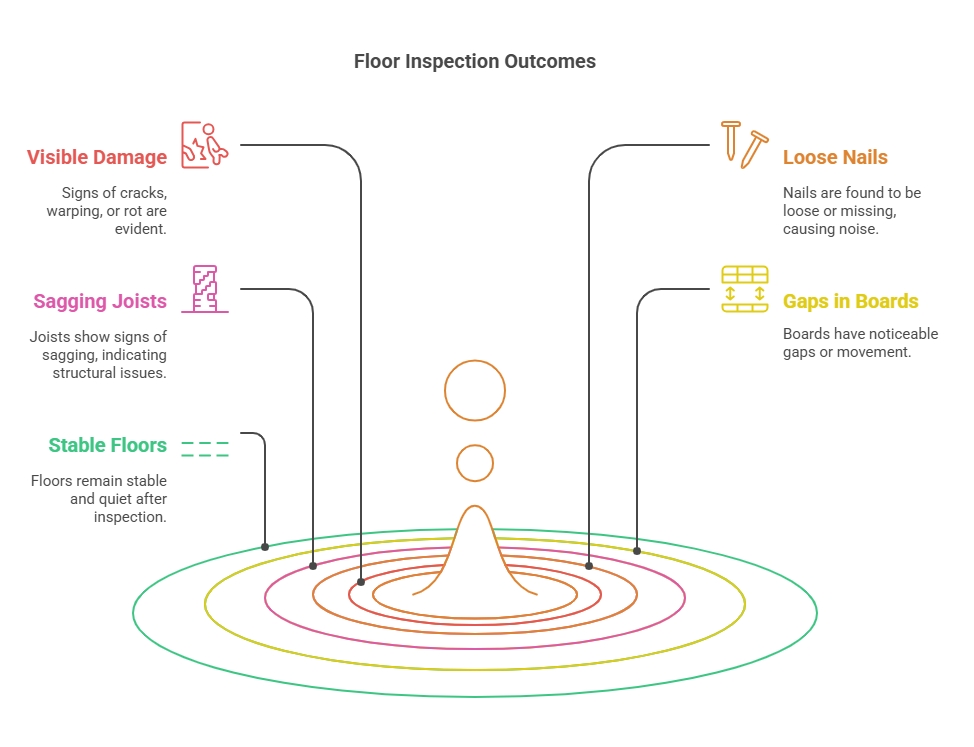
If you notice loose or missing nails, that could be a source of your creaks. Check for any signs of sagging, which might indicate deeper structural issues. Don't forget to inspect the boards themselves for any gaps or movement. By identifying these problems early, you can take the necessary steps to make certain your floors are stable and quiet once again.
Apply Lubrication Techniques
After inspecting the floor joists and boards, you might find that some creaks can be resolved with a simple application of lubrication. Start by identifying the areas where the floorboards rub against each other or the joists.
A common choice is to use powdered graphite or talcum powder. Sprinkle it generously in the creaky spots, then gently work it into the gaps with a soft brush or cloth. This helps reduce friction and silence the noise. If you prefer a liquid solution, consider using a silicone spray. Just be cautious not to over-apply, as excess lubricant can lead to a slippery surface. Remember to keep the area well-ventilated while you work, ensuring a safe and effective application.
Install Soundproofing Materials
If you're looking for a more permanent solution to those annoying creaks, installing soundproofing materials is a great way to go. Start by evaluating the areas most affected by noise. Adding soundproofing underlayment beneath your flooring can greatly reduce sound transmission. You can also use acoustic panels on walls or ceilings to absorb sound and minimize echoes.
.jpeg)
For a more DIY approach, consider using mass-loaded vinyl, which is a dense material that blocks sound effectively. Be sure to seal any gaps around your flooring with caulk or weatherstripping to further reduce noise. By investing in soundproofing materials, you'll not only tackle those pesky creaks but also enhance your home's overall comfort and tranquility.
Consider Professional Help
When creaky floors persist despite your best DIY efforts, it might be time to contemplate professional help. Professional contractors or flooring specialists have the expertise to diagnose the underlying issues contributing to your floor's noise. They can assess whether loose floorboards, inadequate support structures, or even moisture problems are at play.
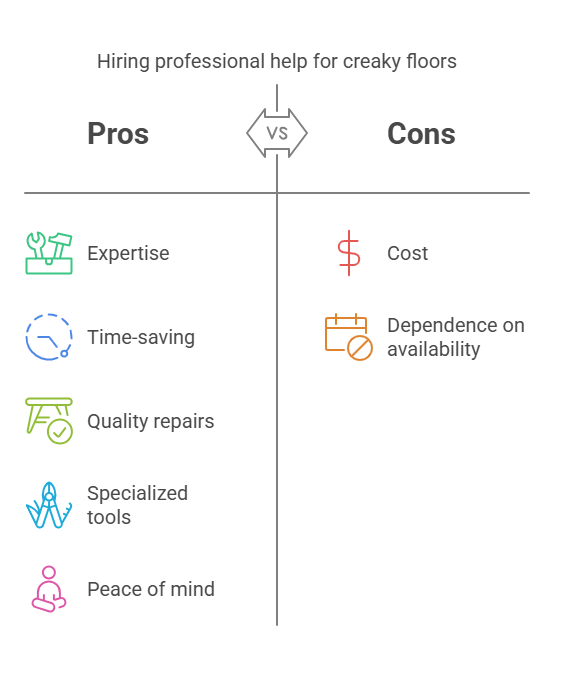
Hiring a professional not only saves you time but also guarantees the job's done correctly, reducing the chance of further issues down the line. Plus, they'll have access to specialized tools and materials that can enhance the quality of repairs. If you're facing significant creaking or you're unsure about your next steps, reaching out for professional assistance can provide peace of mind and restore tranquility to your home.
Conclusion
By identifying the cause of your creaky floors and inspecting the joists and boards, you can tackle the issue head-on. Applying lubrication techniques or adding soundproofing materials can make a noticeable difference. If the noise persists, don't hesitate to reach out for professional help. With a little effort, you can restore peace and quiet to your home, making your living space more comfortable and enjoyable. Your floors deserve it!


.svg)


.jpg)