The Guest Bed Problem: How to Host Overnight in a Tiny Home

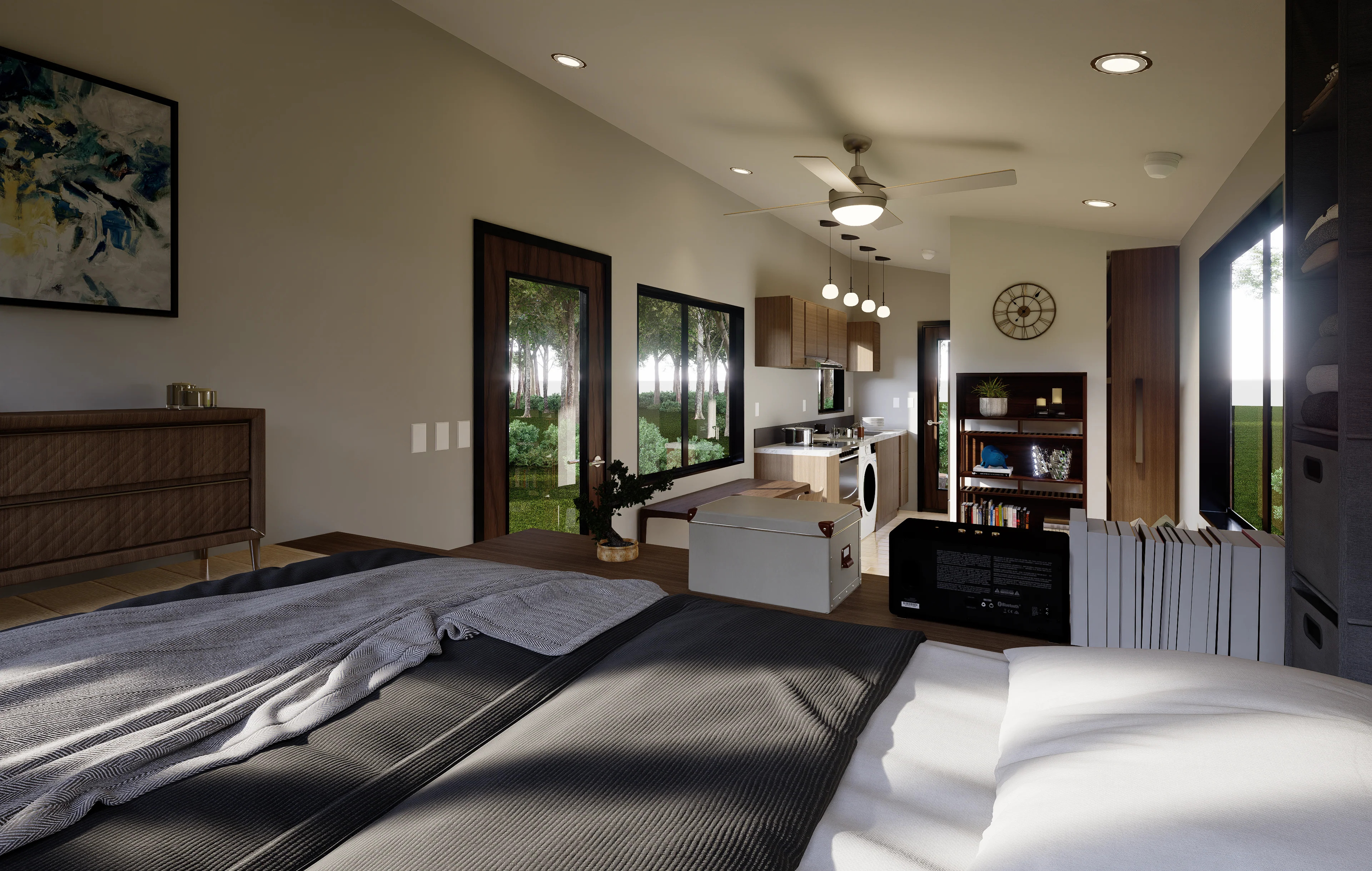
Every tiny home owner hits the same moment sooner or later. Your parents want to visit. Your sister's coming for a long weekend. A friend needs somewhere to crash. And you look around 300 square feet and wonder where, exactly, anyone is going to sleep.
The air mattress in the closet is the usual answer. It's also why so many guests leave after one night. Here's how to plan a guest bed that actually works in a small space, without giving up the room you use every day.
Start with how often people stay
Before you buy anything, be honest about how your space gets used.
- A few nights a year: a good folding mattress or a quality air bed you can store flat is fine. Don't sacrifice daily living space for something you use four times a year.
- Regular visitors: if family stays monthly, or grandparents come for a week at a time to help with the kids, you need a real bed. Anything that leaves a guest sore after night two isn't a solution.
- Every night: if the guest bed is also your bed, because the loft is hard to reach or you're planning to age in place, comfort matters more than anything else.
Most tiny home owners sit in the middle group. That's where the best options are, too.
Measure the space before you choose
Tiny homes leave very little margin for error, so measure before you shop. Find the extended length and width of any bed you're considering, mark that footprint on the floor with painter's tape, and walk around it. Check that a guest can get in and out of bed, reach the bathroom at night, and open the front door without the mattress in the way. Look up as well as across. A bed tucked under a low loft or a sloped ceiling needs enough headroom for someone to sit up without hitting their head.
If you're still at the design stage, it's far easier to plan for guests now than to retrofit later. You can sketch your layout in a free 3D tiny house designer and test where a wall bed or sofa bed would sit before you commit to windows, outlets, or built-in storage. Keeping one clear, flat stretch of wall in the plan gives you far more options down the line.
The four options that actually fit
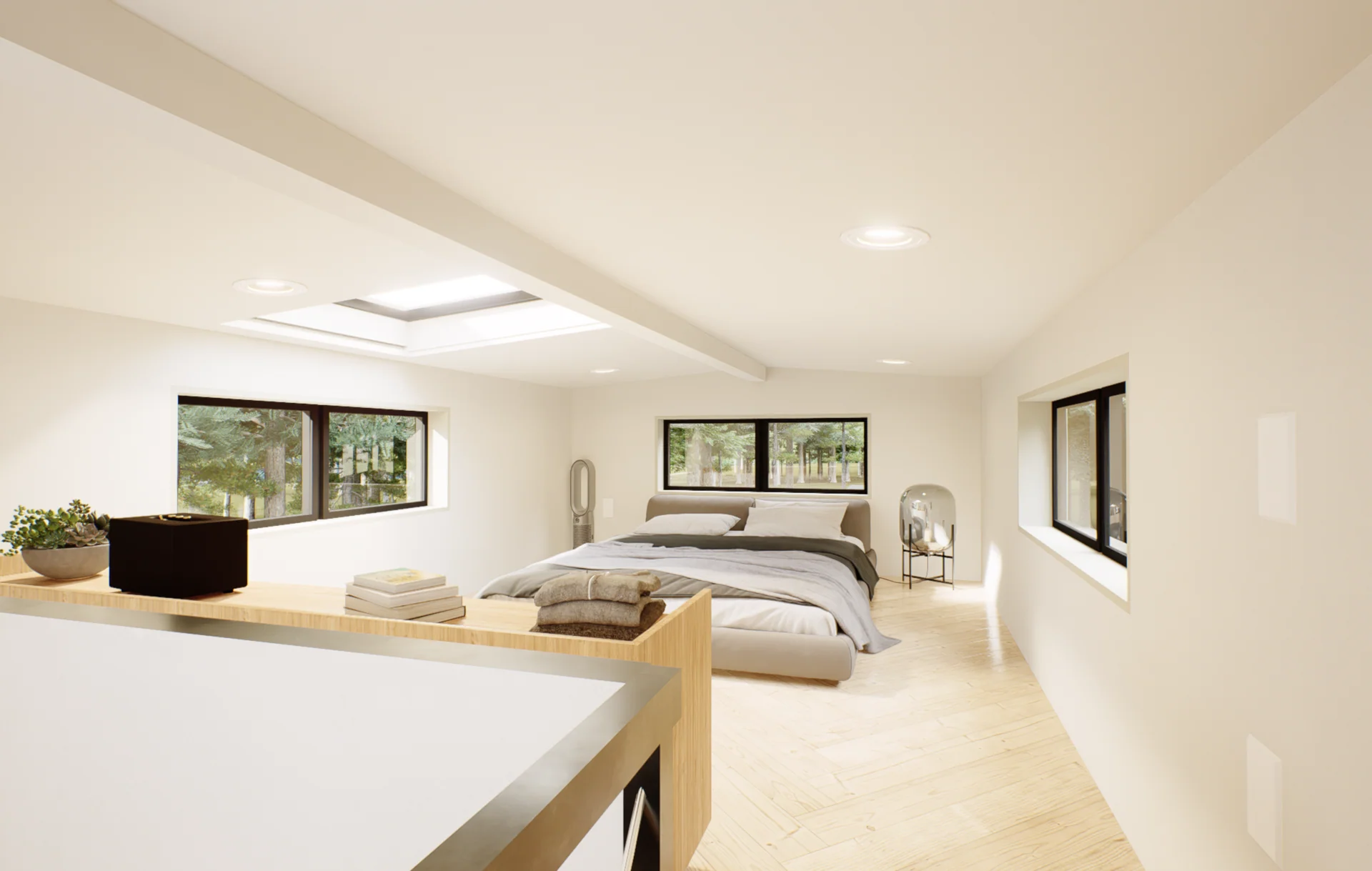
1. The loft guest bed
Many tiny homes already have a second loft. It works well for younger guests. It works badly for anyone with bad knees, anyone getting up in the night, or anyone over about 60. A ladder in the middle of the night is a real risk: about one in four adults aged 65 and older report a fall each year, according to the CDC. If your regular visitors are parents or grandparents, plan for a bed at floor level.
2. The Murphy (wall) bed
A wall bed gives you a full mattress that disappears when you don't need it. The catch is that you have to keep the floor in front of it clear, and you need a strong, flat wall, which isn't always easy in a tiny home with windows on every side.
3. The daybed or trundle
A daybed doubles as seating, and a trundle underneath turns one sleeper into two. It's great for kids. Adults often find the seat too deep to sit on comfortably and the trundle too low to get out of.
4. The sofa bed
Sofa beds have a bad reputation, and most of it is earned: thin mattresses, metal bars across the back, and a mechanism that fights you every time. But a well-made sofa bed is still the most efficient piece of furniture you can put in a small space. It's your living room by day and a full bed at night, in one footprint.
The trick is knowing what separates a good one from the rest.
What to look for in a sofa bed you'd actually sleep on
Mattress depth. This matters more than anything else. Many sofa beds use mattresses only 2.5 to 4 inches thick. You feel the frame through them by the second night. Look for 5 inches or more. For regular use, closer to 7 inches feels like a proper bed.
Full length. Check the extended length. A lot of sofa beds come up short, so taller guests end up with their feet hanging off. Look for around 78 inches, the length of a standard bed.
A mechanism you can open in seconds. If it takes two people and a wrestling match, you'll never use it, and the sofa bed becomes just a sofa. Try it yourself before you buy.
A frame built to be opened often. Ask what the frame is made of and how long the mechanism is guaranteed. A long warranty on the mechanism is a good sign the maker expects it to be used.
Will it get through the door? Tiny home doors are narrow. Some makers build sofa beds in sections so they can be carried in and assembled inside, which can be the difference between possible and impossible.
The UK is a good place to see how far sofa beds have come. British homes are small, spare rooms are rare, and family visits are a way of life, so the best makers there design for sleeping first. Furl, for example, makes everyday sofa beds with deep mattresses by hand in Nottingham. Many of its models use 18cm (about 7 inch) mattresses, the frames come apart and arrive in sections so they can be carried through narrow doorways and up stairs, and the mechanism carries a five-year guarantee. That combination is a good standard to hold any sofa bed to, wherever you're buying.
Make the space feel like a guest room
The bed is only half of it. A few small touches make a tiny home feel generous rather than cramped:
- Give guests somewhere to put things. A couple of wall hooks and a clear shelf stop suitcases from taking over the floor.
- Store bedding close to the bed. Sofa beds with storage arms or a bin under the seat mean you're not digging through the loft at 10pm.
- Add a reading light. A clip-on or wall-mounted light by the bed saves guests fumbling for the main switch.
- Think about privacy. A curtain on a ceiling track can turn the living area into a separate sleeping zone in seconds.
- Plan the morning. If you're up first, make sure you can get to the kitchen and the coffee without climbing over anyone.
Keep the air comfortable overnight
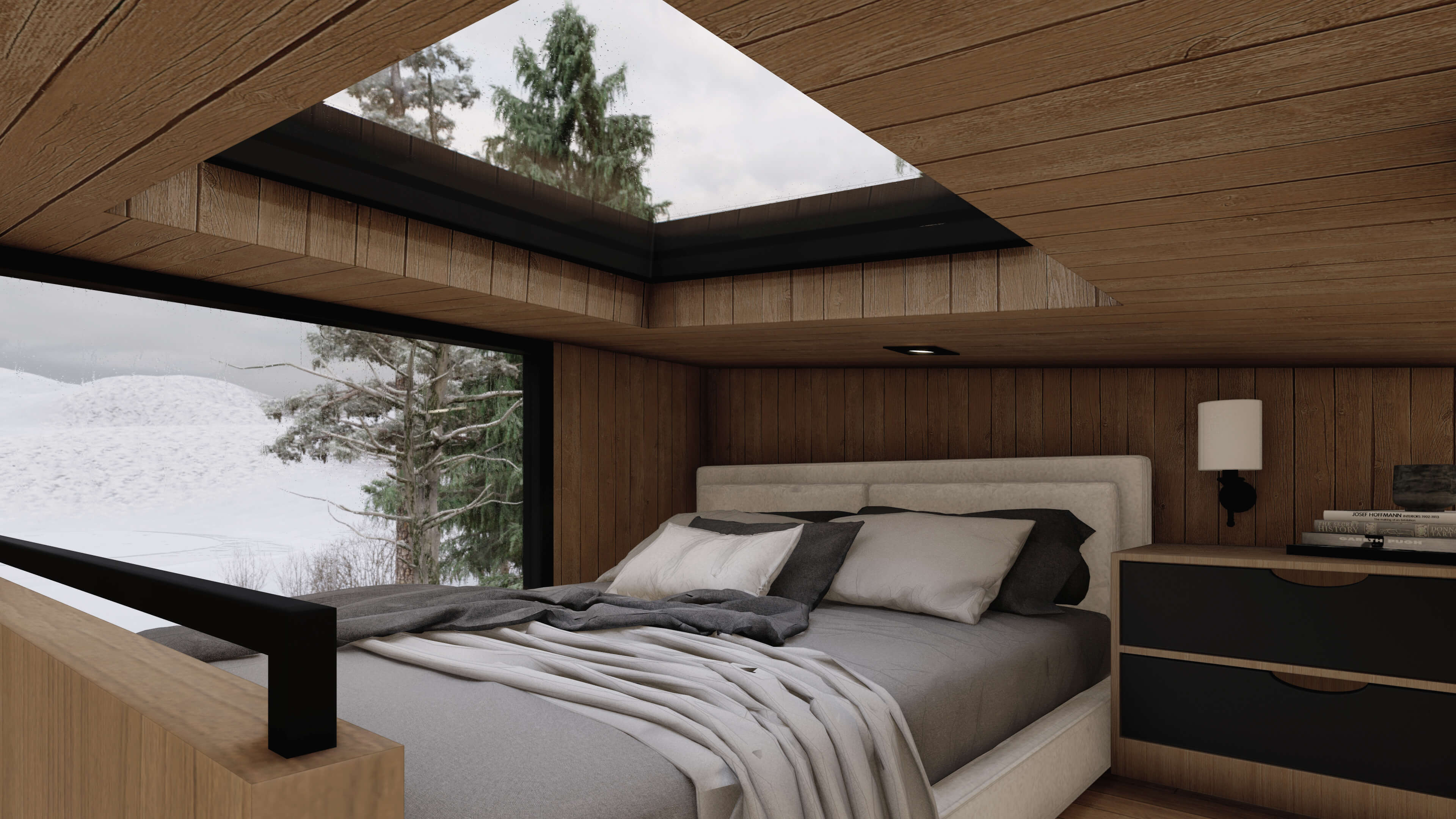
An extra person or two changes how a tiny home feels at night. Every sleeper breathes out moisture, and in a small, tightly built space that shows up as condensation on windows and cold walls by morning. Run the bathroom or kitchen extractor fan for a while before bed, or leave a window cracked if the weather allows. If you heat with propane, wood, or another fuel-burning appliance, test your carbon monoxide and smoke alarms before guests arrive, and make sure there is one near where they will sleep as well as in the loft. Temperature matters too. Warm air rises, so a guest sleeping at floor level may feel noticeably cooler than you do upstairs. A spare blanket within easy reach saves everyone an uncomfortable night.
The bottom line
In a tiny home, every piece of furniture has to earn its place. A guest bed you use a few times a year shouldn't eat into the space you live in every day, but it shouldn't punish your guests either.
For most tiny home owners, the answer is one good piece doing two jobs: a sofa that's genuinely comfortable to sit on, and a bed that's genuinely comfortable to sleep on. Get the mattress depth and the mechanism right, and your visitors might start staying longer than you planned.