
How to Use Metal Screens in Small Home Design

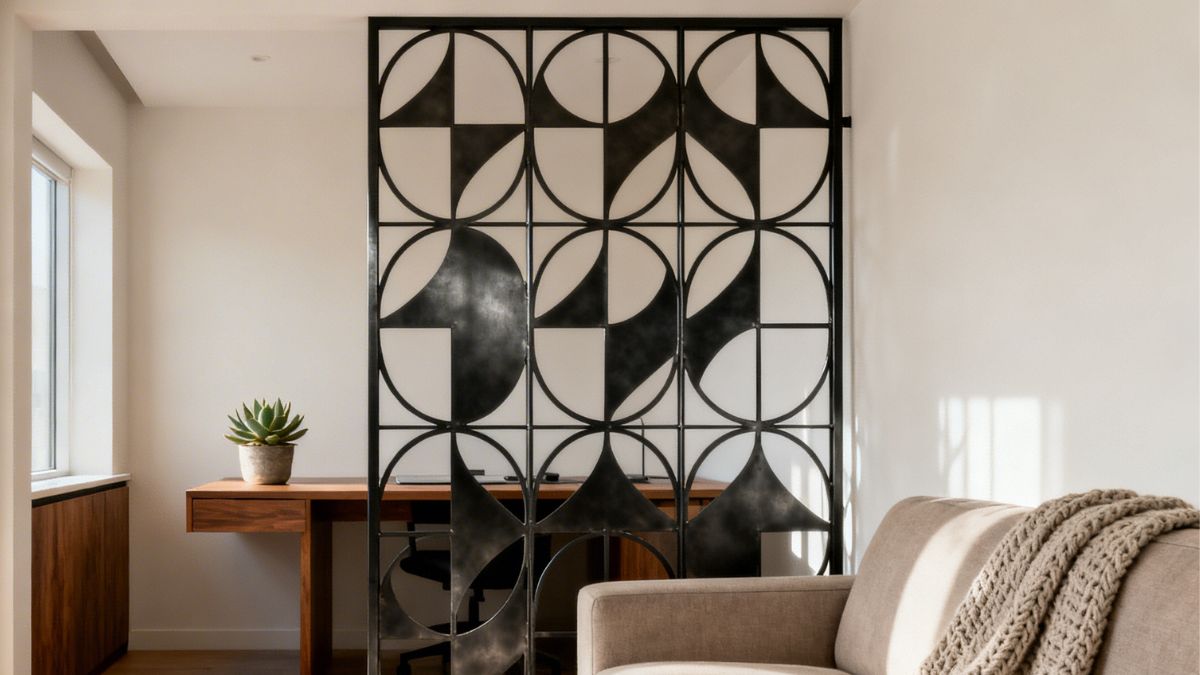
As urban density increases, the challenge of designing compact homes (be it a sleek apartment or a functional ADU) requires a shift from traditional partitioning to smarter architectural interventions. We’re seeing a global housing mismatch where the demand for efficient, high-quality living spaces often outpaces availability, according to insights from the World Economic Forum.
Metal screens emerge here not merely as decorative accents, but as essential tools for zoning. They offer a sophisticated way to manage airflow and light without sacrificing the visual continuity of a small footprint.
Why Metal Screens Are Ideal for Small Home Design
Conventional interior walls can be cumbersome and bulky in such constrained settings, occupying valuable floor space and hindering natural lighting. On the other hand, metal screens become versatile materials that can serve as functional boundaries without causing any sense of closure.
This concept suits perfectly well with today's minimalist designs where functionality is highly prioritized. According to data provided by the Passive House Accelerator, ensuring a good thermal insulation and controlling solar gain is crucial for small dwellings, and this can be achieved with the help of metal screens that will operate as effective solar barriers.
Additionally, thanks to its superior durability, metal will provide a screen with an extended lifespan compared to wooden panels or drywall.
Key Design Functions of Metal Screens in Compact Spaces
1. Space Zoning Without Closing Off Rooms
The biggest challenge in designing studios and small houses is how to divide spaces into rooms without having it look like box after box. Using screens, you can separate an area for sleeping or working without obstructing the view.
This allows one to create the illusion of space because the eyes have room to follow along with the screen towards the opposite wall – a technique frequently discussed by Architectural Digest.
2. Maximizing Natural Lighting While Maintaining Privacy
Privacy can be compromised in compact homes, particularly in buildings located on roads. Metal perforations or slots provide an elegant way out. They scatter direct sunlight, preventing glare on electronic devices and furniture while providing sufficient light inside. This means that you can have privacy in your bathroom or bedroom without installing heavy curtains that drain the space of its life.
3. Improving Ventilation and Heat Management
Ventilation is imperative in small houses because it prevents stagnation and overheating. Unlike fixed walls, metal screens facilitate passive ventilation techniques. It becomes highly significant in Australia's hot climate, where natural cross-ventilation decreases the dependency on air conditioning units and minimizes the building’s carbon footprint.
4. Creating Visual Interest Without Clutter
Every item in an interiors design scheme needs to have its purpose. The addition of a screen brings visual interest through texture and rhythm. As a focal point, it has two roles. First, it eliminates the need for other decorative elements since it already adds visual appeal to the space.
.jpg)
Practical Ways to Incorporate Metal Screens in Small Homes
A common approach is using sliding doors or operable partitions. These allow for a flexible floor plan that adapts to your needs. You can slide a screen across to hide a kitchenette or open it up when entertaining. According to design strategies from Formery, flexibility is the "secret sauce" of small-scale success.
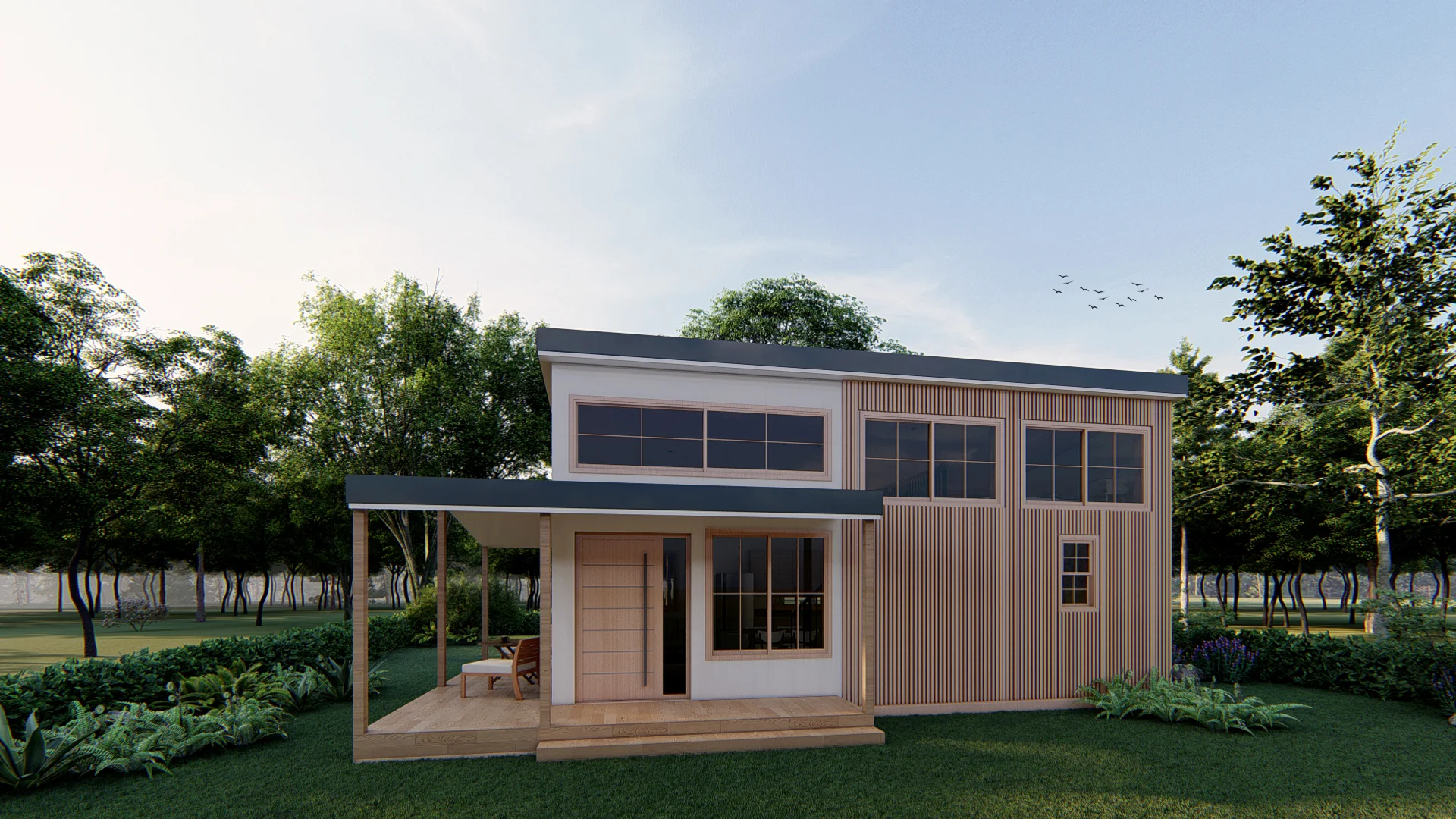
On the building’s exterior, screens function as a secondary skin. This facade screening controls solar exposure before it hits the glass, which is a core tenet of passive design. For vertical tiny homes, metal screens are excellent for staircase and loft enclosures. They provide the necessary safety and structural integrity required by building codes while ensuring the staircase doesn't become a dark or cramped tunnel.
Outdoor spaces, such as balconies or courtyard areas, would also be positively impacted by this process. When creating outdoor spaces that connect to your house in such a way that screens separate the two zones, there is essentially no barrier between the interior and the exterior space except for visual screens.
Choosing the Right Metal Screen for Your Project
It is important to find a perfect balance between visual appeal and practicality. The material is often chosen based on aluminum's favorable strength to weight ratio and natural rust-resistant properties, although sometimes steel will work better as per individual requirements.
Pattern density, which can either be high with perforations or low with wide slats, dictates the amount of light transmission and privacy achieved. It is crucial to also consider finishing.
Finishes like powder coating and anodizing provide color and texture options and ensure that the metal is protected from external elements. In compact spaces, scale and proportion is paramount, making customization options key.
Where to Source High-Quality Metal Screens
In terms of selecting materials, one needs to investigate the availability of systems that have been developed especially for use in architecture. Good quality metal screens provide great freedom in designing according to the requirements of space and aesthetics.
Engineering such systems guarantees an integration process where the bolted on effect disappears completely. It is only through such processes that the difference between a do-it-yourself effort and a well-engineered small house comes to light.
Design Considerations for Long-Term Performance
Beyond the visual impact, technical compliance is vital. The fire rating of the screen will depend on the area you are living in and the height of the building. The material should be selected to fulfill the non-combustible criteria in the location.
Corrosion is another important aspect that should be considered when choosing a material, especially in coastal regions. Salt from the ocean could damage the screen if it is made from low-quality material. Structural fixing will ensure the screen resists wind pressure.
Designing Smarter with Less Space
Small homes should never be perceived as an inferior choice. Instead, it forces us to think more intelligently about design that makes maximum use of every inch of space.
Designing metal screens is a solution that will work well in the present while keeping the future in mind. With the right design approach, it is possible to elevate any small home into something far greater than it really is.


.svg)
.jpg)
.jpg)
.jpg)