
How Your Home Affects Your Allergies

.jpg)
After a long day of having allergy attacks and suffering the sniffles, you might expect to feel safe at home, but it can be even worse there. Why is it that our homes are often a source of our worst allergy attacks?
The problem mostly comes down to cleanliness, and we want to share with you why your home could be problematic for you and your allergies and how you can fix this issue. A tiny home will have it even worse, with cramped spaces putting you in close proximity to the dust and other allergens. Read on to get some help.
How Often Your Home Is Cleaned
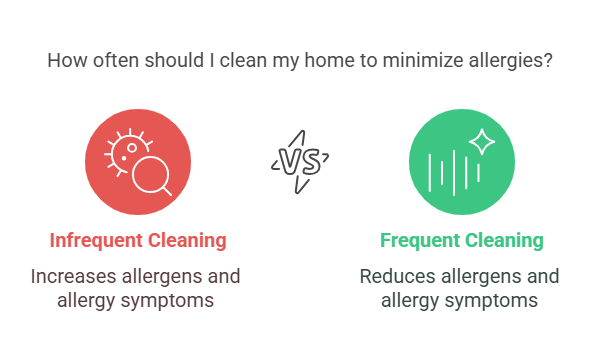
This will be one of the biggest factors affecting allergies in the home. If your home is not cleaned very often, then there will be plenty of areas where you can find allergens like dust mites, pollen, and more. If you clean your home often, you're less likely to encounter these in any space in your home.
A simple and basic cleaning in the home every few days or once a week makes a big difference as to how dirty it is, how much dust is there, and how severely you'll suffer from allergies. Even the most basic cleaning can make a big difference, getting rid of dust and dirt and food particles that could attract pests. If you have been frequently and severely suffering from allergies in your home, you will notice that increasing the number of times you clean your home will make a big impact.
We recommend doing at least a little cleaning every day and then deeper cleaning once a week or once a month, depending on how deep the cleaning is and how much time and energy you have available. You can hire experts for deep cleaning in Brooklyn, and that can save you a lot of time and effort, and a professional also gives you a better deep cleaning.
How Well Your Home Is Cleaned
We have to mention that it's not enough to simply clean your home. You also have to clean it well. A deep cleaning does that, ensuring that all spaces are properly cleaned, but it is something that most people simply don't do often enough. If your cleaning is very surface level and basic, you're going to miss a lot of things. You may not be cleaning underneath heavy objects and behind furniture like you ought to be, which means these will be places where your allergens will hang out.
We would advise deep cleaning your home as often as you can, as this will make a huge difference in how afflicted you feel by your allergies. You can always look up a deep cleaning checklist online to find out what exactly you ought to do with this type of cleaning and what you might expect from a professional dating service that offers this option.
If you do a good job cleaning your home, you won't have as many allergy attacks. Your sinuses will be less stuffy, you will be able to breathe easier, you should be able to sleep better, and you should feel generally better overall.

The Air Quality
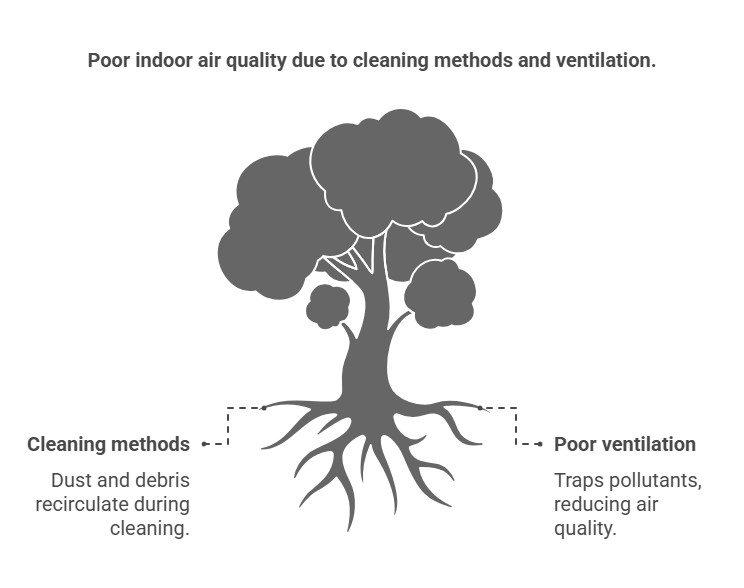
How clean is the air in your home? It's a question you should be asking yourself if you care about your sinuses and the way allergies and allergens affect your life. If you tend to clean your home very well, the air quality will probably be excellent, but even a clean house can have bad air quality if there is poor air flow.
You see, what happens a lot of times when people clean their house is that dust and debris fly up into the air and settle somewhere else. How often this happens and how much of an issue it is will depend on your cleaning methods, but it is something you need to be aware of. If you open windows when you clean or turn on your ventilation system, then a lot of these small particles that you're trying to get rid of will actually be taken out of your house.
If you are concerned about the air quality, you can have it checked by a professional. They can tell you whether there's mold in the air, even though you won't see it, and they can check for other particles as well that might not be visible but that can still cause you some health issues. You can also check air quality on your own by purchasing a testing machine. These can cost anywhere from $30-$60 and can check for a variety of air quality problems.
Most issues with your air quality can be dealt with by simply cleaning your home well and ensuring that there's proper ventilation. If you're doing that, your air quality is probably very good.
Mats and Rugs
We have to talk about carpets, mats, and rugs. These can take up a lot of space and store a lot of dust and dirt. If you have problems with allergies in your home, then your carpeting should be one of the first things you look at.
Maybe you're thinking that you never put your face down by the carpet, so why does it matter if it's a little dirty. Well, what happens when you walk across the carpet or a mat is that your feet create an impact that pushes tiny particles into the air. These can get up near your face or float through the air for a while and affect other people as well.
Carpets trap dirt and dust very well and can be difficult to clean. This is why we recommend people who have severe allergies simply get rid of their carpeting and replace it with some other kind of floor covering. This is especially important in tiny homes where small particles don't have much room to move around and will very likely end up in your sinuses.
Did any of these points seem helpful to you? We hope so, we hope you can put some of our ideas to good use so that your home is a place where you can feel safe and comfortable.


.svg)


.jpg)