Maximize Small Space: Creative Organization for Tiny House Kitchens


Creating a functional and efficient kitchen in a tiny house can be a rewarding challenge. The tiny house kitchen is not just a place for cooking; it embodies the principles of minimalism, creativity, and smart design. With careful planning and innovative organization strategies, even the smallest kitchen can become a highly efficient workspace. This article will provide insights into maximizing space in tiny house kitchens, focusing on clever design ideas and the top space-saving appliances that make cooking enjoyable, even in tight quarters.
Understanding Tiny House Kitchen Design
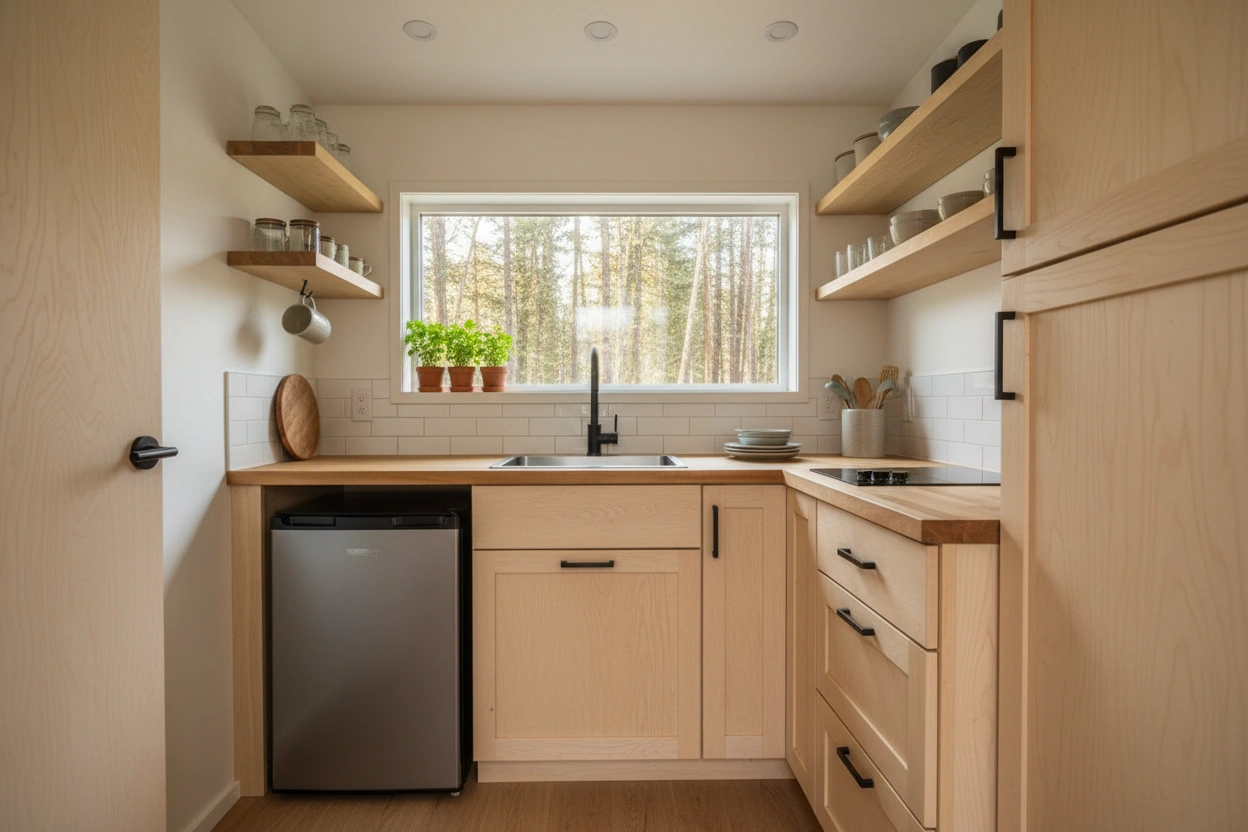
Designing a tiny house kitchen requires a thoughtful approach that considers the unique limitations and opportunities of small spaces. The goal is to create a functional area that meets your cooking needs while maintaining a sense of openness and flow.
Key Principles of Small Space Kitchen Design
Multi-Functional Furniture: Choose items that serve multiple purposes. For example, an island can function as both a prep area and dining space, while a foldable table can be tucked away when not in use.
Vertical Storage Solutions: Utilize wall space for storage. Shelving, pegboards, and hanging racks can keep utensils, pots, and pans accessible without consuming valuable counter space.
Smart Layout: An efficient layout is essential in a tiny house kitchen. The work triangle concept—ensuring the stove, sink, and refrigerator are positioned in a triangular layout—can optimize workflow and reduce movement.
Common Misconceptions About Tiny House Kitchens
Limited Cooking Options: Many believe that a tiny kitchen restricts culinary possibilities. However, with the right appliances and organization, you can prepare a wide variety of meals efficiently.
Uncomfortable Cooking Experience: Some assume that working in a tiny kitchen is cumbersome. In reality, an organized kitchen can make cooking enjoyable and stress-free, especially with the right efficient cooking tools.
Top 10 Space-Saving Appliances for Tiny Kitchens
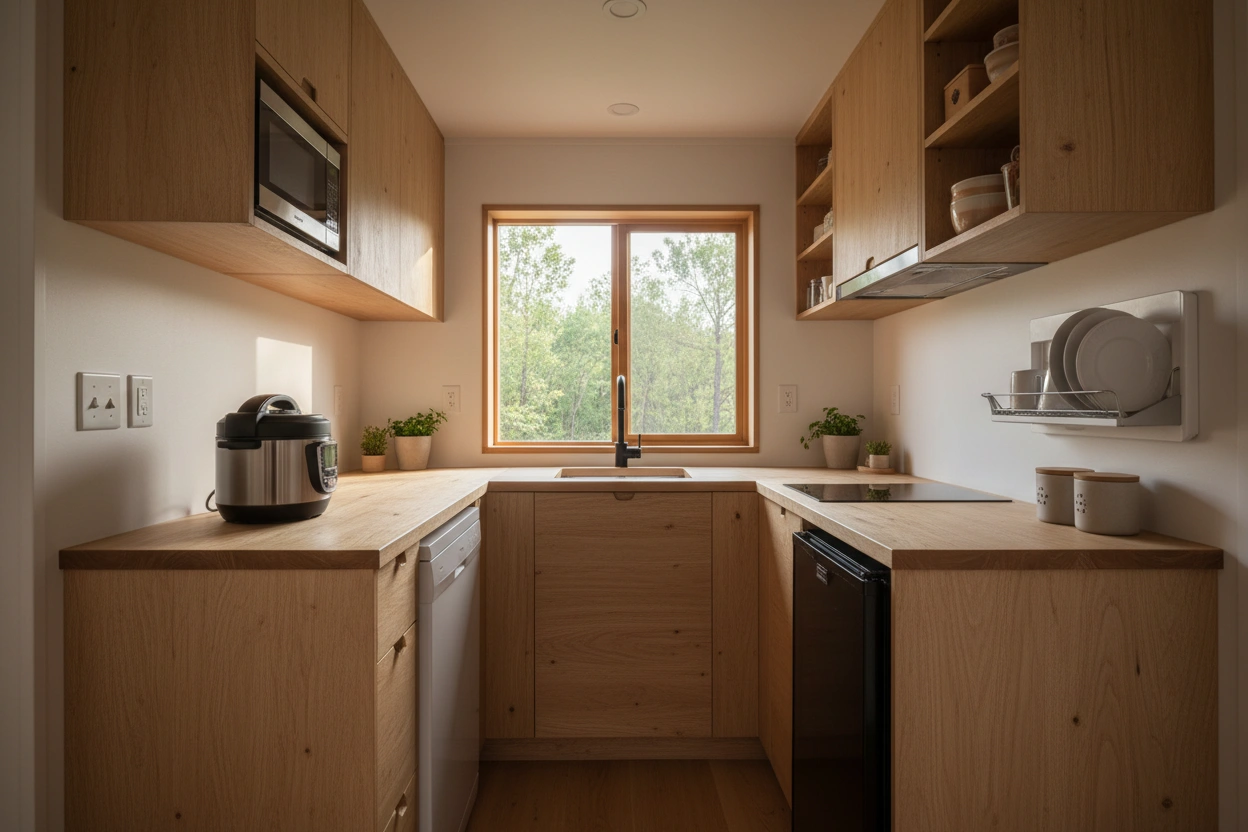
When designing a tiny house kitchen, selecting the right appliances is crucial. The following list highlights ten space-saving appliances that maximize functionality without sacrificing style.
Compact Refrigerator: A small refrigerator with efficient storage compartments can keep your perishables fresh while taking up minimal space.
Induction Cooktop: This portable cooking surface heats quickly and can be stored away when not in use, freeing up counter space.
Multi-Cooker: Devices like the Instant Pot allow for pressure cooking, slow cooking, and sautéing, making them a versatile addition to any kitchen.
Microwave Oven: A compact microwave can serve as a quick cooking and reheating solution, ideal for small kitchens.
Dishwasher Drawer: A smaller dishwasher drawer is perfect for tiny spaces, allowing for efficient cleaning without occupying a full-sized appliance's footprint.
Toaster Oven: This appliance can bake, broil, and toast, serving as a mini oven that takes up less space than a traditional oven.
Blender: A high-performance, compact blender is essential for smoothies and soups, making it a versatile tool in a small kitchen.
Collapsible Kitchenware: Items like collapsible colanders and measuring cups save space when not in use, ensuring your kitchen remains organized.
Magnetic Knife Strip: This space-saving solution keeps knives accessible while freeing up counter and drawer space.
Stackable Cookware: Invest in stackable pots and pans that can be stored efficiently, reducing clutter in cabinets and drawers.
Organizing Your Tiny House Kitchen

With the right appliances in place, the next step is to maximize storage in your tiny house kitchen effectively. Smart organization can transform your cooking experience and ensure that everything has a designated place.
Effective Storage Strategies
Drawer Dividers: Use dividers in drawers to keep utensils organized. This prevents clutter and makes it easy to find what you need quickly.
Clear Containers: Store dry goods in clear, labeled containers. This not only keeps food fresh but also makes it easy to see what you have on hand.
Over-the-Door Racks: Utilize the back of cabinet doors for additional storage. Over-the-door racks can hold spices, cutting boards, or cleaning supplies.
Maximizing Counter Space
Wall-Mounted Shelves: Install shelves above the counter to hold frequently used items. This keeps them within reach while freeing up counter space for food prep.
Under-Cabinet Lighting: Adding lighting under cabinets can illuminate your workspace, making it feel larger and more inviting.
Rolling Carts: Consider a rolling cart that can be moved around as needed. It can serve as additional counter space or a mobile pantry.
Common Mistakes to Avoid in Tiny House Kitchen Design
Designing a tiny house kitchen can be a complex task, and certain missteps can hinder functionality. Here are some common mistakes to avoid:
Overcrowding the Space: Filling the kitchen with too many appliances or decorative items can create a cluttered feel. Stick to essentials to maintain a clean, open environment.
Ignoring Vertical Space: Failing to utilize vertical space limits storage options. Always look up and consider how you can use walls and ceilings for storage.
Neglecting Lighting: Poor lighting can make a small kitchen feel even smaller. Ensure your kitchen has adequate lighting to enhance its usability and ambiance.
Underestimating Storage Needs: Not planning for adequate storage can lead to a disorganized kitchen. Assess your cooking habits and choose storage solutions that accommodate your needs.
Choosing Incompatible Styles: Selecting appliances and furniture that don’t match can create a disjointed look. Aim for a cohesive design that reflects your personal style while remaining functional.
The Role of Color and Design in Small Space Kitchens
Color and design play significant roles in how a tiny house kitchen feels and functions. Thoughtful choices can enhance the perception of space while also making the kitchen more inviting.
Color Schemes for Openness
Light Colors: Light shades like whites, pastels, and soft grays can make a small kitchen feel larger and brighter. These colors reflect light and create an airy atmosphere.
Accent Colors: Use bold colors for accents, such as a feature wall or colorful kitchen accessories. This adds personality without overwhelming the space.
Design Elements to Consider
Open Shelving: Open shelves can create a sense of openness and make the kitchen feel less cramped. However, ensure that items are organized to maintain a tidy appearance.
Simple Lines: Choose cabinetry and furniture with clean lines to create a streamlined look. Complicated designs can visually clutter the space.
Mirrored Surfaces: Incorporating mirrors or glossy finishes can reflect light and create the illusion of a larger area, making your tiny kitchen feel more expansive.
The Path Forward for Your Tiny House Kitchen
Creating a functional and aesthetically pleasing tiny house kitchen involves a blend of smart design, effective organization, and strategic appliance selection. By understanding the principles of small space kitchen design and implementing practical solutions, you can maximize every inch of your kitchen. making the most of a tiny house kitchen lies in embracing minimalism while ensuring that your cooking space is both functional and enjoyable.
Connect with TinyHouse.com for More Inspiration
As you embark on your tiny house kitchen journey, remember that resources are available to assist you. TinyHouse.com is dedicated to helping you maximize your living space while providing insights into building and buying your dream tiny home.
If you are looking for more tips on creating a beautiful and functional tiny house kitchen, visit TinyHouse.com today to explore a wealth of resources tailored to your needs.


.svg)
.jpg)