The Biggest Mobility Challenges in Tiny Homes and How to Solve Them

Tiny homes have earned a loyal following, and for good reason. They offer lower costs, less maintenance, and a simpler way of living that appeals to everyone from retirees to remote workers.
Yet living comfortably in a small footprint requires more than clever storage and minimalist décor. For older adults, individuals with disabilities, and homeowners who want to age in place, compact layouts can introduce unique mobility challenges. A staircase that feels manageable today, for example, may become difficult years from now.
Luckily, accessibility and tiny living aren’t mutually exclusive. With thoughtful planning and a few smart design choices, tiny homes can remain safe, functional, and comfortable for years to come.
Narrow Walkways and Limited Floor Space
Space is precious in a tiny home, which often means furniture, storage, and living areas are packed closely together. While efficient, these layouts can make navigation difficult for anyone using mobility aids.
A walker, wheelchair, or cane requires clear pathways. Even small obstacles such as decorative tables, storage baskets, or poorly positioned furniture can create frustration and increase fall risks.
The solution is to prioritize movement when planning the layout. Choose multi-functional furniture, avoid overcrowding, and maintain open pathways between frequently used areas. If you have to sidestep furniture to reach the bathroom or kitchen, the layout may need adjustment.
.jpg)
Loft Access Can Become a Major Challenge
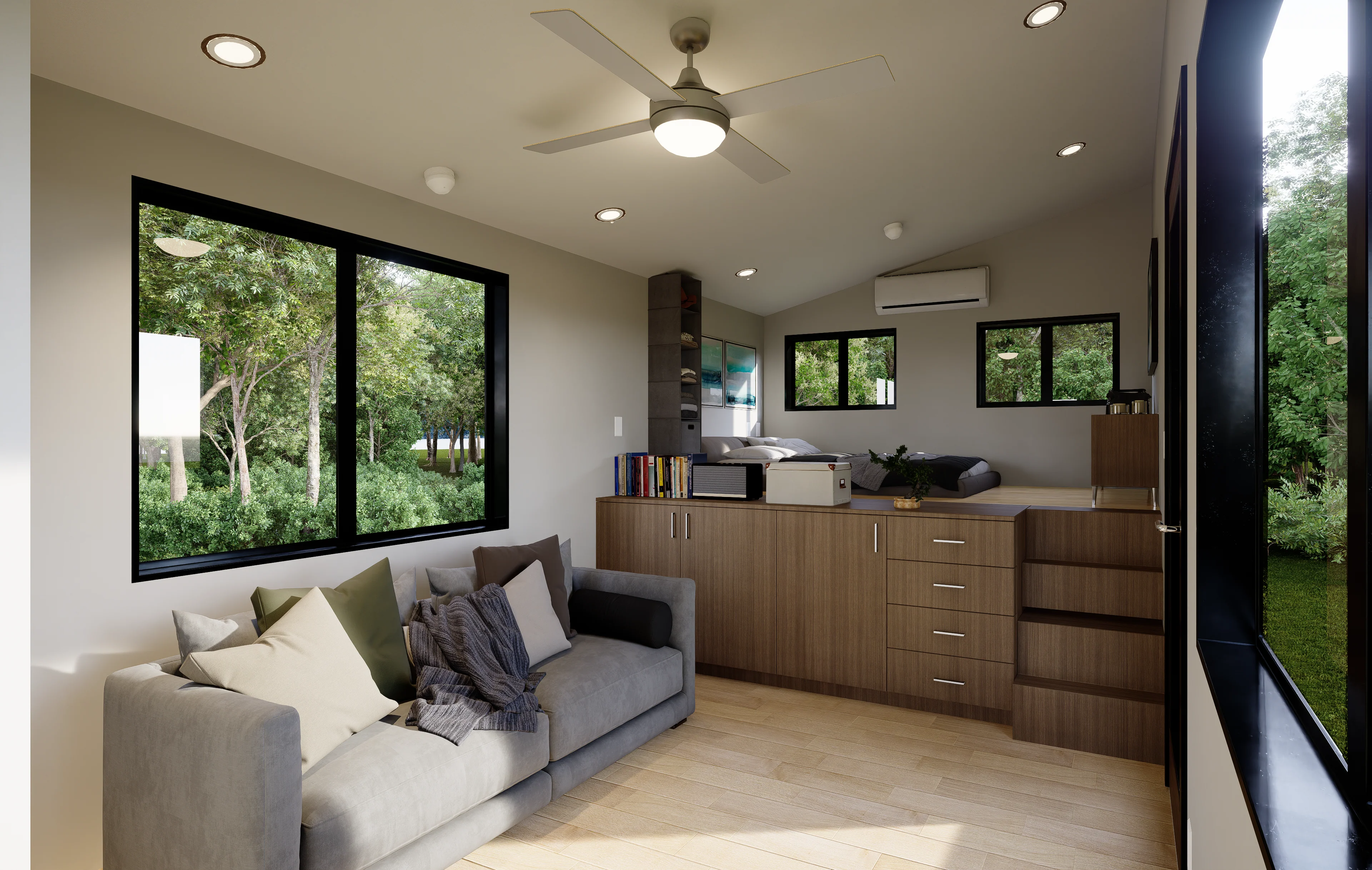
Many tiny homes feature loft sleeping areas accessed by ladders or steep staircases. These designs maximize floor space, but they aren't always practical in the long term.
What feels adventurous in your 40s may feel risky in your 70s. If you have arthritis, balance concerns, or mobility limitations, loft spaces can become inaccessible altogether.
If you're designing or purchasing a tiny home, consider placing the primary sleeping area on the main floor. If a loft is ultimately necessary, compact stair systems with sturdy handrails offer a safer alternative to ladders and make daily access far more manageable.
Vertical Living Requires Better Accessibility Planning
When square footage is limited, storage tends to move upward.
Cabinets stretch toward the ceiling, shelves rise above eye level, and frequently used items often end up just out of reach. The result is a constant cycle of stretching, climbing, and grabbing step stools. A simple change in organization can significantly reduce physical strain and lower the risk of falls.
A better approach is to create accessible storage zones. Store everyday essentials between waist and shoulder height whenever possible. Reserve high shelves for seasonal items or belongings that are rarely used.
Staircases Can Limit Long-Term Independence
Even a few steps can become a significant obstacle as mobility changes. Many multi-level tiny homes include compact staircases designed to save space. Unfortunately, these stairs are often steeper and narrower than those found in traditional homes.
For homeowners committed to aging in place, it's worth thinking beyond current needs. Planning for these possibilities during the design phase is often far easier and more affordable than making major modifications later. Modern mobility solutions such as stair lifts can help residents safely access different levels of their home while maintaining independence.
Small Bathrooms Require Smart Design
Bathrooms are one of the most challenging spaces to work with in any home, and the challenge becomes even greater when every square inch counts.
Tight corners, narrow doorways, and cramped layouts can make transfers and movement difficult. They can also increase the likelihood of slips and falls.
Fortunately, a few strategic upgrades can dramatically improve safety. Walk-in showers eliminate the need to step over a tub wall. Grab bars provide additional support without taking up much space. Non-slip flooring helps reduce fall risks, while compact accessible fixtures make the room easier to navigate.

Kitchen Functionality Can Be Affected by Mobility Limitations
The tiny home kitchen is often a masterpiece of efficiency, but efficiency isn't always the same thing as accessibility.
The goal is simple: place frequently used items where they can be reached comfortably without excessive stretching, bending, or lifting.
High cabinets, deep lower storage, and narrow workspaces can create daily challenges. Reaching for cookware or bending repeatedly to access supplies becomes more difficult over time.
Pull-out shelving, drawer-based storage, and strategically placed appliances can make a dramatic difference.
Entryways and Exterior Access Matter Too
Many tiny homes are elevated, requiring steps to enter. Uneven pathways, loose gravel, and poor lighting can create additional hazards, especially during bad weather.
Ramps, sturdy handrails, slip-resistant surfaces, and well-lit entrances improve safety while making the home more welcoming for everyone. These upgrades are particularly important for seniors and anyone using mobility devices.
Storage Solutions Should Support Mobility
In a tiny home, clutter accumulates quickly. When storage areas become overcrowded, everyday mo vement becomes more difficult. Items stored in walkways, stacked in corners, or piled near entryways can create tripping hazards and make the space feel smaller than it really is.
Built-in storage, vertical organization systems, and regular decluttering help keep pathways clear. This way, you can maximize your storage capacity while also making the home easier and safer to move through.
Planning for Aging in Place Starts Early
Many people choose tiny homes because they offer long-term affordability and a simpler lifestyle. Yet mobility needs rarely remain static.
The most successful accessible tiny homes are designed with future needs in mind from the beginning. Wider doorways, accessible bathrooms, flexible floor plans, and mobility solutions can help homeowners remain comfortable and independent as circumstances change.
Technology and Mobility Solutions Can Maximize Independence
Modern technology is making small-space living more accessible than ever.
Smart lighting systems eliminate the need to traverse through dark rooms, while voice-controlled devices can manage temperature, security, and entertainment with minimal effort. Even automated locks, video doorbells, and remote-controlled systems can simplify everyday tasks.
At the same time, today's mobility solutions are designed to blend seamlessly into the home rather than stand out. Whether it's a stair lift, smart home technology, or accessible fixtures, the best solutions support independence without sacrificing comfort or style.
Creating a Tiny Home That Works for Life
Tiny homes prove that you don't need a large footprint to live comfortably. But successful small-space living requires thoughtful planning, especially when mobility and accessibility are part of the equation.
When you take the time to address challenges such as narrow walkways, loft access, bathroom safety, storage organization, and future mobility needs, you can create spaces that remain functional for you for years to come.
Accessibility, after all, should never be a compromise. Instead, it's an investment in the long-term usability, comfort, and value of your home. When designed thoughtfully, a tiny home can support independence, simplify daily living, and adapt alongside you through each and every stage of your life.


.svg)
.jpg)