How to Organize Your Relocation to Another State: Should You Ship Your Car?

What Is Considered an Interstate Move?
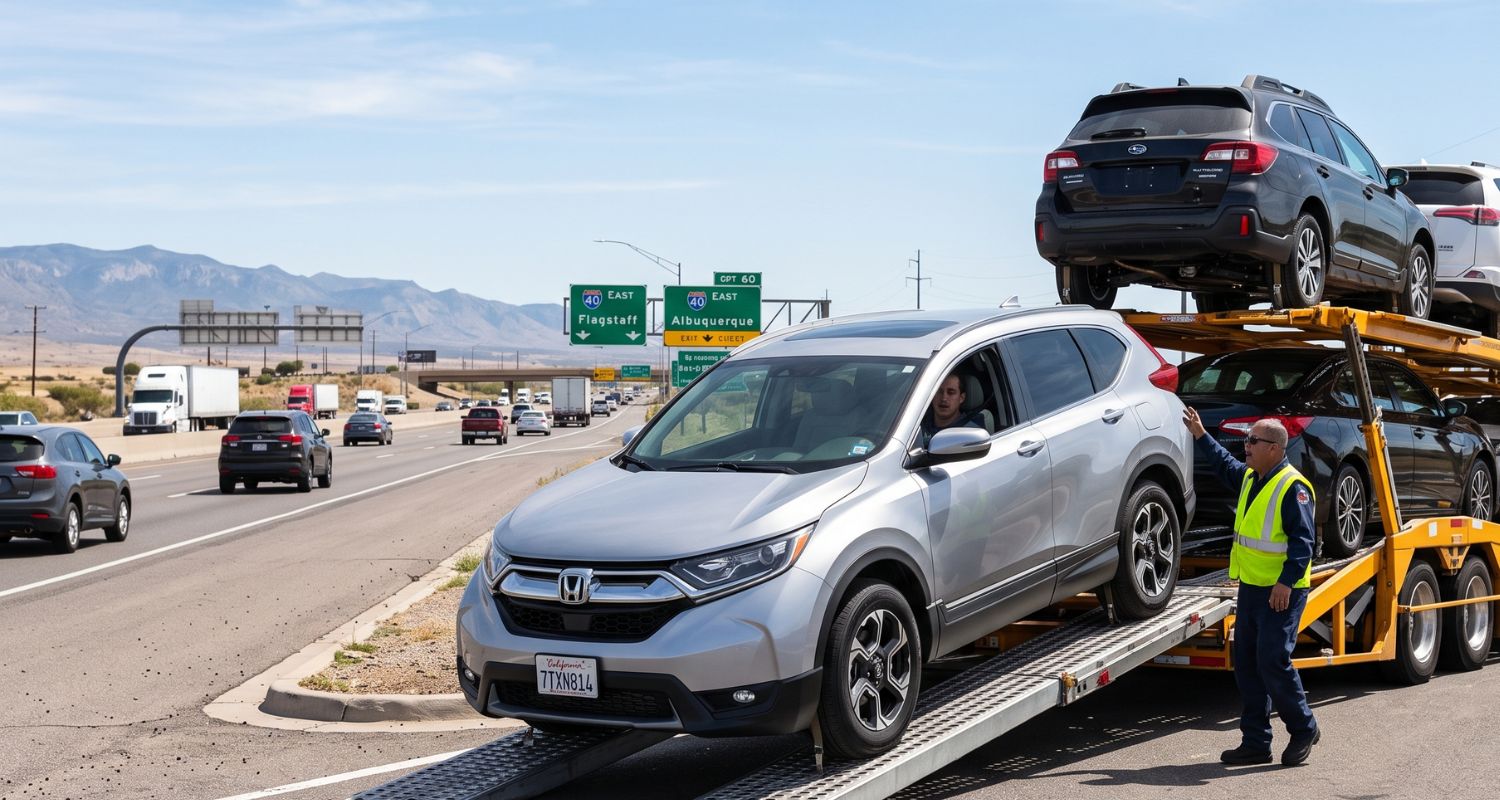
An interstate move, or moving over state lines, is the act of shipping a car or any amount of freight over the state lines of one or multiple states. Luckily, professional services take care of every document, making it far easier for customers to ship their own cars over state lines.
Key Differences Between Local and Long-Distance Moves
The key difference between local and long-distance moves is the distance, which dictates the price and the time of delivery. Long-distance moves will cost less per mile but yield a higher overall cost, while local shipments and deliveries will rarely exceed $1000, but cost more per mile.
Common Challenges When Moving to Another State
Many challenges come with moving your entire life to another state. Employment, accommodations, living, new insurances, new health coverage, and new environment - all of those play an important part in adjusting to the new circumstances. When it comes to the actual act of moving, one of the most common challenges is allocating the time to properly pack and prepare your household for relocation - that is why a lot of people prefer to choose professional services, both for their house and car.
Average Cost of Moving to Another State in 2026
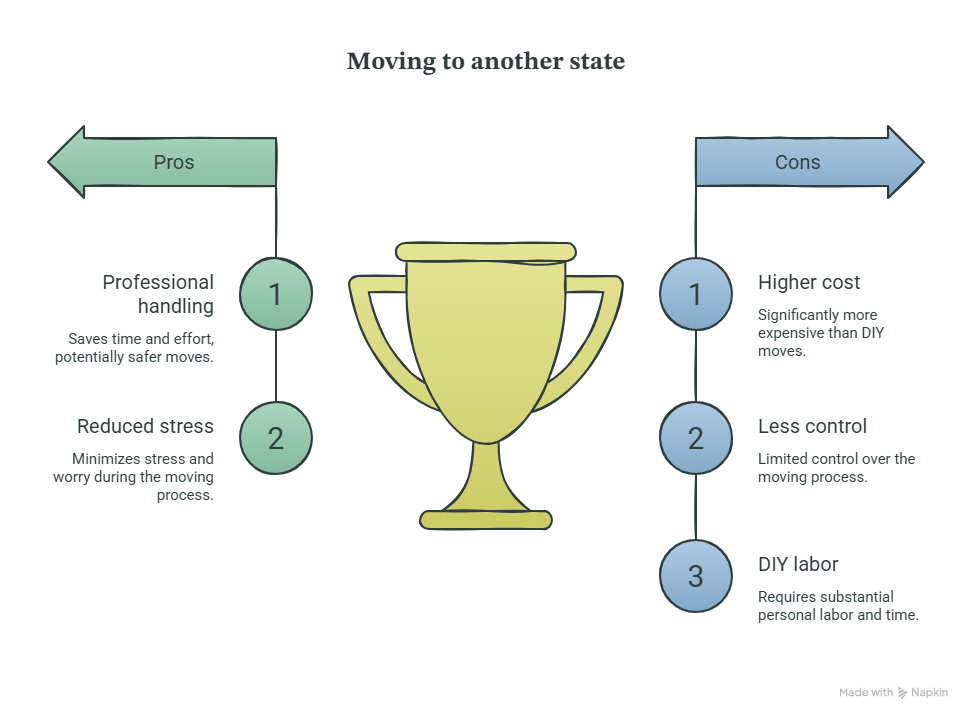
The average cost for moving to another state in 2026 can range from $4,000 to $12,000, depending on many factors such as the size of the household, the distance, the time of year of the booking, and the services that the customer has opted for. Some people prefer the DIY route, where prices tend to be lower, but the labor time is much higher. Fully professionally handled moves are more expensive, but they take less time and effort, and in some instances, are far safer.
Creating a Smart Moving Plan
How Early Should You Start Planning a Move?
Some moves are years in the making, either for higher education, employment, or better living conditions. The actual planning should start at least 2 months in advance to give you more time to prepare and arrange things on the other side. Before initiating the move, be sure to secure living accommodations first and foremost. If you are moving for employment purposes, you are probably going to be renting, but if you are moving permanently, chances are you are looking to buy a house. Make sure the house is ready to be lived in - if it needs some maintenance, take this into account when planning your move.
Building a Realistic Moving Budget (Including Hidden Costs)
Your ideal budget will entirely depend on the size of the household. For 1 or 2 bedroom households, a realistic budget would be in the range of $4,000 to $6,000, even with hidden fees like carry fees, staircase fees, boxing and storage fees.
For households with over 3 bedrooms, a more realistic budget range would be from $8,000 to $10,000 for the entire move, including full insurance coverage, dismantling of furniture, and assembling it. This does not include the price of shipping speciality, high-value items like pianos, antique furniture, expensive electronics or luxury jewellery.
How to Choose a Moving Date for Lower Costs
Demand is the biggest factor for price volatility in any moving industry. Therefore, the most economical time to book is during a low-demand period, such as winter or during the week. We recommend avoiding booking your move during the summer or late spring, as those are the most desired times due to the warmer weather. We also suggest you avoid booking your move during festivals or holiday periods. We also suggest avoiding booking your shipment around the end of the month, as this is the period when most tenants move out and move their household.
Decluttering and Downsizing Before Relocation
It's highly recommended that you declutter your belongings before moving. This will keep the labor and cost for the relocation low. Moving is a great opportunity to remove items that you don’t really need, or that can stay behind, like sofas, beds, and cheap furniture that you can easily get in your new house. This reduces the initial cost of the move drastically, making the experience a bit better.
Choosing the Right Moving Method
Full-Service Movers vs DIY Moving: Pros and Cons
Full-service movers are by far the most convenient choice, but it comes at a cost, literally. Full-service accommodations can run up to $20,000 depending on the size of the household, with the higher price tag going to 4-bedroom households. DIY moves make a lot of sense when the budget is tight, because it leaves you handling every aspect, from packing to carrying and to the transportation itself, but the effort associated with it is tremendously greater than that of full-service coverage.
Moving Container Services vs Truck Rentals
There is a hybrid alternative to the two extremes - moving containers and rental trucks. Moving containers allow customers to easily transport their belongings and add a layer of convenience, with some speculating that this might be the most cost-effective way, because you do get some insurance coverage for the transportation of the items. Then there are rental truck companies which can provide different sizes of moving trucks for rent, which can cost from $100 to $500+ for a certain period, depending on the company and the area.
How to Compare Interstate Moving Companies
When choosing which service to use, it's important to compare prices. Always compare prices with the same parameters - cite the same addresses, the same number of items, and the same timeline for delivery. It gives you a standard to compare with. Consider also getting additional insurance coverage for your items; this will increase the cost, but it will guarantee that any damage to your belongings will be reimbursed.
Understanding Moving Insurance and Liability Coverage
If you choose the DIY way, you are fully liable for any damage to your personal items, including liability for the act of transporting your cargo. With the company route, you get full or near-full coverage, with the company being liable for the safety of your belongings or car; however, that comes at an added cost.
.jpg)
Packing and Preparation Strategies
Best Packing Supplies for Long-Distance Moves
You can get packing supplies from a moving company or a big box store. They can vary in price depending on the quality. We recommend getting bubble wrap, duct tape or packing tape, packing peanuts for fragile items, and special anti-static packaging for sensitive electronics. You can also use blankets for padding between items when loading your truck if you are using the DIY route.
Labeling Systems That Simplify Unpacking
Sorting your items by type or by use can make it easier for you to make sense of the mess once you start unpacking at your new location. You can also sort items by room, because it makes sense that you’ll be using them the same way you did back at your old home.
What Not to Pack for an Interstate Move
It's obvious at first, but you don’t really need mattresses unless they are expensive and specific to your particular needs. You can also avoid packing storage furniture, old, or rented furniture. We also recommend that you avoid transporting flammable liquids like propane, gasoline, or other fuel sources. It's important to be mindful of transporting batteries, car batteries, etc, and be aware of their state of charge and their condition. Avoid overcharging any batteries before transporting them; a 50% state of charge is safest and avoids thermal runaway events.
Preparing Fragile and High-Value Items
To prepare valuable items for transportation, use specific packaging meant for their transportation. Glass items must be placed in a padded container with layers between other similar items to avoid vibrations. Mirrors should be placed on their side rather than flat or upfront to avoid the flexing motion during transportation.
Managing Logistics and Timing
Coordinating Utilities, Address Changes, and Documents
When moving to your new location, you need to have already coordinated with the utility companies. You can change your address once you arrive, but be sure to notify your old post office and provide a forwarding address for any mail that you might still receive at your old residence. You’d also have to remove your name from the utilities at your old address. This should be done before officially vacating the premises, as it might require you to be present, and it might come with some small fees.
Travel Planning: Flights, Hotels, and Road Trips
Plan for your travel accordingly. If you are flying, be sure to book your flights in advance and to prepare any important documentation, including documents that you might want to carry with you. If you are road-tripping, be sure to account for breaks, food, and accommodations for sleep if the trip is longer than 1,000 miles. Road fatigue is one of the leading causes of accidents, so prepare to rest.
Moving with Pets, Kids, or Special Needs
If you are moving with pets, make sure to keep them comfortable. Most airline companies provide an additional service, but sometimes they cannot accommodate your pet if it's an exotic one. There are special services that can help with that. Children might be easier to travel with, but if they are not used to it and the change is too big for them, they might need some extra reassurance and assistance.
Temporary Storage Options During Relocation
Some companies provide customers with temporary storage options during relocation. This can be requested beforehand or during the transportation, if your new living arrangements are not yet ready. This will cost extra; some companies charge a flat fee for a period, while other companies charge daily.
Settling Into Your New State
First Week Checklist After Moving
Secure your utilities, be sure to enrol any children in schools and be sure to get your driver’s license in order. For that, you will need to provide proof of residence, which can be a utility bill statement with your new address. This means that your priority after arriving is to arrange for utilities like gas, water, power and internet.
How to Find Local Healthcare, Schools, and Services
Finding local, healthier schools and services can be difficult if you live in a rural area. It helps to connect with the local government and ask for assistance. Your local council should have resources to help settle you in your new community, making this transitory period a lot easier on you and your family.
Should You Ship Your Car or Drive It?
How Car Shipping Works for Interstate Moves
Most car relocations are done over state lines, with more than 75% of them crossing several state lines. If you are choosing the professional route, there’s nothing that you really have to do except be sure of your choice. If you are going for the DIY route, you can temporarily use your old car tags, but the car must be re-registered with your new state within a 20-day period.
Pros and Cons of Shipping a Car vs Driving
Shipping a car is easier for your schedule, it's safer, and it does not wear the car and its components; it does, however, cost more than driving the car, at least in the short term. Driving your car will take more effort; it will require that you arrange for fuel, accommodations, food, etc., along the way, not to mention covering any expenses like getting temporary tags for the car if it's brand new, or considering putting on extra miles on the vehicle, which adds wear and reduces its value over time.
Cost to Ship a Car to Another State (Key Factors)
The biggest expense for shipping a car to another state comes from the cost of fuel and insurance. Car carriers will charge customers for the full cost of the fuel to transport a car over state lines, as well as include the cost of insurance as a part of the base price.
When It Makes Sense to Ship Your Car
It makes sense to ship your car if you cannot drive it yourself, if you don’t want to sell it and get a new one once you move, and it makes sense to use professional services when you simply don’t want to drive for thousands of miles with your family - it's a tiring process, and it's quite dangerous over long distances. It also makes sense to ship your car if it's expensive, it's winter or if the weather is bad and you want to preserve its condition.
When Driving Your Car Is the Better Choice
It might be a better choice to drive your car if the trip is less than 1,000 miles. This trip can be done safely in 1 or 2 days, depending on the experience of the driver and the local road system. It also makes sense to drive your car if you enjoy road trips and you can spare the time, or if you are transporting some of your personal belongings with you. It also makes sense for younger people to do it over the older generation, simply because they have the energy for it.
Tips for Choosing a Reliable Auto Transport Company
It's important to check if a company is licensed via the FMCSA SAFER System. Input the name of the company and verify if they are active and if the name they give you matches that in the database. Companies that are active in the database can be trusted far more than those which are not. You can also check their insurance coverage and their safety status.
Preparing Your Vehicle for Shipping or Long-Distance Driving
.png)
Preparing your car for shipping is easy, but essential - here are some tips that will make your experience better:
- Remove any toll pay transponders; there is no need to pay for tolls when the car is not being driven.
- Check the battery and leave no more than ¼ of gas in the tank; it's a DOT safety requirement. The same goes for EVs; leave them with no more than 50% of SoC and no less than 30%.
- Be sure to remove any personal items. Carriers will allow customers to transport belongings with the car if they are in the trunk inside a container, but not if they are inside the passenger compartment.
- Be sure to wash the car and document its pre-travel state, as it makes it easier to prove if there is any new damage to it as a result of transportation.
Cost-Saving Tips for Interstate Moves
How to Reduce Long-Distance Moving Costs
Our observations show that moving during the week, away from weekends or the end of the month, yields the best prices. We also recommend removing any unnecessary items and decluttering, as it reduces the volume of the relocation, which reduces the overall cost.
Off-Season Moving Benefits and Pricing Trends
Off-season is when most moving companies can become desperate to keep positive income numbers up. This is when they have the most incentives, dealers and special offers for customers. Take full advantage of a quieter period of the year and get the lowest rates on the market. Early Spring, Summer, and Early Autumn are by far the most popular periods for relocation due to seasonal travel, vacations and the new school year.
Flexible Scheduling to Lower Expenses
If you are flexible with your scheduling, you can expect to get the lowest prices on the market. Carriers and moving companies prefer customers who can wait for a quieter time, because this means more work for them during the quiet period.
Discounts, Tax Deductions, and Employer Relocation Packages
Some companies provide customers with specific deals for disability, veteran status, or active military relocation packages at lower prices. Some employers will even strike a deal with a moving company to provide you with a lower price, depending on what sort of occupation you have.
Combining Services to Save Money
Some companies will provide bundle deals to their customers, which means you get the same experience but at a lower price. Not all companies provide bundles outright, but they will help you combine services, which will generally reduce the cost of the entire move. It also makes more sense to book additional services because it makes your experience better, and if that comes at a discounted price, that’s great for the bottom line.


.svg)

.jpg)