
What Actually Happens Inside a Septic Tank

.jpg)
Most homeowners rarely think about what happens after they flush a toilet or run the kitchen sink. There is a quiet confidence that the waste simply disappears into the ground through a series of hidden pipes. This invisible process is essential for maintaining a clean and healthy environment for the entire family.
Living with an onsite waste system requires a bit of curiosity about the world beneath the lawn. It is not just a simple box in the dirt, but a complex biological environment that works around the clock. When the system is ignored for too long, the consequences can become very expensive and messy quite quickly.
Getting a clear picture of the biology and physics involved helps prevent common mistakes that lead to failure. The process is a fascinating combination of gravity and microscopic activity that keeps everything flowing smoothly. Learning exactly how septic tanks work is the first step toward becoming a more responsible and informed property owner.
Wastewater’s First Stop Underground
Everything that goes down the drain eventually collects in a single large pipe that leads away from the house. This main line carries a mixture of water, soap, food scraps, and human waste toward the treatment area. The journey is short, but the transformation that happens next is vital for the safety of the soil.
Once the mixture enters the heavy concrete or plastic tank, the flow of the water slows down significantly. This sudden decrease in speed allows gravity to take over and begin the process of separation. Heavier items start to sink to the bottom while lighter materials begin to float toward the very top.
The design of the tank ensures that the incoming water does not disturb the layers that are already forming inside. Specialized baffles at the entry point direct the flow downward to keep the environment as calm as possible. This stillness is necessary for the mechanical separation that prepares the waste for the next phase of treatment.
.png)
Bacteria Doing the Heavy Lifting
The middle layer of the tank is home to billions of tiny organisms that thrive in an environment without any oxygen. These anaerobic bacteria are the real workers that break down the organic matter into simpler components. They turn solid waste into liquids and gases through a constant and natural process of digestion.
This biological activity is incredibly efficient as long as the chemical balance of the tank remains healthy. Harsh cleaners and bleach can kill these helpful microbes, which brings the entire breakdown process to a complete halt. Protecting the bacterial colony is one of the most important parts of owning an independent waste system.
As the bacteria consume the waste, they produce gases that are safely vented out through the plumbing stacks on the roof. The remaining liquid becomes much clearer and less hazardous than the raw sewage that first entered the tank. Nature provides a perfect solution for waste management as long as humans do not interfere with the chemistry.
How Solids and Liquids Part Ways
The separation process eventually creates three distinct layers that define the internal landscape of the tank. The very bottom layer is known as sludge, which consists of heavy solids that the bacteria cannot easily digest. This material stays at the base of the tank until it is eventually removed by a professional pumper.
At the very top, a thick layer of grease, oil, and floating debris forms what is commonly called the scum layer. This floating mat acts as a seal that helps maintain the temperature and the oxygen free environment below. It is a necessary part of the system that prevents odors from escaping into the yard.
The relatively clear liquid in the middle is the only part of the mixture that is allowed to leave the tank. This effluent is pushed out through a second set of baffles as new wastewater enters from the house. Keeping the solids and scum trapped inside is the primary job of a well maintained and properly functioning tank.
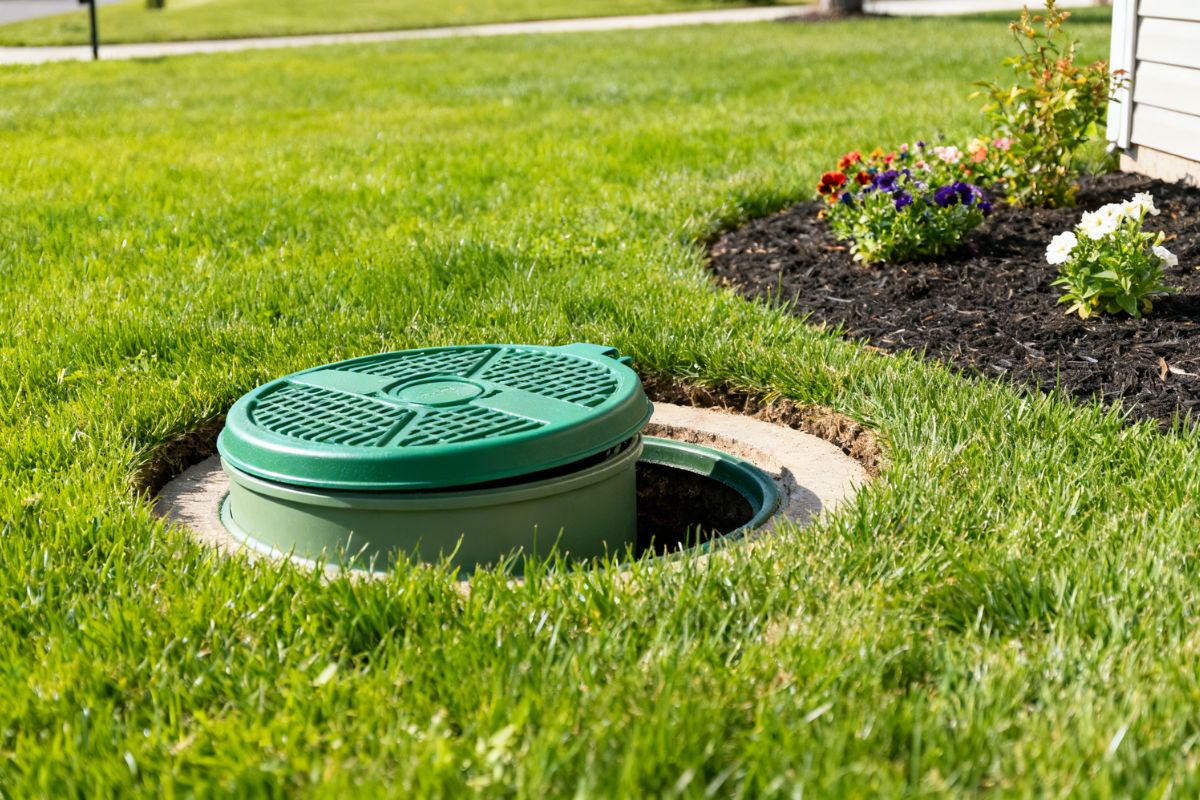
Where Treated Water Goes Next
The liquid effluent travels through a final pipe toward a network of perforated lines buried in the yard. This area is known as the drain field, and it represents the final stage of the cleaning process. The water slowly seeps out of the holes in the pipes and into the surrounding gravel and soil.
As the water moves through the ground, the soil acts as a natural filter that removes any remaining impurities. Beneficial bacteria living in the dirt finish the job of neutralizing pathogens before the water reaches the groundwater. This natural cycle is one of the most effective ways to treat waste without using expensive chemicals.
The health of the lawn above the drain field is often a good indicator of how well the system is performing. If the grass is unusually green or the ground feels soggy, it might mean the soil is becoming overwhelmed. A balanced system ensures that the water is absorbed and cleaned at a steady and safe pace.
.png)
Proper operation of an underground system is a quiet success that protects the health of the community and the environment. It relies on a delicate balance of mechanical parts and living organisms working together in the dark. Every flush is part of a larger cycle that keeps the modern home running efficiently.
Scheduling regular inspections and pumpings prevents the buildup of solids that can lead to catastrophic drain field failure. Taking care of the tank is a small price to pay for the convenience of independent waste management. Reliable results come from respecting the biological limits of the system and avoiding harsh chemicals every day.
The final goal is a home that functions smoothly without any sudden backups or unpleasant odors in the yard. Understanding the mechanics of the tank allows homeowners to make better decisions about what goes down their drains. A healthy septic system is a sign of a well managed and thoughtful household that values its infrastructure.


.svg)


.jpg)
