
Small Space, Smart Choices: Design Decisions That Transform Tiny Homes

.jpg)
Tiny homes ask more of design than any other living space. Every square metre has to work harder, feel better, and adapt faster. It’s not just about fitting life into a smaller footprint – it’s about shaping a space that supports how you live, rest, and recharge.
As architect Ludwig Mies van der Rohe famously said, “Less is more.” In tiny homes, that idea becomes a daily reality. The right design decisions don’t just save space. They improve comfort, function, and even wellbeing. The difference between a cramped layout and a calm, liveable home often comes down to a handful of thoughtful choices.
Design With Purpose, Not Just Aesthetic
In a traditional home, it’s easy to prioritise how things look. In a tiny home, design has to start with purpose. Every item should answer a simple question: What does this do for me?
Multi-functional furniture is a cornerstone of tiny living, but it’s not just about fold-out beds or hidden storage. It’s about aligning your space with your habits. A dining table that doubles as a workspace. A bench that stores seasonal items. A wall that transforms from shelving to seating.
Marie Kondo, known for her philosophy on intentional living, puts it simply: “The question of what you want to own is actually the question of how you want to live your life.” Tiny homes make that question unavoidable.
Light Control Is Just as Important as Natural Light
Maximising natural light is often seen as the golden rule of small-space design. Large windows, skylights, and open layouts can make a tiny home feel expansive. But there’s a second, often overlooked factor: controlling that light.
Without proper light management, even the brightest space can become uncomfortable. Early sunrises, harsh glare, and lack of privacy can quickly disrupt sleep and relaxation.
This is where thoughtful window treatments come in. Choosing the right curtains isn’t just about style. It’s about regulating temperature, improving sleep quality, and creating a sense of retreat within a compact space. Options like blackout curtains, such as those available from Terrys Fabrics, help block excess light while adding softness and texture to the interior.
Research from the Sleep Foundation highlights that darker sleeping environments can improve melatonin production, which supports better sleep cycles. In a tiny home, where living and sleeping areas often overlap, this becomes even more important.
.jpg)
Create Zones Without Building Walls
One of the biggest challenges in tiny homes is separation. When everything exists in one open space, it can feel overwhelming or undefined.
The solution isn’t adding walls – it’s creating visual and functional zones.
This can be done through:
- Changes in flooring or rugs
- Strategic furniture placement
- Lighting variations
- Curtains or sliding panels
Interior designer Nate Berkus once said, “Your home should tell the story of who you are, and be a collection of what you love.” In a tiny home, zoning helps tell that story clearly, even within limited space.
For example, a soft rug and warm lighting can define a relaxation area, while a fold-down desk and task lighting signal productivity. These subtle cues help your brain switch modes throughout the day.
Use Vertical Space Intelligently
When floor space is limited, the only way is up.
Vertical design is essential in tiny homes, but it needs balance. Overloading walls with storage can feel heavy and cluttered. The key is to combine open and closed storage.
- Open shelving keeps frequently used items accessible
- Closed cabinets hide visual clutter
- Hooks and rails add flexible storage without bulk
Architect Le Corbusier described a home as “a machine for living in.” In tiny homes, efficiency matters – but so does how the space feels. Vertical storage should support both function and visual calm.
A good rule: if everything is visible, it needs to be curated.
Choose Materials That Add Warmth, Not Weight
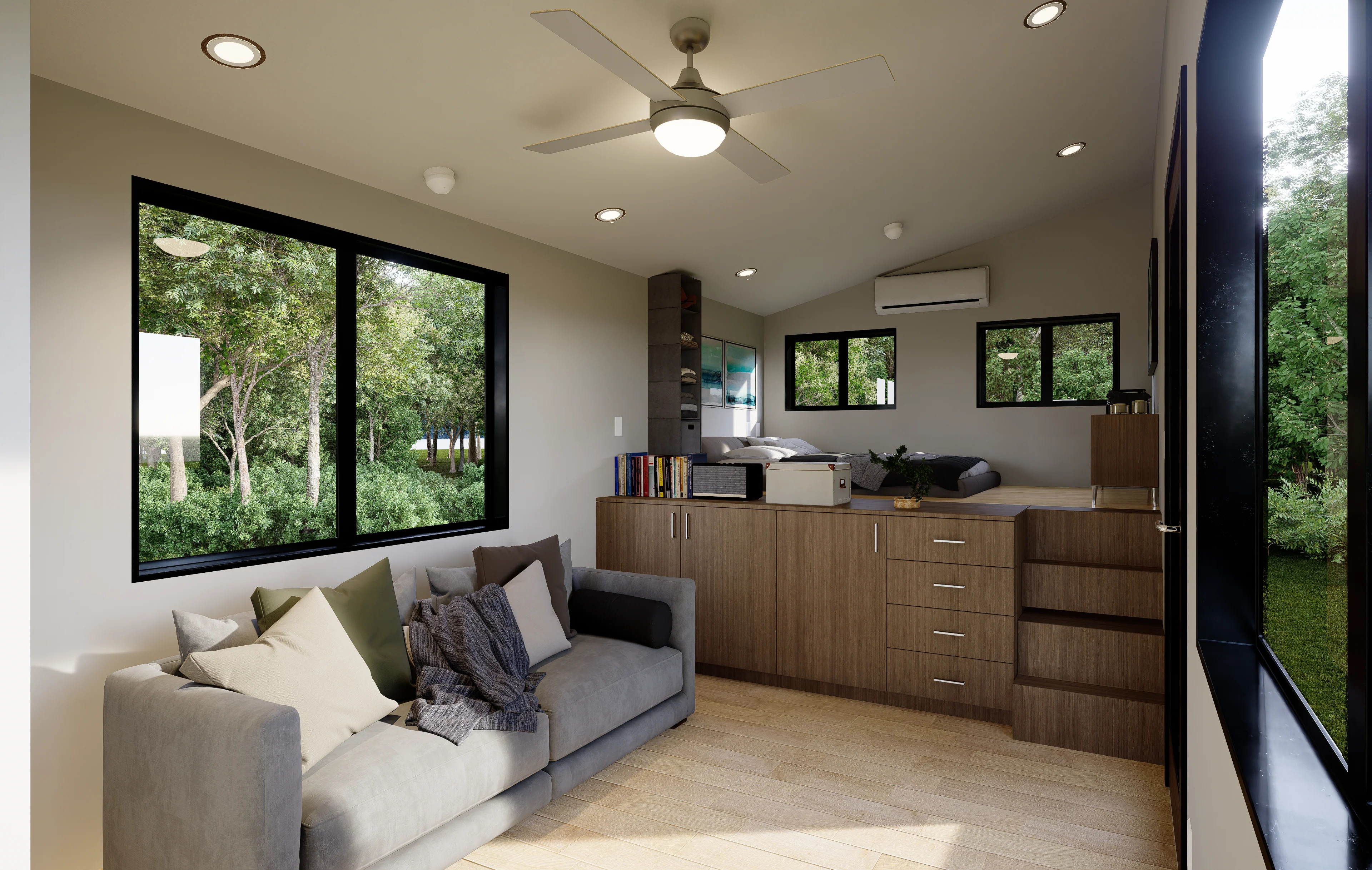
Material choice plays a bigger role in small spaces than many people expect. Heavy, dark finishes can make a space feel enclosed, while lighter textures reflect light and create openness.
But “light” doesn’t have to mean sterile.
Natural materials like wood, linen, and cotton bring warmth without overwhelming the space. Soft furnishings, in particular, can soften hard edges and make a compact home feel inviting rather than clinical.
Textiles also provide flexibility. Unlike fixed elements, they can be swapped seasonally or updated easily, allowing the space to evolve without major renovations.
Design for Movement, Not Just Storage
It’s easy to focus on storage when designing a tiny home. But movement is just as important.
If a space is difficult to navigate, it will feel smaller than it actually is.
Think about:
- Clear walking paths
- Easy access to everyday items
- Doors and drawers that don’t clash
Industrial designer Dieter Rams, known for his principles of good design, stated: “Good design is as little design as possible.” In practice, this means removing friction from daily routines.
A well-designed tiny home should feel intuitive. You shouldn’t have to think about how to move through it.
Prioritise Comfort in Unexpected Ways
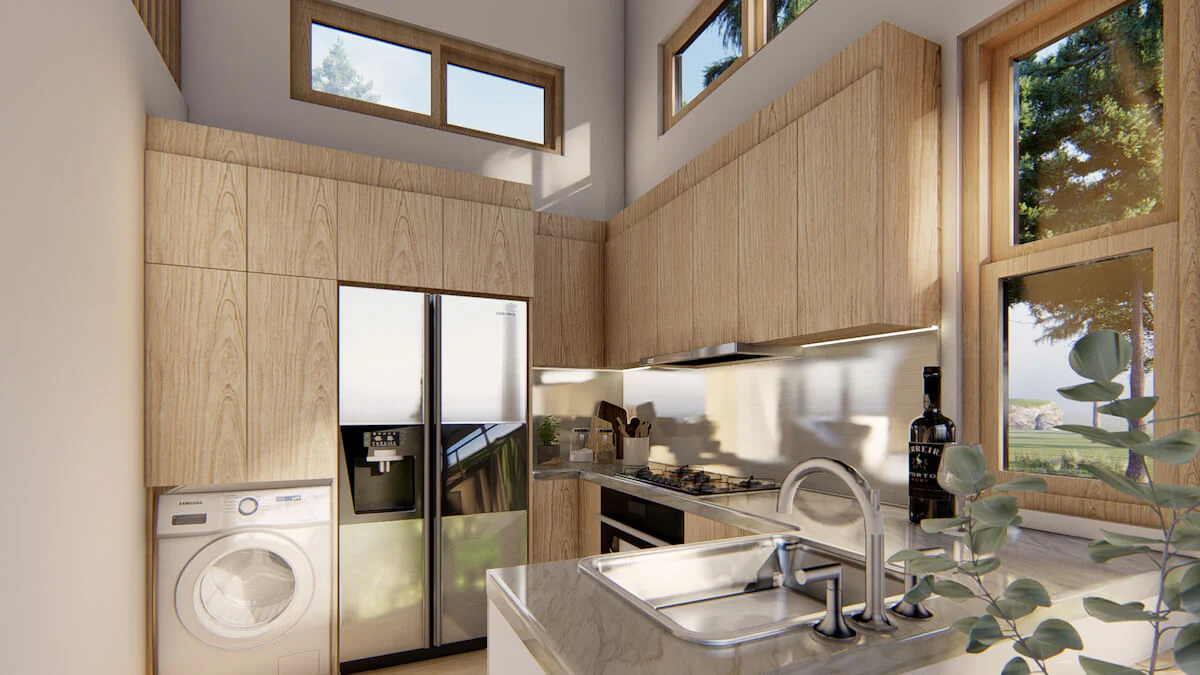
Comfort in tiny homes isn’t always obvious. It’s not just about seating or bed size – it’s about how the space responds to your needs throughout the day.
This includes:
- Temperature control
- Acoustic softness (through rugs and fabrics)
- Adjustable lighting
- Privacy solutions
A study published in the Journal of Environmental Psychology suggests that perceived control over your environment significantly impacts comfort and well-being. In small spaces, even small adjustments, like dimmable lights or layered curtains, can make a big difference.
Embrace Restraint Without Sacrificing Personality
Minimalism is often associated with tiny homes, but that doesn’t mean stripping away personality. The goal isn’t to own less for the sake of it; it’s to choose better.
A few well-chosen pieces can have more impact than a room full of décor. Artwork, textiles, and meaningful objects can add character without overwhelming the space.
As designer William Morris famously advised: “Have nothing in your houses that you do not know to be useful or believe to be beautiful.”
That balance of usefulness and beauty is at the heart of successful tiny home design.
Conclusion
When space is restricted, every decision becomes more intentional. Light, layout, materials, and movement all play a role in shaping how the home feels and functions.
The most successful tiny homes aren’t just efficient. They’re comfortable, adaptable, and deeply personal.
By making smart design choices, from managing light effectively to creating flexible zones, it’s possible to transform even the smallest space into something that feels complete. In the end, tiny living isn’t about having less. It’s about making space for what matters.
References
- Sleep Foundation – Light Exposure and Sleep Quality
- Journal of Environmental Psychology – Perceived Control and Wellbeing in Living Spaces
- Marie Kondo – The Life-Changing Magic of Tidying Up
- William Morris – Collected Works
- Dieter Rams – Ten Principles of Good Design
- Le Corbusier – Towards a New Architecture


.svg)
.jpg)
.jpg)
.jpg)