How Big Should a Shed Be for a Small Property?

.jpg)
When you decide to live in a tiny house, you're ready for the minimalist lifestyle.
Still, there's some stuff you might not be able to fit in your home that you still need, so you can either live in a mess or find a way to store the extra things. Renting a storage unit is one option, but having a shed on your property is another (and some would say better) one. And before you say that having a shed defeats the purpose of tiny living, because what's the point of a tiny house if you'll just build a new shed every time you have extra clutter, that's not the right way of looking at things.
Why would you make yourself uncomfortable?
It's great that you decided to downsize and collect experiences instead of things, but you're not doing yourself any favors if you have to sacrifice your sanity and comfort for it.
A shed can be exactly what you need to have the best of both worlds; you just need to figure out how big it should be.
What's a Shed For?
Before you bust out the measuring tape, think for a while.
Why do you even want a shed? What job will it have?
The size needs to go hand in hand with the job, so thinking of dimensions isn't the first step. Will you use it to store a few shovels and a bag of soil, or do you need a structure to store your riding mower, a workbench, a pile of lumber, workout equipment, a bike, etc?
Do you see the difference now?
If you're a casual gardener, for example, a tiny 6x8 footprint will probably do.
But if you're serious about this stuff and you start seeds in early spring, haul mulch, store a wheelbarrow, and generally have a lot of gardening things, you'll definitely have to go for something bigger.
Now, think about how often you plan on going into your shed. If you'll go in once a week to grab your mower, who cares if it's tiny?
You can squeeze past boxes; it's 30 seconds. But if it'll be a space you use for hobbies, then you'll spend hours there every week, which means you'll need some room to breathe and turn around without knocking things over.
And keep in mind that there's a huge difference between a shed that you use for storage and a shed you use for hobbies. If it's storage, then you'll shove stuff in and close the door. But if you'll use it, you'll move around there – A LOT – reach, spread out, work, all those things. So yeah, you can't have both; you’ll have to choose.
Well… Technically, you can, but you won't like the result.
Then there's the future. And it feels a little bit like overthinking, but it actually isn't.
Do you plan on having kids? Do you think you'll live with someone else? It's much easier to consider the future when you're building from scratch than it is to try to tweak the building after it's already built.
The smart thing to do would be to compare different footprints and styles. If you aren't sure where to start, then it's best to go with a reputable company that specializes in building custom sheds, such as Glick Sheds, because they have plenty of options.
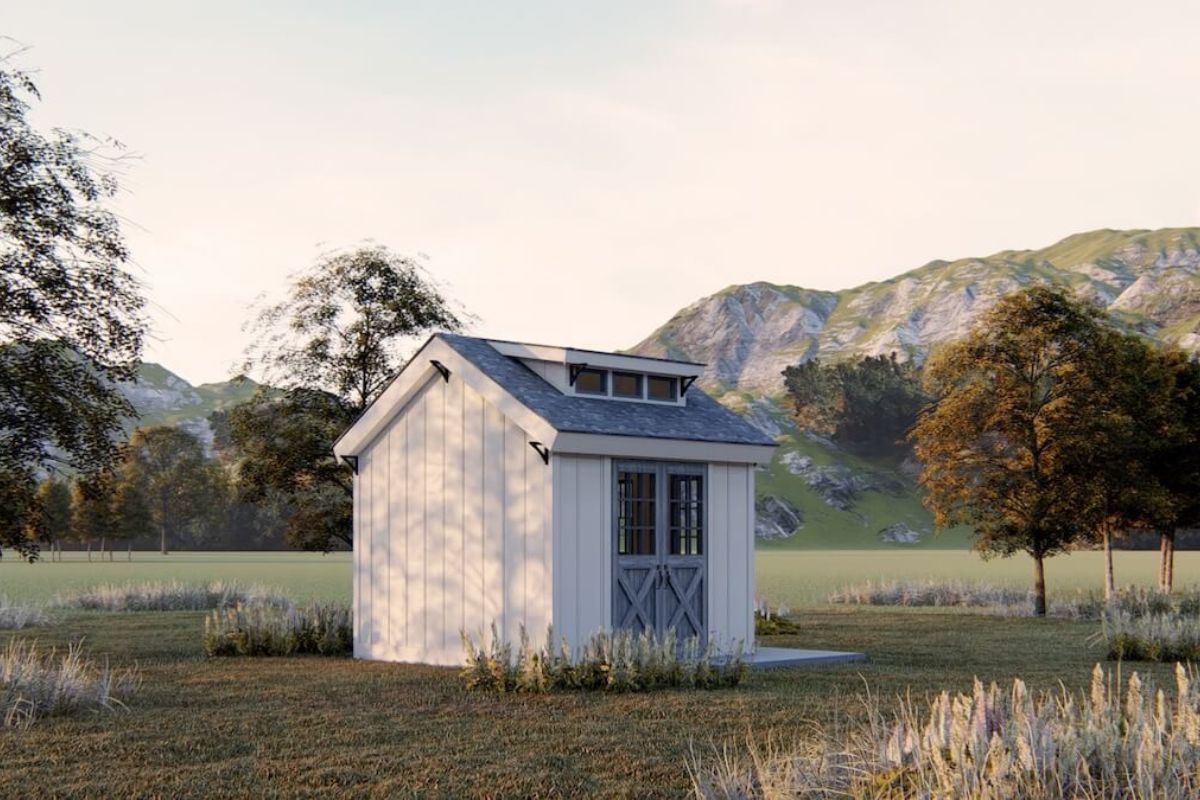
What Usually Decides the Size of Your Shed
The least interesting part about this entire thing is deciding on the square footage, but it's an important factor, so let's talk some numbers and specifics.
Here's how you'll decide what size you need.
How Much Yard Do You Want Left?
You already know that a small property can't afford to waste any square footage.
You probably don't want a shed that'll eat ground for breakfast. Let's say you're thinking of a 10x12 shed. It might only be 120 square feet, but think about the shadow it'll throw and the space you'll lose just by walking around it. That's a decent chunk of space.
A smaller footprint, something like 8x10, will still leave you with enough space to put some patio chairs and a small table.
How Much Stuff Do You Need to Fit Inside?
If you think you'll have just enough space for everything you want to put in there, then you'll be left with not enough space. In 99,9999% cases, people underestimate not just the amount of stuff they have, but also how much space it takes up.
Take a standard push mower.
That easily takes up 3x2 feet. A door is at least 4 feet across just to get in and out. Once you figure out what you want to keep inside, calculate the dimensions, and then go a bit higher than what you think you'll need.
How Will You Get In and Out?
If you measure just the floor space but forget about the door, you'll hate yourself for it the first time you try to drag a wheelbarrow through the opening. A standard single door that's 30" wide is fine if you'll only carry small tools. A lawnmower won't fit through that, though; that'll need at least 36".
Also, don't forget about the path to the shed. You should try to leave enough space to get to the entrance of the shed without squeezing past a bush or a fence.
What Rules Apply to the Property?
Not every structure needs a permit, but this is something you'll have to check before you start building.
For the most part, you'll need to leave at least 5 feet of space from the property line (sometimes 10 feet), so if you have a small property, that might be a third of the area that's available to build on.
You should also check with the HOA.
They like to cap the sizes of sheds at 100 square feet, and the height can usually be up to 8 feet. You'll want to check those numbers before you build, or you might be in for a world of pain later on.
.jpg)
Why Bigger Doesn't Necessarily Mean Better
If you think that a 12x18 shed is better than an 8x10, you're wrong.
It can be, but there's no guarantee that it is. It all depends on what you want and what can realistically work on your property.
If it's too big, then it doesn't make sense, especially in the context of tiny living. It'll take over your yard and look like an eyesore. Plus, the bigger the shed, the more maintenance it requires, so that's another thing to think of.
Think about it – what good is a huge shed if it's half-empty, and meanwhile, you don't have any yard space left because of it? Of course, you don't want a shed to be too small for obvious reasons, but if you organize it well, an 8x10 shed can be just as functional as something bigger.
You want to focus on efficiency, not size.
Conclusion
Reading all of this, you'd think building a shed is rocket science, but it's actually pretty simple.
All you really need to do is decide what you want to use the shed for – it's that simple – and then work out the dimensions according to that.
And if your property is small, you might have to sacrifice some tools or some yard space, but hey, if you're into tiny living, you've probably already mastered getting the most out of every inch.


.svg)
.jpg)