How Gardeners Are Sourcing Better Planters Without Overspending

.jpg)
When one walks into a well-taken care of backyard or patio garden, one of the first things that comes into focus is how nothing seems haphazard. The pots look alike in design, while the arrangement appears to have been made purposefully. More gardeners are starting to plan, especially when it comes to containers. Instead of buying as they go, they’re starting to source more strategically from the beginning.
Reason Strategic Sourcing is Displacing Random Buying
Planters are no longer being purchased without reason by gardeners. The emphasis has changed towards sourcing in a more organized manner, particularly where consistency is important. Purchasing from one supplier means consistency in color, finish, and design that immediately enhances the general appearance of a space.
Bulk buying has also come into the limelight since it makes planning easier. Having access to several pieces simultaneously, it becomes not so difficult to create a layout without having to play with containers that have been gathered over time.
Why Bulk Buying Is Catching On
Buying planters in bulk isn’t just about saving money, though that’s part of it. The bigger advantage is consistency. When pots all come from the same supplier, there is an obvious compatibility in their finishes, colors, and designs that gives an arranged feeling even with a few pots. It also avoids the common problem of ending up with mismatched pieces collected over time.
That is why there has been a growing demand for wholesale pots in Texas in recent times. With access to a larger variety at once, planning becomes much easier than haphazard arranging.
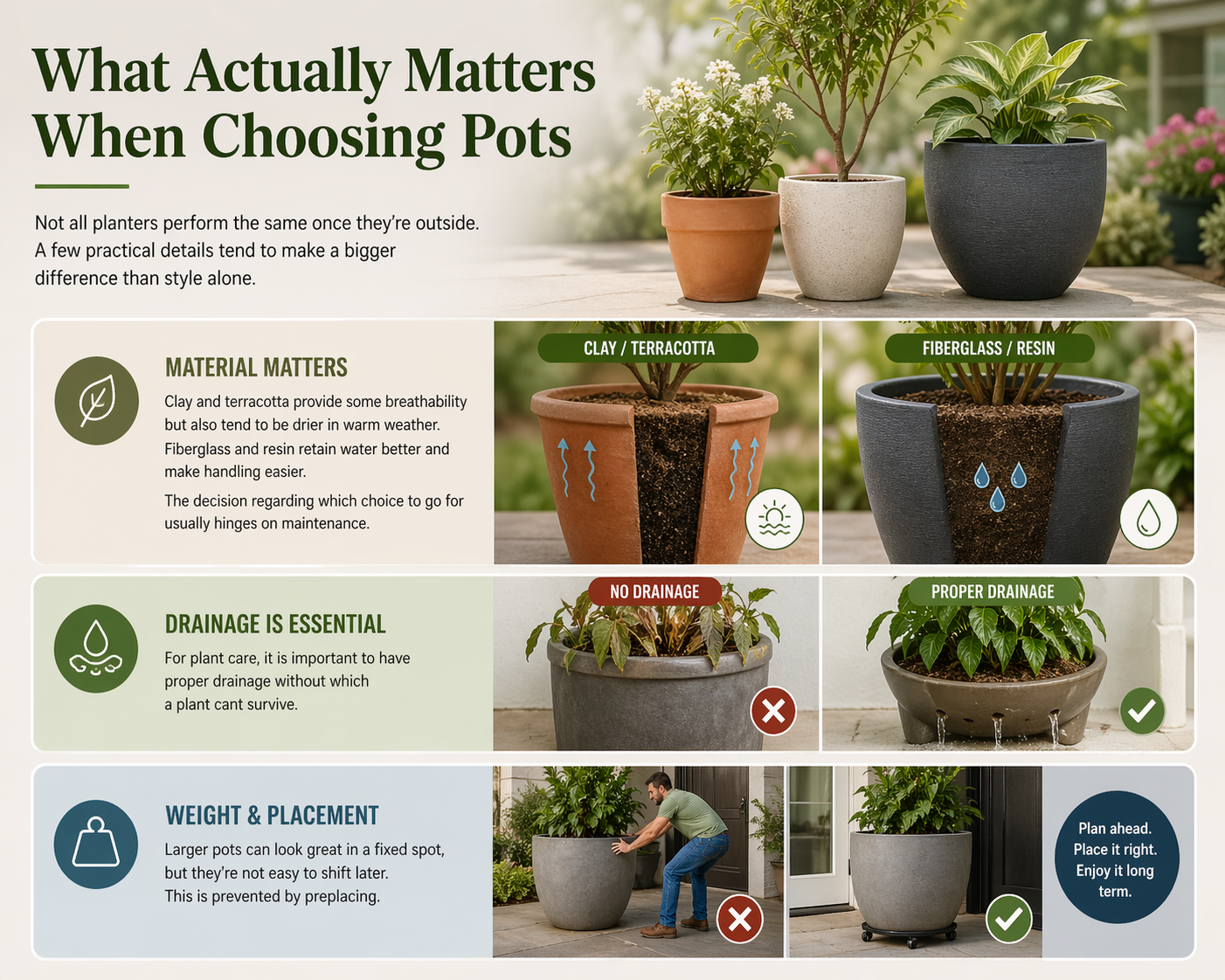
What Actually Matters When Choosing Pots
Not all pots perform the same once they’re placed outdoors. Style matters, but a few practical factors make a much bigger difference in how your plants do and how easy they are to take care of.
The Material of the Pot Matters
The type of material the container is constructed of will influence the quantity of water that the plant will use and the attention that it will need. The walls of containers produced out of clay and terracotta are porous, allowing air and water vapor to go through them. This will ensure that it does not over-water, but it will dry the soil quicker, especially in hot weather.
Fiberglass and resin containers on the other hand retain moisture better, are lightweight and hence, easy to move. Generally, the choice of the proper pot for your plant depends on the amount of effort you want to put into maintaining it.
Drainage Is Essential
Drainage is important to the health of plants. The lack of drainage holes means that any excess water must stay at the bottom of the pot, causing root rot, and then killing the plant. Any planter must be free to have water escape.
Weight and Where You Put the Pot
Grand pots may be considered very impressive and they may support larger plants but have one disadvantage, they cannot be moved easily once full. This is why the placement should be considered in advance. Placing the pot in the correct location initially will save on time in future and prevent unwarranted tension.
A Shift Toward Simpler, More Cohesive Designs
Trends in designing gardens have gone a notch higher to do away with very ornamental designs. The trends in garden designing have been shifted to the simple and focused on the ability to survive in harsh weather and high traffic zones.
Neutral colors are selected, including sand, gray and terracotta, because it does not contrast the flora and disrupt its natural beauty. The decision is rather in favor of textured and not smooth surfaces.
One approach that shows up often is mixing sizes instead of styles. The presence of a few larger pots with smaller ones forms depth without crowding the space. It is a small aspect; however, it alters the entire appearance of the space.
A Practical Way to Build a Garden That Lasts
One pattern shows up across different spaces—people are moving away from constant upgrades. Instead of replacing items every season, there’s more focus on choosing pieces that hold up over time.
That’s where sourcing plays a role. With the careful selection of the base elements, such as planters, the rest of the space will be easier to control. It is possible to swap and rearrange plants, and even add more without having to rethink everything.
It has reduced visual clutter as well. Higher quality and fewer products will age well and need fewer efforts to maintain.
Why Long-Term Planning and Simplicity are Taking Over
The contemporary garden design is shifting towards simplicity and sustainability. Warm colors such as sand, grey, and terracotta are also favored as they are natural blends with plants. Gardeners are currently interested in combining sizes of various styles to bring depth, but not clutter.
It is also evident that there is a move towards long-term thinking. Rather than changing things often, people are spending on long-lasting planters that are here to stay. This will lower maintenance, enhance visual consistency, and simplify updating the garden as time goes on.
Smarter Sourcing Helps Reduce Cost Without Compromise
Gardeners are increasingly conscious of their spending, particularly when installing or renovating outdoor areas. Many are now planning to source planters in a more organized manner as opposed to purchasing them individually. This can save on unnecessary repeat purchases and save money.
Consistency is also provided through bulk sourcing. Planters are naturally compatible when they are of the same origin, in design and finish. This minor detail can have a huge impact on the appearance of the garden and its organization.
Long-Term Planning Creates a More Balanced Garden Space
The development of a good garden is not only about the appearance of the garden, but also about how it will develop over time. Placing the materials that are durable and pre-planning will save effort in the future. It also facilitates the rearrangement of plants without the need to keep replacing containers at all times.
The affinity towards plain, harmonious designs is also increasing. Soft colors and unequal sizes form depth without congestion. The plan ensures space appears clean and allows the option to add or renovate the garden as time goes by.
Final Thoughts
A properly organized garden does not depend on the number of additions to it. It is all about selecting components that fit and putting them together with purpose. The purchasing of planters has been quietly contributing to more attractive exterior environments. This allows decisions to be made quickly at an early stage, making subsequent tasks less complicated.


.svg)
.jpg)