How to Transform Your Living Room Without Replacing Furniture

.png)
Replacing furniture is rarely the fastest or most budget-friendly path to a better-looking home. Yet, every year, thousands of perfectly functional sofas end up discarded simply because their owners grew tired of how they looked or the upholstery had seen better days. The real transformation usually does not come from buying new things but from making smarter choices about what you already have.
The living room carries more weight than any other space in a home. It is the place where people gather, rest, argue, celebrate, and simply do nothing for a while. Because it sees so much daily use, it also shows wear faster than a bedroom or a hallway ever would. Fabric fades, cushions flatten, and the overall mood of the space can shift without anyone making a single deliberate change.
Understanding this rhythm is the starting point for most meaningful interior refreshes.
Fabric Is Where Every Change Begins
If there is a single element that controls the atmosphere of a living room more than any other, it is fabric. Curtains, cushions, rugs, and above all, sofa upholstery set the emotional register of the space before any furniture placement or wall color can do its work.
Linen reads as relaxed and airy. Velvet communicates warmth and intention. Bouclé introduces texture and a tactile quality that invites touch and lingering. Choosing between them is not simply a matter of taste; it is a decision about what kind of space you want to inhabit day after day.
For those working with an IKEA sofa, this decision becomes particularly practical. An IKEA sofa cover in the right fabric can shift the mood of an entire room, turning a utilitarian piece into something that genuinely anchors the space. The cover is not a workaround or a compromise; it is a deliberate design choice, and in many cases, it produces a more considered result than an off-the-shelf replacement would.
Why Slipcovers Have Become A Design Statement
For a long time, slipcovers carried an unfair reputation as the territory of practicality over aesthetics, something you chose because you had children or pets, not because you cared about how your home looked. That perception has largely dissolved.
Interior designers working at the higher end of residential projects now specify slipcovers as part of a considered design strategy, not as a fallback. The appeal is clear: they allow for seasonal changes, they respond to wear without requiring a furniture replacement, and they bring a certain softness to a room that tighter, more tailored upholstery cannot always achieve.
A well-fitted slipcover in a dense, natural weave can look more considered and more expensive than a fixed upholstery job that was sourced without much care. The key is fit. A cover that pulls or bunches undoes every advantage the fabric itself might offer. One that sits cleanly, following the lines of the sofa without fighting them, contributes to a sense of order that the rest of the room can build on.
Color Choices That Actually Work Over Time
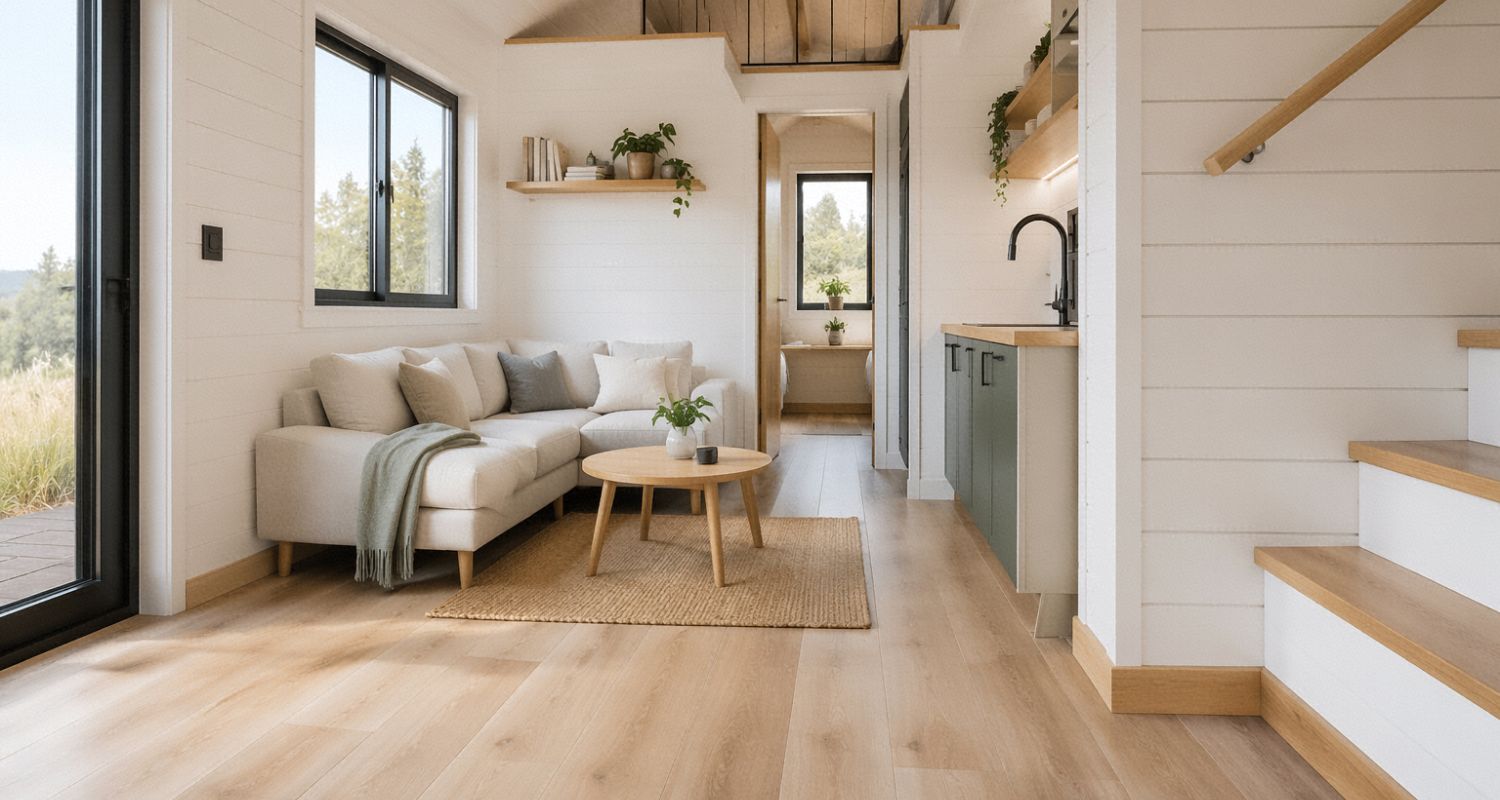
Living room color decisions tend to be made too quickly and regretted too slowly. A shade that feels exciting on a paint chart or in a showroom can become exhausting after six months of daily exposure. The more considered approach is to use structural elements like walls and flooring as a relatively neutral base, and to bring color in through textiles, which are far easier to change.
This is where sofa covers, cushions, and throws become important tools rather than decorative extras. A warm terracotta or deep ochre cover can completely redefine the emotional temperature of a room without any structural intervention. When the season shifts or the mood changes, the cover can change with it.
According to design professionals tracking living room trends in 2026, the spaces that photograph well and feel genuinely good to occupy tend to share one quality: they are layered without being cluttered. Soft geometry, natural textiles, and a willingness to let different periods and styles coexist comfortably produce the kind of room that feels both considered and lived-in. Decorilla's overview of living room trends in 2026 captures this direction well, noting that the most compelling interiors this year reward material richness over visual minimalism.
How Light Interacts With Upholstery
One aspect of sofa styling that rarely gets discussed in practical terms is how light, both natural and artificial, interacts with the upholstery fabric. A matte linen sofa and a velvet one in the same shade of warm grey will look entirely different across the hours of the day. The velvet will catch and shift with the light, producing depth and movement. The linen will absorb it, producing a quieter, more consistent surface.
Neither is objectively better, but understanding this difference matters when you are making decisions about a cover or an upholstery choice. If your living room gets strong afternoon light from the west, a fabric with some texture and pile will become more interesting as the day progresses. A flat weave will stay consistent, which can be exactly what a busy or highly patterned room needs.
.webp)
Mixing Periods and Styles Without Chaos
The anxiety around mixing furniture from different eras or styles is understandable but mostly unnecessary. Rooms that contain only one style tend to feel either too formal or too sterile. The rooms that feel most interesting usually have a little tension in them, an older wooden piece alongside a more modern sofa, a graphic rug beneath a softer, more traditional armchair.
The key to making this work is consistency in one other element, usually color or texture. If the sofa cover, the cushions, and the main rug share a family of tones, the room will hold together even when the individual pieces come from very different places. The textile layer acts as a kind of visual grammar that gives the space coherence without demanding uniformity.
Caring for Upholstery in a Home That Gets Genuinely Used
A living room that looks good but cannot withstand daily life is not a well-designed space; it is a performance. Designing for real use means making choices that hold up to spills, pets, children, and the general wear that comes from a room that is actually occupied.
Removable and washable covers are not a compromise. They are a rational response to the reality of how living rooms function. Fabric quality still matters enormously here: a well-constructed cover in a dense natural or blended weave will survive washing far better than a cheaper alternative, and will continue to look considered after years of use rather than months.
The practical case for a quality sofa cover and the aesthetic case converge at the same point. A room designed to be used, cleaned, and refreshed without significant effort or expense is a room that stays pleasant to live in over time. That outcome is worth considerably more than a space that looks flawless for a weekend and deteriorates by the following month.


.svg)
.jpg)