Passage Door Handles For Rooms That Never Need A Lock

Choosing door hardware may seem like a small part of home improvement, but the wrong handle may make everyday routines less convenient. A door that doesn't need privacy can still have an unnecessary lock, and incompatible handles can make the rest of the design look out of place. Also consider ease of use, looks, and whether the hardware will fit your current doors.
Fortunately, it is easier to choose the right handle when you know which mechanisms work best in different rooms. Some spaces need privacy, while others simply need a door that opens and closes smoothly.
This article explains where non-locking handles work best, how to choose the right style, and what to check before installation.
1. Understand Where Passage Door Handles Work Best
The rooms all around your home serve different purposes, and hence the door hardware installed in each room should reflect the purpose. Passage door handles are designed for interior doors that need to open and close without locking. They operate a latch when you turn the lever, allowing people to move between spaces without using a key or unlocking a button.
For Example, hallways, walk-in closets, pantries, laundry rooms, and connecting living spaces. These spaces are easy to operate because people may go in and out several times a day. A non-locking handle also prevents accidentally locking a door that other household members need to open.
Consider a pantry door in a busy kitchen. You may open it quite often when cooking, carrying groceries, or putting away supplies. A passage handle lets you enter and exit without dealing with an unnecessary lock. Similarly, a hallway door may be easy for everyone in the house to operate.
However, this kind of hardware does not have to be installed on every interior door. Bedrooms, bathrooms, and other spaces where occupants need privacy generally require privacy handles with a locking latch mechanism. Exterior doors should also have the proper entry hardware, including a deadbolt and key lock.
2. Choose the Right Handle for Your Household's Needs
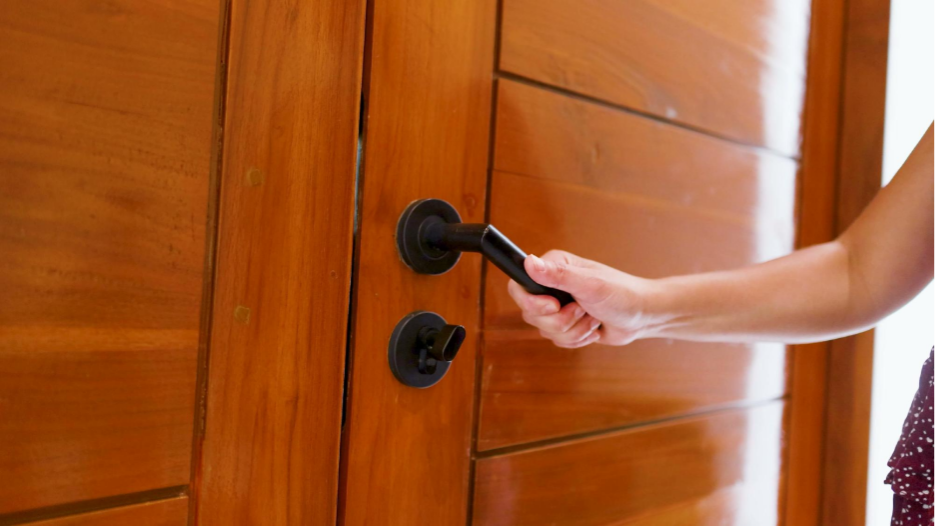
After identifying the rooms that need non-locking hardware, consider how each handle will work in everyday use. A handle should be comfortable to operate, suit the door's location, and complement the surrounding interior. Such information is important as you may enter the same door several times a day.
Many homes prefer using lever handles. A lever moves downward to release the latch, unlike round knobs, which require a twisting motion. This design may be more child-friendly, elderly-friendly, and suitable for those with heavy groceries or laundry. Nevertheless, the most appropriate option depends on the user's comfort and the door's needs.
Next, consider the handle's shape. Slim, straight levers suit minimalist interiors, while curved or rounded designs can soften rooms with traditional or transitional decor. Geometric profiles may also complement contemporary spaces with clean lines and simple furnishings.
Before choosing a style, think about the doors throughout your home. Matching hardware creates visual consistency, even when different rooms need different locking functions. For instance, you may use passage handles in a hallway to match privacy handles on bedroom doors.
3. Match the Finish to Your Interior Design
Small details such as door handles may affect how a room looks and feels. Since you will interact with them regularly, choosing a finish that matches your existing fixtures may make the entire interior feel more thoughtful.
Begin with the existing colors and materials in your house. Matte black handles create contrast against white doors and light-colored walls. Brushed nickel has a gentler metallic look that may be mixed with most modern and transitional designs. Chrome offers a glossy, clean appearance, and champagne brushed gold also warms up spaces that have warm-toned accents.
However, you do not have to match all the metal finishes. Instead, aim for a moderate mix that feels purposeful. For example, a brushed nickel handle can work well with neutral walls, while matte black hardware can tie together dark window frames, cabinet pulls, and lighting fixtures.
The handle mounting design also deserves attention. A concealed-mount rosette hides the mounting screws on the finished face, giving a more refined look than hardware with exposed screws. This detail may be useful, especially if you prefer simple, uncluttered interiors.

4. Check Door Measurements Before Installation
Before buying a new handle, make sure it fits your door. Checking the measurements beforehand helps prevent installation problems and unnecessary returns.
First, measure the door's thickness. Many standard US interior doors are between 1⅜ and 1¾ inches thick, but dimensions may vary. Also, check the bore hole, where the handle mechanism fits, and the backset measures the distance from the door's edge to the center of the bore hole.
Second, make sure that the handle fits the door's opening direction. Reversible handles work with both left- and right-handed doors, making installation more flexible.
Finally, check that the package includes the necessary hardware, such as the latch, strike plate, and mounting screws. Install as directed and check that the handle turns smoothly; the latch folds down, and the door closes without sticking.
Conclusion
The right door handle should suit both the room's purpose and your home's design. Non-locking handles work well in hallways, closets, pantries, laundry rooms, and other shared spaces where privacy is unnecessary.
By choosing a comfortable lever, coordinating finishes, and checking measurements before installation, you may improve everyday convenience while maintaining a consistent interior style. Most importantly, reserve locking hardware for rooms that need privacy, and choose compatible handles for the doors you use every day.