
Small House, Big Skillset: The Jobs Tiny Living Quietly Hands You

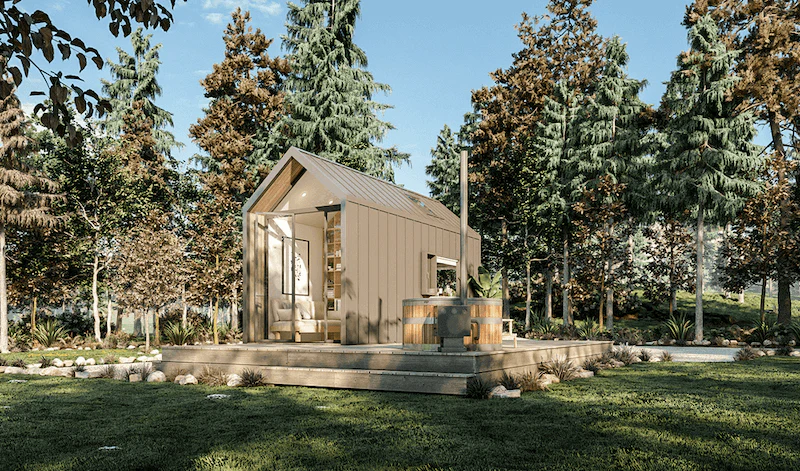
Ask ten people why they went tiny and most will say some version of "less house, less hassle." Which is true right up until the Saturday morning you notice a dark line at the bottom of the shower wall, call three contractors, and discover that nobody wants to drive out for a two-hour job in a 190-square-foot house on wheels parked forty minutes outside town.
That's the part nobody puts in the Instagram caption. In a tiny home, you are the maintenance department. Not because tiny homes are badly built — plenty are built far better than the average tract house — but because the economics of a call-out don't work at this scale, and because a lot of tiny homes live in places where trade coverage is thin.
The good news is that the skillset is smaller than the fear. Here's what it actually consists of.
Why small homes are technically harder, not easier
A tiny house isn't a normal house scaled down. Shrink the box and four things get disproportionately worse.
Moisture becomes the main character. A resting adult gives off somewhere in the region of a liter of water vapor a day through breathing and perspiration — more if you're active, and considerably more if you cook, shower, or dry laundry indoors. In a 2,000-square-foot house, that load disappears into the volume. In a tiny home with maybe 1,500 cubic feet of air, two people, a shower, and a pot of pasta on the boil, it doesn't disappear anywhere. It condenses on the coldest surface it can find, which is usually a window reveal or the underside of a loft.
Everything is a weight decision. On a trailer, your finish choices are also engineering choices. A tiled backsplash instead of painted board can mean a hundred pounds you now have to carry over the axles for the rest of the house's life. Builders think in pounds the way other people think in dollars.
Houses on wheels experience forces houses don't. A tiny home on the highway takes vibration and crosswind loads no foundation home ever sees. Fasteners back out. Grout hairlines. Cabinet latches that were decorative in a static house become structural. It's the one category of dwelling that gets shaken like a paint mixer several times a year.
Thermal swing is fast. Low mass and a small volume means a tiny home heats and cools quickly. Lovely in January. Less lovely when a single kettle and an oven push the main room several degrees in twenty minutes.
None of this is a reason not to go tiny. It's a reason to learn the four or five maintenance habits that address it.
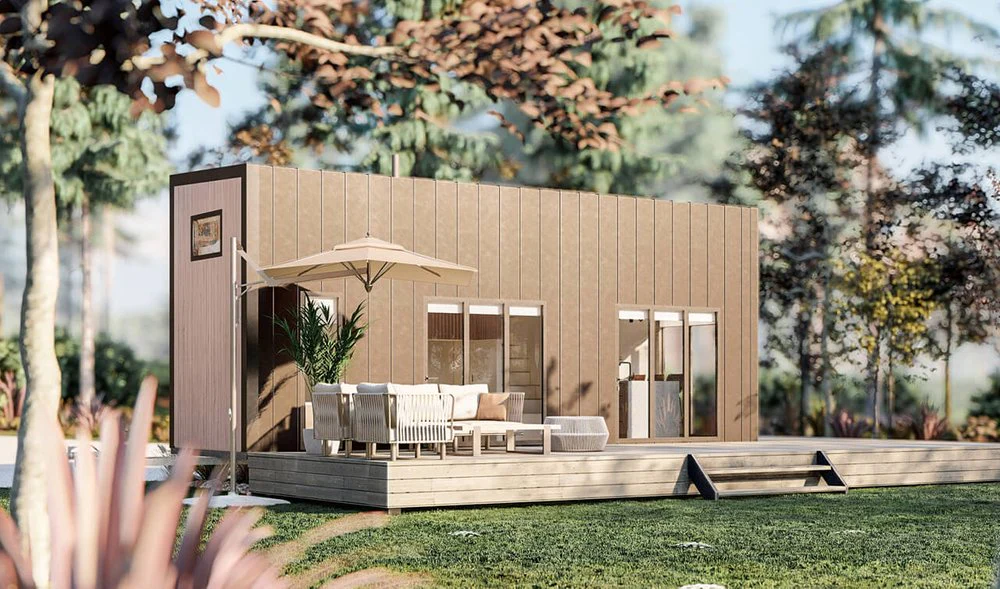
Seven things that surprise first-time tiny builders
- There is a building code written specifically for you. The 2018 International Residential Code introduced Appendix Q (now often listed as Appendix AQ), which applies to dwellings of 400 square feet or less excluding lofts. It relaxes ceiling heights in lofts, allows compact stairs and ladders that would be illegal in a full-size home, and sets its own rules for loft guards and emergency escape openings. It's up to each state or municipality to adopt it — but where it's adopted, it's the difference between a permit and a polite refusal.
- The stair math has its own formula. Under Appendix AQ, loft stair risers run 7 to 12 inches, and tread depth is calculated as 20 inches minus four-thirds of the riser height. If your ceiling height where the stair meets the loft is under 6 feet 2 inches, you need a landing platform. Almost every tiny house does.
- Wheels were originally a legal strategy as much as a lifestyle one. Many U.S. municipalities set minimum floor areas for dwellings — historically well above what a tiny house occupies. Building on a trailer reclassified the structure as a vehicle rather than a dwelling, which sidestepped the problem. A lot of tiny house design DNA traces back to that single workaround.
- Boats solved all of this two hundred years ago. Fiddle rails on shelf edges, positive-latch cabinet hardware, gimbaled stoves, dual-purpose furniture, water tanks under seating — the marine world had compact living figured out long before the tiny house movement existed. Marine and RV suppliers remain the best-value source for small-space hardware.
- Your bathroom fan is the most important appliance you own. More important than the heater. In a tiny home it's the primary defense against the moisture load described above, and it's the single component most often undersized by first-time builders.
- Small rooms sound wrong. Hard surfaces plus short distances between them equals a slappy, echoey acoustic that makes a beautifully finished tiny home feel oddly clinical. Textiles fix it — a rug, a curtain, an upholstered bench.
- The finish schedule is your inspection schedule. Because you can touch every surface in the house from two positions, you notice problems years earlier than a full-size homeowner would. That's a genuine advantage, provided you know what you're looking at.
Eight habits worth building
Photograph everything before you close the walls. Every stud bay, every run of wire, every plumbing line, every blocking point. Ten minutes with a phone saves you an afternoon of exploratory demolition in year four. Label the photos by wall.
Buy a hygrometer before you buy anything decorative. Fifteen dollars. Aim to sit between 40 and 60 percent relative humidity. Above that consistently, you have a ventilation problem, not a mold problem — the mold is just the symptom arriving later.
Run the fan longer than feels necessary. Fifteen to twenty minutes after the shower stops, not two. If your fan has no timer, add one; it's a straightforward swap.
Do a torque tour after every tow. Cabinet hinges, appliance brackets, trailer fasteners, anything with a screw and a load. It takes twenty minutes and it's the single highest-return maintenance ritual in tiny living.
Learn caulk properly. It's the most-used consumable in a small home, and there's a real difference between silicone, acrylic, and hybrid — the wrong tube in a wet area fails within a year and takes the substrate with it.
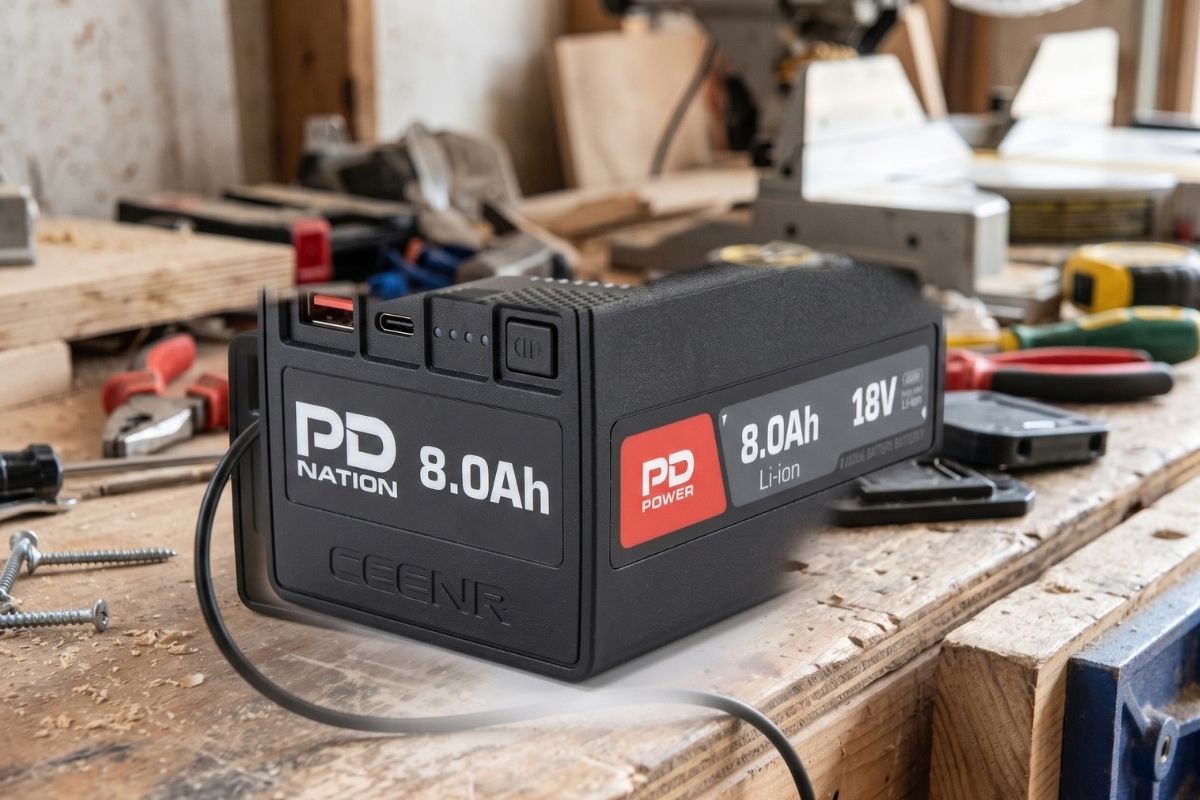
Buy tools for the smallest job, not the biggest. A compact drill/driver, a decent multi-tool, a moisture meter, a good headlamp, and a proper caulking gun will handle the overwhelming majority of what a tiny home asks of you. Storage is your constraint, so buy quality over quantity.
Learn the skill before you need it, not during. This is the one people skip. Everything on this list is standard home-maintenance work — it's just performed with less room to swing your elbow. If you're coming to tiny living without a trade background, spend a few winter evenings on beginner-friendly home improvement guides that walk through paint, caulk, fixture replacement, and basic plumbing without assuming you've held the tool before. The knowledge transfers directly, and it's far cheaper to learn what a P-trap is on a Wednesday night than at 11pm with a bucket under the sink.
Write down when you did things. A single note file with dates — sealant renewed, fan replaced, roof checked, wheel bearings packed — will be worth more to you at resale than any photo of the interior.
The real payoff
The thing about learning to maintain a tiny house is that the house teaches you fast. Feedback loops that take a decade in a full-size home take a season in 200 square feet. Get the ventilation wrong and you'll know by February. Fix it and you'll know that too.
Most people arrive at tiny living for the money, the mobility, or the simplicity. A surprising number stay for a reason they didn't expect: for the first time, they understand the building they live in — every wire, every joint, every gallon. That's not a small thing. It just happens to fit in a small space.


.svg)


.jpg)