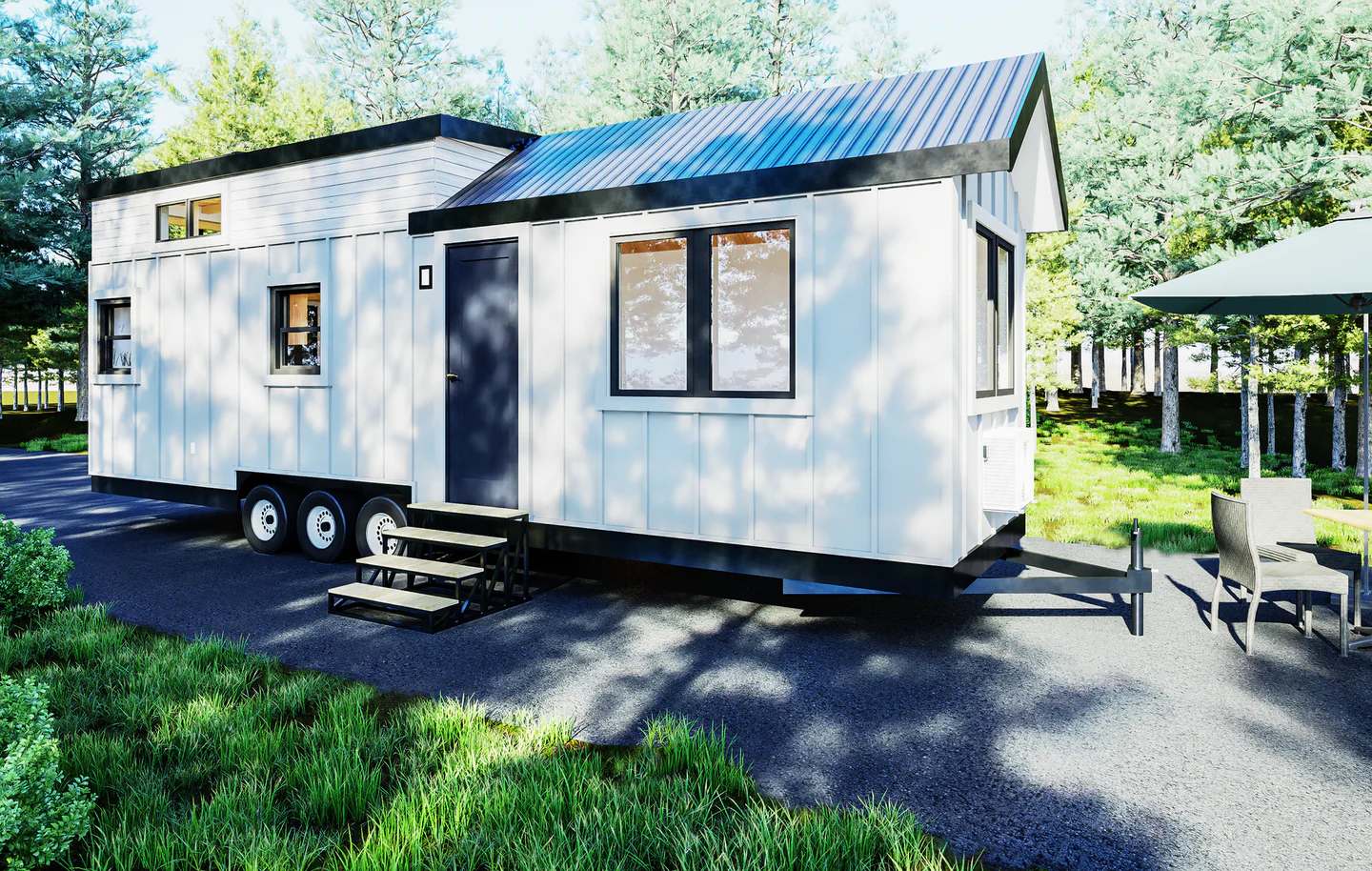
Tiny Home Cleaning: Save Space With the Right Tools


In a small home, even a vacuum has to justify the space it takes up. Here’s how to keep floors clean, choose equipment that fits, and make a smarter purchase when Black Friday deals arrive.
A vacuum tucked beside the refrigerator. A mop bucket under the sink. A charging base competing with the shoes by the front door.
None of these takes up much room on its own. Put them together, though, and they can swallow a surprising amount of storage in a tiny house.
That's the trouble with buying cleaning equipment the usual way. You see a feature that looks useful, bring the machine home, and only then start wondering where it will live.
Tiny-home living calls for a different approach. Rather than starting with the appliance, start with the floor plan. Think about the messes that actually happen, the surfaces you need to clean, and the spot where everything will go afterward.
You may find that one well-chosen machine does most of the work. You may also discover that a small handheld vacuum and a basic mop are a better fit. Both can be sensible answers.
The best place to start is your floor plan
Walk through your home and look at it from the perspective of someone carrying a cleaning tool.
Where do you have to turn sideways to pass a chair? Does the bed lift to reveal storage underneath? Can you reach the floor behind the built-in bench, or would you need to move its cushions and everything stored below?
These details matter in a 200- or 400-square-foot home in a way they might not in a larger house.
Take three measurements before shopping: the lowest clearance under your furniture, the width of the tightest passage, and the dimensions of the space where you could store a vacuum.
Then look at the flooring.
A tiny house with continuous sealed tile or another washable hard surface has straightforward needs. A home with vinyl plank downstairs and a carpeted sleeping loft is a different story.
The loft is especially easy to overlook. Even if you can wash nearly every inch of the main floor, you still need a way to remove dust from carpeted stairs, a rug, or a fabric-covered bench.
One machine rarely handles every surface equally well.
Keep the entry and kitchenette under control
In many tiny houses, the entrance is practically part of the kitchen.
That means wet shoes, grit, breakfast crumbs, and cooking splashes can all wind up in the same few square feet.
A washable doormat and a designated shoe tray do more good than they get credit for. They catch some of the mess before it travels across the living area. A quick cleanup after dinner is usually easier than letting food residue dry overnight.
For compatible hard floors, a tineco vacuum mop is one type of appliance worth considering.
In Tineco's FLOOR ONE range, wet/dry floor washers collect suitable small debris while washing the floor with fresh water. The dirty water goes into a separate tank, which is helpful when you're dealing with crumbs and damp footprints together.
What you gain is fewer steps. What you take on is the job of emptying and cleaning the tanks afterward.
That trade-off is particularly important in a tiny home. If the bathroom sink is the only convenient place to rinse equipment, picture how that will work when someone else is using the bathroom.
And remember that these floor washers are intended for compatible hard surfaces, not carpet or area rugs.

Low furniture changes which features matter
A platform bed is excellent for making the most of a small footprint. So is a bench with storage drawers or a sofa that sits close to the floor.
Cleaning beneath them is another matter.
This is where a machine that reclines nearly flat can be genuinely useful.
The Tineco FLOOR ONE Stretch S6 has a 180-degree lay-flat design. According to the manufacturer, its body measures about 5.1 inches high in that position, and its advertised runtime is up to 40 minutes.
The Tineco s6 (Tineco FLOOR ONE Stretch S6) is particularly worth a look if you have compatible hard flooring beneath low furniture and don't need an especially elaborate floor washer.
Just don't trust the phrase "lay-flat" without checking dimensions.
If your bed frame leaves four inches of clearance, a 5.1-inch-high appliance won't fit beneath it. Built-in storage drawers, support rails, and uneven floor levels can reduce the usable gap even further.
For a tiny house, an extra inch of clearance can be a bigger deal than another cleaning mode.
What would you get by stepping up to the S7?
The Tineco FLOOR ONE S7 Stretch Ultra tackles a similar category of everyday messes, with a 180-degree lay-flat design and additional features for regular hard-floor care.
Its Tineco s7 (Tineco FLOOR ONE S7 Stretch Ultra) has DualBlock anti-tangle technology, FlashDry self-cleaning, and up to 50 minutes of advertised runtime.
That may be useful if your tiny house has a long, uninterrupted stretch of hard flooring or if pets regularly bring dirt indoors.
But more runtime isn't automatically better.
If it takes you eight minutes to clean the entire floor, paying extra for a longer maximum runtime may bring little benefit. Ease of handling, the actual storage footprint, and how quickly you can empty the dirty-water tank might matter far more.
There is also the question of cleaning beneath built-ins. Both machines can recline, but you still need to compare their dimensions with your own furniture.
A buyer reviewing the S7 Stretch Ultra on Tineco's website, Mary Durham, noted that the machine was too tall to reach beneath her cabinets. That's one person's experience rather than an independent test, but it illustrates why measurements matter more than a marketing photo.
Is steam worth making room for?
Steam sounds attractive, especially when food has dried onto the floor near the kitchenette.
The Tineco FLOOR ONE S7 Stretch Steam offers a steam-cleaning function alongside wet/dry floor washing.
For a home with flooring specifically approved for steam, this can be an option for certain stubborn messes.
The catch is that many tiny homes use laminate, engineered wood, or vinyl products with particular cleaning restrictions. Even a floor described as water-resistant isn't automatically steam-safe.
A flooring manufacturer's care instructions should settle the question.
If you can't confirm compatibility, don't gamble on it. A non-steam floor washer or another approved cleaning method is the more sensible choice.
There's also no need to buy a steam feature simply because it exists. In a small kitchenette where spills are usually wiped up quickly, the added capability may rarely be used.
When a premium washer is too much machine
It's tempting to think that buying a higher-end appliance once will solve the problem for years.
Sometimes it does. But small spaces make trade-offs harder to ignore.
The Tineco FLOOR ONE S9 Artist Pro is a premium floor washer with advanced features, a lay-flat design, and an advertised runtime of up to 75 minutes.
The FLOOR ONE S9 Master is another higher-end model, positioned around its hot-water cleaning function.
Both deserve consideration for people who clean frequently and have a specific reason to want those capabilities. Neither is automatically a better tiny-home choice than a simpler model.
A premium machine may be comfortable to use yet still be awkward to maneuver around a compact dining table. A larger charging arrangement may leave no convenient room for shoes or kitchen supplies.
Before upgrading, ask what frustrates you about your current cleaning routine.
Is it the need to vacuum and mop separately? Difficulty reaching beneath the bed? Time spent cleaning the brush roll?
A feature that solves a recurring problem is worth considering. One that looks impressive but barely gets used doesn't contribute much to living well in a small space.
Why a large cleaning station may not belong in a tiny home
There are situations where an automated station can be a real convenience.
The Tineco FLOOR ONE STATION S9 Scientist Pro is an example of a more elaborate floor-care system, designed around an integrated station and automated water-management functions.
In a larger home, such a setup may reduce repetitive preparation and maintenance tasks.
Inside a tiny house, though, the station has to compete with furniture, storage, and walking space.
Think about what else could occupy that footprint. A pull-out pantry? Shoe storage? A place for a folding chair? If the station must sit in the only open corner, it may introduce more inconvenience than it removes.
It's worth checking the station's complete dimensions, not just those of the handheld cleaning unit. Leave enough clearance to remove tanks and maintain the system.
For most tiny homes, a simpler dock is likely to be easier to accommodate. That isn't a judgment on how well a premium station cleans; it's a question of space.
The hidden challenge: where does everything dry?
One feature that is rarely shown in a tiny-home floor plan is the place where cleaning equipment dries.
After using a wet floor washer, you'll need to empty the dirty-water tank and maintain the removable parts as instructed.
If you store damp components in a closed cabinet, unpleasant odors can develop.
A charging location also needs attention. You don't want cords across a walkway, and you shouldn't assume that a tight cupboard is appropriate for charging or drying without checking the manufacturer's ventilation and clearance requirements.
A good arrangement might be a utility nook with a suitable outlet and easy access to the bathroom sink. In other layouts, a compact storage cabinet with sufficient clearance may work better.
If your home is mobile, think about travel as well. The appliance and its dock should have a secure storage position, and the tanks should be emptied as required before moving.
The goal is to make the whole cleaning routine convenient, including what happens after the floor looks clean.
Black Friday 2026: a chance to buy better without overspending
If you're planning a tiny-home cleaning setup, Black Friday can be a sensible time to look for a deal.
This year's Black Friday falls on November 27, 2026. It's worth putting the date on your calendar if you already know which type of machine fits your home.
Tineco's U.S. store has shown substantial advertised markdowns during its fall promotions.
For example, its October Halloween sale page listed the FLOOR ONE Stretch S6 at $279 against a crossed-out $599 price, with a further $249 checkout offer shown. The S7 Stretch Ultra appeared at $399 against $649, with a $369 checkout offer.
That's a sizeable difference in advertised prices, especially for someone furnishing a small home on a limited budget.
These were October listings, not confirmed Black Friday prices, and availability was shown as unavailable when checked. They shouldn't be treated as offers guaranteed for November.
For a tiny home, the question is also whether the discount is buying you something useful.
A Stretch S6 on sale may be an excellent match for a compact area with low furniture. A discounted S7 Stretch Ultra could be worthwhile if its features genuinely improve your routine.
The S7 Stretch Steam, S9 Artist Pro, and S9 Master are more specialized or premium options. Consider them only where the additional capability fits the flooring and how often you clean.
And a heavily discounted STATION S9 Scientist Pro still needs room for its dock. A sale price won't make the station any smaller.

Compare the final price, not just the percentage
Retailers may show list prices, crossed-out prices, checkout discounts, and coupon offers. They aren't necessarily interchangeable.
Before buying, compare the actual final price with what the model has typically sold for. Check the shipping terms, return policy, included accessories, and whether the product is in stock.
If you're not in a hurry, tracking the price beforehand can make it much easier to judge whether the Black Friday offer is genuinely attractive.
The point isn't to collect more gadgets because they're cheaper. It's to spend less on equipment that already has a clear place in your home.
A small-space cleaning routine that doesn't take over your day
Once the tools are sorted, a tiny-home cleaning routine can be surprisingly simple.
Keep grit at the door with a doormat and shoe tray. Wipe up kitchenette spills before they dry. Vacuum rugs or fabric-covered areas with an appropriate dry tool, then wash compatible hard floors when needed.
Empty the dirty-water tank after each use, and keep the charging spot clear enough that putting the machine away doesn't become another chore.
Before you purchase anything, measure the storage space and check the flooring care instructions. If you'd like to compare the broader range, the Tineco vacuum website lists the manufacturer's current models, specifications, and availability.
In a tiny home, the best cleaning setup is the one you can put away without having to rearrange the room.
Frequently Asked Questions
Can one wet/dry floor washer handle an entire tiny home?
It may be enough if the home has only compatible hard flooring and the washer suits the messes involved. Homes with carpeted lofts, rugs, or upholstered furniture generally need a separate dry-cleaning method.
Which is better for small spaces: Stretch S6 or S7 Stretch Ultra?
Both have lay-flat designs. The Stretch S6 offers a comparatively straightforward approach with up to 40 minutes of advertised runtime; the S7 Stretch Ultra adds features and advertises up to 50 minutes. Compare clearance, storage dimensions, maintenance, and price before choosing.
Is steam safe for luxury vinyl plank or engineered wood?
Not automatically. These materials can have specific restrictions, even when marketed as water-resistant. Use steam only if the flooring manufacturer explicitly allows it.
Does an automated cleaning station save space?
Usually not. It can reduce some manual tasks but occupies floor or storage space of its own. Its value depends on how frequently the equipment is used and whether the station fits comfortably into the layout.
Where should I store a wet floor washer in a tiny house?
Choose a location near a suitable outlet, with enough clearance for safe charging and the maintenance prescribed by the manufacturer. Avoid storing wet components in an unventilated cupboard.
Should I wait for Black Friday to buy a Tineco floor washer?
If your current setup is adequate and you've already identified a suitable model, comparing confirmed Black Friday prices may be worthwhile. Large advertised markdowns have appeared in earlier promotions, but November offers and inventory must be checked when announced.